Archive for the ‘Dealing With Tragedy’ Category

Explaining the Colorado Movie Theater Shooting to Children

July 22, 2012

An awful tragedy that is going to unsettle children:

Today, parents across the country are struggling with how to talk to their kids in the aftermath of a tragedy that killed and injured both adults and children. Experts generally agree that after such a tragedy, parents should keep their answers simple, leaving out dramatic details, while reassuring their children of their safety.

Below are some tips by experts in the field:

Watch for Trauma: “Young children may have difficulties identifying and expressing feelings. Parents should pay attention to the children’s play (for instance, preoccupation with certain aggressive electronic games, drawings, repetitive play that imitates the traumatic event or events). Another sign of trauma is avoidance of reminders (in this case, going to the movies or to a show or watching certain movies or avoiding other activities that they didn’t avoid before).” — Dr. Aurelia Bizamcer, Medical Director, Outpatient Psychiatry at Temple University Hospital

Keep Answers Truthful but Simple: “We’re not holding back, but we’re not giving more because the giving more could have the risk ofalarming the child. … As a parent you have an obligation to protect a young child from being overwhelmed.” –Alan Kazdin, Professor of Psychology and Child Psychiatry at Yale University; Director of the Yale Parenting Center.

Reassure Them: “We need to appreciate that kids have different fears. Many will worry about the movies, but others will worry about such events spilling over to other areas, such as the mall, school, the neighborhood. For kids of all ages, it is really important to let them know that these kinds of events are incredibly rare. Movie theaters are very safe places. Just think of all the movies you, mom and dad and everyone has gone to. Things like this really do not happen much at all.” –Dr. Gene Beresin, Director of Child and Adolescent Psychiatry Residency Training, Massachusetts General Hospital and McLean Hospital

Keep Answers Age-Appropriate: “Parents should be sure to pitch the discussion to their kids’ developmental level ? for a 6-year-old, it’s completely appropriate to reassure them of their safety, with some emphasis on the fact that police have caught the person they think did this, and he is no longer at large. For kids over the age of 8, more concrete details are appropriate, along with, perhaps, a general discussion of how to be safe in public — locating exit doors for instance, and getting to safety in the event of any dangerous occurrence.” –Jay Reeve,President and Chief Executive Officer, Apalachee Center

Don’t Make Assumptions: “Don’t project your own feelings, fears and anxietyon kids because you know you don’t really know exactly what your kids are feeling until you talk to them.” –Dr. Jane Taylor, psychiatrist

Click here to read ‘Helping Our Children Make Sense of Natural Disasters’.
The Tragic Loss of a Student

October 12, 2011

I recently read a very sad blog post written by notswallowedinthesea.

I never imagined this could happen to me… Especially so early on in my teaching career!

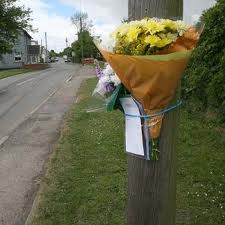
But yesterday, first day of Term 4, and in all my excitement, I went back to the school where I teach music part time, excited to see my students and teaching them all the great things I have planned for them – only to be whisked into the staffroom and briefed by social workers on “how to deal with a death in school.” I looked around confused before the assistant principal came up to me and whispered in my ear that one of our prep kids was hit by a truck during the holidays in front of his mum and older sister (who is in Grade 2).

The AP told me the name of the student but it went past my head. I asked for the name again but it didn’t ring a bell. AP tried to describe him: “little blonde one”. There are so many “little blonde ones”. Which one? When I realized I did not recognize the name I sighed in relief, but only for a second. Because then I shuddered at the thought of not knowing the student. How on earth could I NOT know? I kicked myself for not learning the names of all my students soon enough. I felt an overwhelming sense of guilt and couldn’t wait to break away from the staff room to locate the class list and photo so I can put a face to the name of the student. I have 14 music classes and about 20-28 in each class, so yes, I still don’t know the names of all the students! As the social worker was briefing us, I went through the faces of all my prep kids, trying in vain to remember Rex. Rex, the name is very familiar but I couldn’t put a face to it!

When the briefing was over, I spoke to the school counselor who gave me a bit more details about the accident, and pointed to me a picture of Rex. There he was, the little blonde one. Immediately I knew who he was! He was in my Top 5 students in the final class before the holidays! Sweet smiling Rex. Suddenly the memories overwhelmed me and I felt everything from grief to guilt. Grief because I had lost a student through the worst circumstance, and grief because I wished we could have spent more time together – or that I would have remembered him! It pains me that I couldn’t remember him in the first instant! Why didn’t God give us more time together? Why was he taken away so suddenly? Why hadn’t I paid more attention to him? Why couldn’t I remember him?!

It was awful. I wanted to cry but I couldn’t because my first class came in. I tried my best to hide my tears and answered questions about Rex as honest as I could without breaking down. I had never been in such a situation before, and I found it extremely difficult replying to students who have questions such as : “Why did it happen?” and “Where is he now?”

I know for a fact, because of my faith, that God is taking care of him, that things happen for a reason and that God is in control. But I cannot say this to my kids as I am not teaching in a Catholic school and I don’t want to cross any lines or upset any parents. How can I answer questions like these? I ended up avoiding them as much as I could!

The last class yesterday was Rex’s class, and I knew the moment the students came in that they were itching to tell me about Rex, about why he wasn’t in class and why he was never going to come back. But I went straight into my lesson, avoiding any questions, claiming I do not have time and that we had a lot to get through.

I had a lot to get through… a lot of emotions to get through. At lunch time I stumbled across Rex’s music book, I noticed his work for the first time. 2 weeks ago it was just a book belonging to one of the preps, just a book among the statistics, with scribbly drawings and terrible colouring techniques. Now, it is the precious work of a child no longer here on earth, and the horrifying truth that the child has had only 5 years in this world… not enough to learn how to colour in the lines, not enough to learn to write his name properly… not enough! Not enough!

I don’t know if I am angry. I am definitely not bitter. I know these things happen, and tragedies occur throughout the world. Who am I to complain and pound heaven for an answer? But the fact that it happened, TO ME, at this time has made me realize immensely how precious life is, how precious teaching is, and how fragile we human beings are.

While singing with the Preps yesterday I found myself staring into each student’s eyes, trying to take in as much of them as possible, drinking in their personalities and hoping that they will all come back again next week. I do not want anyone else to leave! I do not want any of them to get hurt!

But I cannot save them all… and I did not save Rex. Rex is gone. My class of 21 preps is now down to 20. He was hit by a truck, and died at the scene. Rex, who only 2 weeks ago I had given a piece of chocolate cake for making it into the Top 5 because he sat patiently for his book while others were shouting for it. Little blonde Rex.

I find myself looking towards the right everytime I pass his classroom to go to the staffroom or toilets. I keep looking because I still see his photo in the class wall, on the class door, on his table, his book shelf, his bag shelf, his music book…

I am only in my first year of teaching, and already I have had to deal with a student’s death. I wonder how much more will come? How much more can I take?

I was wondering if you have experienced something similar?  If so, what advice do you have for this teacher to help her get through this emotionally traumatic experience.

Coloring Book of the 9/11 Tragedy is in Bad Taste

August 26, 2011

I have no problem with children learning about the 9/11 tragedy and I think it is appropriate to commemorate those that perished in terrorist attacks on that fateful day.  What I don’t condone is the idea that kids coloring in the burning twin towers is a good way of imparting such information.  To me, this is disrespectful to children and creates unhelpful tensions.

As Bruce Felps writes:

Titled “We Shall Never Forget 9/11 ‘The Kids’ Book of Freedom,’ ” the book engages kids to color in a depiction of the flaming, smoking, about-to-collapse World Trade Center towers. It also includes an image of a Navy SEAL firing on Osama bin Laden, complete with a bullet in mid-flight. (See that page here)

So, what color is tragedy? What shade of cowardice hides behind a woman when facing his certain death?

The book looks to be intended for kids about 6, 7, 8 years old … too much for that age or too ageless a lesson to delay?

The book also contains narrative. In a press release, publisher Wayne Bell of Really Big Coloring Books Inc. said it “was created with honesty, integrity, reverence, respect and does not shy away from the truth.”

One page, illustrating the immediate aftermath of the attacks, depicts what looks like a TV news anchor reporting that bin Laden was, indeed, the mastermind.

That page includes the line, “These attacks will change the way America deals with and views the Islamic and Muslim people around the world.” Shouldn’t that be “extremist Islamic terrorists” and not the religion and its adherents as a whole?

Helping Our Children Make Sense of Natural Disasters

March 16, 2011

Below is an article from Michael Grose’s Insight on how we can help our children cope with Natural disasters. After last week’s catastrophe in Japan, the earthquake in Christchurch and the floods in Australia, I thought it was timely to make educators aware of it.

Help your children make sense of natural disasters

By Michael Grose

The Queensland floods and the Victorian bushfires continue to wreak incredible havoc on so many people’s lives and will no doubt leave an indelible imprint on our collective psyches. These two natural disasters will be brought into our living rooms via the media over the coming days and weeks.

As adults we all want our children to live carefree lives and keep them from the pain and even horror of tragedies such as natural disasters. In reality we can’t do this.

So what is a parent, teacher, or other caring adult to do when the natural disasters fills the airwaves and the consciousness of society? Here are some ideas:

  1. Reassure children that they are safe. The consistency of the images can be frightening for young children who don’t understand the notion of distance and have difficulty distinguishing between reality and fiction. Let them know that while this event is indeed happening it will not affect them directly.
  2. Be available and ‘askable’. Let kids know that it is okay to talk about the unpleasant events. Listen to what they think and feel. By listening, you can find out if they have misunderstandings, and you can learn more about the support that they need. You do not need to explain more than they are ready to hear, but be willing to answer their questions.
  3. Help children process what they see and hear, particularly through television. Children are good observers but can be poor interpreters of events that are out of their level of understanding. Sit with them. Ask them questions to ascertain their understanding.
  4. Support children’s concerns for others. They may have genuine concerns for the suffering that will occur and they may need an outlet for those concerns. It is heart-warming to see this empathy in children for the concerns of others.
  5. Let them explore feelings beyond fear. Many children may feel sad or even angry with these events so let them express the full range of emotions. They may feel sadder for the loss of wildlife, than for loss of human life, which is impersonal for them.
  6. Help children and young people find a legitimate course of action if they wish. Action is a great antidote to stress and anxiety so finding simple ways to help, including donating some pocket money can assist kids to cope and teaches them to contribute.
  7. Avoid keeping the television on all the time. The visual nature of the media means that images are repeated over and over, which can be both distressing to some and desensitizing to others.
  8. Be aware of your own actions. Children will take their cues from you and if they see you focusing on it in an unhealthy way then they will focus on it too. Let them know that it is happening but it should not dominate their lives.
  9. Take action yourself. Children who know their parents, teachers, or other significant caregivers are working to make a difference feel hope. They feel safer and more positive about the future. So do something. It will make you feel more hopeful, too. And hope is one of the most valuable gifts we can give children and ourselves.

Children’s worlds can be affected in ways that we can’t even conceive of so adults need to be both sensitive to children’s needs and mindful of what they say and how they act in front of children.

In difficult times, it is worth remembering what adults and children need most are each other.