Archive for the ‘Childhood Obesity’ Category

Law Requiring Schools to Weigh Students Must Be Repealed

October 24, 2011

You have got to be kidding me!  How can so-called intelligent adults pass a law so downright cruel?  Sometimes I think adults take advantage of the resilience of children.  They think they can impose great humiliation on poor, naive children, without any long-term cost.

Well I have news for you – children, like adults, don’t like being made to feel ugly, different or unworthy.  So why on earth would you pass a law that mandates schools to weigh children so that their weight can be compared with others?

A state law requiring schools to measure a child’s height and weight to find out how they stack up against their peers has generated plenty of controversy, but not a lot of local participation.

School officials say the law’s aim to combat childhood obesity is a worthy cause, but its approach is questionable.

The law measures body mass index, which is calculated from height and weight and given as a percentile. It’s generally a snapshot of a person’s overall body fat, but many argue it doesn’t take into account individual body types or other health risks.

Schools are required to take those measurements for students in kindergarten, third, fifth and ninth grades, then report that data to the Ohio Department of Health and mail the results to parents.

State education officials say similar health screenings, such as hearing and vision tests, have been done for many years with the results kept private.

What if the law was to include Ohio politicians?  What if they were forced to step on the scale in front of their peers and were measured for all to see?

Yes, privacy might be assured, but children aren’t stupid.  They know why they are being measured, and the humiliation of the procedure will not be lost on the overweight.

This plan is doomed to failure.

My wish, as idealistic as it sounds, is to make our children comfortable with who they are, regardless of their weight.  Whilst I strongly advocate educating children about healthy eating choices and encouraging active lifestyles, I am even more concerned about the inner wellbeing of the child.  To me, the tragedy is not that there are obese children, but that there are children who feel unworthy, ugly and hopeless because of their weight.

It’s time to get rid of the scales and let our children know that their worth is not the sum total of what they weigh, but rather, who they are and how they treat others.

Tips for Parents on Helping Their Children Overcome Obesity

September 19, 2011

It was great to read a list of suggestions by Joanna Dolgoff M.D. with suggestions for parents with obese children.  It was a welcome departure from the “name, shame and threaten” methods being employed by some sections of society on parents who clearly require support.

These suggestions are steeped in common sense and encourage a positive approach:

What Parents Can Do to Help

Be supportive: Overweight children need support, acceptance and encouragement from their parents. Children’s feelings about themselves often are based on their parents’ feelings about them. It is also important to talk to your children about weight, allowing them to share their concerns with you.

Don’t use food as a punishment or reward: Withholding food as a punishment may lead children to worry that they will not get enough food which may result in overeating. When foods, such as sweets, are used as a reward, children may assume that these foods are better or more valuable than other foods. For example, telling children that they will get dessert if they eat all of their vegetables sends the wrong message about vegetables.

Set a good example: Children are good learners and they learn best by example. Set a good example for your kids by eating a variety of foods and being physically active. Involve children in food shopping and preparing. Children may be more willing to eat or try foods that they help prepare.

Teach healthy habits: Teaching healthy eating practices early will help children approach eating with the right attitude: Food should be enjoyed and is necessary for growth, development and essential energy. Guide their choices rather than dictating foods. This will help your children learn how to make healthy food choices. Encourage your child to eat slowly. A child can detect hunger and fullness better when eating slowly.

Cut down on some fats: Reducing fat is a good way to cut calories without depriving your child of nutrients. Simple ways to cut the fat in your family’s diet include eating low-fat or non-fat dairy products, poultry without skin and lean meats, and low-fat or fat-free breads and cereals. However, make sure not to cut out healthy sources of fat such as walnuts, almonds and avocado.

Healthy snacking: You should make snacks as nutritious as possible, without depriving your child of occasional chips or cookies, especially at parties or other social events. Healthy snacks include: applesauce, carrot sticks with hummus, peanut butter on apples, yogurt, dried fruit, fruit juice popsicles, low fat cheese etc.

Increase your physical activity: Regular physical activity, combined with healthy eating habits, is the most efficient and healthful way to control your weight. Some simple ways to increase your family’s physical activity include the following: Plan family activities like walking, dancing, biking or swimming.

For example, schedule a walk with your family after dinner instead of watching TV or playing video games. Overweight children may feel uncomfortable about participating in certain activities so it is important to help your child find physical activities that they enjoy and that aren’t embarrassing or too difficult.

Instead of judging parents with obese children negatively, I feel it is important to encourage, educate and support parents.  Dr. Dologoff’s list is a reminder that the answers lie with positive change and the adcocation of healthier living.

Children To Be Taken Away From Parents Because of Their Weight

September 5, 2011

There is no doubt that social workers are unheralded and deserve much credit for the work that they do.  But having said that, I can’t hide my displeasure at their willingness to break up families in the name of raising thinner kids.

It bothers me that people think they know what is best for someone elses children.  It disturbs me that people can justify taking children from their flawed but loving parents and subject them to foster homes and estrangement from their flesh and blood all in the name of helping them to lose weight.

What about what the children want?  Has it ever occurred to them that some children are prepared to deal with the consequences of being severely overweight if it means they can remain with their parents?  Since when did physically healthy foster kids have it much better than obese kids enjoying the closeness of their parents and siblings?

And don’t tell me that parents that raise obese kids are ‘cruel’.  Yes, they have made poor parental decisions and yes their poor decisions may have all kinds of serious consequences for their kids.  But parenting, like weight loss, is not an easy job.  It is unfair to taint parents as ‘cruel’ and ‘unfit to parent’ just because they are not succeeding in breaking bad habits.  No parents wants to see their child suffer.  Some just need a lot more support than others to break bad habits.

Four obese children are on the brink of being permanently removed from their family by social workers after their parents failed to bring their weight under control.

In the first case of its kind, their mother and father now face what they call the ‘unbearable’ likelihood of never seeing them again.

Their three daughters, aged 11, seven and one, and five-year-old son, will either be ‘fostered without contact’ or adopted.

Either way, the family’s only hope of being reunited will be if the children attempt to track down their parents when they become adults.

In an emotional interview, the 42-year-old mother said: ‘We might not be the perfect parents, but we love our children with all our hearts. To face a future where we will never see them again is unbearable.

‘They picked on us because of our size to start with and they just haven’t let go, despite the fact we’ve done everything to lose weight and meet their demands. We’re going to fight this to the bitter end. It feels like even prisoners have more human rights than we do.’

The bullying and stand over tactics by the social workers and courts were deplorable.  Making them send their kids to dance and sport lessons is not sensible at all.  Why wouldn’t the courts give the children a say about whether or not they wanted to go to dance and football?  Ask a young girl suffering from obesity whether or not she would take up dancing, she would invariably say, “Over my dead body.”  Clocking in and out to satisfy court imposed curfews and having social workers stand in corners taking notes at dinnertime just added to the lunacy.

Society is too harsh on parents.  Parenting is a difficult job.  Instead of judging or punishing parents for bad choices, would it be too much trouble to offer real support and encouragement?  Has this couple ever once been offered free appointments with dieticians or councillors?
Soon we are going to get to the stage where it is socially acceptable to classify any parent with even a slightly overweight child as a reckless and sub-standard parent.
Outrageous!

Diet Book For Children Is a Concern

August 28, 2011

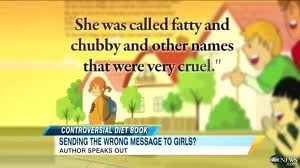
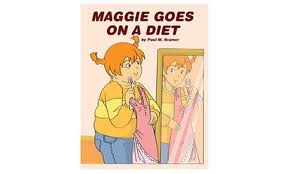
There are two significant problems with a book like Maggie Goes on a Diet, which is pitched at pre-teens and preaches dieting as the best form of weight loss.

The first problem is that young children should not be dieting.  On the child related health website, Kidshealth.org, it states that, “Diets that don’t include a variety of nutritious foods, or have too few calories, can be dangerous for kids.”

My second concern is the type of messages we send kids about weight.  At a time when these young children are trying to work out who they are and trying to find a sense of self it is terribly destructive to focus on their weight.  Children who need to lose weight don’t need a novel to tell them that.  They need a support network of loving parents and dietitians who will be able to consider the child’s virtues as well as their struggles.

As much as childhood obesity is a concern, in my view children lacking in confidence is of far greater concern.  It is not sufficient to tear down a childs self-esteem by recommending diets and drawing attention to their weight.  To be motivated to do anything positive one has to be in a positive mindframe.  You have to believe in yourself and think of yourself as worthy of the breakthrough.

I too have written a book (albeit not yet published) that focusses on an obese child.  But I have taken a very different approach.  My child learns not to obsess about his weight and see the bigger picture.  He is not going to get thin tomorrow, but in trying to improve his health he will reflect on the things he has learnt about himself over the course of the journey.

I don’t think the carrot stick for potato chip packet works or is very responsible.

Diet Book Targets 6-12 Year-Olds!

August 18, 2011


You don’t need me to tell you that it is unhealthy for preteens to target.  I would go even further than that and say that it’s unhealthy for preteens to be fixated on their weight to begin with.

Writing a book advocating child dieting is irresponsible and potentially destructive:

A book aimed at helping young children lose weight has outraged an eating disorder help group.

Maggie Goes on a Diet, aimed at 6 to 12 year olds, tells the story of an overweight girl who goes on a diet and goes on to become the school soccer star.

Its Hawaiian publishers pitch the book on their website as an inspirational tale for kids.

“Maggie has so much potential that has been hiding under her extra weight,” the website says.

Deb Schwarz, manager of Eating Difficulties Education Network (EDEN), a New Zealand not-for-profit organisation, says the book could have the opposite effect, and encourage eating disorders among children.

“Research shows poor body image is associated with depression, bullying, eating disorders, risk taking behaviours, and reduced physical activity. Messages like those in the book promote body dissatisfaction.”

She says there are concerns that dieting messages increase disordered eating in children.

This is another sad situation of literature published for the purpose of stirring controversy and making money at the expense of the vulnerable.

Not good enough!

Losing Custody of Your Kids Because of Obesity is a Disgusting Thought

July 13, 2011

Shame on you David Ludwig for making a conclusion that belies all common sense and sensitivity.  How can you justify the idea of taking children away from their parents because of their obesity?  How is such a move in the best interest of the child?

Should parents lose custody of their kids if they get too fat?

A commentary in Wednesday’s Journal of the American Medical Association says yes.

Harvard obesity specialist David Ludwig says putting children in temporary foster care can be more ethical than providing weight-loss surgery – but only in extreme cases.

Ludwig says the point is not to punish the parents – but to act in the child’s best interest, and provide care that the parents do not or cannot provide.

Ludwig says the goal is to get those kids back to their parents as soon as possible – and for parents to learn the proper ways to prevent future obesity.

There have previous calls for government intervention, in cases where parents either neglect or refuse proper efforts to control a child’s extreme weight.

A doctor from London cited a Wisconsin case from 2009 in which a 440-pound 16-year-old almost died at UW Hospital in Madison.

Doctors had talked about reporting the parents for neglect – but they didn’t have to, because the girl later lost 100 pounds with her family’s help.

The Journal article comes a week after an annual study reported that 27-percent of Wisconsin adults are obese.

This method will further punish a child with enough to contend with as it is.  No parent wants their child to be obese.  Yes, some do more than others to avoid obesity, but that doesn’t mean that they are not loving and caring parents.  Many of them, as reported, suffer from obesity themselves.

As a society we must learn to support rather than threaten.  The child’s welfare does not rely on just a loss of weight but also the continued love and support from their parents.  We must not fingerpoint or punish parents for obesity.  It won’t help one bit.  Instead we must offer as much support, education and guidance as we can to ensure that families are able to pass up cheap calorie laden products for the more expensive, yet far more healthy alternatives.


Kids and Obesity: We Have Reached Crisis Point

July 4, 2011

The figures being released about the rate of childhood obesity is quite alarming.  To read that half a million British children have liver disease makes me worry very much about what a difficult state we are in and how far we have to go to reverse this unfortunate trend.

Doctors say obesity levels are now so high that children are commonly suffering signs of disease more commonly associated with alcohol abuse, meaning many will go on to develop cirrhosis, with some requiring liver transplants.

Government estimates say around 500,000 children below the age of 15 are suffering from “non alcoholic liver disease” which is caused by a build-up of fat within liver cells, which stops the organ functioning properly.

The condition increases the risks of heart disease, strokes and type 2 diabetes, and can lead to cirrhosis – scarring of the liver – which is often not detected until it is too late.

Britain’s most senior liver expert said the country was now facing a timebomb, with thousands of lives already at risk, and the numbers of children suffering from the disease projected to “rocket” further in line with rising obesity levels.

Prof Martin Lombard, the Department of Health’s national clinical director for liver disease warned that the disease was rarely detected until it had caused damage.

He said: “Liver disease is a silent killer, which is putting the lives of thousands of our children at risk. We do not want to see the next generation dying young from a condition that can be prevented.

“We know that with childhood obesity on the rise we can expect more children to be at risk of fatty liver disease in the near future.”

Government figures show 30 per cent of children aged between 2 and 15 are now overweight or obese – a figure which is projected to double by 2050.

Prof Lombard said he was concerned that children suffering from fatty liver disease were at particular risk if they started experimenting with alcohol in teenage years. He said even modest amounts of alcohol could worsen the condition.

There is no medical treatment for the disease, but the extent of it can be reduced by weightloss and improvements in diet.

Introducing the Candy Diet!

June 30, 2011

Feeling guilty about the amount of candy you allow your children to eat?  Not anymore.  If anything, you aren’t feeding them enough!

Or, at least that’s what the research seems to suggest ….

Indulging a sweet tooth might not be anyone’s idea of a good weight-loss strategy. But in jaw-dropping new research, scientists say they’ve found something even more likely to be associated with unwanted weight gain in children and adolescents than eating candy:

Not eating candy.

For the study, published in Food & Nutrition Research, researchers at Louisiana State University tracked the health of more than 11,000 youngsters between the ages of two and 18 from 1999 to 2004. They found that children who ate sweets were 22 percent less likely to be overweight or obese than kids who shunned sweets. Adolescents? Those who ate candy were 26 percent less likely to be overweight or obese than their non-candy-eating counterparts.

And that wasn’t the only surprising finding. Researchers also found that the blood of candy-eating kids had lower levels of C-reactive protein. That’s a marker of inflammation in the body and a risk factor for cardiovascular disease and other chronic illnesses.

Who funds this research?  Could somebody please do a study that links the watching of televised sport to greater physical health?  I could do with some scientific evidence to persuade my wife that I’m not wasting my time

Ten Rules for Getting Kids Fit

June 20, 2011

I found a useful article that gives ten rules for keeping your kid active.  The ten rules are as follows:

Rule #1: Don’t Rely on Organized Sports

Rule #2: Keep Play Fun

Rule #3: Turn off the TV…

Rule #4: …Unless You’re Playing Wii

Rule #5: Never Reward Kids with Food

Rule #6: Instruct by Showing, Not Telling

Rule #7: Know When to Praise

Rule #8: Make a Play Date with Friends

Rule #9: But Don’t Compare Your Kids with Others

Rule #10: Give Them Your Blessing

For an explanation of what each rule means, click on the link at the top of the post.


Our Kids Must Be More Active

May 4, 2011

I am not that old, yet I know that my experiences growing up in many ways are worlds apart from the current experiences of our youth.  When I was growing up we used to regularly ride our bike, play sporting games outside and sign up for after-school swimming or gymnastics classes.

I’m afraid those days are long gone:

One in six children cannot swim,  a survey has revealed.

It also found one in ten had not learnt to ride a bicycle and  almost a quarter had never run 400 metres.

The study found British children were more than twice as likely to spend their free time watching television (79 per cent) than playing sport (34 per cent).

Children were also more likely to surf the internet (56 per cent), chat on social-networking websites (45 per cent) and play video games (43 per cent) than take part in sports.

The study of 1,500 children aged six to 15 reveals a generation turning its back on sport.

‘This is another sad reflection on children today,’ said Tam Fry of the Child Growth Foundation.

A study found British children were more than twice as likely to spend their free time watching television

‘We have a generation of children being fed the wrong food, which makes them fat, and fewer and fewer get the exercise they need to burn it off. It becomes a vicious cycle.

‘We need to teach children from a young age that they have to exercise and take part in sport to stay a healthy weight.’

He added that there are often not enough places for children to play and ride their bikes because there are so many cars on the road.

The survey, which reveals a generation turning their backs on sport, was described as ‘staggering’ by the head of the British Triathlon.

Even for those who could swim and ride bikes, just a third (34 per cent) had swum the length of a pool and half (46 per cent) had ridden their bikes in the past week.

In contrast, nearly three quarters (73 per cent) had found the time to play a video game in the past week.

A further 15 per cent of the children polled said they had never played sport with their parents.

The study was commissioned as part of a series of mini-triathlon events being held this summer by Tata Steel in areas including steel regions such as Scunthorpe, Corby, Teesside, Rotherham, Swansea and Shotton in North Wales.

A third of those questioned (33 per cent) said they did not own a bike, compared with three quarters (77 per cent) who owned a games console.

Remember when the fad at school would fluctuate between down ball, 4 square, hop scotch, hula hooping and elastics?  Most girls growing up now would never have associated elastic with a game.  I find this so sad.  The future ramifications of bringing up a generation of couch potatoes is quite frightening.