Archive for the ‘Child Development’ Category

Too Many Struggling Students Lack Support

June 20, 2011

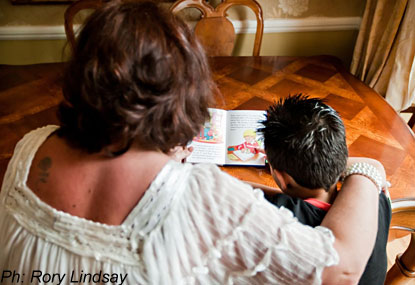
I read a disturbing article about a young boy who struggles with dyslexia, and the trauma his mother has gone through as his school makes little to no effort to assist him.  It is a difficult article for a teacher to read, but a very important one.  There are too many students that fall between the cracks.  Too many that don’t get the attention and support that they so desperately need.  As teachers, we must fight for the social, emotional and academic wellbeing of all our students, whilst ensuring that they are all, without exception, getting the care and attention they need.

Below is an excerpt of the article.  I truly recommend that you read the whole story,

David is an artistically gifted boy with a photographic memory. The 10-year-old’s dining-room table is full of intricately designed Lego battleships, his art displays such originality that his teacher calls him “the next Picasso”, and he has an extraordinary ability to recall facts from the History Channel documentaries he watches on TV.

“The other day,” his 41-year-old mother Margaret recalled, “we were driving along and he said, ‘mummy, you were born in the year the first man landed on the moon’.”

But there is one big problem with David that overshadows his life. He cannot read. He has been assessed as “severely dyslexic” and “having the reading age of a child aged four years and four months”. His schooling has been a disaster and according to educational psychologist reports seen by the Standard, he has progressed “just one month in five years”.

You might assume that David attends a failing, inner-city school, but you would be wrong. His south London state primary is rated “good” by Ofsted, attended almost exclusively by white British-born pupils, and is located in a street of £3million houses. He is also well behaved.

Yet David, his mother said, has been “catastrophically let down by everyone: by his teachers, by the school and by the council”, all of whom failed to give him the specialised help he needs.

Margaret said: “At school the other kids call him ‘odd’ and ‘weirdo’ and he often comes home crying. He is still reading flashcards and has not progressed beyond words like ‘cat’ and ‘dog’. He has no real friends – how can he? He doesn’t get their jokes or their games. To the other kids, he is a misfit who doesn’t understand anything that’s going on because he can’t read.”

“My son was nine and he still couldn’t read a word,” said Margaret. “What were they waiting for? Why didn’t they do something?” 

Finally the school arranged for David to have some specialist teaching – three hours a week at a nearby literacy centre at a cost to the school of £1,000 a term – as well as 15 hours a week one-on-one with the teacher assistant. For the first time he made a glimmer of progress, improving by “one month in a year”. Margaret says the teacher assistant and the literacy centre are not experts in teaching severely dyslexic children.

There is a growing tendency to allow students to pass the year, regardless of their level of skill or maturity.  The reason for this is quite sensible.  Holding a child back can have strong emotional repercussions.  But because such a system exists, not enough questions are asked of students who are languishing.

I am not suggesting for a second that young David should have been kept down.  I am simply suggesting that since teachers no longer have to explain why a child is ready to be promoted, there is less incentive to put the time and energy into children like David.

It is time that we looked into the issue of students being promoted without the basic skills, and ensure that teachers are made accountable for the progress of their students.  David was allowed to fall into the gaps and starved of the support he needed because there isn’t enough pressure on teachers to reach benchmarks.

The story of David breaks my heart because he is a victim to poor teaching, an inept education system and a misnomer that dyslexia renders one academically incapable.


Lazy Parents Blamed for Kids Falling Behind at School

June 19, 2011

It is a gross simplification to blame parents for their children’s slow academic development.  Last time I looked, a large part of a child’s day is spent at school.  It is simply unfair to blame parents when the failings of the education system is so apparent.  Blame should be shared between all key stakeholders.

It is also unfair to blame parents as lazy.  Often these same parents that don’t play enough games with their children work multiple jobs and long hours to put their children into good schools.  I play games and practice reading with my daughter every night, but by the time I sit down with her she is exhausted from a long day at school.  If I can’t rely on her school in keeping up their end of the bargain, then even my best efforts may not be enough.

Whilst I do not in any way condone putting a child in front of a television, I believe that the school system should be able to make up any developmental lag as a result of misspent toddler time.  If the school system can’t help overturn a 4-year old’s slow development with 7 hours a day of school instruction, then it says a lot about the failings of our school system.

Neuro-psychologist, Sally Goddard Blythe, disagrees:

LAZY parenting is resulting in children starting school developmentally disadvantaged because they watch too much TV instead of playing and being read to.

A neuro-psychologist in the UK, Sally Goddard Blythe, researched the link between children who missed out on simple childhood activities and those who started school with learning problems.

She found many toddlers were watching 4.5 hours of TV a day instead of playing, and went on to start school with poor emotional development and motor skills.

Dr Marc de Rosnay, an early childhood development expert from the University of Sydney’s school of psychology, said children were put in front of a television screen too often.

“We are living in a world where there are lots of opportunities for a child to be engaged with no one for an extended time,” he said. “There is some decent research that shows that motor skills develop when kids are out and about and experiencing the physical world … as a nation (we now have) more children growing up with low levels of activity.

“There are government recommendations about how much TV kids should be watching, and it’s not much.”

While he stopped short of saying that parents who did not read to their children or interact with them were “neglectful”, Dr de Rosnay said there were developmental consequences for children who missed out on that nurturing.

“It’s fair to say that children who miss out on interacting with their parents, peers and siblings will find themselves at a disadvantage compared with children who have had that interaction,” he said.

But he added that using play to develop a bond and trust between parents and child was more important than teaching a child to read at a young age.

“We live in a world now where children are meant to be numerate and have the first steps of letter recognition before they start kindergarten,” he said. “We used to live in a world where kindergarten was the place that was done.”

Dr de Rosnay said there was no evidence that if a child started school unable to read and write it would affect their long-term learning.

Ms Goddard Blythe found that almost half of all UK five-year-olds who started school only had the motor skills of a baby, including the inability to hold a pencil. The cause, she said, was because parents had not spent enough time playing with their children or letting them play with others.

Ms Goddard-Blythe also argued that when children missed out on being read fairy tales, it impacted on their ability to understand “moral behaviour” and how to deal with emotions.

Instead of putting all the blame on parents, the educational system should get with reality.  They should prepare for the fact that students may not have motor skills that enable them to properly grip a pencil etc.  Instead of complaining that students show a lack of understanding of proper moral behaviour due to a lack of exposure to fairy tales, ensure that fairy tales is part of the early years curriculum.

Anyone that thinks a 5-year old can’t radically improve in motor skills and the ability to make moral choices has never been in a classroom.

Parents should always do their best to help their kids.  But they are not the only stakeholders in the education of our children.

Kids Fined $500 for Lemonade Stand

June 19, 2011

Kids get criticised so much nowadays for not showing enough initiative, taking their luxuries for granted and being selfish.  You’d think that when kids show some drive and vision they’d be applauded for it.

Well, that’s not always the case I’m afraid.

When a group of children get together to raise money for pediatric cancer research, only to have their lemonade stand shut-down and  slapped with a $500 fine, you know that there is something very wrong with the message we send kids.

After life dealt these kids a $500 fine, they kept making lemonade.

Four 10-year-olds who set up a lemonade stand a front yard near Congressional Country Club golf course, site of this year’s U.S. Open, were warned by Montgomery County officials to shut down their lemonade stand on Thursday.

On Friday, in a compromise, parents say the county agreed to let the stand stay open, just a few feet away from its original location.

Neighborhood kids set up a pop-up tent at the corner of Country Club Drive and Persimmon Tree Road.  Thirsty golf fans had a chance to buy lemonade or other cold drinks for $2 a pop.  The kids and their parents said that half the proceeds would go to a children’s charity.

The Montgomery County Department of Permitting said they were obstructing pedestrian and vehicle traffic, and wrote up the lemonade stand for operating without a license.  The offense carries a $500 fine.

“What happened to the entrepreneurial spirit of this country,” one angry parent told NBC4’s John Schriffen on Thursday, “this is the American dream.”

Parents resolved not to move the stand, and to donate 100 percent of the sales to charity.

On Friday, parents said the county government relented, and allowed the stand to stay open. In a compromise, the tent got moved 100 feet down the road, away from the intersection.

“We’re really happy today because the kids are thrilled to be back in business,” said one of the mothers, “and the county said last night that they would not in their words ‘hassle the kids’ this weekend if they would just move their lemonade stand 100 feet down still on private property.”

The kids and their parents planned on giving the money to a race to benefit pediatric cancer research.

Suer a media backlash caused the fine to be waived and a compromise to be hatched up, but there shouldn’t have been a fine or a compromise.  Adults must encourage kids to do things for others and get them to think beyond their own metrialistic vices.  But when children do something that is selfless and sincere, it sends such a terrible message to try and undermine or interfere with their passion for wanting to make a real difference.

Why be content with the next generation simply following in our footsteps, when they are capable of so much more?  Let’s support and encourage them to lean and improve upon both our strengths and weaknesses.

Are We Setting Up Our Children?

June 10, 2011

I personally don’t agree with closing down establishments that offer facials to kids under 13, as I feel that while it may be in poor taste, it is hardly outrageous.

What I do believe is that there far too much focus put on appearance. We are setting up our kids for failure if we continue to peddle the lie that:

a. You are happy if you look a certain way

b. You are ugly if you don’t look a certain way

c. That appearance is more important than character and integrity.

Still, as long as we allow our kids to stop acting their age and instead obsess about their appearance, cases like this will emerge:

Do children need a facial?

That question is actually being considered by some parents in Britain, where a salon that caters exclusively to children recently opened.

The salon, which opened earlier this week in the county of Essex, Britain’s answer to Jersey Shore, offers services such as manicures, pedicures, facials and hair styling to children under 13. The salon, called Trendy Monkeys also offers “princess parties” for groups of children, which comes with pink limousine service to and from the salon.

News of the salon has created an uproar in Britain, where child psychologists and advocates say that type of business promotes the sexualization of young girls and robs them of their childhood.

Owner Michelle Devine has defended her business, saying that daughters want to be like their mothers and that she is simply offering a service that many want.

“This shop will be specifically aimed at children and will cater to their need to feel good about themselves and take pride in their appearance in a fun-filled environment,” Ms. Devine told The Independent.

Critics disagree. A child protection consultant named Shy Keenan told the Daily Mail, “This is outrageous – it is giving children a complex about the way they look from the age of one.”

She might be onto something. Cosmetics companies and beauty businesses looking to widen their customer base have been increasingly courting the I-still-have-baby-teeth group in recent years.

A 2008 New York Times article detailed how a growing number of salons aimed at children as young as five were popping up, while retail giant Walmart came under fire earlier this year after news emerged it planned to sell anti-aging skin care products aimed at children 8 to 12, according to CBS local news in Pittsburgh.

While many parents may see nothing wrong with letting their child play dress-up or try on lipstick at home, a growing number of critics argue that marketing salon services and cosmetics to children is just plain wrong.

Whether that has any impact on business is another story. The business’ Facebook page (where, incidentally, photos of children who have visited the salon are accessible to anyone with an Internet connection) posted a message on Thursday expressing thanks for all of the attention it has received, apparently in belief that any publicity is good publicity.

You hear adults defend this practice by saying, “I spend a great deal of time focussing on my appearance, it’s natural.”

My response is, “How is that working for you?”

Do we want our kids to be spending inordinate amounts of time at salons, in front of the mirror and on the scales?  Do we want their appearance to guide their self-worth?  Do we want them to spend more time working out what to wear than how they can help others?

Is it not possible that we are setting up our children to take on the mindless anxieties that have so deeply tarnished our self-worth and affected our capacity to feel good about who we are and what we have achieved?

Kids Adapt to Technology While Adults Watch in Amazement

June 2, 2011

At a time when parents are often criticised for being over-protective and not exposing their kids to taking on challenges, it is amazing to see how quickly young children adapt to new technologies.  The apprehension and indecision that adults have is non-existent.   These kids often make the remarkable transition from inhibited and anxious to confident risk takers as soon as the i-Pad comes out.

Take this revealing clip as a two-and-a-half  year old is presented with an i-Pad for the very first time.  Watch how confidently she navigates the product and how quickly she learns to use its programs and features.

This shows us what kids are capable of, not only when it comes to technology, but in other spheres at all.  When engaged and stimulated, when they enjoy what they are doing, their behaviour becomes more positive and more inclined to take responsible risks.

The challenge of educators is to spend less time protecting students from making mistakes and disappointment, and more time investigating ways to educate through fun and engaging activities.  Confidence does not come about from someone protecting you or holding your hand through a challenge.

Confidence comes about when the challenge is enticing and the outcome is genuinely fulfilling.

Is There Any Benefit in Children Repeating a Year of School?

May 20, 2011

The findings of a study I came across recently claims that not only is there no benefit in making a student repeat a year level of school, but that it actually does some harm:

The study, by Deakin University’s Dr Helen McGrath, also found students who repeated a year were 20 to 50 per cent more likely to drop out, compared to similar students who progressed.

Dr McGrath reviewed dozens of studies by academics in Australia and the United States over the past 75 years comparing the outcomes for students with specific needs who were either held back or allowed to progress.

She said those studies failed to support the popular assumption among teachers and parents that repeating a year helped a student’s academic performance.

“There may be an occasional student who is the exception, but for most students providing them with more of what didn’t work for them the first time around is an exercise in futility,” she said.

“In fact, repeating a year confirms to a student that they have failed.

“They experience stress from being taller, larger and more physically mature than their younger classmates. They miss their friends who have moved on to the next year level.

“They also experience boredom from repeating similar tasks and assignments. Their self esteem drops. All of these factors ultimately lead many to drop out.”

There also appears to be no benefit in holding children back from starting school because they were not seen to be “school ready”.

“If a child is old enough to enter primary school, then holding them back and enrolling them in an additional year of preschool appears to provide no academic or social advantages and may in fact be detrimental in many cases,” she said.

Dr McGrath said simply promoting the struggling student to the next year level was not the answer either.

She said schools needed to consider more effective alternatives to support students who experienced social, behavioural or academic difficulties.

These included identifying problems at pre-school level and developing programs to address them, creating individual education plans, providing specialist support and adapting the curriculum to the needs of the student.

“Multi-age classrooms and peer tutoring also provide ways of supporting students who may be struggling,” she said.

Whilst I respect the findings of this study, the trend of promoting students for no other reason than to protect their self-esteem is quite challenging for teachers.  It means that the child is often far behind, is often missing basic skills and therefore cannot understand advanced concepts and sometimes disrupts the other students.  It means that there will be students that can’t read or write properly entering into high school.

How is that beneficial to the child?  How does being set vastly different work to ones classmates make that child feel any less of a failure?

Teachers will generally do anything they can to accelerate the divide between struggling students and the rest of the class.  The last thing they would ever want is for any of their students to suffer emotionally.

At the same time, the current closed mindedness of education experts when it comes to repeating year levels is a concern.  Surely, at some point, the child has a better chance repeating a year than they do being promoted on the back of under developed skills?

I am in no way an advocate for making children repeat year levels.  But I am also mindful that gaps can grow, and the result of a skills divide in the classroom can have a lasting effect on both class and struggling student.

I suppose it just goes to show the importance of good teaching in the early years, alertness in spotting any learning problems or difficulties and a well run and resourced Special Education/Remedial Education department.


When Do Kids Begin Forming Memories?

May 13, 2011

I stumbled across a fascinating article about when children begin forming memories:

New research challenges the notion that very young children do not form memories, finding that they do but that the memories often fade over time.

Most adults remember little before their third or fourth birthdays, and the thinking has been that prior to this age children do not have the cognitive or language skills to process and store events as memories.

But psychology professor Carole Peterson, PhD, and colleagues from Canada’s Memorial University of Newfoundland confirmed in earlier research that this is not the case and that even very young children can recall past events.

Now they report that young children’s earliest memories tend to change over time, being replaced with “newer” earliest memories until around age 10. As this happens, memories occurring in the preschool years tend to be lost.

“As young children get older their first memories tend to get later and later, but around age 10 their memories crystallize,” Peterson tells WebMD.

Checking Children’s Memories

In an effort to better understand how children form memories, the researchers asked 140 kids between the ages of 4 and 13 to describe their earliest memories and then asked them to do the same thing two years later.

On both occasions, the children were also asked to estimate their age at the time of each memory, and parents were questioned to confirm that the events happened.

The researchers found that children between the ages of 4 and 7 during the first interview showed very little overlap between the memories they recalled as “first memories” during the first question session and those they remembered two years later.

“Even when we repeated what they had told us two years before, many of the younger children would tell us that it didn’t happen to them,” Peterson says.

Conversely, a third of the children who were age 10 to 13 during the first interview described the same earliest memory during the second interview. More than half of the memories they recalled were the same at both interviews.

The researchers are now studying why children remember certain events and not others.

Peterson says traumatic or highly stressful events made up only a small percentage of the earliest memories reported by children in the study.

Cultural Differences Influence Early Memory

Earlier research suggests that culture plays a big part in early memory.

When Peterson and colleagues compared early memories in groups of Canadian and Chinese children, they found that the Chinese children’s earliest memories tended to be a year or more later than the earliest memories of Canadian children.

Emory University child memory researcher Robyn Fivush, PhD, found the same thing in a study comparing Chinese and American children.

Fivush tells WebMD that Western children tend to have stronger early memories because their dialog with parents and other adults tends to be more autobiographical.

The first lasting memory I have is from when I was 4 years-old, which seems to be consistent with these findings. When was your first lasting memory?

Click on the link to read Experts Push for Kids to Start Driving at 12

Click on the link to read Study Reveals Children Aren’t Selfish After All

Click on the link to read Catering for Four-Year Old Transgendered Children

Click on the link to read What Happened to Honesty and Integrity?

Click on the link to read Kids Need Meaningful Relationships More than Mobile Phones


Our Kids Must Be More Active

May 4, 2011

I am not that old, yet I know that my experiences growing up in many ways are worlds apart from the current experiences of our youth.  When I was growing up we used to regularly ride our bike, play sporting games outside and sign up for after-school swimming or gymnastics classes.

I’m afraid those days are long gone:

One in six children cannot swim,  a survey has revealed.

It also found one in ten had not learnt to ride a bicycle and  almost a quarter had never run 400 metres.

The study found British children were more than twice as likely to spend their free time watching television (79 per cent) than playing sport (34 per cent).

Children were also more likely to surf the internet (56 per cent), chat on social-networking websites (45 per cent) and play video games (43 per cent) than take part in sports.

The study of 1,500 children aged six to 15 reveals a generation turning its back on sport.

‘This is another sad reflection on children today,’ said Tam Fry of the Child Growth Foundation.

A study found British children were more than twice as likely to spend their free time watching television

‘We have a generation of children being fed the wrong food, which makes them fat, and fewer and fewer get the exercise they need to burn it off. It becomes a vicious cycle.

‘We need to teach children from a young age that they have to exercise and take part in sport to stay a healthy weight.’

He added that there are often not enough places for children to play and ride their bikes because there are so many cars on the road.

The survey, which reveals a generation turning their backs on sport, was described as ‘staggering’ by the head of the British Triathlon.

Even for those who could swim and ride bikes, just a third (34 per cent) had swum the length of a pool and half (46 per cent) had ridden their bikes in the past week.

In contrast, nearly three quarters (73 per cent) had found the time to play a video game in the past week.

A further 15 per cent of the children polled said they had never played sport with their parents.

The study was commissioned as part of a series of mini-triathlon events being held this summer by Tata Steel in areas including steel regions such as Scunthorpe, Corby, Teesside, Rotherham, Swansea and Shotton in North Wales.

A third of those questioned (33 per cent) said they did not own a bike, compared with three quarters (77 per cent) who owned a games console.

Remember when the fad at school would fluctuate between down ball, 4 square, hop scotch, hula hooping and elastics?  Most girls growing up now would never have associated elastic with a game.  I find this so sad.  The future ramifications of bringing up a generation of couch potatoes is quite frightening.

How Do Teachers Answer Questions About Osama?

May 3, 2011

There is no easy way to respond to questions about the death of Osama Bin Laden.  Young kids are clearly confused as to why people are gaining satisfaction from a person’s death.  It is not for a teacher of young children to go in to great detail about Bin Laden and his evil monstrous ways.

The problem then becomes – what do we say?

While many of us are still processing last night’s late-breaking news that Osama bin Laden was killed by a team of Navy SEALs, many teachers had to stand up bright and early this morning in front of a classroom of curious youngsters to field their questions on everything from assassination to terrorism, with little preparation.

“One of my students walked in this morning and said: ‘Osama Bin Laden is dead … is that a good thing?’ Leave it to a six year old to put things in perspective,” a California teacher wrote on Facebook today.

BeAtrice Mazyck, who teaches 11th-grade U.S. history at Lee Central High School in Bishopville, South Carolina, tells The Lookout she had already finished her curriculum for the semester, so she was glad to have a big current event to talk about. Her students had studied the 9/11 attacks earlier in the year, and today were debating the effect bin Laden’s death would have on the U.S. war efforts.

“Some of them were wondering, ‘Is the war over? Can the soldiers come home now?’ Because we live like 20 minutes from the Shaw Air Force Base,” Mazyck said, adding that some of her students have parents who are in the military.

 In Cincinnati, one 9th grade teacher found she had to rehash for her students the events of September 11, 2001–when they were very young–for them to understand the context and significance of bin Laden’s killing.

“Most of these students were in kindergarten or first grade and have very little memory of September 11th,” Oak Hills High teacher Amanda Ruehlmann told the Cincinnati Enquirer. “Many have even less of an idea of how much their lives have been impacted by the results and effects of 9/11. So I’ve shown students information on how bin Laden came to be Public Enemy No. 1.”

Some older students wrote they were glad for a distraction from regular coursework. A senior at Glades Central High School in Florida joked on Facebook that Monday should be a school holiday, and that he planned to “bring up the Osama killing to distract all of my teachers from teaching today.”

Teachers aren’t the only ones getting questions. Parents around the country are going online to talk about how difficult it can be to explain to a child why so many people seem happy that a person has been killed.

“I got to explain to my 7 year old son this morning about the news that osama is dead…. he was instantly happy and in his words ….. so the war is over and daddy doesnt have to go away again? really, how do you answer that?” wrote Kate Harbison in Bangor, Maine. “I explained that we all love daddy, and would love for daddy to be home all the time, but considering all that is going on in this world, daddy and all the rest of the armed forces have alot still to do, and probably always will,” Harbison told The Lookout in a note.

“In explaining who Osama is this morning to my 6 year old, my 8 year old said ‘it’s like he is Voldemort.’ I’m so glad it is clear to them now,” a woman from Coppell, Texas wrote.

Have you been asked any questions about Osama by your students?  What did you say?  Do you have any advice for this slightly tongue-tied teacher who is looking for the right words which stubbornly refuse to come out?

Our Children Must be Taught About Society’s Lie

March 18, 2011

It’s time to correct the mistakes of my generation by ensuring that our children aren’t given the same misleading message.  For too long society has fed our young a big, destructive lie.  For too long that lie has been allowed to take over our lives, muddy our relationships and bring out the worst in people.

It’s time to revisit the following question and change the answer:

What is success?

  • Success in Not Dependant on Money – For too long we have been programmed to look at wealthy people as successful.  This is simply unfair.  No matter how you structure a democratic society, there will always be a very small percentage of wealthy people.  Are we saying that only 5% of our population are going to be successful?  Surely success is something obtainable to a broader group of people?  We have seen how easily wealthy people lose their wealth.  We have also seen how dishonestly some wealthy people obtain their wealth.  Is this the trademark of success?  Surely not.  We must tell our young that a wealthy person is someone who can feed and clothe their family.  Not someone with cars they don’t drive and a holiday home only lived in for a few weeks during the summer.


  • Success is Not Dependant on Appearance – This one really upsets me.  It is a sentiment which allows the advertising agency to take control of our self-esteem, flog us products that don’t work and make perfectly “normal” and healthy people feel ugly.  By setting up a model of beauty that is impossible for 95% of society to ever achieve is tragic!  The current model of how we should look goes against the natural aging and metabolic process of the body.  It says that if you have wrinkles, freckles, dimples, big ears, a bent nose, cellulite, small breast or a certain complexion you are not beautiful.  Gone are the days where we can even say “Beauty is in the Eyes of the Beholder”, because this model of beauty has infiltrated and brainwashed the beholder.  Is it alright to look your best?  Sure.  Is it beneficial to look after yourself? Absolutely!  But an obsession with looks, like every other obsession is destructive.  Even those that are blessed with such looks soon find out that it doesn’t last forever, and when it goes, they often haven’t developed other parts to their character to fall back on.  I personally, don’t believe in forcing the media and advertisers to change their policy.  I believe in advocating a change of perspective starting from parents and supported by teachers.  We must redefine beauty and then show our children that our appearance has nothing at all to do with success.


  • Success is Not Dependant on a Title – Not everyone can win an Oscar or become a President, and nor should they to feel successful.  For too long society has peddled the belief that doctors and lawyers are successful while taxi drivers and house painters are not.  A taxi cab driver might not sound like a successful profession on face value.  But that same taxi driver has a crucial role to play.  They help the disabled and the aged, are crucial in keeping intoxicated people off the roads and protect vulnerable people from walking the streets and taking the trains late at night.  A house painter may seem like an ordinary profession, but have you ever looked at the difference a bright, well-painted room makes to a persons mood and outlook?  All jobs have a critical role to play in making life more enjoyable regardless of the pay involved.  We must tell our children and students that it’s not what you do that determines your success it’s how you do it.

So what is the measure of success?  If it has nothing to do with a person’s level of wealth, appearance or job description, what does success look like?  I prescribe to the following checklist:

Are you a good person?  Do you treat others with respect and show empathy and concern? Do you avoid speaking disparagingly about others (particularly behind people s backs)?  Do you refrain from spreading rumours about others?

Are you patient?  Do you allow others to have different views and opinions?

Do you follow the law? Are you truthful?  Are you fair in business?

Are you a good parent? Do you put your children first?  Do you spend enough time with them and take an interest in their passions?

Are you a good husband/wife/partner?  Do you accept your spouse for who they are?  Do you avoid putting down or heaping guilty on your partner?

My checklist isn’t dependant on characteristics that are only obtainable by a miniscule proportion of society.  Instead it reinforces my belief that all of society can be successful regardless of background or job description.  That’s why I think that an educator has an even more important job than simply covering the curriculum.  We get the chance to instill in our students a sense of self, what they can achieve, and how they can use their unique qualities and skills to positively affect the world.

I usually don’t impart my personal beliefs on my students.  I believe that teachers should allow their students the opportunity to form their own beliefs.  But on this subject, I gladly make an exception.

I will not hear it that only some of my students can achieve success. While I have them, I will continue to fight for their right to a self-esteem, an opportunity to claim “real success” and a an awareness of society’s lie about what success is.