Television, long seen as a negative influence on children has managed to turn the tide thanks to the recent spate of reality programming:
What do reality television shows The Block, MasterChef and Australia’s Got Talent have in common?
Your child.
According to a TV Tonight report, in 2011, those three shows were the most popular with children under 15.
It seems that feel-good family oriented sitcoms, popular with tweens and teens of the past generation have given way to talent quest shows and experts say that this is not necessarily a bad thing.
Competency based programs showcase hard work and discipline, while graphically depicting the euphoria of success and and the bitter disappointment of failure. In contrast, popular family sitcoms of the 80s and 90s like The Cosby Show or Full House featured safe, insular worlds, in which a happy ending was assured.
Laura Kiln, internationally recognised parenting expert and owner of Laura’s Place, a practice where she offers counselling to families, cautiously endorses reality TV saying some shows expose children to a wide spectrum of issues and offer useful advice without sugar-coating difficult matters.
Kiln notes that a show like The Biggest Loser can help children develop empathy by observing the severe impact of weight problems on contestants’ lives, especially in cases where the children’s own families have no experience of obesity.
I heard a very surprising fact on the radio the other week. A nutritionist asked the listeners what they thought the leading cause of death was. Like most, I thought the answer was something like heart disease, obesity or cancer. It was none of the above. Apparently, the leading cause of death is inactivity.
That’s why it is so vital that we help our children to become more active. Here are some helpful hints by Steve Ettinger, a children’s fitness expert and author:
Be creative
Whether you live in an urban, suburban or rural environment, use the space, time and resources you have to find ways to exercise. For example, if you live in the city and don’t have access to outdoor space, find indoor activities. Ettinger also says if kids are sitting in front of the TV, challenge them to exercise in short spurts during commercials. It is a far better solution than having them get up to snack on junk food.
Schedule time to exercise
Writing down time to exercise makes it much more likely that you will do it. Even if it’s just playing at the park, schedule that time in your calendar.
Ettinger also says children who eat poorly will naturally not have as much energy and as high of an activity level as children who eat nutritiously.
Get involved as a family
One of the best ways to get children to exercise is for the family to participate together. Find something that everyone enjoys doing, such as bike riding or going for a walk around the neighborhood, and do it together. That way, there are fewer safety concerns because kids aren’t out by themselves, and everyone in the family – including yourself – gets to benefit from moving around.
Find something your kids enjoy
One reason kids stop exercising is that they are forced into activities they don’t enjoy. If your child doesn’t like a particular activity or organized sport, be patient and take the time to explore different options. Ettinger says if kids find activities fun, they will usually stick with them. He also says it’s best to find an activity for children before age 10 – otherwise, inertia will become a habit.
Educate yourself
Modeling proper nutrition and exercise is the best way to teach your kids about maintaining a proper weight and a healthy lifestyle. Ettinger says he is amazed by the number of parents who have misconceptions about proper nutrition. Seek out resources so you can learn the basics and incorporate these lessons into your own life.
Unfortunately swearing has become part of our vernacular. Curse words are no longer seen as rude or unsociable and parents are less conscious of avoiding sprouting certain words around their children. Many will not see this as a problem. They will argue that swearing is harmless and a popular fixture of everyday conversation.
I do not find swearing offensive per se, but I am grateful that my parents brought me up to express myself in a more dignified way. It would greatly upset me if my children swore, like many children are nowadays:
CHILDREN as young as three are swearing – and it’s not just “bloody” coming out of the mouths of babes either.
“F—” and “s—” are the first naughty words that toddlers usually let fly.
They pick up swear words from the playground, at home and on TV and they do it because it gets them “maximum attention”, linguistics expert Kate Burridge says.
“In the old days they might have had their mouths washed out with soap or been sent to the bedroom with no supper,” Prof Burridge, of Monash University, said.
“But (now) they get maximum attention and learn how potent these word are.”
Parents say almost 60 per cent of children swear by three years of age and that by kindergarten more than 90 per cent of children have uttered their first rude word, an exclusive Herald Sun survey found.
Etiquette expert June Dally-Watkins said the level of swearing on TV and in public was unacceptable.
“I think it is disgusting,” she said.
“Parents should not permit it.”
Most parents agree with Ms Dally-Watkins – 70 per cent believe schools and parents should do more to crack down on swearing.
But parents (52 per cent) admit their children often hear their first curse at home.
Second was the playground (48 per cent) at school or pre-school, followed by TV (31 per cent).
Most parents (78 per cent) still actively discourage swearing.
Prof Burridge advises parents not to panic if their child swears.
She says: “It is probably best to treat these as ordinary words, because they are.
They have always been an important part of the Australian vernacular.”
Whenever teachers dispense parenting advice, the outcome is almost never a positive one. As much as I agree that children who are exposed to violent movies and video games are worse for it, I think it is essential that teachers spend less time judging parents and more time concentrating on the curriculum.
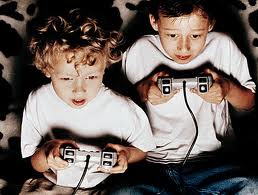
School pupils are being allowed to stay up until the early hours of the morning playing games that are inappropriate for their age, said Mary Bousted, general secretary of the Association of Teachers and Lecturers.
She said many parents were failing to adhere to age-restrictions on the most violent games, raising concerns that children are growing up desensitised to aggression and bloodshed.
It was also claimed that over-exposure to screen-based entertainment was robbing children of valuable time interacting with friends or playing outdoors – harming their education and long term development.
It follows repeated concerns from psychologists that watching violent films and playing games such as Grand Theft Auto, Mortal Kombat and Modern Warfare makes youngsters more prone to violence.
Speaking yesterday, Dr Bousted said: “I think what we are talking about, first of all, is the amount of time children spend locked in their room. The fact that children spend hours locked in their rooms playing computer games, which means they’re not interacting, they’re not playing and not taking exercise.”
Some of these games were “very violent”, she said, and risk having a major effect on “tender young minds of children and young people.”
Dr Bousted said that many teachers fear parents are ignoring age restrictions on computer games, which often ban their sale to children aged below 18.
“The watershed tends to work quite well, but with online TV and video children and young people are probably watching inappropriate content over a range of media,” she said.
It would be great to share criticisms with parents without fear of reprisal. But, in my experience, the importance of having parents on side means that these criticisms can interfere with a healthy parent/teacher partnership.
No matter how advanced technology becomes, nothing will stop us from needing human contact and real interaction. You might be able to stockpile Facebook friends, but nothing can replace the loyalty and support offered by a real friend.
Sometimes I feel that we have allowed ourselves to live in glass cubicles, shielded from real people, real conversations and real experiences. The same technology which was devised to bring us closer together has been misused and ultimately, has kept people out.
Teachers have been instructed to keep emotional distance from their students, the local small business operator who cared about his/her community as much as their bank balance, has been replaced by people not interested in the place where they work or the people who frequent their establishment. People are much less likely to say things like, “I just met someone on the train. We got talking and she told me all about her interesting life.” The only talking on trains is via mobile phone.
A new study that found almost 50 per cent of kids don’t play every day has prompted an expert’s warning about a generation of depressed and anxious youngsters.
The study, hailed as the first of its kind in Australia, carried out a total of 1397 interviews, including 344 with children aged between eight to 12.
About 40 per cent of them said they don’t have anyone to play with while 55 per cent say they’d like to spend more time playing with their parents.
Forty-five per cent said they were not playing every day.
The MILO State of Play study, which also interviewed 733 parents and 330 grandparents, found that more than 94 per cent of them believed play was essential for child development.
But it is still rapidly falling off the list of priorities, said child psychologist Paula Barrett.
“The longer we de-prioritise it, the more likely we are to have unhappy and inactive Australian kids which are more likely to be anxious and depressed, resulting in a raft of social problems in adulthood,” she said.
Dr Barrett said unstructured, active play was essential to help children learn important life skills, develop imagination and creativity.
“This finding highlights a concerning yet common misperception that many parents share – they dont think that kids need to play regularly after the age of eight,” she said.
Many will criticise me for drawing a parallel with the state of society and the development of new technologies. Of course technology isn’t solely to blame for a lack of real and personal interactions. But let’s face it, they have made the issue more serious. Just look at the advertisement above. Do we really want life’s pleasures to be about how nifty our touch screens can become?
In 2005 a landmark movie was released entitled, Crash. It depicted New York as a place where people are too insecure and selfish to interact with others. The only way a person can have any dialogue with a stranger is if they, quite literally, crash into each other.
Our children need real friends, not Facebook friends, they need play dates not peer-to-peer gaming sessions and they need the adults in their lives (including teachers) to scrap any notions of emotional distance and become engaged.
Let’s tear down the barriers and bypass the touch screens and actually … talk with each another!
It is a common complaint of our modern age that kids and teens don’t get enough sleep.
Video games, TV, social media, and other trappings of our increasingly tech-centric lives are often blamed, but a new study shows that long before Facebook or PlayStation 3, kids were sleeping less than experts said they should.
When researchers in Australia reviewed sleep recommendations and actual sleep times among children over the past century, they found that kids consistently slept about 37 minutes less than recommended at the time.
Each time, new technological marvels — be it the light bulb in the early 1900s, TV in the 1950s, or computer gaming systems and social networking today — were blamed for declining sleep times.
“The message that children don’t get enough sleep has been the same for over 100 years,” says researcher Tim S. Olds, PhD, of the University of South Australia.
I wonder if children today experience a different form of tiredness. A tiredness as a result of late nights, a lack of physical exercise, a carb dominated diet and excess weight. Perhaps the tiredness is the same as always, but the presentation of the tiredness is more extreme.
I was once strongly opposed to homework, but I have since softened my approach. It’s not that I believe homework is a good thing, it’s just that I have observed what children do withn the extra time and I can’t say it’s productive. Quite apart from playing in the backyard or walking the dog, kids are more likely to spend their waking hours on the computer or watching television.
Whilst experts believe abolishing homework will free up time for healthy activities, the truth is that it will only result in more time in front of a screen.
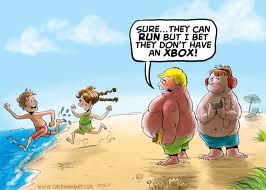
CHILDREN are spending too much time “sitting around”, looking at screens and doing homework, when they should be outside playing.
New Deakin University research suggests parents should encourage children to play the old-fashioned way outside with mates rather than nagging them to complete homework or allowing them to watch TV or use computers, the Geelong Advertiser reports.
Associate head of research at Deakin’s School of Exercise and Nutrition Sciences, Professor Jo Salmon, yesterday said pushing kids outdoors to play would help improve the health and happiness of children.
Parents needed to set rules around the amount of screen time children were allowed every day, and enforce a limit of two hours in total, Professor Salmon said.
They should also try not to place too much academic pressure on their kids and recognise that playing outside and being active was probably better for children than sitting inside practising spelling or sums.
While previous generations of children would come home from school, have a quick snack and then head straight outside to play until dinner time, most children now came home from school and propped on the couch, their bed or at a desk, she said.
Recently named one Australia’s top child health researchers by the National Health and Medical Research Council, Professor Salmon said while she was an optimist by nature, she was concerned for the future health of Australian children.
I was once an optimist too. I hoped that instead of homework, my students could help wash dishes or take on some other household duties. I hoped they could go to the library and borrow books. But that is not what happens in reality.
So I am now faced with a choice. Do I prescribe homework that serves as revision for skills taught during the week in class or do I just let them use the extra time for more television and video games?
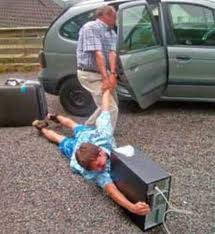
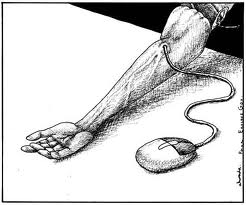
We all love our internet connections and mobile phones and would find it extremely difficult to live without them. However, addictions are still addictions, and there is no doubt that our children have grown a deep addiction to the internet. So bad is the problem, that children have become more addicted to the internet than to TV:
Just 18% of children would miss TV most, compared to mobile (28%) and Internet (25%), finds Ofcom research
A new research by communications watchdog Ofcom has revealed that more young British teenagers can do without TV but not without mobile and the Internet.
Ofcom research found that just 18% of children aged 12 to 15 would miss TV most, compared to mobile (28%) and the Internet (25%). However, the research suggests that the teenagers are also watching more TV than ever before, with viewing figures increasing by 2 hours since 2007.
In 2010, children aged 4-15 watched an average of 17 hours and 34 minutes of TV per week, compared with 15 hours and 37 minutes in 2007. Nearly one third (31%) of children aged 5-15 who use the Internet are watching TV via an online catch-up service such as the BBC iPlayer or ITV Player, said Ofcom.
Ofcom’s research said that 95% of 12-15 year olds now have Internet access at home through a PC or laptop, up from 89% in 2010 and 77% in 2007.
Social networking is still one of the most popular uses of the Internet amongst 12-15s. Ofcom said that children are visiting social network sites more often on their mobiles. Half (50%) of 12-15s with a smartphone visit them weekly compared with 33% in 2010.
Children aged between 8-11 are more likely to use Internet for gaming, with 51% saying they play games online on a weekly basis, up from 44% in 2010. 8-11s are also spending more time playing on games players/ consoles compared with 2010 (9 hours 48 minutes – an increase of nearly 2 hours), said Ofcom.
In my school days television addiction was a problem. Now we have another addiction which comes with the same side-effects. It creates tired students who have been up so late they can’t concentrate. It has compromised our children’s capacity to have healthy social interaction. Playing with a friend has now become messaging a friend. It’s just not the same.
As soon as people go from the moderate to the obsessive, they lose control of themselves. Children today are certainly showing the signs of a lack of control, to the point where they are smuggling mobiles in their bags so they can reply to Facebook messages as soon as they receive them.
Kids require rules for their internet usage. Rules that outline when, how and where they can use it.
I used to be philosophically opposed to homework in all forms. That was, until I witnessed how my students used their after-school time. It was then, that I realised that ten to fifteen minutes a night would constitute the only meaningful activity some of these students would take part in on a given night.
The radio presenter Alan Jones doesn’t believe in homework because children should have time to play outside and learn skills that only time after school with your family can teach. Normally, I would agree. But do children today have these types of experiences after school?
Families are so busy working that when children come home, they often sit in front of the TV for hours or play computer games. Children spend hours every day networking on Facebook. Exhausted parents do not realise just how dangerous these modern technological tools can be.
Technology can open a world of excitement to children. Yet it can also glorify gangster lifestyles through MTV, and encourage the use of bad language and ”text speak” in social networking.
An hour of homework a night distracts children from such activities and enables them to practise what they were taught at school. Excellent learning requires constant revisiting, and homework is the perfect tool to reinforce facts and skills. Teachers often find that children forget what they learnt the day before. At high school, you may not see your history or geography teacher for a few days until the next lesson. Without any homework in between to bridge the gap, often teachers take two steps forward, then one step back in the following lesson.
It is the school’s responsibility to inform parents that homework has been set – easily done through a diary system. The school should also ensure the homework set is of quality and not some assignment that can essentially be downloaded from the internet. Equally, it is the parents’ responsibility to ensure homework gets done.
I object to her call for an hour of homework per day, but I do currently favour 10-15 minutes of revision work, to consolidate on skills and concepts currently being covered in class.
Well, I have taught math in the past. My thoughts on homework was that if students had homework, they didn’t get finished in class. I never assigned homework. Homework was there if they didn’t get finished in class, but most times students did.
Now that I teach Science, it’s the same way. A lot of what we do is in class, hands-on activities. Homework are the questions they didn’t get to because they were goofing off or not focused in class.
In my opinion, teachers who teach the entire period and allow no work time are not good teachers. Students need to know they are being successful and have confidence. They can’t have a teacher telling them they are correct when they are at home.
This topic remains a very contentious one. I look forward to reading your opinions on this much discussed issue.









 Topical Teaching