Posts Tagged ‘Teachers’
June 21, 2012
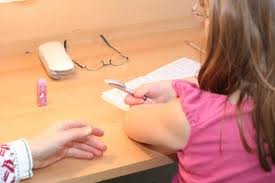
I couldn’t disagree more with the opinions expressed in Susie O’Brien’s column today. Allowing teachers to touch students, even innocently, is a step backwards. Every day we read news articles of teachers who have misused the privilege of working with kids and have overstepped the boundaries. It’s because of the evil minority that continue to heap shame on our wonderful profession, that these regulations are vital.
The rules that restrict teachers from hugging and touching our students without justifiable cause are not about political correctness, they are about common sense. They exist to protect students, but in doing so, they also protect teachers from false accusations. I agree that it’s a sad state of affairs that I am obliged to keep my door open when having a private meeting with a student, but isn’t that a small price to pay for transparency?
I find Ms. O’Brien’s intimation that I can’t provide my students with the same standard of care due to the fact that I don’t touch them quite upsetting:
WHY can’t teachers touch kids any more? It used to be that teachers had total control over the children in their care.
They were allowed to hit them, cane them and handle them in pretty much any way they saw fit.
But they could also hug them, comfort them, and even check their hair for nits.
With the advent of political correctness, everything changed.
Teachers should be able to judge for themselves what contact is appropriate in any situation.
If we think any teacher lacks the ability to make such judgments, then they shouldn’t be in front of our classrooms.
For instance, take a look at the rules imposed on teachers in this state by the Victorian Institute of Teaching, which is the professional regulation body.
Their code of conduct says teachers are violating their professional relationships when they touch a student without a valid reason.
It’s a bit depressing that it’s come to this.
The code says teachers can touch students, but goes on to say it is a “difficult issue for teachers in the present climate”.
Apparently, teachers can touch students for comfort, guidance or acknowledgment, but not for any other reason.
And teachers are not meant to have any meeting with a student alone with their door closed.
It seems a pretty sad state of affairs.
As sad as it is that the evil few spoil it for the majority, these rules are vital. They protect teachers and students alike.
Tags:Education, Hugging, kids, Mt Martha, Political Correctness, primary school, professional conduct, professional relationships, Teachers, Victorian Institute of Teaching
Posted in Professional Conduct | 5 Comments »
June 21, 2012

What a brilliant idea! Creating a universal portal for teachers to access information and materials is just what we need. I can’t wait to use it!
The result of that call, to be unveiled Tuesday, is Share My Lesson, an online portal that teachers will be able to access free of charge. It is expected to contain more than 100,000 user-generated materials.
“We’ve been trying to find a way to have teachers be able to access information quickly, actively and share with each other,” Weingarten said. “It felt to me almost too good to be true, that some private entity had created a platform for teachers to be able to share.”
Share My Lesson is expected to be the largest online resource for teachers in the U.S. and comes at a time when cuts to education budgets have led many districts to slash professional development. AFT and TSL have pledged $10 million to develop and maintain the site, which should be ready for teachers by August.
“We must support the incredibly complex work teachers do at every opportunity, including by sharing and promoting best practices through online resources and communities of practice,” Education Secretary Arne Duncan said.
He said the program would benefit teachers everywhere.
Tags:American Federation of Teachers, Arne Duncan, Christine Armario, Education, Karen Brennan, online portal, online resource, Randi Weingarten, Share My Lesson, Stanford University, Teachers, technology, TES Connect, TSL Education, user-generated materials
Posted in Technology | 2 Comments »
June 19, 2012

Wake up America! Your preparedness to prescribe powerful stimulants to children for reasons as slight as a lack of concentration is lamentable. It is a trend that threatens to effect a whole generation. Teachers have got to take a far more passive approach on this issue. Instead of recommending that students take these drugs they should instead concentrate on their own performance. Too many teachers take the selfish choice of trying to restrain a wayward or naughty child rather than focus on their own weaknesses as a teacher. Instead of picking on a childs’ lack of focus, they should be concerned about how engaging their lessons are.
To hear the medical fraternity boast about a reduction in antibiotics subscriptions when the real issue is Ritalin and others of its kind is very disappointing:
The new report also found an uptick in the use of some drugs in children, with stimulants for attention deficit hyperactivity disorder, or ADHD, leading the pack.
From 2002 to 2010, the use of ADHD drugs grew by 46 percent — or some 800,000 prescriptions a year. The top drug dispensed to adolescents was the stimulant methylphenidate, also known as Ritalin, with more than four million prescriptions filled in 2010.
“What the article is suggesting is that the number of children that we are treating for attention deficit disorder has gone up,” said Dr. Scott Benson, a child and adolescent psychiatrist and a spokesperson for the American Psychiatric Association.
“For the most part I think the overall increase reflects a reduction in the stigma,” he told Reuters Health. “It used to be, ‘You’re a bad parent if you can’t get your child to behave, and you’re a doubly bad parent if you put them on medicine.'”
Dr. Lawrence Diller, a behavioral pediatrician who has written extensively about ADHD, was more critical of the rise in stimulant prescriptions, noting that the U.S. is far ahead of other countries in its use of the drugs.
“You have to look at how our society handles school children’s problems. It’s clear that we rely much, much more on a pharmacological answer than other societies do,” Diller said. “The medicine is overprescribed primarily, but under-prescribed for certain inner-city groups of children.”
A report in the New York Times last Sunday said stimulant use is becoming a commonly used study drug even among high schoolers, with healthy students easily fooling their doctors into prescribing the coveted drugs.
“There is no objective test, so obtaining the medications is relatively easy,” said Diller.
Tags:ADHD, adolescent psychiatrist, Attention Deficit Disorder, Dr. Lawrence Diller, Dr. Scott Benson, Education, Methylphenidate, New York Times, News, Overprescribed, Parenting, Report, Ritalin, Schools, Teachers, ttention deficit hyperactivity disorder
Posted in ADHD | 2 Comments »
June 18, 2012

I believe that teachers deserve better pay. This shouldn’t surprise you as I am a teacher. But what I don’t agree with is the often used argument that if we paid teachers more we would attract a better standard of teacher. I have yet to have met a potential teacher who decided not to enter the profession based on the pay. I have also yet to have seen any difference to the quality of teachers after a pay increase.
A recent report finds that salary is a huge factor:
Several reports from the Australian government indicate that, although many high achievers consider teaching important and challenging, they do not pursue a career in teaching because salaries, promotional pathways and status are limited relative to other professions.
The research is clear that annual bonus pay schemes are ineffective in improving the quality of teaching or student outcomes or in making teaching a more attractive career.
There are some professions which attract based on promotional pathways and pay and others that attract based on the rewarding aspects of the job. I don’t want to teachers come in to the system based on pay and promotion reasons over passion and eagerness to make a difference.
Click here to read my post “If Teachers Were Paid More I Wouldn’t Have Become One.”
Tags:Dr Lawrence Ingvarson, Education, Finland, Pay, Productivity Commission, South Korea, Teachers, Teachers Salary, Teaching
Posted in Teachers Salary | 4 Comments »
June 18, 2012

When I was a child there was no punishment more feared than a suspension from school. The idea that the Principal could at any moment call your parents to pick you up and take you home was enough to make any child think before breaking a rule. But times have changed and suspensions have lost their effectiveness. This is partly due to it being metered out for minor offenses such as answering back and rudeness and partly due to a change in parenting styles.
If my parents were given the call to pick me up early they would have been furious. They would have immediately sided with the school and grounded me at home. Nowadays, parents take their children’s side and embrace them rather than berate them. When the child returns to school after their suspension, it is common to hear them boast about being taken out for a coffee and spending the afternoon playing video games.
It is no wonder that a recent survey has labelled suspensions as ‘counterproductive’:
SUSPENDING students from school for bad behaviour is counterproductive, with students who have been suspended twice as likely to be excluded again in the next 12 months.
Research by Australian Catholic University professor Sheryl Hemphill found about 6 per cent of students in Years 6-8 have been suspended, rising to 12 per cent of Year 10 students.
“Kids who are suspended just keep getting suspended. It doesn’t stop the behaviour that resulted in the suspension, it almost sets them on a pathway more likely to lead to suspension,” she said. “The risk for students who are having trouble maintaining engagement and staying at school is that suspension starts to help them move out of school.”
As part of a series of reports on problems in our nation’s schools, The Australian has found that suspended students were 50 per cent more likely to engage in antisocial behaviour and 70 per cent more likely to commit a violent act in the next 12 months.
Professor Hemphill said the policy of excluding students from school as punishment for bad behaviour sent a mixed message: every child must attend school, except on some occasions.
“It’s so contradictory to everything else we’re trying to do,” she said. “We’re trying to keep kids in school longer, we know the positive benefits of keeping them connected to further study and training for employment.
“Suspension doesn’t fit with the current policy environment, a lot of which promotes connection with education, because suspension is potentially a way of cutting off students.”
The problem with scrapping suspensions is that it leaves teachers with fewer options in dealing with class discipline issues.
Click here to read about my post on teachers being stripped of the ability to give punishments that work.
Tags:Australian Catholic University, Behaviour, Classroom Management, Discipline, Education, News, Parenting, Peter Chalkley, Punishments, School, Schools, Sheryl Hemphill, Survey, Suspensions, TAFE, Teachers, Teaching, The Australian
Posted in Classroom Management | Leave a Comment »
June 17, 2012

Talk about a shocking news week for teachers in Texas! First there was the explosive story of a teacher inciting 20 of her students to beat up one of their classmates (did I mention that the children were 6-years old!) Now comes yet another published story which doesn’t read any better.
The parents of a third-grade boy have sued two Texas school employees, alleging that they forced their son to strip and shower in front of them because he “smelled badly, was dirty and had bad hygiene.”
The eight-year-old was singled out last November and taken to the nurse’s office at Peaster Elementary School where he was forced to remove his clothes, the suit alleges, the Courthouse News Service reported.
The two school officials then “began violently washing his body with a washcloth, scrubbing him over a large portion of his body, stuck cotton balls in his ears, all while ridiculing and harassing him about being ‘dirty,'” the complaint claims.
The child’s parents, Amber and Michael Tilley, said they lodged a police report over the incident but no charges were laid.
On Thursday, the Tilleys filed their lawsuit against Peaster Independent School District and Peaster Elementary School employees Julie West and Debbie Van Rite in federal court in Fort Worth.
“It’s terrible, and we don’t want anything like that to happen to any other children,” Amber Tilley told NBC Dallas-Fort Worth.
According to the lawsuit, the incident left the boy “visibly and severely distraught,” and he had to see a therapist after.
“He just kept on and on, wanting to take baths,” Amber Tilley said. “You know, he just felt so disgusting.”
She added that her son did not have a problem with body odour or cleanliness.
The school district and Peaster Elementary did not respond to calls for comments Friday.
Tags:Amber and Michael Tilley, Child Welfare, Education, eight-year-old, hygiene, News, Peaster Elementary School, Peaster Independent School District, Shower, Strip, Teachers
Posted in Child Welfare | 1 Comment »
June 16, 2012

It’s stories like this that cause me to rethink my idealism. I may believe that teachers sign up for the profession because of a desire to help all children reach their potential. However, when you read stories like this one, you wonder how on earth the teachers involved could have rationalised such a poorly thought out strategy. These are not the actions of proud and passionate teachers:
A Texas teacher will lose her job after ordering more than 20 kindergartners to line up and hit a classmate accused of being a bully, a district spokesman said Friday.
The teacher at a suburban San Antonio school is accused of orchestrating the slugfest after a younger teaching colleague went to her last month seeking suggestions on how to discipline the 6-year-old, according to a police report from the Judson Independent School District.
Both teachers at Salinas Elementary were placed on paid administrative leave, though the one who allegedly arranged the punishment will not work for the district next school year, said district spokesman Steve Linscomb. Prosecutors are reviewing the allegations and will determine whether formal charges will be filed in 30 to 60 days.
The police report alleges the teacher chose to show the child “why bullying is bad” by instructing his peers to “Hit him!” and “Hit him harder!” It also states that the second teacher intervened only after one of the children hit the boy hard on his upper back.
“Twenty-four of those kids hit him and he said that most of them hit him twice,” Amy Neely (pictured above), the mother of 6-year-old Aiden, told KENS-TV. She did not specify what injuries her son may have received.
Neely said her son is not a problem child and that this was the first she’d heard of teachers having issues with him. She said she wants to make sure the teacher who ordered the hitting does not work in a classroom again.
“She doesn’t need to be around any children,” Neely told the television station.
The mother added — and the police report confirmed — that some of Aiden’s classroom friends told him they didn’t want to hit the boy but did so because they were afraid not to.
Tags:Aiden Neely, Amy Neely, Bully, Bullying, Child Welfare, Education, Judson Independent School District, Kindergarten, life, News, Parenting, Salinas Elementary, San Antonio, Steve Linscomb, Teacher, Teachers, Teaching, Texas
Posted in Bullying, Child Welfare | 2 Comments »
June 6, 2012

If you are finding your job quite challenging lately and you are at a loss to work out how to restore order in the classroom, I hope these tips will prove useful:
1. You Have Nothing to be Ashamed of: Even the best of teachers often struggle to keep control of a classroom. You should not feel deflated if your current crop of children are making your life difficult and testing your patience. This is nothing unusual. Make sure you keep a positive front. Children do not tend to feel empathy for a defeated teacher. On the flip side, they have respect for a teacher that can overcome difficult moments and stay positive, enthusiastic and show a willingness to intoduce new ideas to make things work.
2. What you Teach is not as Important as who you Teach: As much as it can frustrate when you have a lot to cover and so little time to cover it, it is important to note that the most important aspect of your job is to look after the wellbeing of your students. It is perfectly alright to interrupt a maths class for a discussion on bullying or respect. It is also important to realise that whilst Timmy may frustrate you and come to class with a poor attitude, the best thing you can do for him is to plant a seed of positivity. He may leave your class without the skills you have taught, but at least you have let him know that you believe in him and are there for him regardless.
3. If They are not Listening, Perhaps you Should Stop Talking: Teachers often complain about the lack of concentration among their students. This is commonplace, but not always entirely the students’ fault. Teachers often talk too much. From laboured mat sessions to interminable board work, teachers have got to realise that the more they talk, the more the students program themselves to daydream. Teachers have got to spend less time talking to the class and more time going from individual to individual. This is less threatening, more effective and better for charting individual progress. Other ideas include: Group work, games and interactive programs.
4. Stop Threatening: Detentions, suspensions and other punishments are important tools in a teachers toolbox, but boy they can get overused! A teacher’s attitude sets the tone for the classroom. If the “go-to” response is always to threaten and punish, the classroom will be a negative place. If the teacher instead put a privilege on the board (such as extra computer time) and during the class add under the privellege according to behaviour, attitude and work ethic, it sets a very different mood. Instead of feeling watched and judged, the students feel empowered to earn the teacher’s respect and motivated to win the reward.
5. Small Changes Make a Big Difference: When you are in a rut, the desperate part of you wants to change the world in a day. This is impossible. A better approach would be to isolate a goal or two such as; working on an orderly line-up, getting the students to raise hands before asking questions or getting the students to reflect on how they treat each other. These goals may seem insufficient in the grader scheme of an uncontrolled classroom but I assure you small goals can make big changes to the classroom dynamic.
I hope these tips are of use. We all struggle at times to teach effectively. You are not alone!
Tags:Behaviour, Classroom Management, Concentration, Detentions, Discipline, Education, Goal Setting, Goals, kids, Listening Skills, Nehgative Thinking, Positive Attitude, Punishments, Rewards, Students, Suspensions, Teacher, Teachers, Teaching
Posted in Classroom Management | 2 Comments »
June 5, 2012

I am not a fan of specialised programs as they tend to clog the school day and leave too few hours for covering the curriculum. Programs such as “Stranger Danger” have been shown in studies to be ineffective and a cause of paranoia and anxiety among students rather than a useful resource for their protection.
An exception to this rule is training children to be safe around pets. As a father of a young girl who is absolutely petrified of dogs of all shapes and sizes, I am concerned that this fear will prevent her from enjoying animals. I am also aware that dog attacks happen on an all too regular basis, with many of these incidents involving children and proving deadly.
Adults may know that running away from an angry or vicious dog is a recipe for disaster, but do children know that? And if they do, do they have the tools to manage such a situation?
The answer to that question is invariably – no!
That’s why I am grateful to prominent veterinarian, author and blogger, Dr. Vadim Chelom, whose passio for this issue prompted him to release a program for teachers to integrate into their literacy/social studies curriculum free of charge. On his blog is a comprehensive lesson by lesson program which will enable teachers to educate their students about how to stay safe around pets.
I have no doubt that this program has the potential to save lives. I certainly encourage parents to share the information with their children and for teachers to find time in a crowded curriculum to at least dedicating a lesson to this very important issue.
What to do When Threatened by an Angry Dog according to Dr. Chelom:
- Lie down face on the ground.
- Pull your legs up to your stomach.
- Bring your hands close to the body to cover your face with your arms and your chest with your elbows.
- Don’t move and don’t shout.
- Lie still until the dog is gone.
Tags:Animals, Doctor Pets, Dogs, Dr. Vadim Chelom, Education, Educational Programs, Literacy, Parenting, Parents, Pets, Social Studies, Teachers, Teaching
Posted in Educational Programs | Leave a Comment »
May 22, 2012

I am not particularly surprised by the finding that bright students, in particular, are being failed by poor maths instruction. It’s been my experience that most teachers come from a strictly humanities (i.e. English, Politics, History) background. These teachers often shirk maths and science as it isn’t their forte.
In a damning report, the watchdog warned that the scale of underachievement at school was a “cause of national concern” that risks robbing the country of well-qualified mathematicians, scientists and engineers.
It said that many of the most gifted children were “insufficiently challenged” at primary and secondary level after being set the same work as mid-ranking classmates.
Inspectors insisted that too much teaching focused on the use of “disconnected facts and methods” that pupils were expected to memorise and replicate without any attempt to solve complex problems in their heads.
Large numbers of pupils are also being pushed into sitting maths GCSEs a year early – forcing schools to completely ignore many of the most demanding algebra topics, it was revealed.
In a highly-critical conclusion, Ofsted said that teaching was not good enough in almost half of English state schools, with almost no improvements being made in the last four years.
I realise that what I am writing is a gross generalisation, but I believe that maths is generally taught in a very abstract and monotonous way. No wonder the students are not benefitting from maths instruction at the primary level. Traditional maths teaching involves worksheets, a mindless array of algorithms and plenty of other rote styled goodies.
The tragedy of it all is that maths can be taught in a completely different way. I find the basic skills of maths the most refreshing and creatively exciting subject to teach. The fact that maths is a composite of everyday skills means it translates wonderfully to problem solving activities.
Tags:Education, GCSEs, gifted children, math, maths, News, Ofsted, primary, Report, secondary level, Sir Michael Wilshaw, Teachers, Teaching
Posted in Maths | 1 Comment »








 Topical Teaching
