There have been a lot of studies recently where the findings were so obvious you wondered how they managed to get a research grant for it in the first place.But every so often you stumble upon a study where the findings were not as you might have predicted.
Intelligent girls and boys are much more likely than average to take illegal drugs like cocaine, cannabis and ecstasy when they grow up, a study has found.
Scientists think they do so in part as a “coping strategy” to avoid bullying from their peers, and partially because they find life boring.
The effect is more pronounced in girls than boys, with those exhibiting high IQs as children more than twice as likely to have tried cocaine or cannabis by the age of 30, as those of lower intelligence.
The effect in boys with high IQs is also marked, with them being around 50 per cent more likely to have done so by that age as their less intelligent former classmates.
A team at Cardiff University analysed data from almost 8,000 people born in one week in April 1970, who were enrolled at birth in the ongoing British Cohort Study, which follows participants through life. All these children had their IQs tested between the age of five and 10.
Drug use, as reported by the participants themselves, was then recorded at 16 and 30 years of age.
At 16, 7.0 per cent of boys and 6.3 per cent of girls had used cannabis. This minority had “statistically significant higher mean childhood IQ scores” than non-users, according to the authors of the report, published in the Journal of Epidemiology and Community Health.
The authors noted: “Across most drugs (except amphetamine in men), men and women who reported using in the past 12 months had a significantly higher childhood IQ score than those who reported no use.”
They concluded: “High childhood IQ may increase the risk of substance abuse in early adulthood.”
Well that explains it – no wonder why I’ve never taken drugs!
A recent study into bullying may have fond that online bullying isn’t as prevalent as regular bullying, but it is still early days.
A new study entitled Teens, Kindness and Cruelty on Social Networks confirms much of what we already know about cyberbullying. Most kids aren’t bullied and most kids don’t bully either online or off.
In fact, the study–conducted by the Pew Internet & American Life Project for the Family Online Safety Institute and Cable in the Classroom–concluded that “[m]ost American teens who use social media say that in their experience, people their age are mostly kind to one another on social network sites.” Nearly seven in ten (69 percent) of teens said that peers are mostly kind while 20 percent said peers are mostly unkind with 11 percent saying, “it depends.”
Fifteen percent of teens say they have been the “target of online meanness.” When you include in-person encounters, 19 percent say they’ve been “bullied” in the past year.
These numbers track very closely with previous scientific surveys on bullying and cyberbullying. The largest source of bullying (12 percent) was in person, followed by text messaging (9 percent). Eight percent said they had been bullied via email, a social networking site or instant messaging and 7 percent were bullied via voice calls on the phone. Girls are more likely to have experienced what we typically call “cyberbullying,” while boys and girls are roughly equal when it comes to in person bullying.
Online bullying may be less prevalent but it is arguably more damaging. It is generally accepted that since online bullying invades the victim’s home (traditionally a place of comfort and safety), it has a much more powerful effect. Another reason that online bullying is potentially more oppressive is that there can be many more bystanders and participants online. Facebook bullying can be shared between hundreds rather than just handful of kids in the schoolyard.
And let’s not kid ourselves. Bullies don’t discriminate between mediums. A bully doesn’t throw their weight around in person and then become an angel online. Bullying is bullying, no matter what the medium. The experts are telling us online bullying is not the major form of bullying that some believe it to be.
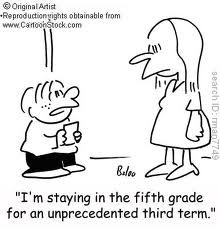
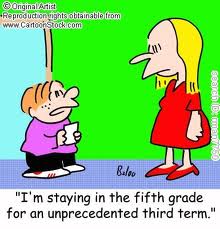
OECD figures released this year found about 8 per cent of Australian students were repeating grades at school, often with the intention of helping them catch up and get better educational outcomes.
But a University of Sydney study of more than 3,000 students in eight different New South Wales schools has found repeating a child could have the opposite effect.
Professor Andrew Martin says the research found the students who repeated did not only suffer academically, but they also struggled in other ways.
“We found that students who repeated a grade tended to be less likely to do their homework, they had more days absent from school, they tended to be a bit lower on the academic engagement and motivation scale, they were lower in academic confidence and they were lower in their general self-esteem,” he told ABC News Online.
“In many cases, it seems what educators and parents were hoping for does not quite happen.
“It seems that simply pressing the pause button does not get at the issues that might have led to the decision to repeat a child.”
WhilstI respect the findings of this study, the trend of promoting students for no other reason than to protect their self-esteem is quite challenging for teachers. It means that the child is often far behind, is often missing basic skills and therefore cannot understand advanced concepts and sometimes disrupts the other students. It means that there will be students that can’t read or write properly entering into high school.
How is that beneficial to the child? How does being set vastly different work to ones classmates make that child feel any less of a failure?
Teachers will generally do anything they can to accelerate the divide between struggling students and the rest of the class. The last thing they would ever want is for any of their students to suffer emotionally.
At the same time, the current closed mindedness of education experts when it comes to repeating year levels is a concern. Surely, at some point, the child has a better chance repeating a year than they do being promoted on the back of under developed skills?
I am in no way an advocate for making children repeat year levels. But I am also mindful that gaps can grow, and the result of a skills divide in the classroom can have a lasting effect on both class and struggling student.
I suppose it just goes to show the importance of good teaching in the early years, alertness in spotting any learning problems or difficulties and a well run and resourced Special Education/Remedial Education department.
It is my belief that cyber-bullying is often based on “dominance” and “popularity” rather than “hate”. I don’t think most cyberbullies hate their victims. Instead, I think they see them as stepping-stones to wider acceptance from their peer group. Often the victims are minorities or outcasts. The pressure to be in the “in group” has always been high. For an “in group” to exist there needs to be a clearly defined “out group”. It is often seen as a sort of right of passage for someone seeking popularity to kick the easy target.
A new study commissioned by CNN’s “Anderson Cooper 360°” found that the stereotype of the schoolyard bully preying on the weak doesn’t reflect reality in schools.
Instead, the research shows that many students are involved in “social combat” — a constant verbal, physical and cyber fight to the top of the school social hierarchy.
“Kids are caught up in patterns of cruelty and aggression that have to do with jockeying for status,” explains Robert Faris, a sociologist whom “Anderson Cooper 360°” partnered with for the pilot study. “It’s really not the kids that are psychologically troubled, who are on the margins or the fringes of the school’s social life. It’s the kids right in the middle, at the heart of things … often, typically highly, well-liked popular kids who are engaging in these behaviors.”
Faris, along with the co-author of the study, Diane Felmlee, also found that bullies, whom they call aggressors, and victims are not defined roles, but in many cases, they can be the same person. The higher students rise on the social ladder, the more they bully other students, and the more other students bully them.
“When kids increase in their status, on average, they tend to have a higher risk of victimization as well as a higher risk of becoming aggressive,” Faris says.
The study was conducted this spring at The Wheatley School, a nationally top-ranked high school on Long Island, New York. More than 700 students at the school were given a survey with 28 questions on aggressive behavior four separate times throughout the semester. They were also given a roster of the entire school in which every student had an identification number and kids were asked to write down specifically who did what.
This is part of the reason why I am so critical of the way bullies are handled at some schools. So often the emphasis is on the actions of the bully and not on the social environment that encourages bullying behaviour in the first place. That is why so much of my energy is devoted to changing the social fabric of my class.
After all, bullying isn’t a priority – it is THE PRIORITY. As a teacher, I am entrusted not with people’s money or belongings but with the most important and precious things they have – their children. It is my responsibility to ensure that they are safe and secure. Sure, I have to teach them and help them grow academically, but even more so, I have to do my best to make sure that the child they dropped off at my classroom is going to come back in as good if not better emotional shape than when they arrived.
When I speak to my class at the beginning of the year, I tell them there is a sure-fire way for them to have to repeat the year a second time. It’s not if they find the work difficult or are struggling to pass assessments – it’s if they are not treating their classmates with respect. Because if they are not ready to treat others with respect, they are not emotionally ready to go up a year level.
I’m not joking. I really do mean it.
There is a lot of talk about ‘child centered learning’ vs ‘teacher centered learning’. I prescribe to neither. Instead, I believe in what I call “class centred learning”. The main focus of my teaching is that everyone in the class must respect each other. It is the fundamental rule for assessing my own performance. They don’t have to be best of friends, but they absolutely must respect each other. And ultimately, it is my duty to empower the class and create an environment of closeness and mutual respect.
Does it mean that there is no bullying in my classroom? Absolutely not. I wish. I’m only an ordinary teacher. What it means is, I take more interest in the welfare of my class than any other consideration.
On the topic of bullying, I again strongly recommend (not for the last time) this most brilliant anti-bullying film developed by young students in their own free time. It is the best of its kind by a long, long way!
The findings of a study I came across recently claims that not only is there no benefit in making a student repeat a year level of school, but that it actually does some harm:
The study, by Deakin University’s Dr Helen McGrath, also found students who repeated a year were 20 to 50 per cent more likely to drop out, compared to similar students who progressed.
Dr McGrath reviewed dozens of studies by academics in Australia and the United States over the past 75 years comparing the outcomes for students with specific needs who were either held back or allowed to progress.
She said those studies failed to support the popular assumption among teachers and parents that repeating a year helped a student’s academic performance.
“There may be an occasional student who is the exception, but for most students providing them with more of what didn’t work for them the first time around is an exercise in futility,” she said.
“In fact, repeating a year confirms to a student that they have failed.
“They experience stress from being taller, larger and more physically mature than their younger classmates. They miss their friends who have moved on to the next year level.
“They also experience boredom from repeating similar tasks and assignments. Their self esteem drops. All of these factors ultimately lead many to drop out.”
There also appears to be no benefit in holding children back from starting school because they were not seen to be “school ready”.
“If a child is old enough to enter primary school, then holding them back and enrolling them in an additional year of preschool appears to provide no academic or social advantages and may in fact be detrimental in many cases,” she said.
Dr McGrath said simply promoting the struggling student to the next year level was not the answer either.
She said schools needed to consider more effective alternatives to support students who experienced social, behavioural or academic difficulties.
These included identifying problems at pre-school level and developing programs to address them, creating individual education plans, providing specialist support and adapting the curriculum to the needs of the student.
“Multi-age classrooms and peer tutoring also provide ways of supporting students who may be struggling,” she said.
WhilstI respect the findings of this study, the trend of promoting students for no other reason than to protect their self-esteem is quite challenging for teachers. It means that the child is often far behind, is often missing basic skills and therefore cannot understand advanced concepts and sometimes disrupts the other students. It means that there will be students that can’t read or write properly entering into high school.
How is that beneficial to the child? How does being set vastly different work to ones classmates make that child feel any less of a failure?
Teachers will generally do anything they can to accelerate the divide between struggling students and the rest of the class. The last thing they would ever want is for any of their students to suffer emotionally.
At the same time, the current closed mindedness of education experts when it comes to repeating year levels is a concern. Surely, at some point, the child has a better chance repeating a year than they do being promoted on the back of under developed skills?
I am in no way an advocate for making children repeat year levels. But I am also mindful that gaps can grow, and the result of a skills divide in the classroom can have a lasting effect on both class and struggling student.
I suppose it just goes to show the importance of good teaching in the early years, alertness in spotting any learning problems or difficulties and a well run and resourced Special Education/Remedial Education department.





 Topical Teaching