Posts Tagged ‘Self-Esteem’

Schools Have to Wake Up to Confidence Issues Amongst Students

February 27, 2012

I’m not a medical expert, so excuse me if I show my ignorance, but I am constantly amazed by what looks like a overdiagnosing of kids. From ADHD to autism, from dyslexia to language disorders, our students are being bombarded with medically based names for sometimes seemingly everyday based problems.

Sometimes these diagnoses prove spot on, and ultimately guide the teacher to better understanding their students. At other times however, I feel the diagnosis seems rushed, lazy and counter productive. Not only do such students receive the stigma of their newfound disability, but they also tend to lose more confidence because of it, rather than letting the revelation give them a new lease on life.

What bothers me is that in making these diagnoses, GP’s, occupational therapists and speech pathologists often see a child’s low confidence levels as a sign of a condition that is impeding their learning. Why can’t a child’s learning challenges be caused plainly and simply by their confidence issues? Why does it always have to be a condition? Why don’t they try to improve a child’s self-esteem before prescribing and labelling?

I can’t tell you how many students I have seen over the years that have been diagnosed with some learning disorder that have responded not to the recommended regime, but to a devoted teacher that spends just as much time trying to raise the child’s self-esteem as they do trying to improve the child’s academic skills.

Sometimes I think we fool ourselves into believing that school life is easy and that all children should be able to cope fairly well. School is tough for children. It can potentially damage a child’s sense of self and can be quite detrimental to their feeling of worth.

I’m not surprised kids are reluctant to go to school. I am surprised however, that our psychologists think that only 1-2% of children fall in that category:

… suffering from school refusal, an anxiety condition that affects 1 to 2 per cent of children.

”A certain degree of anxiety or reluctance to go to school is normal,” psychologist Amanda Dudley says.

”But for some, they experience excessive anxiety and it can result in persistent refusal to go to school.”

Children who experience school refusal often complain of stomach aches, headaches, nausea and other physical symptoms and are often extremely distressed when it is time to go to school.

”It can be all of a sudden that the child refuses to attend; it can be after something upsetting at school or after legitimate absence from school,” she says.

School refusal isn’t a condition. It is a natural response to the challenges that children face at school. It is also a sign that educators are blind to the real needs of their students. By overlooking self-esteem issues and instead concentrating on placing seemingly normal children on an ever-growing spectrum, we are labelling children instead of responding to them. We are diagnosing instead of truly connecting with them.

I accept that there are children with special learning needs who require targeted programs and individual support, but I also believe that there are many children who would be better served if their school helped them to adjust to school life instead of bracket them with a condition or disorder.

 

Eight Tips for Teaching Shy Children

January 11, 2012

I once taught a child that refused to talk. He was already in fourth grade by the time I had him and some of his previous teachers had told me that they hardly recall a time when they heard the sound of his voice. No matter what I tried, nothing was working. By the end of Term 1 I was beginning to doubt I could do anything for him.

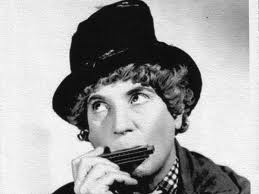
Then it hit me. It was a long shot, but I couldn’t think of anything else so it was worth a try. The boy reminded me of Harpo from the Marx Brothers. Not only didn’t he talk, but he had the same facial features and a similar haircut. I decided to show the class my favourite Marx Brothers movie, Duck Soup, and dedicate the screening to this student that refused to talk. I mentioned how Harpo Marx is cool and so is this student who happens to share a resemblance.

I figured that instead of trying to get him to talk and making his silence a negative, I would celebrate it and cannonise it. The class loved the Marx Brothers and particularly enjoyed Harpo Marx. In fact, no one loved it more than this particular child, who would mimic Harpo, get his parents to order the Marx Brother’s DVD’s and yes, the positive attention from peers in particular made him start to talk!

I recently stumbled on a valuable website that deals with helping parents and educators deal with shy children. The website is called shakeyourshyness.com and it features some useful tips. By following the link provided, the tips below are explained in more detail.

  1. Normalize shyness and depict it in a positive light.
  2. Make regular contact.
  3. Give shy children a job to do.
  4. Comment on their successes and post their work.
  5. Help Children Learn To Initiate Contact With Others.
  6. Educate Parents.
  7. Reward Small Improvements
  8. Keep an eye out for teasing

It turns out that he was just waiting for somebody to at least attempt to understand him. He didn’t want people to try to change him, he wanted people to appreciate him for who he was.

Later that year, this very child performed in the school concert. Thank you Harpo!

I’m Glad I’m a Teacher and Not a Parking Inspector

October 31, 2011

Today I was fined by a parking officer for parking in a permit zone. I had only left my car for a few minutes, and clearly that’s all it takes.

On my way back from the shops I noticed a parking inspector processing a ticket by my car. I asked him what I did wrong. I pointed out the 1 hour parking sign. He pointed to another small sign among others that notified those with good eyesight that the spot was a permit zone on weekends but fine during the week.

I told him that I was only gone for a second and that I had made an innocent mistake. He didn’t pay attention. My daughter cried sensing something was wrong and becoming unsettled by the man’s presence. The man ignored her and kept on typing.

$75 – that’s what the tiny mistake cost me!

I realise that the man was doing his job. He probably has a wife and family to take care of and bills to pay. I don’t blame him for his actions or diminish his right to take on this job.

But ultimately, I’m so glad that I am a teacher and not a parking officer.

Parking officers serve no real value to the community. They are employed by council workers who should have enough revenue to waste through our overpriced rates. But no, through parking infringements, they have another steam of revenue they can waste in good measure.

Nobody is glad to see a parking inspector walking around. Nobody goes to lengths to welcome them or engage in small talk. Their job is to prey on people’s mistake and slug for an inordinate amount of money.

Teaching can be so much more than that. We can represent all that’s positive about this world. We can be mentors and role models. We can help children grow to reach their potential.

Unfortunately, we can also do a lot of damage. If we are not good at our job or our heart isn’t in it, we can be the manifestation of what is wrong with this world.

That’s the great challenge for teachers. To be the polar opposite of a parking inspector.

Sparing Young Children the Affliction of Body Image

July 31, 2011

A mother not associated with my school told me of her concerns regarding her 3-year old child.  The 3-year old is much shorter than others in her age bracket and the comments about her childs’ height have started to make the child self-conscious.  The mother is worried that the stigma of being much shorter than her peers may deeply erode the child’s self-confidence.  Doctor’s have recommended starting the child on growth hormones to alleviate some of the height discrepancy.  The mother is extremely dedicated and loving, and refuses to take that option as she doesn’t see it in the best interests of her child.

This example highlights a problem that keeps getting bigger and more difficult to deal with.  Why are young children more self-conscious about their body now than ever before?  What are we doing about it?

It seems as if the problem is getting worse and we are becoming less able to respond to it.

Pre-teens have never been so obsessed with their looks and so insecure about their imperfections. I read an article that points to a recent study in the UK where almost 600 children below the age of 13 have been treated in hospital for eating disorders in the past three years.

Many point to the advertising industry.  They blame magazine covers and their gaunt models for creating an unrealistic perception of the average body size and type.

But isn’t advertising just a mirror of our own hopes and dreams?  If they put more meat on Barbie’s unhealthily skinny body, wouldn’t sales be adversely affected?

What bothers me is that parents face an uphill battle with empowering their children to be content with their own looks.  No matter how much time and energy they put into trying to make their children feel secure and attractive, peers and others in society tend to tear them down.

Has the problem gone too far to remedy?  Is blaming the advertisers and media really worth the trouble?  How much power do parents have in helping their children overcome societies unhealthy and unrealistic obsession with body image and beauty?

The Role of Teacher in Helping Students Deal With Divorce

June 5, 2011


In a previous post I observed that:

It is my opinion that while divorce is a fact of life and that in most cases there is nobody to blame, it is quite distressful for the child.  The fact that it is common and has also effected other classmates provides next to no comfort for the child.  I believe that when a child’s parents separate the teacher must refer the matter to the school councillor (if the school has one), and spend more time with child building their confidence and displaying patience when the child plays up or has difficulty completing a task.  It is not sufficient to wait until the child shows signs of anxiety or rebellion.  The time to initiate support is straight away.

Now we find just how difficult it is for kids academically:

Young children of divorce are not only more likely to suffer from anxiety, loneliness, low self-esteem and sadness, they experience long-lasting setbacks in interpersonal skills and math test scores, new research suggests.

Children do not fall behind their peers in these areas during the potentially disruptive period before their parents divorce, the study revealed. Instead, it’s after the split that kids seem to have the most trouble coping.

“Somewhat surprisingly, children of divorce do not experience detrimental setbacks in the pre-divorce period,” noted study author Hyun Sik Kim, a doctoral candidate in the department of sociology at the University of Wisconsin-Madison. “From the divorce stage onward, however, children of divorce lag behind in math test scores and interpersonal social skills.”

“Children of divorce also show enhanced risk of internalizing problem behaviors characterized by anxiety, loneliness, low self-esteem and sadness,” Kim said.

While the negative impacts do not continue to worsen several years after the divorce, “there is no sign that children of divorce catch up with their counterparts, either,” he added.

The study is published in the June issue of the American Sociological Review.

In the study, Kim discussed how the fallout from divorce might harm childhood development.

Children may be stressed by an ongoing parental blame game or child custody conflicts. This stress could be compounded by the loss of stability when a child is shuttled between separate households or has to move to another region altogether, thus losing contact with his or her original network of friends.

In fact, Kim observed a dramatic change in family locations, suggesting that children of divorce were more likely to change schools.

Parents’ divorce-related depression might also play a role, as could economic strains when family income suddenly drops, he said.

In his research, Kim analyzed data from the Early Childhood Longitudinal Study on 3,600 children who entered kindergarten in 2008.

The children were tracked through fifth grade. Over that time, Kim compared children whose parents had gotten divorced while the child was in the first, second or third grade with the children of intact marriages.

While divorce is an unfortunate fact of life for many adults and their kids, it is crucial that teachers play a supportive role, offering appropriate care and displaying patience and sensitivity at all times.  Just because it happens frequently, doesn’t make it any easier for those involved to adjust to and overcome.


Asperger’s Teacher Must Be Penalised for His Comments

April 1, 2011

I don’t know enough about Asperger’s Syndrome to be considered an expert on the condition.  Regardless, I am sure of this – a teacher who has a reputation for saying demeaning and insulting things to his/her students with some level of frequency needs to find another profession whether they have Asperger’s Syndrome or not.

I am a deep critic of the general lack of understanding and support given to students with autism and other related conditions, so I want to make it clear that I am not insensitive to the difficulties that such a condition poses on a person’s social skills.

Having said that, it is my belief that Robert Wollkind, if indeed it is proven that he did do what is alleged, needs to be fired for his behaviour:

A Connecticut high school teacher faces the loss of his job after asking a student, who is overweight, if he had eaten his homework. According to the Hartford Courant, officials in the Brookfield school district want to fire Robert Wollkind who, they say, has made a ‘string of inappropriate remarks over his 32-year career.’ Wollkind, a math teacher at Brookfield High School, was diagnosed in 2002 with Asperger’s Syndrome, an autism spectrum disorder in which individuals have normal or above intelligence but struggle with social, communicative and sensory skills. Wollkind has been on administrative leave since the November 2010 incident.

Lawyers representing the school district says that Wollkind has ‘used abusive language to others, including telling one student that he hated him.’ According to the News-Times:

The student, identified as “Student 21,” had been previously teased by peers about his weight, said the school district’s attorney Patrick McHale.

Wollkind’s personnel file also contains reported incidents of him screaming at a student, grabbing a student, and using “abusive and foul language” with students.

Wollkind counters that ‘many of those incidents have been described inaccurately.’

The fact that more than 1,000 Brookfield parents and students have signed a petition supporting him suggests he has some fine qualities as a teacher and that the parents of Brookfield are very understanding.

My issue is with his behaviour.  Teachers have an important role to fulfill that goes beyond the teaching of skills and knowledge.  They are there to build up the confidence of their students, empower them to take responsible risks and help them to realise their full potential.

Comments that hurt and strike at a child’s self-esteem do not belong in a teacher’s repertoire.  It hurts enough in the schoolyard by peers, but to get teased by your teacher is simply not acceptable and potentially destructive to the child.

Whilst I can understand that Mr. Wollkind’s jibe’s were a product of Asperger’s Syndrome, and I am deeply sympathetic to it’s likely influence over his actions, I am not sure I would want him teaching my child.


Our Children Must be Taught About Society’s Lie

March 18, 2011

It’s time to correct the mistakes of my generation by ensuring that our children aren’t given the same misleading message.  For too long society has fed our young a big, destructive lie.  For too long that lie has been allowed to take over our lives, muddy our relationships and bring out the worst in people.

It’s time to revisit the following question and change the answer:

What is success?

  • Success in Not Dependant on Money – For too long we have been programmed to look at wealthy people as successful.  This is simply unfair.  No matter how you structure a democratic society, there will always be a very small percentage of wealthy people.  Are we saying that only 5% of our population are going to be successful?  Surely success is something obtainable to a broader group of people?  We have seen how easily wealthy people lose their wealth.  We have also seen how dishonestly some wealthy people obtain their wealth.  Is this the trademark of success?  Surely not.  We must tell our young that a wealthy person is someone who can feed and clothe their family.  Not someone with cars they don’t drive and a holiday home only lived in for a few weeks during the summer.


  • Success is Not Dependant on Appearance – This one really upsets me.  It is a sentiment which allows the advertising agency to take control of our self-esteem, flog us products that don’t work and make perfectly “normal” and healthy people feel ugly.  By setting up a model of beauty that is impossible for 95% of society to ever achieve is tragic!  The current model of how we should look goes against the natural aging and metabolic process of the body.  It says that if you have wrinkles, freckles, dimples, big ears, a bent nose, cellulite, small breast or a certain complexion you are not beautiful.  Gone are the days where we can even say “Beauty is in the Eyes of the Beholder”, because this model of beauty has infiltrated and brainwashed the beholder.  Is it alright to look your best?  Sure.  Is it beneficial to look after yourself? Absolutely!  But an obsession with looks, like every other obsession is destructive.  Even those that are blessed with such looks soon find out that it doesn’t last forever, and when it goes, they often haven’t developed other parts to their character to fall back on.  I personally, don’t believe in forcing the media and advertisers to change their policy.  I believe in advocating a change of perspective starting from parents and supported by teachers.  We must redefine beauty and then show our children that our appearance has nothing at all to do with success.


  • Success is Not Dependant on a Title – Not everyone can win an Oscar or become a President, and nor should they to feel successful.  For too long society has peddled the belief that doctors and lawyers are successful while taxi drivers and house painters are not.  A taxi cab driver might not sound like a successful profession on face value.  But that same taxi driver has a crucial role to play.  They help the disabled and the aged, are crucial in keeping intoxicated people off the roads and protect vulnerable people from walking the streets and taking the trains late at night.  A house painter may seem like an ordinary profession, but have you ever looked at the difference a bright, well-painted room makes to a persons mood and outlook?  All jobs have a critical role to play in making life more enjoyable regardless of the pay involved.  We must tell our children and students that it’s not what you do that determines your success it’s how you do it.

So what is the measure of success?  If it has nothing to do with a person’s level of wealth, appearance or job description, what does success look like?  I prescribe to the following checklist:

Are you a good person?  Do you treat others with respect and show empathy and concern? Do you avoid speaking disparagingly about others (particularly behind people s backs)?  Do you refrain from spreading rumours about others?

Are you patient?  Do you allow others to have different views and opinions?

Do you follow the law? Are you truthful?  Are you fair in business?

Are you a good parent? Do you put your children first?  Do you spend enough time with them and take an interest in their passions?

Are you a good husband/wife/partner?  Do you accept your spouse for who they are?  Do you avoid putting down or heaping guilty on your partner?

My checklist isn’t dependant on characteristics that are only obtainable by a miniscule proportion of society.  Instead it reinforces my belief that all of society can be successful regardless of background or job description.  That’s why I think that an educator has an even more important job than simply covering the curriculum.  We get the chance to instill in our students a sense of self, what they can achieve, and how they can use their unique qualities and skills to positively affect the world.

I usually don’t impart my personal beliefs on my students.  I believe that teachers should allow their students the opportunity to form their own beliefs.  But on this subject, I gladly make an exception.

I will not hear it that only some of my students can achieve success. While I have them, I will continue to fight for their right to a self-esteem, an opportunity to claim “real success” and a an awareness of society’s lie about what success is.


Fighting for Our Kids’ Self-Esteem

March 4, 2011

There’s a reason why kids are suffering from body image related problems in greater numbers than ever before.  We let them.  Society has a responsibility to ensure that the same dreadful affliction that has had diabolical effects on our generation, doesn’t torment the next.  We have made the mistake of valuing people for all the wrong reasons, putting too high a price on weight, shade and form and too little emphasis on character, personality and integrity.  We place celebrities on pedestal so high, we barely notice that we don’t know anything about them.

Our young notice our insecurities and base a world view on them.  They see the pressures their parents feel about appearance and weight and base their own self-worth on precisely these factors.  Before you know it, you’ve got kids as young as five with eating disorders:

Children are suffering from eating disorders at younger and younger ages according to disturbing new research.

Media consumption, peer pressure and negative messages from parents are all contributing to the problem of poor self-image in children, which can trigger eating disorders such as anorexia, bulimia and binge eating. According to the Eating Disorder Resource Centre of Ireland, children as young as five are displaying signs of poor body image – and some seven and eight year olds have developed eating disorders.

Experts are stressing that such disorders are not confined to girls, with little boys also being susceptible. Psychologist and author Deirdre Ryan told TheJournal.ie that parents can unthinkingly pass on negative messages to their children: “I was speaking with a six-year-old boy who said that he wanted to lose weight – when I asked him why he said: ‘I have a wedding coming up’. That message was more than likely passed on by a parent,” she said, “Parents have to be aware of what they are saying, even in front of boys, and not engage in ‘fat talk’. Children of this age are hypersensitive.”

Parents need to be more aware of their relationship with their own bodies as well, Ryan said: “It is starting younger and younger – but it is also affecting people who are older – spreading across the life span. Now, there is an expectation that even if you’re in your 60s you should conform to a certain image. It’s very damaging.”

Our generation has already let ourselves down by buying in to the media driven lie about what a person should aspire to be like.  We have been fooled into believing that life is about striving to beat aging, keeping a toned figure and withstanding lines and wrinkles.  The beauty industry has made a bundle out of us, and all we are left with in return is confusion, pressure, anxiety and in many cases a battered self-image.  Is this what we want for our children?

It’s great to invest in one’s health and appearance, but it is important that these things don’t take over.  Our children need to see that we place more value in perfecting our character than our figure.  That we consider integrity, honesty, empathy and loyalty on a higher level than six packs or breast size.

As a teacher, there is only so much I can do.  As a parent, I have a big job ahead of me.

This is What Teaching is All About!

February 28, 2011

There is so much anti-teacher propaganda in the news at the moment, it is refreshing to come across a story which gives us an example of teaching at its very best.  We’ve all had students that appear shy and struggle to find a voice in the classroom.  Some teachers ignore the problem and allow the student to fall under the radar, others berate the child for not contributing to classroom discussions and activities.  And then there’s this rather unorthodox method:

A 10-year-old student has shaved off his teacher’s hair after completing a dare to overcome his shyness.

Taewoong Jeong, from Korea, could barely speak in front of his classmates at Gems World Academy. His Grade 5 teacher, William Clark, said his bashful nature was holding him back.

“I thought it was perhaps a lack of English language skills,” said Clark. “But then I found out that wasn’t the case because he is a good writer.

“It later dawned on me that the child had a fear of public speaking.”

His classmates came up with a solution. “It began as a joke,” said Mr Clark. “They said, ‘If Taewoong sings in assembly, you should get your head shaved, Mr C’.”

Mr Clark agreed, and the dare was set. If Taewoong worked up the courage to stand up in front of a school assembly and sing the national anthem, he would be allowed to shave off his teacher’s hair.

The Taewoong Project, as it came to be known, included posters plastered around the school, urging Taewoong to go through with the dare.

Mr Clark recalls: “Every Thursday I would ask him, ‘Is today the day Taewoong?’. We could see that every week he would muster up a little more courage for it.

“His classmates would constantly motivate him too.”

“What he did last week, though, has made him my hero.”

It took three months, but last week Taewoong overcame his fears and got up in front of the school.

“I just did it,” said Taewoong. “I definitely feel more confident and think I can do it again.”

True to his word, Mr Clark brought out the shaver for Taewoong. “I told him, this is a life long deal.  If you cannot do it during your time at school, send me a video of your achievement from wherever you are and even if I am in Antarctica, I will send across a video with my head shaved off.”

For Taewoong this was the fun part: “I felt really happy and weird at the same time.”

Mr Clark believes this experience will help Taewoong get through other difficult situations.

“Noting will be that hard for him anymore,” he said. “Whenever he is faced with an audience and fear grips him, he will have to memory to help him through.”

Taewoong’s father, Simon Jeong, said he appreciates the effort put in by his class teacher: “It was a unique style adopted by Mr Clark where my son was pushed to taking a risk. I think it will make Taewoong a go-getter.”

I just love this story.  It goes to show that the best way to deal with challenges in the classroom is to think outside the box, build your students up, instill a support group feel amongst the group and build a fun and lively atmosphere. Whilst I’m not sure I have it in me to have my hair shaved off, this story inspires me to work even harder to ensure that no child is left out, ignored or unsupported.