Posts Tagged ‘Schools’

Stop Banning Our Kids From Being Kids

April 7, 2011

Society pretends it isn’t so, but let’s face it – school is not a natural environment for the growing child. Kids have to sit in an often uncomfortable seat for hours on end, have no say who they can sit next to, can not talk unless spoken to, can not go to the toilet without permission and often cannot choose for themselves what they would like to wear.

As a teacher, I devote so much of my time to help maximise my students’ enjoyment for learning and appreciation for the positive aspects of school such as positive social interactions and self growth.  I am drawn to this profession because I can see that it is possible to create joy from the school experience. That kids who have only seen school as a negative can be turned around quite quickly.

That is why I get frustrated with the constant barrage of regulations and bans that lessen the students’ opportunity for enjoyment of school.

Take this unfortunate case for example:

Children at Pope Paul Catholic Primary School, in Baker Street, have been barred from playing the national sport over concerns there could be accidents.

An angry parent of a year five child contacted the Potters Bar Edition to say he thought “the world has gone mad” over the 
ball game ban.

The whistleblower did not wish to be named as he feared the school would “bear grudges” against his child.

He said: “I’m just rather fed up of the health and safety coming out of the school.

“Break times are time to let off some energy and relate with other kids.”

He also pointed to football’s ability to teach valuable life lessons like winning and losing and the importance of teamwork.

And speaking about the injury fears, he added: “Boys might fall over and hurt their leg, but you just get up, wipe it off and carry on.”

Headteacher Helen Lines said: “The children aren’t allowed to play football on the playground during the winter months because there isn’t enough room.”

She added: “Many of the children want their own game and there’s no room to do anything else.

“In the summer there are plenty of ball games on the field, but it’s too muddy in the winter.”

Despite the weather picking up as spring has sprung, Mrs Lines said pupils were still banned from playing football.

She said: “We’ve tried a rota system but it’s too tempting for others not to join in.

“We’ve got lots of people trying to play a very active sport like football, there are going to be accidents.

“There are lots of children who don’t want to play football.”

She added playing the sport in the confines of the playground was too “dangerous”.

Ms. Lines rationale makes no sense at all.  On the one hand she says there isn’t enough room because of the great demand for multiple soccer games and on the other hand she claims that there are children who don’t want to play, thereby intimating that their stance wont affect too many.

There’s a reason why kids like to play active sports during recess – they are kids!  Not only that, they are sitting down for hours on end.  Let them run!  Let them enjoy their recess!  Don’t even bother investigating why boys aren’t thriving at school when you want to ban the very activity that gives them an outlet for their restlessness and something to look forward to.

Ultimately, it’s not entirely the fault of schools.  They are entitled to cover their backs in the fear of being sued.

Here is an idea:  How about Governments passing legislation that makes it much harder for parents to sue schools for run of the mill accidents?

And how far will this go?  If you ban soccer, you have to ban monkey bars, slides, basketballs, cartwheels, running, bunsen burners, scissors and sharp pencils etc.

School is already a less than perfect place for our children.  Why make it so much worse?

Why Be Flexible When You Can Be Politically Correct?

April 5, 2011

There used to be a time when educators were self-directed.  They could decide how to teach, when to discipline and were given the opportunity to do their job according to their own unique style.

Not any more.

Everything is dictated and imposed, so little is left up to the educators.  There is such a lack of trust in the gut instincts and methodology of teachers and school communities, that Governments feel they must intervene.  What we are left with is political correctness gone mad!

Take this story for example:

CHILDCARE workers who send tantrum-throwing toddlers to “time out” risk hefty fines under national childcare laws to come into force next year.

New regulations will expose childcare centres to penalties if children are required to take part in religious or cultural activities, such as Christmas tree decoration or Easter egg hunts.

Childcare supervisors risk personal fines for the first time, under the national legislation being adopted by state and territory governments.

Centres could be fined as much as $50,000, and supervisors $10,000, for failing to ensure children are adequately supervised, or for using “inappropriate discipline” to keep order.

Centres will be banned from using …  “any discipline that is unreasonable in the circumstances”.

The Education and Care Services National Act, which has been passed by Victoria as the “host jurisdiction” and will be replicated by other states and territories, does not define “unreasonable” discipline.

But draft regulations with the legislation show childcare supervisors risk $2000 fines for “separating” children.

Supervisors must “ensure that a child being educated and cared for by the service is not separated from other children for any reason other than illness or an accident”, the regulations state.

Herein lies the problem.  Governments know precious little about education.  Here is just a few examples of how they’ve got it wrong:

  1. “Separating children” is often an essential method of conflict resolution and discipline.  If a child is threatening another child/children, they must be separated.  You can’t allow a child (regardless of age) who is in an irrational or heated frame of mind to be among other children. It is simply a safety imperative.
  2. Similarly, separation can be quite effective for teaching students that every action has a consequence.  When a child misbehaves and is forced to sit out of a game or activity for a period of time, it teaches the child that privileges come with responsible behaviour.
  3. To not define “unreasonable” discipline is just ridiculous.  How can you pass a law about something that isn’t even defined?  How can you have already thought up the fine before you have properly defined the offence?
  4. What is wrong with giving childcare centres the opportunity to decide for themselves whether or not to conduct Easter egg hunts?  They are not stupid.  If they have a large non-Christian demographic, there is no way they would ever consider such an activity.  But what if they were entirely Christian in make-up?  What if the parents were uniformly comfortable with their children taking part in Easter Egg Hunts?  No,  the Government says they will fine you  regardless.

Political correctness stifles those in the know from doing their job properly.  It stops teachers from injecting their own personal style and prevents innovators from providing our educational system with much-needed positive change.  It says that all childcare centres and schools must be run in the same way, with the same harsh and uncompromising rules without any thought given to the makeup or cultural uniqueness of the institution.

Political correctness is useless and counter productive.  Instead of these harsh and illogical rules, teachers and childcare workers need to be encouraged to be flexible, sensible and sensitive to the welfare of their students and their families.

Calls for Scientology School To Be Investigated

March 25, 2011

I am not a big fan of Scientology and based on accounts of children and adults caught under its spell, I am deeply concerned about its growing numbers and influence.  I agree with Independent senator Nick Xenophon, who has pushed for Scientology’s tax-free status to be scrapped.

The latest of many controversies to come out of the Church of Scientology sees one of their schools accused of covering up its allegiance to the Church and allegedly using Government Funds intended for the school to help build a Church of Scientology headquarters.

A Melbourne school linked to the Church of Scientology spends among the lowest per student in Australia despite receiving thousands of dollars in government funding.

Yarralinda School in Mooroolbark has also come under fire for obscuring its affiliation with Scientology, in a flyer that spruiks the school as a ”no homework school”.

My School website reveals Yarralinda School spent $3727 per student in 2009, despite receiving $6171 per student in combined government funding and $4609 per student in fees. //

Victoria’s independent schools spend an average of $15,201 per student, while government schools spend an average $10,178 per student.

However, most of Yarralinda’s income – $7765 per student – was allocated to paying off debts, according to My School.

A former board member at Yarralinda, Paul Schofield, who resigned in 2009, alleged the school’s debt repayments were so high because the school had taken out a mortgage to lend money to the Church of Scientology for its headquarters in Ascot Vale.

”I was livid the school had been left with this debt in order to fund the Scientology building,” he said.

The Australian Education Union called on the federal government to investigate the use of government funding.

”The government is providing recurrent funding for very specific purposes, and it appears this funding is not being used for the purpose of education,” president Angelo Gavrielatos said.

Yarralinda principal Christel Duffy refused to comment on why the school’s spending per student was so low.

I am extremely weary of the Church of Scientology and hope Senator Xenophon is successful in his endeavours.

Bullied Hero Speaks

March 21, 2011

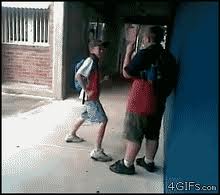
Last week I wrote a post about Casey Heynes, the Australian boy who was caught on tape defending himself against a bully.  In a graphic show of what seems to be a completely unprovoked attack, the bully is seen striking Casey with a fist to the jaw.  Casey then responds with the now infamous body slam.  I devoted the post to criticising the school’s response to the incident (It turns out that the child that filmed the video did in fact get suspended too).

So big was the news, and so divided was people’s reaction to Casey’s show of self-defense, that A Current Affair got a 1-on-1 interview with Casey:

The schoolboy who’s become an internet sensation after turning the tables on a bully has told how he snapped after years of cruel taunts about his weight.

Casey Heynes, 16, says he has been bullied nearly every day at his school, Chifley College, at St Marys, but could take no more when Year 7 student Ritchard Gale tormented and attacked him last Monday.

“All I was doing was defending myself. I’ve never had so much support,” he said during an interview with A Current Affair.

Casey reveals he’d been targeted by a new group of Year 7 boys who had started picking on him and teasing him about two weeks prior to the fight.

The Year 10 student said he was surrounded by the students when he went to get a school timetable before class.

As Ritchard backed him against the wall and started throwing punches, Casey said he felt scared and worried that others in the group would also start hitting him.

Eventually, he snapped, picking Ritchard up over his shoulder and throwing him to the ground.

The brawl was recorded on the mobile phone of another student who later posted the video online where he has earned “hero” status.

Asked if he was a superhero, he laughed and said: “No I wish I was.”

The video, which was taken off YouTube on Tuesday, has gone viral worldwide spawning dozens of websites and facebook pages congratulating Casey for fighting back.

It also sparked a media storm with St Marys residents claiming television stations were offering up to $1000 for information about the fight.

Yesterday, Ritchard was unrepentant. Asked whether he was sorry for attacking Casey, he bluntly replied: “No.”

The issue has divided the western Sydney community.

“Good on him. I was so happy to see a bully finally getting what he deserved,” one St Marys resident said.

“I don’t condone violence but when kids stage an attack like that and record it to humiliate the victim it’s wrong.”

But another resident Jayne Saunders said: “He could have broken that little kid’s neck.”

He explained that this wasn’t a one-off incident and he has been taunted for 3 years:

Casey said his outburst was a “build-up” of more than three years of being attacked verbally and physically by other students.

“They used to slap me on the back of the head and said I was a fatty and to lose some weight.

“I’ve been duct taped to a pole before as well. They target me because I don’t retaliate.

“I’ve never reacted that way before but everything built up inside me for three years…I just had enough. All I wanted is for it to stop.”

I am very disappointed that the bully is unrepentant. I would have thought that this saga would have taught him the lesson he needed to learn. Whilst I in no way condone violence of any kind, what rational human person can blame Casey for snapping? Yes Ritchard’s injury could have been a lot worse, and there is a concern that there will be copycat incidents because of the hype around this case. But I can’t help but go back to my original argument.

What is a child supposed to do when they are being taped to polls and there doesn’t seem to be anything done to protect them? I am glad that Casey feels more confident as a result of his new-found fame. But perhaps, the real story is not about Casey. Perhaps the real story is about all those kids who continue to be bullied without adequate intervention by their schools.

Wake Up Schools: You’ve Got a Bullying Problem

March 17, 2011

Whilst anti-bullying programs and policies have their place, the epidemic known as schoolyard bullying is on the rise, and the measures for counteracting it is pathetic at best.  Schools must take responsibility for their culture and must ensure that the safety of their students is paramount.  I can’t believe that incidents like the infamous NSW “body slam” incident, which has now become an internet sensation is allowed to take place at our schools.

THERE are only so many times you can try to turn the other cheek.

A Sydney schoolboy has become an internet sensation after video emerged of him body-slamming another student during a verbal and physical attack.

The year 10 boy – who pleaded with his tormenter to leave him alone – picked up his attacker and slammed him to the ground.

The teenager, said to have been bullied all his school life, was taunted and punched by a younger, smaller boy.

The victim took a hit to the face and then more blows as the year 7 boy goaded him to fight.

Suddenly the boy had had enough. He launched himself at his attacker, picked him up and threw him to the ground.

The younger boy staggered away, stunned and hurt.

Both students were suspended for four days after the incident which took place on Monday.

How can you justify punishing the victim with the very same punishment as the bully?

How can you let the kids filming and commentating from the sidelines go unpunished?  Talk about enablers!

How can the school not accept some of the blame for the lack of adequate supervision and providing an environment where such bullying exists.  If the film hadn’t been shot, there probably wouldn’t have been any punishments.  How can this happen in an age where there is a higher level of bullying awareness?

Below is the link to the video.  I must warn you it is not for the squeamish.

http://video.heraldsun.com.au/1841676941/Shocking-school-fight-video

Suspended for 4 days?  Seriously?  The school should have closed down for 4 days, and made to use that time to reflect on its core values.

The Cure for Suicide Isn’t Another Educational Program

March 11, 2011

I think that schools should implement suicide prevention programs and should certainly train teachers in how to deal with students at risk of self harm and suicide.  However, often these programs are nothing more than scapegoats for schools with poor cultures to pretend they are dealing with the problem responsibly when they aren’t.

The program in itself sounds like a good one.

Dr Martin Harris, who is on the board of Suicide Prevention Australia, says a suicide prevention program should be considered as part of the new national curriculum.

“I think it ought not to be the prevail of a particular teacher, but it ought to be a program which is embraced in a robust way by a school when they think they’re ready to do it,” he said.

Mr Harris says mental health experts could prepare teachers on how to broach the subject in schools.

“I think for us to be saying, ‘well, it’s not my problem’, increases the risk of it being isolated and for it to be stigmatised,” he said.

“I think it’s high time the community took off the blinkers and looked more carefully about what they can and can’t do.”

But Dr Michael Carr-Gregg, a child and adolescent psychologist, has dismissed calls for a suicide prevention program in schools.

“We’ve adopted a policy for as long as I can remember, that basically says let’s talk about suicide in terms of what leads up to it, which of course is by and large mental health problems; so suicide is the outcome of what happens when you don’t treat it,” he said.

“My view has been that we’ve been doing that very successfully for the last 15 years or so – the suicide rate’s come down. I see no reason at all why we should change our policy and I would urge schools to stick to their original idea and ignore the advice from Suicide Prevention Australia.”

My worry is that every time there is a glaring problem facing school aged children, somebody develops a school program to counteract it.  The advantage of a problem is that it creates awareness in students and encourages students to talk candidly and openly about important topics.  The disadvantage is that often all it ever amounts to is a lot of talk and very little real substance.

Suicide is indeed an issue facing our students.  Many of the reasons for suicide and suicide attempts relate to problems faced at school such as social pressures, bullying and academic pressures.  Schools claim to be safe, caring environments, but we know that many aren’t.  It can be argued that many schools come across cold, distant and out of touch with the issues facing their students.  Such schools should not be allowed to hide behind programs.  They should be pressured into changing their culture by spending as much time investing in connecting with their students as they do covering themselves legally.

In my view school’s must do a lot more than take on programs.  They must do everything in their powers to support and nurture their students.  They must fight for their students’ self esteem, help them find a sense of self and give them every chance to leave school with a positive attitude and real purpose.

If you think what I’m saying is just “airy fairy”, then you’d probably be in the majority.  Meanwhile programs come and go and problems still remain.

Teaching 150 Students in the One Classroom!

March 11, 2011

pupils

Pupils in an overcrowded classroom at Quarry Heights primary school interact with their teacher.


This story may well stop me from complaining ever again about class size.  I have always been of the opinion that the optimal class size is somewhere between 15 and 25.  Anything less than 15 provides the students with a lack of social opportunities, whilst anything more than 25 prevents the teacher from having sufficient 1-on-1 time with struggling and advanced students.

To think that classrooms exist with up to 150 students is just staggering!

One hundred and fifty Grade 1 pupils crammed into one classroom is the reality of Quarry Heights Primary School near Newlands East in Durban.

The 14 staff members battle to teach the pupils, virtually packed on top of each other, some of whom pass out because of heat exhaustion.

The school – which is made up of seven prefabricated buildings – caters for children mostly from disadvantaged backgrounds. It has only two taps for the 564 pupils, with no electricity, books or stationery.

The school’s governing body secretary and spokesman, Thami Nzama, said that the school lacked basic necessities and received little funding as it was a “no-fee school”, meaning that pupils did not pay school fees.

“The school was built for the poorer people of the community. We have a staff of 14. The Grade 2 class has 78 pupils; the Grade 3, 57; Grade 4, 70 pupils, and we have a joint class of grade six and sevens with 140 children.

“The other pupils are in Grade R. We have one building for a security guard who stays on the property and another that we use as a kitchen, but it does not have running water,” Nzama said.

He added that the staff did not have a staff room in which to meet and organise their work .

“Our staff room will be anywhere we find shade during the day, whether it be under a tree or prefab veranda.”

pupils 1

Teachers at Quarry Heights primary school marking exam scripts outside because they don’t have a staff room.


I can’t imagine teaching 150 six-year olds all day in the one classroom without even having a private staff room to retire to at lunch time.  I love teaching very much, but those conditions would push my level of job satisfaction to the limit. The amazing part of this story is that the teachers involved are loving the experience.

Credit goes out to the dedicated teachers who work in such an environment.  You are a credit to your profession, students and community.  May you continue to inspire us fellow teachers, to make every post a winner and overcome all challenges with a quiet resolve and an ever present smile.

Why Our Young Teachers Leave

March 7, 2011

This is a topic I feel very strongly about and it goes to the heart of the future of our educational system.  Our system is not being fair to our young teachers.  The way they are trained and geared towards teaching is horrendous.  The lack of support they receive upon commencing their first job is even worse.  If the Government really cared about teacher shortages and low retention rates they would do something about it.  But the truth is that they are too clueless to think up a decent policy and too inert to care.

As schools grapple with Australia’s teacher shortage, the race to lure more people into the profession has begun. Governments are scrambling to offer scholarships and other incentives to get more students, mature-age graduates and workers in other professions to consider a career in the classroom. The strategy seems to be working, with education authorities reporting a rise in teacher graduate numbers.

In Victoria, more than 4200 people graduated as teachers last year, an extra 400 compared with the previous year. But what if the focus on stimulating teacher supply is the policy version of pouring water into a bucket riddled with holes?

A team of education researchers who have spent the past nine years interviewing teachers think this is the case. They argue that chronic teacher shortages won’t be solved as long as governments keep failing to confront the reasons why large numbers of teachers desert their jobs early.

“Poor pay is not the reason they’re giving for leaving the profession: it’s the workplace issues of highly stressful, poor working conditions,” says Dr Paul Richardson, who has been working with Monash University colleague Dr Helen Watt since 2002 on Australia’s first longitudinal study tracking the experiences of 1650 teachers from the time they started a university education course through their years in the profession. Twenty-seven per cent of those surveyed planned to quit teaching within their first five years of teaching. Dr Richardson says the finding has big implications for governments trying to entice other professionals to switch to teaching. Many of the teacher recruits planning to quit were people who had experience in other professions.

“These were people who had been in business commenting on conditions in their schools by saying, ‘There’s no support, you can’t get any photocopying done, you’ve got to do it all yourself!’

“One guy said: ‘I’ve been a solicitor and now I’ve got a one-metre desk in a staffroom where you can’t think.’ They were totally shocked by the working conditions and the lack of administrative support.”

Between 25 and 40 per cent of teachers leave the profession within five years of starting, according to estimates in numerous surveys by teacher unions and education academics. An accurate national figure is not publicly available because exit statistics are kept and collated differently by individual education authorities in each state and territory.

Of course teachers aren’t leaving because of the pay.  Our future teachers know that the pay isn’t great, and still sign up to join the profession.  Why?  Because they have a devotion to education, to helping our next generations achieve, to making a difference.  But what they don’t bank on is the lack of sufficient training and support they will get along the way.

I went to one of the elite Australian universities, with a highly distinguished Education faculty.  Only problem is, my university, like so many around the world failed to give me the practical insights and methods necessary for doing my job properly.  They were brilliant at filling us up with the theoretical, terrible at preparing us for the day-today issues that face classroom teachers.  Accountants are prepared for their job straight out of Uni, as are doctors, lawyers and architects.  Why can’t teachers go into their profession with the same amount of confidence and practical nous?  And it’s not just the best universities in Australia.  This applies to abroad as well.

As a first year teacher I was on a one-year contract. I had to show competency straight away or risk losing my job and reputation even before my actual degree arrived in the mail.  I couldn’t ask my colleagues too many questions, for I didn’t want to lose confidence in the people who would help decide whether or not I should be retained at the end of the year.

Teaching is a wonderful profession.  And I’m glad that I had the determination and passion to stick through the uncertain times and develop the skills on my own.  But that isn’t going to cut it for all young teachers.  They deserve better practical training and a true support system that watches over them – not to judge them, but to honestly help them.  Teachers wont leave like they are if they feel adequately supported and nurtured.

Governments are dumb when they respond to the problem by making more places for teaching training at University.  The more places they make available, the more teachers scurry away before making any lasting impact in the profession.  Why should anyone be surprised?  How can you sell the profession to our youth, when in reality they face such an uphill battle for acceptance, confidence and job security?

Wouldn’t it be worth investing in support systems and greater practical experience for our young teachers?  Nurture them, assist them, give them the tools and then watch them thrive.

Teachers in Uniform?

March 6, 2011

I can see why some schools would take a likening to the idea that teachers should wear a uniform just like their students. Ultimately, I think it has the potential to undermine the very reason such an initiative was conceived. Still, it has been trialled in India with some positive results:

There is nothing new in students of Zilla Parishad schools wearing uniforms but in Buldhana district of central Maharashtra, teachers wear them too.

The concept was introduced by S J Koche, Buldhana Zilla parishad Chief Executive Officer, soon after he returned from a training programme for IAS officers, in South Korea last year.

“We were in South Korea for 15 days and in the schools we visited, I saw that even teachers wore uniforms,” said Koche. “The sight was very impressive and I made it a point to implement the same back home,” he said.

“If students can come in uniform, why not teachers, because students imbibe discipline from teachers,” he said.

His novel scheme met with stiff opposition initially, Koche said. However, later on, everything fell in place.

Now, besides 2.30 lakh students, around 8,000 teachers in 1840 zilla parishad schools in the district, wear uniforms. “The idea has been lapped up by families of teachers, Koche said.

The villagers have also appreciated the concept, Koche said. “They say they now know who the teacher is.” The colours for teachers are white shirt and black pant while for students it is blue pant and white shirt, he said.

I personally am against this idea. I have already worn a uniform throughout my own school days, and would not like to revisit the days of itchy woolen jumpers and terrible looking grey trousers. I truly sympathise with the students for what they have to wear. It would be uncomfortable to have to comply to a uniform of my own. I also feel that teachers will not be taken as seriously when forced to wear a uniform. Rather than see it as a case of setting an example, I fear that students will see it as a bit of a joke.

I am all for dressing in a professional manner. But a uniform? I think I’ll pass.

Bizarre Ideas in Education

February 24, 2011

I’ve written about this before, but I still can’t believe that this insane idea is gaining momentum.  Yes, it’s true that teachers often get frustrated by what they believe is negligent parenting of their students.  Does that give them the right to formally assess their perceived incompetence?

The idea of giving teachers the responsibility to write report cards about their students’ parents is ridiculous.  Yet, the idea is not going away:

Legislation from a Florida lawmaker has parents pondering how they’d be graded on their involvement in their child’s education: satisfactory, unsatisfactory or needs improvement?

Public school teachers in Florida would be required to grade the parents of students in kindergarten through the third grade, under a bill introduced by Rep. Kelli Stargel, R-Lakeland.

The bill has gotten the married mother of five national attention because there’s been so much emphasis on tying teacher salaries and advancement to student performance.

“We have student accountability, we have teacher accountability, and we have administration accountability,” CNN.com quotes Stargel as saying, “This was the missing link, which was, look at the parent and making sure the parents are held accountable.”

The grading system is based on three criteria that Stargel wrote in the legislation:

• A child should be at school on time, prepared to learn after a good night’s sleep, and have eaten a meal.
• A child should have the homework done and prepared for examinations.
• There should be regular communication between the parent and teacher.

Unbelievable!  Is it not the child’s responsibility to take ownership over their own homework? Did I just read that a child should have eaten a meal?  If a teacher is aware that their student isn’t being fed, the teacher has a responsibility to notify child protection authorities, not mess around with assessment forms!

Sure there are bad parents out there, but what is a report card going to achieve anyway?  How is a report going to change the error of their ways?

“Thanks teacher.  I needed that. I had no idea I was a bad parent.  I feel so much better now!”

I suppose, teachers needn’t worry.  A policy as silly as this will never be seriously contemplated.  Well, at least I hope not ….