Posts Tagged ‘School’

The Downside of Facebook

March 9, 2011

The benefits of Facebook are obvious and invaluable.  However, it is clear that like every other innovation, the bad comes with the good.  Facebook connects you to places and people all over the world, it allows you to promote yourself, your business and interact with more people than you otherwise would.  But it also has the potential of getting you in trouble:

Recently there was the case of Natalie Munroe who became a hero in some quarters for blunt comments she made of her students on her Facebook page.

Now we have a very disappointing case that once again acts as a cautionary tale of Facebook misuse:

A 13-year old Georgia girl is facing expulsion and relocation to an “alternative school” after she called one of her teachers a pedophile on Facebook. The girl, Alejandra Sosa, and two of her classmates who commented on the post must now go before a disciplinary tribunal for what Chapel Hill Middle School calls a “level one” offense: the worst category of transgression in the student handbook. Sosa posted the message because she was angry with her teacher, but said it was intended as a joke. She claims that she now regrets posting it, and understands that what she did was wrong.

The parents of the three students, though upset with their kids’ behavior, think the school and its principal, Jolene Morris, have gone too far. Sosa claims that Morris took her to the school’s library after catching wind of the post. She claims the principal then demanded she log into her Facebook account; she then took the keyboard and mouse from the student to read through her Wall posts, before telling Sosa to delete the messages. The father of William Lambert, one of the other students implicated in the incident, says that Morris also violated his son’s privacy by demanding that Sosa log into her Facebook account; Lambert had called the teacher a rapist in a comment on Sosa’s original post.

The parents all believe that sending the children to a school for students with behavioral problems will ultimately derail their education. Sosa is an honor student, and Taylor’s mother worries that putting the children in that environment is tantamount to telling them to “[be] in a gang and do drugs.” The parents have banded together to obtain the services of a lawyer. If the tribunal decides on expulsion and alternative schools, the case could wind up in the courts.

Gerry Weber, an adjunct professor of civil rights at Georgia State University, told the Atlanta Journal Constitution that while online comments are subject to libel laws, they’re also protected under the First Amendment. The schools do not have the jurisdiction to punish students for “off-campus speech,” he said, unless the comments can be proven to have caused an on-campus “disruption.” The principal’s decision to access Sosa’s Facebook account could also play to the students’ favor in court proceedings, as it may be seen as a violation of the child’s privacy.

I know there aren’t many that will agree with me, but falsely accusing a teacher of being a pedophile in a public forum is worthy of expulsion.  I know she is a child and didn’t properly think through her actions, but there is no worse label to give a teacher than that one.  Her parents should stop defending her and let her cop her punishment.  It is about time that kids take responsibility for their actions.  If they are old enough to have a Facebook page, then they are old enough to accept accountability for its misuse.  Her parents need to tell her that while the penalty may seem harsh, it is a fair one.  One that will hopefully get her to think before she slanders another person.

And perhaps, there is a lesson there for all of us with our Facebook pages.  Facebook is there to connect us with others not to divide us.

Teachers in Uniform?

March 6, 2011

I can see why some schools would take a likening to the idea that teachers should wear a uniform just like their students. Ultimately, I think it has the potential to undermine the very reason such an initiative was conceived. Still, it has been trialled in India with some positive results:

There is nothing new in students of Zilla Parishad schools wearing uniforms but in Buldhana district of central Maharashtra, teachers wear them too.

The concept was introduced by S J Koche, Buldhana Zilla parishad Chief Executive Officer, soon after he returned from a training programme for IAS officers, in South Korea last year.

“We were in South Korea for 15 days and in the schools we visited, I saw that even teachers wore uniforms,” said Koche. “The sight was very impressive and I made it a point to implement the same back home,” he said.

“If students can come in uniform, why not teachers, because students imbibe discipline from teachers,” he said.

His novel scheme met with stiff opposition initially, Koche said. However, later on, everything fell in place.

Now, besides 2.30 lakh students, around 8,000 teachers in 1840 zilla parishad schools in the district, wear uniforms. “The idea has been lapped up by families of teachers, Koche said.

The villagers have also appreciated the concept, Koche said. “They say they now know who the teacher is.” The colours for teachers are white shirt and black pant while for students it is blue pant and white shirt, he said.

I personally am against this idea. I have already worn a uniform throughout my own school days, and would not like to revisit the days of itchy woolen jumpers and terrible looking grey trousers. I truly sympathise with the students for what they have to wear. It would be uncomfortable to have to comply to a uniform of my own. I also feel that teachers will not be taken as seriously when forced to wear a uniform. Rather than see it as a case of setting an example, I fear that students will see it as a bit of a joke.

I am all for dressing in a professional manner. But a uniform? I think I’ll pass.

The Heroic Life of a Selfless Teacher

March 4, 2011

If there is something one can get out of the absolutely tragic story of a teacher who drowns in trying to rescue his students, it is the selflessness of teachers, heroically displayed by maths and science teacher Paul Simpson.

A schoolteacher has drowned in an apparent attempt to save his students from a rip at the notorious Bells Beach.

The man, believed to be aged in his 30s, died yesterday while supervising a group of Year 11 and 12 students from Shelford Girls Grammar, in Melbourne’s east.

The girls, aged about 15 years, had been snorkelling at 4.30pm when wild surf and a rip tide turned conditions dangerous.

The group of 19 students and three adults had been walking in knee- to waist-deep water on a reef when a wave knocked them off their feet and into deeper water, Ambulance Victoria spokesman John Mullen said.

Police said it was believed the teacher had been trying to rescue the girls before he drowned.

Paramedics tried unsuccessfully to resuscitate him on the shore of the surf beach near Torquay, 105km southeast of Melbourne.

Several teenagers had to be rescued from the water. One received treatment for an asthma attack. Others had minor injuries.

The distressed students, who were in shock, had to be helped to make their way back up the beach to a car park to be taken back to their camp at Torquay.

The teacher is question works at a school within walking distance of my home.  His bravery and unflinching desperation to rescue his students shows us what sacrifices a brilliant teacher can make for the safety and security of his students.  I extend my condolences to his family, friends, colleagues and students.  May his brief but meaningful life inspire others to strive to make selfless decisions whilst looking out for others.

If you have some time I encourage you to read tributes written by his former students on a special Facebook page dedicated to the memory of this incredible person.

Homeschooling is Not the Enemy

February 25, 2011

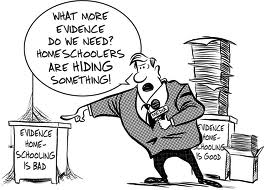
Whilst I am not a proponent of homeschooling and I see the virtues of the traditional school system, I am very frustrated by the lack of tolerance given to parents who decide that homeschooling is their prefered option.  To knock homeschooling is to ignore the many serious flaws inherent in the traditional school system.  Even though I think these flaws can be corrected and better practice can be implemented, until that is the case, parents will always look at their options.

That’s why I was particularly disappointed to read a recent article regarding the 12,000 children, aged 16 or under who are classed as “missing” from school in England.

The figures prompted warnings about the safety of those allowed to slip through the net. Children allowed to drop out of school could be at “serious risk” of physical, sexual or mental harm, charities said.

A Commons Education Select Committee inquiry in October reported that thousands of children as young as 11 who were “lost” to the education system may be turning to lives of crime, drugs and prostitution.

At this pont of the article I was naturally concerned about these kids who are so young, yet are not receiving education.  Then I read the following sentence:

Children may go “missing” due to being forced to wait for a school place or being kept at home by their parents…

How are those scenarios considered “missing?”  What if a child is being homeschooled?  Are they missing then?  Surely children waiting for a school place and being kept home by their parents aren’t necessarily “missing”.

Luckily I read another article which focussed on ending home-school stereotypes:

Despite successes with the ACT, spelling bees and math contests, home-schooled children battle a stereotype that they’re social misfits leading sheltered lives that fail to prepare them for the real world. Or worse yet, home schooling is depicted as brainwashing by parents pursuing a narrow political or religious agenda.

Nebraska law is friendly to home-schoolers, requiring basically that parents submit a form affirming their intent to home-school and provide a copy of their curriculum. The state doesn’t require state testing or home visits by state personnel.

Several parents interviewed said they cope with public misconceptions about home schooling even as the Internet and creative teaching arrangements give parents new ways to broaden their children’s education and further challenge the stereotypes.

Home-schooled students play on Little League teams, join Boy Scouts, perform in public school bands, participate in cooperative academic classes and, when necessary, take classes at local high schools and colleges, parents say. Students participate live in classes via the Internet.

Mike and Tricia Croushorn of Omaha home-schooled their children, Abi, 22, Tyler, 20, and Sam, 16, to give them a well-rounded education that included a religious component.

The Croushorns got interested after getting to know parents who home-schooled.

“We would meet these other children and they were always polite and respectful, and they could carry on a conversation with adults,” Tricia Croushorn said.

Homeschooling is not the enemy of education.  Bad teaching and poorly run schools are the enemy of education.  Until traditional schools really do offer the kind of support, care and safety that they claim to, then loving parents will always explore their options.  Because ultimately it’s not about tradition, it’s about the best needs of our children.  The only people who should be making that call are the parents.

I love being a school teacher and I see great value and potential in traditional school education, but I admire the selflessness and sacrifice that homeschooling parents make and the intentions behind their decision.  Instead of picking on the unconventional, make the conventional much better than it currently is.

Why Aren’t Kids Held Back Anymore?

February 11, 2011

“It is our policy not to hold kids back unless there are exceptional circumstances.”

This is the standard line that Principals use nowadays when a teacher raises the topic of kids repeating grades.

Why isn’t it school policy?  What is stopping schools from having the courage to recommend it?

EXCUSE 1: “There is a stigma about kids that are forced to repeat a year.”

Well, that stigma is partly generated by an educational system that refuses to think logically about this issue.  When policy makers decide that some students would greatly benefit from redoing the year, they are assisting in breaking that stigma.  When they decide that they would prefer letting thE child flounder in a year level they aren’t equipped for they are helping to maintain the stigma at the cost of progress.

EXCUSE 2: “A child’s confidence could be tarnished by making them repeat.”

Since when is a school content in letting students fail, looking out for their self-esteem?  How is being miles apart from the rest of the class a confidence boost?  On the contrary, a child can get a new lease on life when they repeat a year.  They are given extra time to fill in the gaps and improve their basic skills.

EXCUSE 3:“But the parents would be devastated if we even raised it.  They may even remove the child from the school. “

A school that makes its decisions based on whether or not the parents will remove their child, is deeply compromised and lacks integrity.  The reason why parents may be devastated is because such an occurrence is rare.  The reason why it is rare to recommend that a child repeat a year is because schools don’t do it enough.  You have to break the cycle before such a measure gains wider acceptance.

Ultimately, a school should do what is right for the child, not what is popular or easy.  That is why I congratulate the Indianapolis school system for its brave new policy:

A new statewide third grade reading test will be a new test developed by the same company that produces the ISTEP statewide exams. About a third of third grade students fail the English and language arts ISTEP test each year, but the new exam will be designed with the expectation that all students who can read will pass the test.

“This is so fundamental to a child’s success, I think we absolutely must draw a line in the sand,” said board member Jim Edwards.

Under provisions adopted by the board Tuesday, students who do not pass the test on the first try could attempt the test again during locally-offered summer school, and could move to fourth grade if they pass on that attempt. All students would have to pass the exam to advance unless they qualified for one of the plans’ three exemptions: one for special education students, one for English language learners and one for students that have been retained twice prior to fourth grade.

I realise that repeating a year has implications, and that sometimes the result of doing so will end up being negative.  I simply feel that schools should be caring and supportive enough to do the right thing by the child and help replace stigmas with good decisions.

Teachers Can Now Be Fired For Being Human!

February 10, 2011

Reality check: Teachers are REAL people!  They are not robots, and yes, they make mistakes.  Sure, teachers are role-models with a responsibility to act with dignity and professionalism at all times.  But that doesn’t mean that they can’t enjoy the same privileges and opportunities as other people.

To fire a teacher over an innocuous Facebook photo is absolutely disgraceful!

A US teacher was fired for posting a picture of herself holding a glass of wine and mug of beer on Facebook, a report has said.

The happy holiday snap cost Ashley Payne her job after a parent spotted it on Facebook – and complained, the Daily Mail reports.

The picture was reportedly taken while travelling around Europe in the summer of 2009.

According to the Daily Mail, Payne, 24, was shocked when she was summoned to the head teacher’s office at Apalachee High School, in Winder, Georgia, and offered an ultimatum.

She reportedly told CBS News: “He just asked me, ‘Do you have a Facebook page?’

“And you know, I’m confused as to why I am being asked this, but I said, ‘Yes’, and he said, ‘Do you have any pictures of yourself up there with alcohol?’”

He then offered her an option: resign or be suspended.

She chose to resign.

Readers of my blog would be aware that I have previously written about the challenges that Facebook and other forms of social media has on educators and education as a whole.  I have been critical of teachers who post inappropriate material, as well as advised teachers to ensure that their privacy settings are on.  What makes this case different is that this teacher wasn’t doing anything illegal or unprofessional, especially since her settings were switched to private:

The English teacher reportedly later found out it was one anonymous emailer who turned her into the school board after seeing the picture on the social networking site.

But she is baffled how a parent could gain access to her page when she has all her privacy settings on “high””, meaning only her closest friends have permission to see her pictures.

According to the Daily Mail, she admits putting the “offensive” photos on Facebook but says she now feels as if she had stashed them in a shoebox at home for them to be stolen and showed to the head teacher.

Let our teachers have a life!  Let’s not fire every teacher who has holiday photos!

Payne added: “I just want to be back in the classroom, if not that classroom, a classroom. I want to get back doing what I went to school for, my passion in life.”

All those resposible for this teacher’s resignation – shame on you!

The Obstacle Course that is Teaching Maths

February 9, 2011

Below is the second maths lesson in a series of original maths lessons I have devised over the years:


Maths Obstacle Course

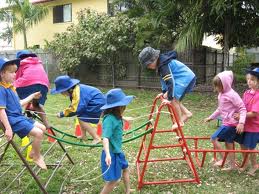
I devise a simple obstacle course using whatever playground equipment the school has.  Slides, monkey bars, polls, ladders and bridges are all useful.  The obstacle course doesn’t need to be intricate, long or complex.  Students should be able to finish it within half a minute maximum.

I take the students out to the playground.  They have no idea what we are doing.  They may ask me, but my reply is “You’ll see.”  The reason why I don’t tell them it’s a maths lesson is because maths has a stigma, and just the mention of it will deflate some students’ expectations.

Usually outdoor lessons require pencils, worksheets and clipboards.  The students are relieved when they find out that none of these implements are required.

With the students congregating around the playground equipment, I tell them that they are going to be doing an obstacle course.  I show them the route they need to take and tell them that each individual will be timed while doing the course.  Each student gets one attempt only, with their personal time written down.  On completion, I order the times privately while the students get a drink of water.

Only the 5 quickest times are read out, so as not to upset or demoralise any of the slower performing students.  Of course, if other students request to know their time, I tell them.  At this point we walk back to the classroom.

On arrival, I write the times in random order on the board.  Using the times, students will take part in some of the activities below, depending on their age and maths proficiency:

Activity 1:  Order the times from quickest to slowest;

Activity 2:   Round the times to the nearest second, tenth of a second etc;

Activity 3:  Work out the total time taken cumulatively over the entire class;

Activity 4:  Work out the average time for the entire class;

Activity 5: Chart the times using Excel and create a chart such as a column graph which presents the data in graphical form; and

Activity 5: Students estimate what time they think they would get should they be given a second attempt.  They will also be asked to give reasons for their answer (e.g. it could be faster the second time around due to a greater awareness of the route, or an improved strategy, yet it could be slower due to fatigue or the pressure to perform).

Even though the main chunk of the lesson is spent doing something that can hardly be called maths, it serves as a basis for engaging the students.  The skills covered in the lesson include measuring time, adding decimals, ordering number, rounding, IT, graphing, averaging and predicting.

It’s a great feeling watching the students get a shock when they find out that the PE lesson they thought they were taking part in, ends up being referred to as a maths lesson.

And ultimately, that’s the point.  Maths is in everything – even the things that give the students pleasure.

Parents, Don’t Do Your Kids’ Homework!

February 7, 2011

The other day I took my daughter to the museum to see an exhibit on Africa.  We sat down to do an African inspired craft activity where I witnessed a loving mother helping her daughter design and decorate her artwork.  I use the word “help” very loosely, because in fact she was basically doing the whole thing for her.  Soon the child’s father joined them.  What ensued was a disagreement between the child’s father and mother over what design strategy to use and what colours worked best.  What was supposed to be an activity for the child, became a chance for the parents to let their child sit aimlessly while her parents took over.

This is a common syndrome when it comes to homework.  Parents often end up doing their child’s homework.  Whilst I understand that they do this out of love as well as to diffuse some of their child’s anxiety over the complexity of the set task, I strongly urge parents to desist from this practice.  Even though in the short-term the child is grateful that the homework can now be submitted without too much heartache, in the long-term they have neither demonstrated capability in successfully mastering the task nor have they managed to calmly work through a challenge.  I accept that parents use homework as a chance to spend some quality time with their kids on a weeknight (where time with the kids is often at a premium), but there are better ways to show your children that you love them and support them.

Whilst there are some strong arguments for abolishing homework (which I will cover at a later date), I’d instead like to focus on what homework should be and how parents can help without feeling a need to take over:

  1. Homework should be revision.  It should not introduce a new concept or skill.  It should simply be a vehicle for students to demonstrate how well they understood what was covered in class that week.  If the child is bringing home work that was not introduced in class, I advise you to see the teacher.
  2. Most teachers give a few days to complete the homework.  I strongly urge my students to use night one to read over the homework and circle any question that they don’t understand.  Then, instead of approaching their parents, come see me the next day.  Of course, I am not restricting the parents from helping their kids, I am merely offering my help as the first option.  In my opinion, parents have already spent most of their youth completing homework, they have paid their debt to education and should now be allowed to enjoy a homework-free life.
  3. When the student approaches the teacher early on about difficulties in the homework, they are showing a great deal of responsibility and assertiveness.  This isn’t lost on the teacher.  So if the students maintains this sort of dialogue with their teacher, extensions are likely to be given should they struggle to meet the deadline.
  4. The best help you can give your children, when assisting them through a homework task is patience and perspective.  Offer your services by all means, but ensure that unlike the girl at the craft table, they end up having ownership of their work.  Kids are not proud of their parents homework, they are proud of their own achievements.  Whilst instilling independence and confidence in children may sometimes feel like an overwhelming proposition, the payoff is huge.  I would rather my students hand in a piece of homework that they took ownership of that was full of mistakes than a brilliant piece ultimately done by mum or dad.

We can easily look at parents who are doing their children’s homework in a judgmental light, whilst calling them enablers and accusing them of spoiling their children.  This is not the right approach.  These parents are often loving parents that don’t know how best to act in a complex situation.

Hopefully the above tips are of some assistance.

You Don’t Get Elite Teachers with Elitism

February 4, 2011

In my opinion, one of the biggest factors concerning the current failures of our educational system is the inadequate and substandard teacher training programs offered by our Universities.  Not just the minnow Universities but also the elite ones.

The idea proposed by Lord Adonis that every secondary school should have teachers who attended elite universities is not only unworkable but costly and simplistic.

Addressing the Independent Academies Association (IAA) conference in central London, Lord Adonis said: “You need a good mix of teachers, of course, at any successful school, but you cannot be a successful school unless you at least have a certain proportion of your teachers who have themselves come from leading universities in to which you intend to send your best students.”

Lord Adonis warned delegates it would not be possible to transform admissions to top universities “unless you can develop a cadre of teachers in your own schools that have that background themselves.”

I attended one of Australia’s elite Universities and I can tell you without a shadow of a doubt that there was precious little that I was taught that was of value to me in the classroom.  From my experience the training of teachers needs an overhaul.  Teaching theory is all well and good but it needs to be complemented with proper practical instruction.  I’ve seen teachers who are more academic  and have sharper intellects than I do, who floundered in the classroom because sometimes all the knowledge in the world on the right and left brain and metacognition can’t help you get through to a hostile or challenging class.

My lecturers were mostly former teachers who left the classroom because they couldn’t manage anymore.  They were a fountain of knowledge when it came to theory, but clearly relieved to be out of the classroom.  Their pearls of wisdom included “Use them or lose them”, concerning the number of paid sick days available to teachers.  Sure, it can be seen as good advice to cash in on your paid sick leave, but it isn’t the positive and responsible message to be sending to future teachers.

Lord Adonis may be right.  Perhaps it is easier to get pupils, particularly those from poorer areas, into top universities when their teachers have studied at those institutions too.  But for my daughter, I am satisfied with a teacher that is caring, dedicated, and prepared to challenge educational norms by experimenting and taking responsible risks.

You don’t need an elite University to educate, prepare and nature an elite teacher.

I’m Drowning in Paperwork: Please Pass the Snorkel

February 3, 2011

I admit it.  The allegations are true.  I am a tree-killer!

It’s not my fault, of course.  In the short time I have been teaching, the paperwork demands on a teacher have grown from taxing, to barely manageable, to excessive, and now – out of control!

Why?  Why, at a time when teachers are being criticised for their students’ low performance data and failure to deliver on outcomes, is the paperwork demands of a teacher so high?  Surely time would be better spent developing engaging lessons.

The answer is simple.  The rules applying to all teachers are in place to cover the lesser achieving teachers.  The assumption is that if a lazy teacher wasn’t told what to do, how to think, what to cover, how to plan and who to cater for, they wouldn’t achieve anything.  By forcing teachers to complete crazy amounts of paperwork, they are treating all teachers as if they were inert, fraudulent, apathetic stooges.

Take the planning requirements, for example.

Is planning important?  Absolutely!  Planning is important for three main reasons:

1.  It shows what you are teaching your students in a week, term and year.

2. It helps you organise thoughts and properly sequence the concept or skill you are teaching.

3.  It provides a comprehensive guide for a casual relief teacher, should you not be able to teach your class.

As important as planning may be, it can still go overboard.  In the summer holidays alone I had to complete first term planners for literacy and numeracy, yearly planners for literacy and numeracy, a 10 page integrated planner for my topic of inquiry (Federation) and weekly planners for both numeracy and literacy.  The amount of hours I spend on those darn things doesn’t correlate with how useful they turn out to be.

The rationale that by spending hours upon hours on these planners,  an average teacher will become transformed miraculously into a more focussed and effective educator is just plain wrong.  On the contrary, it forces some teachers to cut corners by mindlessly copying dull, lifeless units from textbooks.  With all that paperwork, teachers often become too concerned with deadlines and time restrictions to go to the trouble of conceiving original and fresh lesson ideas.

And it’s not just planning.  There’s professional learning contracts which chart the goals, reflections and progress of the teacher, class newsletters, letter to parents, school policy feedback forms, incident report documentation, worksheets, homework, curriculum night summaries, parent teacher interview folios and I’m sure there’s more, because … there’s always more!

I’m not trying to play the victim here.  I love my job and understand the value of the above requirements.  It’s just that the sheer amount of  paperwork clearly gets in the way of a teacher’s natural desire to spend less time meeting arcane professional standards and more time excelling in delivering fun, vibrant and engaging lessons.

I’d love to write more on this topic, but unfortunately, I’ve got more paperwork to finish.