Posts Tagged ‘religion’

Teacher Left Out in the “Cold”

October 1, 2011

Let’s face it,  most of us respond, “Bless You” to a sneeze simply because it’s a tradition, not because of any religious reasons.

I’ve always wondered why one gets a “Bless You” for a sneeze but nothing for a cough.

I’m sure poor Steve Cuckovich wished his students had a cough rather than cold.  Perhaps none of the circus act to follow would have eventuated:

Teacher Steve Cuckovich docked his students’ scores after they said “bless you” in the middle of class. He says talking of any kind is disruptive and takes time away from class.

Cuckovich teaches health at William C. Wood High School in Vacaville.

Some parents were furious with the teacher, claiming his rule was anti-religious.

Cuckovich apparently listened to the parents. He says he will no longer deduct points from assignments for the disruption, but he added he will continue to control his classroom.

On Thursday, the district made it first comments on the issue. Superintendent John Niederkorn said that Cuckovich thought the students were sneezing in dramatic fashion with the intent of disrupting class.

“It was brought to the District’s attention a few days ago that students were disciplined for being disruptive in class. The teacher believed that students were dramatically sneezing and responding in repetitive fashion “Bless You”. One of the concerns is the social convention of saying “Gesundheit”, “God Bless You”, or “Bless You” after someone sneezes. Of question is whether a series of these repeated remarks by several students constitutes freedom of speech or a classroom disruption and merits student discipline. Vacaville Unified’s Administration is continuing its investigation of this reported classroom disruption. We are reviewing the impact of this disruption and the student grading policy. Certainly a blessing by one individual to another after a sneeze is a welcomed acknowledgement of a social norm. Hopefully it is not abused as a disruption of classroom instructional activities.” Dr. John Niederkorn, Superintendent.

Let’s get this straight.  Students erupted in a chorus of “Bless You” designed to disrupt Mr. Cuckovich class for their own enjoyment.  He responds with a consequence (albeit a harsh one) and the parents, instead of seeking the teacher or Principal for a clarification, go right to the top with their protest.

And instead of taking responsibility for the poor conduct of their children they decide to make this into a religious scandal.

And what does the superintendent do? Does he:

a. Redirect the parents to the teacher or school?

b. Tell the parents not to take this minor issue out of proportion?

c. Defend the teacher in question?

Nope.  None of the above.  I’m afraid he takes the criticisms extremely seriously and conducts a full investigation.

What’s wrong with an investigation?

This whole ugly story shows how powerless and unsupported many teachers are.  Here is a teacher who wants to do his job without disturbance.  That is every teacher’s right.  He isn’t a religious bigot or necessarily a bad teacher.  But where was his defence?  Where was the instruction to consult with the teacher before taking it to the superintendent?

How would the parents like to have such disturbances in their workplace?  How would they like it if I turned up at their desk every 5 minutes screaming “Bless You”?  How would they like it if while they were conducting a meeting I waltzed in screaming “Bless You”?.

I’m sure they wouldn’t like it.  But they wouldn’t be able to stop me.  That would be anti-religious!

Let Our Students Think For Themselves

September 14, 2011


Be very wary of a teacher with an agenda.

Teachers have opinions – that’s a given.  They have beliefs about religion, politics, etc.  But teachers do not have the right to use their classroom as a platform for spreading their convictions.  Teachers must allow their students to think for themselves and reach their own conclusions.

Unless the school is a private religious school or the subject is Bible Studies a teacher does not have the right to deviate from the curriculum to canvass their religious beliefs.  That is why the Supreme Court in the U.S. got it absolutely right when they handed down a ruling that disallowed such a practice:

Saying a high school teacher has no right to “use his public position as a pulpit,” a federal appeals court ruled Tuesday that a San Diego County school district was on solid legal ground when it ordered a math instructor to remove large banners declaring “IN GOD WE TRUST” and “GOD SHED HIS GRACE ON THEE.”

Those inscriptions and others that longtime teacher Bradley Johnson displayed on his classroom wall amounted to a statement of religious views that the Poway Unified School District was entitled to disavow, said the Ninth U.S. Circuit Court of Appeals in San Francisco.

Under U.S. Supreme Court rulings, the appellate panel said, government employees, including public schoolteachers, have no constitutional right to express views in the workplace that contradict their employer’s rules or policies.

“Johnson took advantage of his position to press his particular views upon the impressionable and captive minds before him,” said Judge Richard Tallman in the 3-0 ruling, which reversed a lower-court decision in the teacher’s favor.

The district “acted well within its constitutional limits in ordering Johnson not to speak in a manner it did not desire,” Tallman said.

The two banners, each about 7 feet by 2 feet, contained references to God from U.S. documents and patriotic songs. One quoted the Declaration of Independence passage that all men are “endowed by their CREATOR” with unalienable rights.

If Mr. Johnson wanted to inspire his students to respect or even adopt his religious beliefs he should have disposed of the signs long ago and instead tried a far less invasive strategy.  He should have concentrated on being a role model, acting with integrity, commanding respect from his students and making a good impression.
He may have had some or all of those character traits, none of which required cheesy signs.  The best way to make someone follow in your footsteps is to lead by example not creating loud billboards.


Why Be Flexible When You Can Be Politically Correct?

April 5, 2011

There used to be a time when educators were self-directed.  They could decide how to teach, when to discipline and were given the opportunity to do their job according to their own unique style.

Not any more.

Everything is dictated and imposed, so little is left up to the educators.  There is such a lack of trust in the gut instincts and methodology of teachers and school communities, that Governments feel they must intervene.  What we are left with is political correctness gone mad!

Take this story for example:

CHILDCARE workers who send tantrum-throwing toddlers to “time out” risk hefty fines under national childcare laws to come into force next year.

New regulations will expose childcare centres to penalties if children are required to take part in religious or cultural activities, such as Christmas tree decoration or Easter egg hunts.

Childcare supervisors risk personal fines for the first time, under the national legislation being adopted by state and territory governments.

Centres could be fined as much as $50,000, and supervisors $10,000, for failing to ensure children are adequately supervised, or for using “inappropriate discipline” to keep order.

Centres will be banned from using …  “any discipline that is unreasonable in the circumstances”.

The Education and Care Services National Act, which has been passed by Victoria as the “host jurisdiction” and will be replicated by other states and territories, does not define “unreasonable” discipline.

But draft regulations with the legislation show childcare supervisors risk $2000 fines for “separating” children.

Supervisors must “ensure that a child being educated and cared for by the service is not separated from other children for any reason other than illness or an accident”, the regulations state.

Herein lies the problem.  Governments know precious little about education.  Here is just a few examples of how they’ve got it wrong:

  1. “Separating children” is often an essential method of conflict resolution and discipline.  If a child is threatening another child/children, they must be separated.  You can’t allow a child (regardless of age) who is in an irrational or heated frame of mind to be among other children. It is simply a safety imperative.
  2. Similarly, separation can be quite effective for teaching students that every action has a consequence.  When a child misbehaves and is forced to sit out of a game or activity for a period of time, it teaches the child that privileges come with responsible behaviour.
  3. To not define “unreasonable” discipline is just ridiculous.  How can you pass a law about something that isn’t even defined?  How can you have already thought up the fine before you have properly defined the offence?
  4. What is wrong with giving childcare centres the opportunity to decide for themselves whether or not to conduct Easter egg hunts?  They are not stupid.  If they have a large non-Christian demographic, there is no way they would ever consider such an activity.  But what if they were entirely Christian in make-up?  What if the parents were uniformly comfortable with their children taking part in Easter Egg Hunts?  No,  the Government says they will fine you  regardless.

Political correctness stifles those in the know from doing their job properly.  It stops teachers from injecting their own personal style and prevents innovators from providing our educational system with much-needed positive change.  It says that all childcare centres and schools must be run in the same way, with the same harsh and uncompromising rules without any thought given to the makeup or cultural uniqueness of the institution.

Political correctness is useless and counter productive.  Instead of these harsh and illogical rules, teachers and childcare workers need to be encouraged to be flexible, sensible and sensitive to the welfare of their students and their families.

This is the Program You Want To Cut?

January 4, 2011

Governments are good at introducing programs that go nowhere and cost the taxpayer a fortune, but rarely institute a program that actually contributes positively to schools.  The schools chaplaincy program which offers pastoral care for students in need is a great initiative.  It gives schools the funding to employ a counselor or pastor to assist with students who require help with anxiety, personal, academic or social issues.

Surely a program like this would be a candidate for increased funding, right?  Well, apparently not:

THE schools chaplaincy program is being investigated by the Commonwealth Ombudsman after a highly critical report of its operation in the Northern Territory. At the same time, a High Court challenge has been launched by critics of the scheme to which successive federal governments have committed $437 million.

Critics don’t like the fact that such a large proportion of the pastors are Christian.  They argue that such a service undermines the separation of church and state.  Although most of the chaplains are Christian, some like the one working in my school are not.  The fact that such a large proportion is Christian has no bearing on the opportunity for a given school to use the grant to get a non-religious counsellor.

Critics also point to the fact that these pastors are not qualified.  To fund qualified counselors in 3700 schools would cost considerably more than the $437 million already invested in the scheme.  At least it’s something.  It may not be a Rolls Royce scheme but I can testify to its effectiveness.  Yes there are concerns of unqualified counselors having access to personal information, which is why my school makes the teacher and parents fill out forms before our Wellbeing Officer can start taking sessions.  It is up to the school to ensure that the parents are informed and co-operative not the Government.

The likelihood is that this program will be scrapped.  If so, I think it should be replaced with an even better version of the same thing.  Chances are, it will be replaced with something more costly and completely ineffective.

Hijacking the Curriculum for Political Correctness

December 15, 2010

The proposal to include the traditions of other religious faiths as part of the formal school curriculum must be summarily ignored.  The curriculum does not, and has never contained any religious content before, why tamper with it now?

Keysar Trad, president of the Islamic Friendship Association of Australia may want more students to have awareness of Islamic festivals, but fiddling with the curriculum is not the way to go.

As someone of neither Christian nor Muslim faith, I have absolutely no problems with schools acknowledging festivals from different religions and cultures, but that doesn’t mean they have to insert them in the curriculum.  And you can’t compare Islamic festivals to Christmas, as Christmas is a holiday celebrated by non-religious as well as religious people.

It is also important to note that after finishing reading about Mr. Trad’s history and long list of controversies on his Wiki page, I am deeply concerned that a man of his reputation is allowed to represent his people, especially under the banner of a “Friendship Association of Australia.”

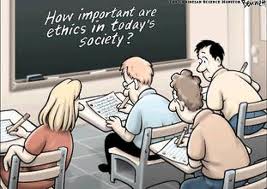
The Ethics Debate

November 22, 2010

For the past few years there has been much debate about the place Ethics classes have in Primary school education.  There has been resistance from religious groups on the basis that it is competing with formal RE (Religious Education lessons) for numbers and government funding.  Proponents of having ethics instruction in our government schools claim that people have a right to choose what is the best for their children, and that non-religious students are better off having an alternative program rather than just sitting out of RE and taking part in an unstructured lesson (basically consisting of free time or watching a movie) instead.

In a new law about to be passed in NSW, parents will have the right to ethics classes as an alternative to scripture in their child’s school even if the principal and the majority of the school community opposes them.

A Baulkham Hills parent, whose child participated in the trial, said: ”The majority of parents, ethics teachers and children at our school found the ethics classes an enriching complement to the many good SRE [Special Religious Education] classes on offer”.

However, many of those opposed were concerned about ethics competing with scripture classes.

”Ethics is already taught in other forums in state primary education and should not be allowed to attract students away from meaningful faith-based studies,” wrote one.

Whilst I am not opposed to have Ethics lessons taught at our schools, I would like to make the following points:

1.  I would like to see RE and Ethics material being submitted to a curriculum board for approval.  Everything taught at school must be rich, stimulating, engaging and subject to curriculum style scrutiny.

2.  Every teacher should, and most do, invest time in their day-to-day teaching, imparting ethics by teaching their students right from wrong, helping them to make healthy choices and showing them how to maximise their potential.  The idea that students without an Ethics program at their school are is some ways missing out on ethics instruction is just wrong and disrespectful to hardworking, caring teachers.

Is the RE vs Ethics debate prevalent in countries other than Australia?  What is your opinion regarding the validity of ethics instruction?

Drunken Teachers Beat-Up

November 21, 2010

The Sunday Telegraph should be reprimanded for an appalling article which claims that teachers in Catholic schools drink alcohol in the staff room on a Friday evening.  The article doesn’t ring true, seems designed for shock value rather than true journalism and fails to give proper evidence to back up its claims.  Read the article here:

http://www.dailytelegraph.com.au/news/happy-hour-in-school-staff-rooms/story-e6freuy9-1225957381180

Example 1:  The Sunday Telegraph understands many of the 200-odd Catholic schools in NSW to have refrigerators stocked with alcohol in staff rooms and to publicise cheap alcohol.

Yeah?  How many of these schools?  Prove it!

Example 2:  Drug & Alcohol Research & Training Australia’s Paul Dillon said he had grave concerns about the example being set for students by the behaviour.

What behaviour?  You have yet to prove such a culture of drinking exists.  You have yet to name 1 of the 200 schools.

Example 3: “Certainly I have confronted schools and principals about the practice and the worst thing I’ve seen is actual prices of alcohol pinned on fridges,” Mr Dillon said. “Young people go into the staff room, they see the fridges.”

Students do not have access to staff room fridges.  Heck, they shouldn’t have access to the staff room!  How many schools have you visited with alcohol prices?  Does it really matter anyway?

Example 4:   “There is also the issue that [teachers] are doing this on a Friday night. They are then getting behind the wheel and driving home.

“When I’ve raised this, the teachers have become very, very defensive. They say things like, ‘It is our right to do this’.”

If they went straight to the pub it would be none of your business, and since you have yet to establish that this is a clear problem, I still ascertain, it is none of your business.

So what do we have here?  Figures to prove its a problem?  Nope.  Pictures or video footage of beer-loaded fridges and booze-ups? Nope.  Can we name and shame a school that has transgressed in this way?  Sorry, we don’t have that information.  How about a quote from a student who witnessed this behaviour or saw evidence of alcohol in the staff room?  No, we don’t have that either.

There is no story here.  If I was affiliated with a Catholic school I would be ropable.  What an abominable piece of gutter journalism!

Shame on you Sunday Telegraph!