Posts Tagged ‘Parents’

Pushy Parents and those Awful Standardised Tests!

May 13, 2012

So it turns out that some parents are so keen to have their children perform at the NAPLAN tests (Australia’s standardised tests) that they have started preparing them as early as kindergarten age. I couldn’t think of anything more dispiriting for a child. It’s bad enough I have to teach my Grade 3’s based on the questions they are bound to encounter during the tests, what could be worse than being subjected to it, up to 5 years in advance?

PUSHY parents are training kindergarten kids for Naplan – four years before they have to sit the controversial literacy and numeracy tests.

About a million students – in years 3, 5, 7 and 9 – will sit this year’s tests over three days next week.

But the pressure to perform is beginning years early, with some parents forcing their four-year-olds to take grade 3-level tests at home.

Dr Les Michel, from the Senior Students Resource Centre, said pre-school parents had joined the soaring demand for practice Naplan tests.

“This year we’ve even been getting kinder parents,” Dr Michel said.

“We would have had dozens, I’d say.”

Dr Michel said kindergarten parents bought the grade 3-level booklets, costing up to $24.95 each.

“They are really pushing their kids,” he said.

School Education Minister Peter Garrett said Naplan practice for pre-schoolers was “highly alarming”.

“It’s putting more pressure on kids at such a young age that they really don’t need, and it’s usurping the role that teachers in the classroom play, which is completely unnecessary,” he said.

However schools are also increasing the pressure, with “teaching for the test” now beginning as early as grade 1.

“We’re aware of it happening, even though people won’t admit it on the record, and why would they?” Parents Victoria executive officer Gail McHardy said.

“It demonstrates the desperation of some schools – their reputation hangs on it.”

Victorian Independent Education Union secretary Deb James said there was an “increased and unwelcome” focus on the tests in schools.

Australian Education Union state president Mary Bluett said: “Kids sitting down and practising tests is not the way to learn.”

Lucky for these pushy parents, I have some suggested exercises for them to set for their children.


To prepare them for the persuasive writing exam, you could set your child some of the following topics:

1. What is more fun, studying language conventions or playing outside with friends?

2. Is doing practice tests with mum and dad considered quality time?

3. Is learning for fun overrated?


To prepare them for the maths paper, I have the following suggested activities:

1. Count up the blisters that you have accrued from all the writing you’ve done and round the number to the nearest ten.

2. If Johnny went to school from 8:00 a.m until 4:00 p.m. and then spent the next 2 hours completing timed reading comprehension exams, how much time does he have to relax?

3. What percentage of pushy parents ends up rearing appreciative kids?

Good luck parents!

95% of Educators Claimed to Have Been Bullied

May 8, 2012

The plight to stop children from bullying others is a hard enough task, What makes it even more difficult, is the fact that the very same people entrusted with controlling the issue are bullied themselves:

BULLYING of staff is rife within Australian schools, with parents and students among the top perpetrators, research reveals.

A staggering 95 per cent of educators claimed they had experienced at least one of 42 bullying behaviours identified by the researchers.

The most common was personal confrontation or professional destabilisation, often resulting in a deterioration of mental and physical health.

The new book Bullying of Staff in Schools – to be launched by former defence force chief Peter Cosgrove tomorrow – examines bullying where an adult is either the perpetrator or the target.

Researchers Dan Riley, Deirdre Duncan and John Edwards surveyed 2529 employees at schools across all sectors. Respondents reflected the national profile of 83 per cent female and 27 per cent male educators.

SCHOOL bullying victims have received almost $1 million in compensation from the Department of Education since January last year.
MORE parents are becoming involved in cyber-bullying, taking up disputes involving their children, a federal parliamentary committee has been told.

Two-thirds were teachers – more than 50 per cent had 21 years or more teaching experience – one in five executives and one in 15 principals.

According to the research, 81 per cent experienced bullying from parents, and 79 per cent named colleagues, closely followed by executives.

Students were named as bullies by 75 per cent of respondents, about seven percentage points higher than principals.

The principal was identified as the most persistent bully, followed by members of the executive and colleagues.

Educators said the most common form of bullying behaviour was questioning decisions, judgment and procedures, followed by tasks set with unreasonable or impossible targets or deadlines, and then being exposed to an unmanageable workload.

This highlights the uselessness of bullying policies and programs. For us to get on top of this problem, we must address bullying of all natures to all parties. Until the culture of bullying is remedied from the Principal down, our children have no chance!

Adults Need Positive Rolemodels Too

May 2, 2012

Thanks to the explosion of reality television shows we have a vast selection of horrendous parenting examples to choose from. Shows like Toddlers and Tiaras and The Real Housewives of New Jersey as well as Jon and Kate Plus 8 showcase styles of parenting that are not to be emulated.

These shows sicken me because they are intended to make deeply flawed parents feel better about their half-hearted approach to parenting by presenting them with examples of worst practice.  It is not responsible for television networks to give parents the impression that as long as they resist spray tanning their toddler they are doing a satisfactory job of raising their kids.

The trials and tribulations of Octomom is a perfect example of gutter television appealing to parents who haven’t yet earned the right to judge. By focussing on the exploits of Octomom, we have denied parents what they should really be seeing on television – examples of good parenting. Adults, like kids, need to see positive rolemodels who can inspire them to make positive change, alter their priorities and help them make good, sensible and selfless life choices.

It may not rate, but it’s got to be better than this:

“Octomom” Nadya Suleman filed for bankruptcy this week, citing $1 million in debts to her landlord, her father, the water department, DirecTV and Whittier Christian School, where several of her 14 children are students.

In 2008, Suleman, 36, famously conceived octuplets through in-vitro fertilization (as she had done with her previous six children) by Dr Michael Kamrava, and became a national obsession. Since the birth, she has cut deals with media outlets and posed in tabloid photo spreads and promoted products and books that somehow never made it to market. In 2009 she turned down a $1 million offer to appear in an adult video for Vivid Entertainment and is currently relying on welfare, food stamps and Social Security disability payments to raise her 14 children, who are all under the age of 10.

Speaking of sound decision-making, in a reversal of her 2009 decision to pass on porn, Suleman told reporters on Monday night’s “Showbiz Tonight” that these days she’ll do just about anything for the benefit of her brood: “You know if the opportunity comes up, I’ll be the first to admit, I’m gonna eat my words,” she said. “Because all that matters is that I can take care of my family.”

Reality television was supposed to allow the viewer to experience the life of another. This can be a very useful device. It can help the average viewer relate to another person by allowing them to experience life in their shoes. Instead, reality television is content in providing us with the very worst society has to offer.

As a parent with a lot to learn, I am sick and tired of being bombarded with ‘polluted parenting’ on the small screen. Where are the shows that explore helpful advice by experienced parents who have overcome adversity and addressed major challenges?

Surely there is a place for a bit of balance in television scheduling?

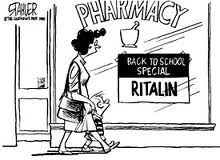
ADHD Diagnosis a “Convenient Out For Lazy Teachers”: Dunham

May 1, 2012

I commend for her courageous piece on the rising rates of ADD and ADHD diagnosis. Ms, Durham refuses to pull punches, raising a view I have been quite vocal about – the dubious role of teachers in the diagnosis process. Deborah suggests that teachers may be taking the lazy approach instead of the responsible one. She also raises strong arguments about the lack of research about the long-term ramifications of taking Ritalin, the contribution of diet to a child’s mental state and the lack of engagement and stimulation in school.

I’m starting to wonder if it’s possible for doctors, teachers and parents to diagnose kids with anything other than  Attention Deficit Disorder? According to a new study, the rate that kids are diagnosed continues to increase by 5.5% each year, but are there really that many more kids with ADD and ADHD? It seems like this has become a convenient “out” for many lazy teachers, doctors and parents who don’t know what to do with kids who don’t fit the “mold”.

The rates of ADHD diagnosis in the developed world increased annually by an average of 3% from 1997 to 2006 and 5.5% from 2003 to 2007 in the U.S. But researchers wanted to know–as did we–how accurate these diagnoses really are.

Led by a team of researchers at the University of Basel’s Katrin Bruchmueller, 473 child and adolescent psychotherapists and psychiatrists across Germany were surveyed on how they diagnose people with ADD or ADHD. In three out of the four cases, the described symptoms and circumstances did not fulfill ADHD diagnostic criteria. In fact, many mental health practitioners were found to base their decisions on unclear standards.

For example, male patients were more readily diagnosed when they displayed symptoms such as impulsiveness, motoric restlessness and lack of concentration–all things that can be perfectly normal when growing up. Boys were more likely to be diagnosed than girls, and on the same note, male doctors tended to diagnose ADHD more frequently than their female counterparts.

In short, what the researchers found what that ADHD is over-diagnosed because doctors rely too much on their intuition and not on a defined set of criteria.

All of this is troubling because it means that kids are the ones who are suffering as a result. Instead of taking the time to accurately diagnose them (if there is even anything at all wrong besides just being a “kid”), they are put on brain-altering drugs which is risky for anyone, especially someone who is still young and developing.

More than three million kids in the U.S. take drugs for their supposed difficulty focusing. In 30 years there has been a twentyfold increase in the consumption of these. And while medications like Ritalin may help increase concentration in the short term, not enough is known about the long-term health consequences–although some say drugs like this can stunt a child’s growth, other speculate that they can cause heart problems and even sudden death.

But is it really possible that three million kids in our country really suffer from ADD or ADHD, or has this just become a catch-all diagnosis by lazy doctors, parents and teachers?

We know that an unhealthy diet, sugar, processed foods, stress and a lack of sleep and exercise can all contribute to someone’s mental state. So, it’s entirely possible that our society has become so unhealthy that we are the ones creating these problems in our kids. And it’s not always synthetic drugs that are the answer.

The other issue that could be a major factor here is that kids are not engaged and stimulated in school enough. Taking millions of kids who all have different learning styles and trying to force them to comply and fit into one method of learning does not work. No one can possibly be expected to sit at a tiny, uncomfortable desk for eight hours a day in a classroom with florescent lights and the blinds drawn on the windows. Yet, when a child doesn’t conform, they are thought to have ADD.

Perhaps instead of jumping to conclusions and forcing our kids to swallow mind-altering drugs in order to fit our ideals of how they should behave, all of us–parents, teachers and doctors–should take more time to fully evaluate the unique learning style and personality that each child has and then alter how we interact with them accordingly. That’s not to say that everyone is lazy (because they aren’t) and there aren’t some legitimate cases of ADD (because there certainly are), but research like this points to the fact that we need to take more time and better understand how to consistently diagnose this disorder.

Parents Wiring Their Children to Catch Out Abusive Teachers

April 27, 2012

I’ve maintained all along that teachers found to be verbally abusing their students should be made accountable for their actions, regardless of whether the offence was captured without their knowledge. Even though I am of this opinion, I completely object to the secret filming of teachers by students.

To read that parents are now wiring their own children to prove allegations made against teachers is very disappointing and a trend that needs to be stamped out:

Teachers hurled insults like “bastard,” ”tard,” ”damn dumb” and “a hippo in a ballerina suit.” A bus driver threatened to slap one child, while a bus monitor told another, “Shut up, you little dog.”

They were all special needs students, and their parents all learned about the verbal abuse the same way — by planting audio recorders on them before sending them off to school.

In cases around the country, suspicious parents have been taking advantage of convenient, inexpensive technology to tell them what children, because of their disabilities, are not able to express on their own. It’s a practice that can help expose abuses, but it comes with some dangers.

This week, a father in Cherry Hill, N.J., posted on YouTube clips of secretly recorded audio that caught one adult calling his autistic 10-year-old son “a bastard.” In less than three days, video got 1.2 million views, raising the prominence of the small movement. There have been at least nine similar cases across the U.S. since 2003.

“If a parent has any reason at all to suggest a child is being abused or mistreated, I strongly recommend that they do the same thing,” said Wendy Fournier, president of the National Autism Association.

But George Giuliani, executive director of the National Association of Special Education Teachers and director of special education at Hofstra University in Hempstead, N.Y., says that while the documented mistreatment of children has been disturbing, secret recordings are a bad idea. They could, he said, violate the privacy rights of other children.

“We have to be careful that we’re not sending our children in wired without knowing the legal issues,” Giuliani said.

Stuart Chaifetz, the Cherry Hill father, said he began getting reports earlier in the school year that his 10-year-old son, Akian, was being violent.

Hitting teachers and throwing chairs were out of character for the boy, who is in a class with four other autistic children and speaks but has serious difficulty expressing himself. Chaifetz said he talked to school officials and had his son meet with a behaviorist. There was no explanation for the way Akian was acting.

“I just knew I had to find out what was happening there,” he said. “My only option was to put a recorder there. I needed to hear what a normal day was like in there.”

On the recording, he heard his son being insulted — and crying at one point.

He shared the audio with school district officials. The superintendent said in a statement that “the individuals who are heard on the recording raising their voices and inappropriately addressing children no longer work in the district.”

Since taking the story public, Chaifetz, who has run unsuccessfully for the school board in Cherry Hill and once went on a hunger strike to protest special-education funding cuts, said he has received thousands of emails.

At least a few dozen of those he has had a chance to read have been from parents asking for advice about investigating alleged mistreatment of their children.

Mr. Chaifetz is clearly a loving father with the very best of intentions. Whilst I don’t advocate his methods, I understand that it comes from the frustration and shock of having his son labelled as a violent child. But the difference between Mr. Chaifetz and future copycat parents is that he underwent a long protracted process before going down this road. I fear that parents will be wiring their children in the first instance. It is also important to note that autistic children don’t have the same capacity to stand up for themselves and communicate verbal offences to their parents.

Teachers shouldn’t wire themselves to prove abuse on the part of students and vice versa. What we should be doing is working together instead of creating an us vs them mentality.

Are Parents Creating a Generation of Spoilt Children?

April 4, 2012

I think teachers should be very careful when criticising parents. Whilst I have no doubt that parents who don’t demand help around the house often breed lazy kids who lack independence and motivation, school isn’t necessarily the place to gauge whether or not a child is spoilt.

Teachers have been instructed for many years to become emotionally distant. This philosophy has become very prevalent and the results are as gloomy as the methodology. No teacher adopting this style of teaching can ever compare themselves to a parent. When parents set boundaries they do it with love and deep concern. If a teacher decides to become emotionally distant, they lead their students to believe that their boundaries are set without a deep-rooted connection to the child. The child comes to believe taht the rules were set for selfish reasons, because “it’s not as if my teacher cares about me anyway!”

That’s why I am not sure the connections made in this article are necessarily accurate:

Some middle class parents are turning their children into “little Buddhas” by “waiting on them hand and foot” at home, a teachers’ leader has said.

Association of Teachers and Lecturers general secretary Dr Mary Bousted warned spoilt children had “disproportionate” consequences for behaviour in schools.

Parents needed to be confident in saying no to their children, she said.

It come as the union debated calls for tough behaviour sanctions in school.

The ATL conference in Manchester earlier heard that measures such as detention, suspension and exclusion, were failing to deal with behavioural issues.

But Dr Bousted laid the blame firmly with poor parenting in both poor and middle class homes.

While acknowledging most parents did a good job, she told reporters: “Children without boundaries at home resent boundaries imposed at school.

“We need to be confident in saying we can go so far but no further we need to be more confident in what we think is reasonable.

“How many parents ask their children regularly to contribute to the running of the house?

“Far too many children are waited on at home hand and foot. They don’t do the washing up and they don’t do the hoovering and the don’t have to make their own beds.

“We are not doing them any favours if we make them into little Buddhas at home,” she said.

“And it certainly doesn’t do them any favours in school”.

I also don’t agree that this style of parenting is more prevalent in lower and middle class families than wealthy families.

At the end of the day, until our teachers uniformly dispense with strategies that preach distance rather than concern, we can never connect symptoms in the classroom to habits taught from home.

Boundaries are more likely to be respected when the child feels that the person setting them respects them.

Parents Urged to do the Job of a Teacher

March 1, 2012

It is my belief that the job of a parent is to parent and the job of the teacher is to teach. Sure it’s wonderful when parents take it upon themselves to help reinforce skills taught in class. I am always appreciative of parents that spare some time to revise concepts covered during the school day. But essentially, I am paid to ensure that the parents can spend textbook-free quality time with their children. This is in my view essential to maximising the relationship of child and parent. Children often show a reluctance to work through school material with their parents and parents often get very anxious when trying to get their children to concentrate and listen to their explanations.

It is my job to see it that parents are free to spend time with their children without having to go through the ordeal of maths and science work. That’s what they pay me for.

But unfortunately, it seems that we are not doing a good enough job. It seems as if parents have often been given little choice but to try to fill in the gaps we have left behind. You hear too many stories of parents frantically trying to complete their own childs’ homework, sometimes struggling to work out the answers themselves:

A quarter of parents in Reading admit that helping their children with homework leads to family arguments, according to a survey.

Research by tuition provider Explore Learning also showed 9.2 per cent rarely helped their children with homework with more than two thirds struggling when they did.

Maths confuses parents the most with 41.2 per cent of parents finding the subject hard to grasp compared to the 11.1 per cent of parents who find English difficult.

Nationally, nearly a third of parents admitted homework had caused friction in the family with Reading not straying far from the average when it came to struggling in maths and English.

It’s time we let parents bond with their children instead of getting them to do our dirty work. Homework, if administered at all, should be revision of concepts covered in the class. If the children are not capable of doing it independently it shouldn’t have been given to them in the first place.

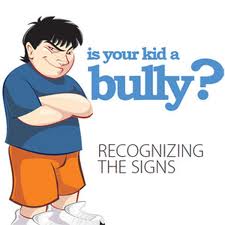
Would You Notice if Your Child Was a Bully?

February 21, 2012

Psychologist Jodie Benveniste thinks parents are so blinded by the belief that their child is perfect that they are startled when confronted with the possibility that their child has been bullying others:

Psychologist Jodie Benveniste says most parents don’t – until they get a call from their child’s school.

“That’s often the first time you hear about it because you’re not there to observe the behaviour,” she says.

Youth worker and school chaplain Nigel Lane says in his experience parents are usually in “total shock” or “total denial” when they learn their child is a bully.

The experts agree there are tell-tale signs parents can look for, including very aggressive behaviour towards siblings, talking aggressively and negatively about other children and coming home with money or items that don’t belong to them.

Lane, who has written several books and is working on another about how to recognise a bully, says most parents eventually accept there is a problem.

 “Generally I say to parents that the first thing they should do is listen. Listen to the accusation, don’t deny and ignore it,” he says.

“Then do exactly the same with your child. Sit down with your son or daughter and just listen. Ask broad questions, such as, ‘School gave me a ring today to tell me something happened at lunch time, what was it?’ rather than saying, ‘You’re a bully’, which could make them defensive.”

Lane says this “gentle” approach is more likely to bring out the truth or a version close to it.

The bullying stigma has become a massive one. It is essential that we don’t label people as bullies haphazardly. What that does is unnecessarily complicate the issue, while it also puts children who are involved in one-off incidents in the same basket as perpetual offenders.

Parents should be open to the fact that their children acts differently at school than they do at home. Schools must realise that such a disparity often comes as a result of the unnatural array of clicks and the deep social segregation that are a common fixture in many schools.

The reason why parents may be surprised to know that their child is bullying isn’t just due to their lack of objectivity, it’s also due to the ‘dog eat dog’ environment rampant in many schools. Kids are presented with an environment that is often vicious, unrelenting and difficult to navigate through.

This of course doesn’t excuse their behaviour. What it does do, is make schools equal partners with the parents in reforming bullying children.

13-Year-Old Girls Given Contraceptive Implants at School Without Consent of Parents

February 8, 2012

There may exist a rule of patient-child confidentiality, but it just doesn’t seem right that such important information would be withheld from the parents. What makes it even tougher to comprehend is that this service is all done at school.

Girls as young as 13 are being given contraceptive implants at school without their parents’ knowledge.

Nurses insert devices into their arms which temporarily prevent pregnancy by releasing hormones into the blood.

Last year 1,700 girls aged 13 and 14 were fitted with implants, while 800 had injections which have the same effect.

The 2010/11 NHS figures also show that 3,200 15-year-old girls were fitted with implants, and 1,700 had injections.

But under strict ‘patient confidentiality’ rules, staff are banned from seeking the permission of parents beforehand – or even informing them afterwards.

Both forms of contraception can bring on unpleasant side-effects including weight gain, depression, acne and irregular periods.

The jabs have also been linked to bone-thinning, although experts say fractures are unlikely if they are used only for a short time.

The implants and injections are being offered to girls in nine secondary schools and three sixth form colleges in Southampton under a scheme run by NHS Solent. The sexual health clinics also offer other forms of contraception, advice and tests for infections.

I think the patient/child confidentiality should have loopholes and shouldn’t include children under the age of 16. As parents, we have the right to be informed and the right to overrule. People might say that this is a very important service against unwanted pregnancies. That may be so. But in my opinion, the best way for 13 year-olds to avoid unwanted pregnancies is to allow the parents to do their job. The best remedy against teenage pregnancy is vigilant parenting.

Keeping Kids Safe Online

February 5, 2012

I agree with Adam Turner. Cybersafety is something parents need to address. They have the primary duty to ensure that their children are following safe online practices.

As far as I’m concerned cybersafety is primarily a parent’s responsibility, just like teaching about stranger danger or how to cross the road safely. The fundamentals of cybersafety are no different to the real world; don’t wander off, don’t talk to strangers, don’t reveal too much about yourself and call a parent if you’re unsure of something.

Some parents might complain that it’s all too complicated, but it’s not if you take an interest in your children’s activities and take the time to learn the basics. Talk to them about computers and the internet. Ask them what they’re learning at school and what they’re doing at home. Take an interest, just as you should in their other activities. 

Turner suggests ways in which parents can better supervise their children:

A common cybersafety rule is that the computer stays in the living area, positioned in such a way that anyone who walks into the room can see what’s on the screen. If notebooks are permitted in the bedrooms for studying, perhaps it’s on the condition that they recharge on the kitchen bench at night. The same rule can apply for mobile phones, which can also help combat cyberbullying.

You can split cybersafety into two key areas. The first is protecting young children from accidentally stumbling across inappropriate content. This isn’t hard if you can set up a list of appropriate bookmarks and trust your kids not to wander. Installing an ad and pop-up blocker offers an extra layer of protection. If children can’t be trusted not to wander, even by accident, you might consider a whitelist plug-in for your browser, which lets you limit access to a specific list of sites.

The second area of cybersafety is hindering older children who are deliberately seeking inappropriate content. This area is much harder to deal with, as smart and determined kids will find a workaround to just about any security measure (remember, help is only a Google search away).

There’s a big market for desktop filtering software, but don’t walk away and trust it to do a parent’s job. In my experience it tends to cripple your computer, but your mileage may vary. If you do want to restrict internet access, look at services that are independent of your end device – particularly useful if your house contains a variety of internet-enabled gadgets.

It’s worth investigating the filtering options built into wireless routers. Some let you create blacklist and whitelists, or switch off the internet at specific times. You could even run a separate wireless network for the children, making it easier to control their access without affecting your own. Another filtering option is DNS-level services such as OpenDNS. 

Whilst teachers should also take an interest in cybersafety issues, it’s up to the parents to take the lead.