Posts Tagged ‘Parenting’

Charity Wants Us to Teach About Gambling to Our Students

December 4, 2011

There’s no limit to good causes, but at some point teachers have to put these to a side and concentrate on their main responsibility – teaching Maths, English and Science.

It’s really frustrating to be told to put the ever-packed curriculum on the backburner to teach about road safety, internet safety, sex education, fire safety and for some, gambling ed. It’s not that these causes aren’t important. On the contrary, they are very important!

It’s just that it leaves us precious little time for doing what we are evaluated to do – teach the curriculum!

Schoolchildren as young as 12 should learn about “responsible betting” to tackle problem gambling, the Government has been told.

Pupils should be taught about risk and probability, and how to gamble responsibly, in the same way they are taught about the risks of drinking alcohol and taking drugs, according to a charity that supports gambling addicts.

I’ve got a novel idea. How about we ask the parents to teach some of these skills?


Preparing Students for the Real World

December 2, 2011

Sometimes I find it hard to decide whether to expose my students to the realities of the real world or protect them from disappointment.

Never is the conundrum stronger than when it comes to the issue of competition in the classroom.

Society loves to paint clear labels. Winners and losers, successful and unsuccessful, popular and unpopular, beautiful and ugly. The pressures that these labels bring is certainly prevalent in the classroom and is a great cause of anxiety among the students. No matter how tactful the teacher can be, the students are aware that they are graded, levelled and streamed, and with the help of their parents, take a strong interest as to where they stand in the pecking order.

There are many teachers who use competition as a motivating force. Everything from star charts and games to public assessments and evaluations are intended to get students to ignore the often mind numblingly boring lesson presentation and instead, concentrate on beating their fellow classmates.

There are students that excel when offered this incentive. These students love the modern trend of standardised testing.  For them, it’s an opportunity to show how dominant they are over their peers.

But then there’s the student that collapses in a heap under the threatening and potentially confidence sapping pressures of being compared to others. These students watch their fellow classmates reading at level 30 while they are in the late teens and decide that they hate reading and have no interest in practicing or improving.  These students claim that they are stupid, so what is the point.

I was a student who struggled to cope in an environment of “dog eat dog” competition.  My classmates left me in my wake as I struggled with the labels that came with constant comparison and the humiliation of being repeatedly streamed in the bottom group. That is why I modify my teaching to cater for students sick of the constant intrusion of grades in education.

When testing the kids, I don’t give them a letter or number grade, instead I chose to give them clear feedback on skills they performed well in and found challenging.  This not only prevents students from comparing themselves to others, but also provides clear feedback on what they can do and what skills require further practise.

The question is, if real world experiences feature competition, comparisons, labels and winners and losers, am I protecting my students from experiences they need to learn? Eventually they will need to compete against others for jobs and promotions. If I protect them from real life situations am I not doing them a disservice?

Another issue I have on this topic is that I don’t approve of many of the behaviours prevalent in the “real world”.  Just because there is bullying, gossiping, bad manners and selfishness outside my classroom doesn’t mean that I will stand for it in my classroom. At some point I want to ignore what goes on outside the four walls of my classroom and instead, help my students change the rules of society rather than simply prepare them for it.

Which Goose Organised a Class Field Trip to Watch Duck Shooting?

December 1, 2011

I don’t know what is more insane – the idea of taking 6th graders on a “cultural” field trip to watch ducks being shot or the temerity to try to defend such a stupid and irresponsible idea.

Either way this story stands up as one of the craziest decisions a school could possibly make.

A father has complained that his 10-year-old daughter was left traumatised after what she thought was a school birdwatching trip turned out to be a shooting demonstration.

Ray Poolman, 49, said that he was shocked when his daughter, Danielle, came home in tears after the “harrowing” experience of seeing ducks being shot.

He has accused the village primary school in Ramsey St Mary’s, Cambridgeshire, of leaving parents in the dark about the excursion to watch an “evening flight” at a local wetlands area popular with wildfowl.

The school has defended the trip, part of a series of initiatives to teach the children about fenland traditions, and suggested that Mr Poolman may have misunderstood the meaning of the word “wildfowling”.

Parents of year six pupils from Ashbeach School in the village received a letter earlier this month inviting their children to come on a visit to Welney Marshes in Norfolk organised by the Ely and District Wildfowlers Association.

It said that children would be “finding out about different species of wildfowl” in the marshes and “conservation of the landscape”.

It made no direct reference to shooting or guns but went on to refer to seeing dogs and “equipment used for the sport” and reassured parents that the children would be safely out of the way during the “wildfowling demonstration”.

Shirley Stapleton, the head teacher, said that the school had never intended to upset children or mislead parents but that there appeared to have been a misunderstanding.

It’s very good of the school to reassure parents that their child wont be shot at during their excursion.  Because let’s face it, we wouldn’t want any hiccup preventing these children from viewing the spectacle that is the senseless killing of birds.

Seriously, who could ever defend such a crazy initiative?

The Courts Are Failing to Protect Our Children

November 30, 2011

If you ever needed a reminder at how weak our courts appear to be when it comes to protecting the safety and wellbeing of our children, take the bewildering case of former Tasmanian MP, Terence Lewis Martin.

Mr. Martin was found guilty of sex offences (which included having oral sex and taking photographs) with a 12-year-old girl.

Did he get life imprisonment? Nope!

How about 20 years? Try Again!

Well, surely he got at least a 10 year jail sentence? Not even close!

No, Mr. Martin got to walk free with a suspended sentence!

Walk free?

Why you ask?  Good question!

THE former MP guilty of sex offences with a 12-year-old girl has walked free from court with a suspended sentence, provoking outrage from anti-abuse campaigners and some of the girls’ relatives.

Former Tasmanian upper house MP Terence Lewis Martin had been in custody since being found guilty last week of unlawful sexual intercourse with a young person and of producing child exploitation material.

In the Supreme Court in Hobart yesterday, judge David Porter handed down a 10-month prison sentence, with the balance suspended provided the 54-year-old remains of good behaviour for two years.

Outside court, Martin was abused and challenged by a group that included relatives of the girl.

Justice Porter said a “dominant factor” in his sentencing of Martin was that the former MP had been suffering hyper-sexuality caused by medication for Parkinson’s disease. He had concluded there was a “direct causal link” between this dopamine agonist medication and Martin’s offences.

The judge said the condition caused by the medication had impaired Martin’s ability to make moral judgments and therefore “his moral culpability is reduced”.

“But for the medication, he would not be facing sentencing for this crime,” Justice Porter said.

Martin, a Labor-turned-independent MP and a former mayor of Glenorchy, in Hobart’s north, had oral sex with the girl and took naked photographs of her in September 2009.

Martin had pleaded not guilty and insisted he believed the girl was 18. When first confronted by police, he expressed shock that she was 12 and “disgust” at having engaged in sex acts with a child.

So let’s get this straight:

1. Mr. Martin’s excuse at the time was that the girl looked 18 when she was in fact 12.  Give me a break!

2. The judge says that Mr. Martin wouldn’t have offended if it wasn’t for the medication.  How would he be able to make that statement with such certainty? Even if the medication does indeed take away a person’s moral judgement, it surely doesn’t mean that they will do something this heinous. You can’t tell me that an average person stripped of their moral judgement would start taking up pedophilia as a result of their clouded sensibilities.

3. If this drug is indeed seen as so destructive to a reasonable person’s moral judgement as to compel him to sexually molest a 12-year-old girl, why didn’t the judge call for the medication to be banned. Any bet, the drug stays on the shelves regardless of the implications as a result of this trial.

Either the drug is the culprit and it needs to be banned, or this former MP is just making excuses, in which case he would need to be locked up for many years.

Whatever way you look at it, it seems that this 12 year-old girl, like many others, have been given a very raw deal by our courts.

The Stigma of the School Dropout is Sometimes Unfair

November 28, 2011

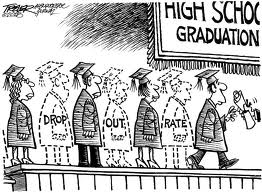
For some reason, society seems to have an issue with “dropouts” who choose a trade over completing high school.  Whilst I am not in favour of someone chosing to drop out without a legitimate Plan B, I highly respect people who make the choice to become plumbers, builders and electricians, even when it’s at the expense of finishing high school.

Australia’s Opposition Leader, Tony Abbott, is right to push for the opening of trade schools in preference to virtually paying students off for completing school. School and University is not for everyone. There are teenagers much more adept at taking on a practical trade than writing essays, working through trigonometry problems and making sense of chemistry.

Paying students just to finish school (it’s the parents that get the money) achieves a lot less than it sounds. Often it doesn’t translate into higher education training and it doesn’t guarantee that there will be marked differences in the takeup of the dole.

Mr Abbott wants to investigate a return to the former Coalition Government’s scheme for technical high schools and school-based apprenticeships.

Mr Abbott declined to endorse a Labor Government election promise to pay families $4000 to help keep teenagers in school longer, saying the spending would have to be appropriately targeted.

“The other point I want to make is that it’s all very well keeping kids at school past year 10 but they’ve got to be the right kids being kept at school past year 10,” Mr Abbott told Sydney radio 2UE.

“A lot of kids would probably be better off in the long run leaving school at year 10 and getting an apprenticeship rather than staying on doing an academic or quasi-academic time at school when in the end it’s the practical trades that we need.

“I mean, one of the great initiatives of the Howard Government was to try to foster these school based apprenticeships to try to get back to a considerable extent towards, if you like, technical high schools.

“And I guess I’d want to carefully study this and make sure that the right kids are getting the money and that we really were keeping the right kids at school because if you’ve got the wrong kids at school it can end up like a glorified occupational therapy basically.”

He told reporters later: “It’s important that some kids stay at school and go on to university, it’s also important that other kids get a good technical education.”

I don’t like the “pigeonhole” mentality society seems to employ. Such thinking makes it hard for people to take different routes and make changes that are right for them. The popular opinion isn’t always the right one for the individual. All countries need active and educated members of society, but they also need good tradespeople.
School is not for everyone. If you have a passion for a trade, don’t hesitate, go for it!

Video Game Addiction is Real and Very Serious!

November 27, 2011

I am not one to use therm “addiction” lightly.  Many would dismiss video game addiction as merely a bad habit or a product of an anti-scocial personality, but it is very real.

Video game addiction can take over a child’s life and deeply affect their relationships, schoolwork and daily routine. With role-playing games such as World of Warcraft now in vogue, the video game addiction has become far more serious.  Because these games have no designated end point, the game goes on indefinitely.  This means that kids struggle to put the controller down in order to eat, sleep or even go to the toilet!

It is an addiction which at the moment is relatively hidden:

In fact, in 2007, a Harris poll found that 8.5% of youths between the ages of 8 – 18 in the United States could be classified as video game addicts.

“The excitement, the thrill and the challenge, for some people gets greater and greater, and then it takes on a life of its own.” Dr. Anna Bacher, a therapist in Sarasota, treats patients with addictions — including those who have a hard time putting down the controller. “It can go to the extreme, where they stop sleeping, they stop eating, the person becomes irritable, lethargic, depressed, highly anxious and very difficult to be around.”

It is absolutely essential that parents are aware of the consequences of an addicted child before the odd game of World of Warcraft and games of its type, become an obsession. Parents should not feel that copious hours in front of the computer amounts to innocent fun.

Yes, gaming addiction is better than drugs. But not as much as some parents may think.

The Last Thing Kids Need is a Swearing Doll

November 26, 2011

I am horrified at some of the language that kids use nowadays. Hearing expletives obviously used by their parents at home, kids as young as 6 come to school sprouting four letter curse words as casually as if they were discussing the weather.

The last thing these impressionable children need is a talking doll that adds some unpleasant words to their ever expanding vocabulary.

PARENTS listening closely to the babbling sounds of a baby doll were shocked when the toy appeared to say “you crazy b***h.”

The You and Me Interactive Triplets sold at Toys R Us stores in America and online via Amazon are supposed to say mamma and dadda and babble like a real baby.

“Oh, absolutely.  She’s calling them a crazy b***h,” Kathy Wetter told Local 6 news in Florida.

Listen to what the baby has to say in the video above.  What do you think it says? Tell us below.

Dozens of videos of the doll have been uploaded onto YouTube and angry parents have flooded Toys R Us with complaints.

The toy store insists the baby is just babbling.

In 2008 Wal-Mart removed Fisher Price’s Little Mommy Real Loving Baby Cuddle and Coo doll after parents claimed it said: “Islam is the light.”

Fisher-Price insisted that the doll was not pushing pro-Islamic messages. The sound some parents were hearing was caused by an accidental distortion of the doll’s soundtrack.

Toys R Us said it has no plans to take the swearing doll off its shelves, but it would allow offended customers to return the toy with a receipt.

Call me old-fashioned but young children swearing is not a good look. Just listening to some of the words this doll uses from the YouTube clip attached above, I am appalled that this was allowed to get on shelves without so much as a warning to parents. To manufacture a doll that is programmed to say nasty, misogynistic expressions is quite irresponsible.

Report Writing That Says a Lot Without Saying Anything

November 25, 2011

It’s report time again, which means the long nights and deep frustrations have arrived.  Many will think I’m strange, but when I first started in  teaching, I was looking forward to writing reports. I saw it as an opportunity to inform the parents about how well I know their child. Communication with parents has always been very high up my priority list, and I saw reports as the centrepiece of good quality communication.

But since I became a teacher the rules for report writing has changed, and we are all worse of as a result.

The Government has legislated that reports all feature the same grading system and the same essential sections.  Two such mandatory inclusions include a list of skills in every area that the students need improvement in and what the school will do to address these needs.

Sounds good, right?

Wrong. Schools across Australia are so terrified that if the teacher doesn’t end up addressing the needs of the students as promised in the reports, then it will open them up to litigation. So schools have quickly searched for a loophole, a strategy designed to be seen to guarantee things to parents without actually guaranteed anything.

And out of that think tank came every teachers new buzz word – ‘encourage’.

“The school will encourage Max to underline key words when reading worded questions.”

“The school will encourage Rita to use rubrics before planning a piece of writing.”

So in the end, the school is offering no actual response to the child’s needs, just some “airy fairy” words that don’t actually mean anything.

And then there’s the “education” words that don’t make any sense to most parents.  Because many teachers are expected to leave out hard truths like, “Max doesn’t behave in class” and “Rita doesn’t apply enough effort”, teachers have employed words that the average parent wouldn’t understand.

For example, teachers love using words that start with “meta” like “metacognitive”, “metalanguage” and “metabolic steroids” (OK, maybe not the last one).  As the custom is to spare the school of angry or dissatisfied parents, teachers have become great at writing reports high on words and low on substance.

It’s actually harder and more tiresome than it sounds.

Think Twice Before Branding Thoughless Kids as Paedophiles

November 24, 2011

Last month I wrote the following comment about the lunacy of putting naive children on child pornography charges:

The same laws that seek to protect children are being severely undermined by a total lack of common sense.

Australia has a sexual offender registry which was designed to assist the government authorities to keep track of the residence and activities of sex offenders.  You don’t have to be Einstein to realise that being on that list is detrimental to that person’s ability to get a job, loan, sense of freedom and quality of life.

The registry is a vital tool in dealing with pedophiles.  That is why I was astounded to read that children caught ‘sexting’ photos of themselves or friends have been put on this very list.

Two days ago I spoke against the “Sneaky Hat” craze.  “Sneaky Hat” refers to teenagers posting half-naked pictures of themselves with a hat covering their genitals.  As much I find this fad quite unpleasant and potentially dangerous, I would be very disappointed if the teenage founders of this craze to face child pornography charges:

Police are investigating a Facebook craze that originated in Queensland encouraging teenagers to post pictures of themsleves nude on the internet.

The Queensland teenagers behind the new Facebook craze “Sneaky Hat” and contributors to the website could face child pornography charges, a cyber safety expert says.

The craze involves young people posting naked pictures of themselves with a hat covering their genitals and/or breasts, and has spawned similar social media pages, websites and Youtube videos.

The original page was started by 15-year-old students from Dalby, Queensland “for a laugh” but quickly attracted about 100 photos of their friends in the “Sneaky Hat” pose — and more than 10,000 followers.

“We just thought it was funny, but after a while it started like getting wild, out of control,” the Sneaky Hat website’s founder told ninemsn.

“There were all these people who were posting naked pictures and stuff.”

“My mum saw it, she knew and just thought it was funny.”

Police have now requested the images and Youtube videos created by the students.

Cyber safety expert Susan McLean, formerly of the Victoria Police cyber safety project, said the page was infamous around the world and that “any pedophile worth his salt” would be saving the pictures for their own purposes.

“I would question the brain matter of these parents,” McLean said. “That it is just for fun or between friends is the biggest load of crap I have ever heard.”

“This is a form of child pornography and they need to realise that the law applies to teenagers just as much as anyone else.

Well if that is the case, change the law! It is just plain senseless to ruin the life of silly immature teens by charging them with an offence intended for paedophiles. This isn’t just dumb. By bunching young, stupid teenagers with sick, evil paedophiles, we completely undermine the significance of being on the sex registry.

The Worldwide Revolution Known as “Cyberbaiting”

November 23, 2011

It is no surprise to me that “setting-up” the classroom teacher has become a universal sport. With the introduction of the mobile phone and the high-profile cases of teachers being caught on camera and subsequently fired, it was only a matter of time before something like “cyberbaiting” took off.

A study from Symantec found that 21% of teachers had either been cyberbaited or knew a teacher who had.

Cyberbaiting, according to Symantec’s Internet safety advocate, Marian Merritt, is when students deliberately provoke a teacher into doing something stupid, then video it and post it online.  “This of course has the net effect of embarrassing the teacher, taking a momentary lapse of judgement in a classroom and embedding it onto the web.”

As per that 21%, remember it includes teachers who know someone it happened to. Only 4% said it happened to them. Still, it’s one more thing for teachers to think about.

The study — which included interviews from kids and parents in 24 countries including the United States — also found that 62% of kids reported that they have had a negative experience online.  It also found that 95% of parents know what their kids are looking at online.

A number of key points come to mind:

  1. Mobile phones should be banned from the classroom. Those playing with one in class should expect it to be confiscated and returned only when their parents come to pick it up personally.
  2. Students caught filming, posting or sharing secret tapings of a teacher should be expelled (at least for the more serious cases).
  3. Teachers should be given the appropriate support so that they are able to teach a class without doing or saying things which they would be ashamed of.

Somehow I expect that this nasty practice will continue without a hitch.  Yet another example of the modern-day culture of “teacher bashing” permeating in society.