Posts Tagged ‘Parenting’

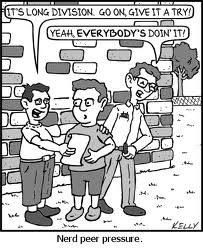
Beating Peer Pressure

February 24, 2012

Is a good sense of humour enough to ward off the threat of peer pressure? Child psychologist Kimberley O’Brien, thinks so:

A child psychologist from Sydney’s Quirky Kid Clinic said people should not trivialise peer pressure by saying it happens to everyone.

“We shouldn’t say it’s normal and it’s fine because it’s not,” Kimberley O’Brien said.

Ms O’Brien said parents need to encourage their children to choose friends they are comfortable with.

“It’s important to teach kids to be assertive. If parents model that behaviour and speak up in the community if they feel something is not right then children learn to do the same.”

The Quirky Kid Clinic advises teenagers to make a quick exit if they are feeling uncomfortable in a situation. They teach young people how to use humour to defuse a potentially risky situation.

“They can just laugh and say I’m not into this and leave,” Ms O’Brien said.

“If they are feeling under pressure, we encourage kids to trust their early warning signs and gut feelings and speak up and ask for help.”

Ashley Long and her friends had been drinking alcohol when the helium party trick turned deadly. The inebriating effects of alcohol can make it increasingly difficult to avoid being pushed into risky behaviour.

“[Teenagers] are much more easily influenced if they have been drinking, even physically if they are stumbling or can’t move properly,” Ms O’Brien said.

“They may have lost their phone or friends so it is more difficult to seek help.”


Tips for Keeping Children Safe Online

February 24, 2012

Geek Squad have come up with some common sense tips for concerned parents. These tips are a good starting point for helping your children keep safe online:

Filtering Software: Install filtering software such as NetNanny or the free Windows Live Family Safety 2011. These programs can help your kids surf the Internet safely – without being exposed to any inappropriate material. You can also consider setting up free filtering at the wireless router level with OpenDNS, which will ensure that all devices that connect to your home Internet are filtered.
Maximize Current Programs: Many computers already come with online safety programs. Learn how to accurately use Parental Controls in Windows and Mac Operating Systems, and other programs that aid in monitoring and managing what children view online. Maximize the use of programs you already have installed and at your fingertips.
LOL Does Not Mean ‘Learn Online Lingo’: But you should: Among the many networking sites are Facebook and Twitter. Learn how these sites work and the coded language commonly associated with them. We can consider citing this study that says teens are increasingly using Twitter because parents have figured out Facebook, so they think they’ll have more freedom where their parents aren’t.
Gaming Parental Controls: Many games have online modes, where your kids can play against others around the globe. It’s important to know who your kids are playing with and what content they can access. Set parental controls on games to protect your kids without affecting their gaming experience.
Control Your Kids’ Online Environment: Windows Vista features parental controls that help parents monitor what kids can access on a computer – even when they’re not in the room or at home. Parents can select what games, programs and websites children can access. Time restrictions can even be set to ensure that the kids are following the rules even when mom and dad are not home. This feature is found in the Parental Controls panel and is part of the User Accounts and Family Safety Control Panel applet.

Pitting Private vs Public Schools is Bad for Education

February 22, 2012

The fallout of the Gonski Report into educational spending has resulted in the typically predictable bashing of private schools. There is a misguided notion that by funding private schools, Governments are robbing the needs of struggling public schools.

This is simply not the case.

I stand by my remarks from last year:

The continued debate between private and public school funding tires me out. I am a big believer of a well-funded (i.e. wisely funded) public school sector as well as a thriving private school sector. There is no reason why parents can’t be given choice and why supporting private schools must come at the expense of quality public education.

This is where the “Moneyball” analogy fits in.

Moneyball is the true story of Oakland A’s GM Billy Beane. Oakland is severely restricted due to the lowest salary constraints in baseball. Winning means beating teams with much better infrastructure and player payment capacities. Billy is presented with the unenviable task of finding a winning team with the miniscule budget offered. Together with a Harvard economics major, a system is devised that uses statistical data to analyse and value players they pick for the team.

Public schools need to take the same approach. Just like the big baseball teams of the time, plenty of money is spent on public schools, but much of it is wasted money. I look at education in a very traditional way. Whilst it is ideal to have the best sporting fields, technologies and building designs, none of these ingredients has been proven to be essential for teaching and learning the curriculum. The school across the road may be able to give each child their own i-Pad, but that shouldn’t explain a marked difference in maths, science or english results. A teacher should be able to deliver on the curriculum with or without such devices.

Whilst many get worked up when Governments subsidise private schools, there is a good reason why they do it.

1. It takes billions off the budget bottom line. This saves Governments money, resulting in reduced taxes and smaller class sizes in public schools.

2. It allows private schools to lower their fees. This is crucial for parents who are by no means wealthy, but are prepared to scrimp and save (and sometimes take on multiple jobs and a second mortgage) to get their children into private schools. These people should be commended. They work long hours, weekends, give up overseas travel and big screen TV’s, just to give their kids the best education possible. Government subsidies allow that to happen.

In Australia, the Government gives $13,000 to every public school per student. Private schools get $5,000. Factor in to the equation that many private schools are not elite schools with truck loads of money and resources (I work in such a private school, where I earn considerably less than a public school teacher), and you realise that the subsidy shouldn’t detract from a thriving public education system.

By constantly drawing attention to private schools, we risk bringing the private school system down to the public level. What we should be doing instead is trying to get the public school system improved to the level where it gives its private school equivalent a run for its money. That way, you have a private school that sets the bar for top quality education and a public school system that is structured to be able to go toe-to-toe with them based on prudent spending, good decision-making and a workforce of supported and fairly paid teachers.

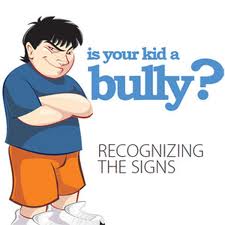
Would You Notice if Your Child Was a Bully?

February 21, 2012

Psychologist Jodie Benveniste thinks parents are so blinded by the belief that their child is perfect that they are startled when confronted with the possibility that their child has been bullying others:

Psychologist Jodie Benveniste says most parents don’t – until they get a call from their child’s school.

“That’s often the first time you hear about it because you’re not there to observe the behaviour,” she says.

Youth worker and school chaplain Nigel Lane says in his experience parents are usually in “total shock” or “total denial” when they learn their child is a bully.

The experts agree there are tell-tale signs parents can look for, including very aggressive behaviour towards siblings, talking aggressively and negatively about other children and coming home with money or items that don’t belong to them.

Lane, who has written several books and is working on another about how to recognise a bully, says most parents eventually accept there is a problem.

 “Generally I say to parents that the first thing they should do is listen. Listen to the accusation, don’t deny and ignore it,” he says.

“Then do exactly the same with your child. Sit down with your son or daughter and just listen. Ask broad questions, such as, ‘School gave me a ring today to tell me something happened at lunch time, what was it?’ rather than saying, ‘You’re a bully’, which could make them defensive.”

Lane says this “gentle” approach is more likely to bring out the truth or a version close to it.

The bullying stigma has become a massive one. It is essential that we don’t label people as bullies haphazardly. What that does is unnecessarily complicate the issue, while it also puts children who are involved in one-off incidents in the same basket as perpetual offenders.

Parents should be open to the fact that their children acts differently at school than they do at home. Schools must realise that such a disparity often comes as a result of the unnatural array of clicks and the deep social segregation that are a common fixture in many schools.

The reason why parents may be surprised to know that their child is bullying isn’t just due to their lack of objectivity, it’s also due to the ‘dog eat dog’ environment rampant in many schools. Kids are presented with an environment that is often vicious, unrelenting and difficult to navigate through.

This of course doesn’t excuse their behaviour. What it does do, is make schools equal partners with the parents in reforming bullying children.

Good Heavens! It’s the Lunch Box Police!

February 17, 2012

Governments that poke their nose into people’s daily life are extremely annoying. It is a Governments job to provide people with the freedoms and resources required for living a comfortable life. The day they impose regulations that limit our basic freedoms, is the day they have gone too far.

Apparently, in some parts of the Western world, that day has well and truly arrived:

The elementary school in Raeford, North Carolina, decided the four-year-old’s lunch — which consisted of a turkey-and-cheese sandwich, banana, potato chips, and apple juice — did not meet nutritional standards established by the U.S. Department of Agriculture. Why? Because it did not contain a vegetable.

The USDA guidelines say lunches, even those brought from home, must consist of one serving each of meat, milk, and grain, and two servings of fruit or vegetables. Those guidelines — introduced last month as “historic improvements” by the federal government — spring from the Healthy, Hunger-Free Kids Act championed by First Lady Michelle Obama as part of her Let’s Move! Campaign and signed into law by President Barack Obama.
 
Dr. Janice Crouse, senior fellow for the Beverly LaHaye Institute at Concerned Women for America, sees the incident at the North Carolina school as historic in another sense. She says it is just another way government intrudes on the rights of parents.
 
“It’s another way that the government says it knows best, another way to waste taxpayer dollars, quite frankly, and to really irritate parents,” Crouse tells OneNewsNow.
 
The mother of the young girl, in an interview with Carolina Journal, says what angered her the most was the message her daughter received. “…Number one, don’t tell my die I’m not packing her lunch box properly,” she stated. “I pack her lunchbox according to what she eats.” The child, she reported, does not like vegetables; so the mom packs fruit instead.

Why do Governments resort to strict regulations and negative tactics to enforce standards which can be met without limiting freedoms and isolating people?

Are Children Getting Enough Sleep?

February 14, 2012

Kids seem to be looking and feeling mored tired than ever before.

A recent study indicates otherwise:

It is a common complaint of our modern age that kids and teens don’t get enough sleep.

Video games, TV, social media, and other trappings of our increasingly tech-centric lives are often blamed, but a new study shows that long before Facebook or PlayStation 3, kids were sleeping less than experts said they should.

When researchers in Australia reviewed sleep recommendations and actual sleep times among children over the past century, they found that kids consistently slept about 37 minutes less than recommended at the time.

Each time, new technological marvels — be it the light bulb in the early 1900s, TV in the 1950s, or computer gaming systems and social networking today — were blamed for declining sleep times.

“The message that children don’t get enough sleep has been the same for over 100 years,” says researcher Tim S. Olds, PhD, of the University of South Australia.

I wonder if children today experience a different form of tiredness. A tiredness as a result of late nights, a lack of physical exercise, a carb dominated diet and excess weight. Perhaps the tiredness is the same as always, but the presentation of the tiredness is more extreme.

Are American Kids Brats?

February 12, 2012

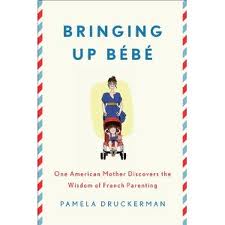
Another book that tries to paint American parents as soft and lacklustre and their kids as spoilt and bad mannered. This time the book advances the French style of parenting.

Time’s Judith Warner, in part, buys into the American parent stigma:

Amidst all the talk this past week about Pamela Druckerman’s new book, Bringing Up Bébé: One American Mother Discovers the Wisdom of French Parenting, there was one phrase that immediately lodged itself in my mind. It was in a sidebar that ran with the Wall Street Journal adaptation of her book, “Why French Parents Are Superior,” and it said this: “Children should say hello, goodbye, thank you and please. It helps them to learn that they aren’t the only ones with feelings and needs.”

That statement points directly to what I see as one of the most meaningful differences between the French and (contemporary) American style of parenting. I don’t happen to believe, as the Journal pushed Druckerman’s argument to say, that French parenting is necessarily superior, overall, to what we do in America. I don’t think French children are, overall, better or happier people — such generalizations are silly. But it is true that French kids can be a whole lot more pleasant to be around than our own. They’re more polite. They’re better socialized. They generally get with the program; they help out when called upon to do so, and they don’t demand special treatment. And that comes directly from being taught, from the earliest age, that they’re not the only ones with feelings and needs.

I say all this based on many years of extended hanging out time with French families, both before and after my own girls — who, like Druckerman’s children, were born in France — came along. In fact, that experience — and the contrast with the American way of parenting I discovered when I moved back to the States — inspired my book Perfect Madness: Motherhood in the Age of Anxiety, the main argument of which Druckerman recapitulates at the very beginning of Bringing Up Bébé. (Fuller disclosure: she interviewed me for the book as well.)

Like Druckerman, I’ve often noted wistfully how French children know how to handle themselves in restaurants. I’ve envied how French children eat what’s put in front of them, put themselves to bed when instructed to, and, generally, tend to help keep the wheels of family life moving pretty smoothly. But the difference that struck me the most deeply, when my family moved to Washington, D.C., from Paris and my older daughter began preschool, was how much more basically respectful French children were of other people. Indeed, how much emphasis French parents put on demanding they behave respectfully toward other people. And how that respect helped make life more enjoyable.

Good manners are certainly very important. Every parent worth their weight in salt attempts to teach their children the importance of graciousness and expressing thanks. But even then, there are two distinctly different types of well-mannered children. There are those who say the right things because they have been trained to do so and there are those that are well-mannered because they are genuinely appreciative and thoughtful.

The one thing I want more than good people on the surface is good people under the surface. There are too many people who will be charming and kind on the surface, yet who harbour resentment below the surface.

I’m not claiming that French people fit that category. What I will say is that books that draw such distinctions usually prove divisive, naive and filled with generalisations. American children will reach their potential when they are not characterised as spoilt brats.

The key to better American children isn’t an Asian style or French style it is a positive style. A book on the topic should include a chapter of what parents may already be doing right and then move on to some helpful hints that they may choose to consider.

But then again, who would buy a parenting book that didn’t peddle stigmas, comparisons and criticisms?
13-Year-Old Girls Given Contraceptive Implants at School Without Consent of Parents

February 8, 2012

There may exist a rule of patient-child confidentiality, but it just doesn’t seem right that such important information would be withheld from the parents. What makes it even tougher to comprehend is that this service is all done at school.

Girls as young as 13 are being given contraceptive implants at school without their parents’ knowledge.

Nurses insert devices into their arms which temporarily prevent pregnancy by releasing hormones into the blood.

Last year 1,700 girls aged 13 and 14 were fitted with implants, while 800 had injections which have the same effect.

The 2010/11 NHS figures also show that 3,200 15-year-old girls were fitted with implants, and 1,700 had injections.

But under strict ‘patient confidentiality’ rules, staff are banned from seeking the permission of parents beforehand – or even informing them afterwards.

Both forms of contraception can bring on unpleasant side-effects including weight gain, depression, acne and irregular periods.

The jabs have also been linked to bone-thinning, although experts say fractures are unlikely if they are used only for a short time.

The implants and injections are being offered to girls in nine secondary schools and three sixth form colleges in Southampton under a scheme run by NHS Solent. The sexual health clinics also offer other forms of contraception, advice and tests for infections.

I think the patient/child confidentiality should have loopholes and shouldn’t include children under the age of 16. As parents, we have the right to be informed and the right to overrule. People might say that this is a very important service against unwanted pregnancies. That may be so. But in my opinion, the best way for 13 year-olds to avoid unwanted pregnancies is to allow the parents to do their job. The best remedy against teenage pregnancy is vigilant parenting.

The Difficulties of Parenting

February 6, 2012

This afternoon I met a colleague outside her eldest child’s school. She had just picked him up from school and was struggling to get both him and his younger sibling inside the car. Her youngest child was making life very difficult for her by having a temper tantrum by the side of the road.

When she saw me, she apologised for the commotion and looked terribly embarrassed by the behaviour of her screaming 2 year-old. I tried putting her at ease, by explaining that I know what it’s like when young children are hot and tired, but it was no use. The whole ordeal clearly embarrassed my poor colleague.

This got me thinking. Society, women in particular, are so judgemental when it comes to parenting and “proper” parenting styles. They are so good at making a poor young mother feel insecure about a whole range of related issues. Any parent can tell you that tantrums are part of the job description. No matter how good or bad your parenting skills are, your kids are a good bet to have a public tantrum every once in a while.

The same goes for parents that feed their kids the odd candy bar or take them out for fast food once in a while. The needn’t feel judged, but they are.

That is why I would like to start a movement. It’s called the “Mind Your Own Business” movement.

You think I’m too lenient on my child? – Mind Your Own Business!

You object to what I put in my child’s lunchbox? – Mind Your Own Business!

You think I should work less and be home more? – Mind Your Own Business!

What’s that? My child is too young to go to child care? – Mind Your Own Business!

I shouldn’t have given up so easily on breastfeeding my baby? – Mind Your Own Business!

You think I’m an over protective parent? – Mind Your Business!

Parenting is a might hard job. Getting a healthy balance between work and home as well as not being too strict or too lenient is so difficult. People should avoid giving parenting advice unless they are specifically called on to do so. People shouldn’t go around thinking they are better parents than everyone else, because chances are they’re not.

And most of all, people should learn to mind their own bloody business!

Keeping Kids Safe Online

February 5, 2012

I agree with Adam Turner. Cybersafety is something parents need to address. They have the primary duty to ensure that their children are following safe online practices.

As far as I’m concerned cybersafety is primarily a parent’s responsibility, just like teaching about stranger danger or how to cross the road safely. The fundamentals of cybersafety are no different to the real world; don’t wander off, don’t talk to strangers, don’t reveal too much about yourself and call a parent if you’re unsure of something.

Some parents might complain that it’s all too complicated, but it’s not if you take an interest in your children’s activities and take the time to learn the basics. Talk to them about computers and the internet. Ask them what they’re learning at school and what they’re doing at home. Take an interest, just as you should in their other activities. 

Turner suggests ways in which parents can better supervise their children:

A common cybersafety rule is that the computer stays in the living area, positioned in such a way that anyone who walks into the room can see what’s on the screen. If notebooks are permitted in the bedrooms for studying, perhaps it’s on the condition that they recharge on the kitchen bench at night. The same rule can apply for mobile phones, which can also help combat cyberbullying.

You can split cybersafety into two key areas. The first is protecting young children from accidentally stumbling across inappropriate content. This isn’t hard if you can set up a list of appropriate bookmarks and trust your kids not to wander. Installing an ad and pop-up blocker offers an extra layer of protection. If children can’t be trusted not to wander, even by accident, you might consider a whitelist plug-in for your browser, which lets you limit access to a specific list of sites.

The second area of cybersafety is hindering older children who are deliberately seeking inappropriate content. This area is much harder to deal with, as smart and determined kids will find a workaround to just about any security measure (remember, help is only a Google search away).

There’s a big market for desktop filtering software, but don’t walk away and trust it to do a parent’s job. In my experience it tends to cripple your computer, but your mileage may vary. If you do want to restrict internet access, look at services that are independent of your end device – particularly useful if your house contains a variety of internet-enabled gadgets.

It’s worth investigating the filtering options built into wireless routers. Some let you create blacklist and whitelists, or switch off the internet at specific times. You could even run a separate wireless network for the children, making it easier to control their access without affecting your own. Another filtering option is DNS-level services such as OpenDNS. 

Whilst teachers should also take an interest in cybersafety issues, it’s up to the parents to take the lead.