Posts Tagged ‘Parenting’

Who Needs Quality Teaching or Parenting When You Have Medications?

June 19, 2012

Wake up America!  Your preparedness to prescribe powerful stimulants to children for reasons as slight as a lack of concentration is lamentable. It is a trend that threatens to effect a whole generation. Teachers have got to take a far more passive approach on this issue. Instead of recommending that students take these drugs they should instead concentrate on their own performance. Too many teachers take the selfish choice of trying to restrain a wayward or naughty child rather than focus on their own weaknesses as a teacher. Instead of picking on a childs’ lack of focus, they should be concerned about how engaging their lessons are.

To hear the medical fraternity boast about a reduction in antibiotics subscriptions when the real issue is Ritalin and others of its kind is very disappointing:

The new report also found an uptick in the use of some drugs in children, with stimulants for attention deficit hyperactivity disorder, or ADHD, leading the pack.

From 2002 to 2010, the use of ADHD drugs grew by 46 percent — or some 800,000 prescriptions a year. The top drug dispensed to adolescents was the stimulant methylphenidate, also known as Ritalin, with more than four million prescriptions filled in 2010.

“What the article is suggesting is that the number of children that we are treating for attention deficit disorder has gone up,” said Dr. Scott Benson, a child and adolescent psychiatrist and a spokesperson for the American Psychiatric Association.

“For the most part I think the overall increase reflects a reduction in the stigma,” he told Reuters Health. “It used to be, ‘You’re a bad parent if you can’t get your child to behave, and you’re a doubly bad parent if you put them on medicine.'”

Dr. Lawrence Diller, a behavioral pediatrician who has written extensively about ADHD, was more critical of the rise in stimulant prescriptions, noting that the U.S. is far ahead of other countries in its use of the drugs.

“You have to look at how our society handles school children’s problems. It’s clear that we rely much, much more on a pharmacological answer than other societies do,” Diller said. “The medicine is overprescribed primarily, but under-prescribed for certain inner-city groups of children.”

A report in the New York Times last Sunday said stimulant use is becoming a commonly used study drug even among high schoolers, with healthy students easily fooling their doctors into prescribing the coveted drugs.

“There is no objective test, so obtaining the medications is relatively easy,” said Diller.

The Punishment That Used to Work but No Longer Does

June 18, 2012

When I was a child there was no punishment more feared than a suspension from school.  The idea that the Principal could at any moment call your parents to pick you up and take you home was enough to make any child think before breaking a rule. But times have changed and suspensions have lost their effectiveness. This is partly due to it being metered out for minor offenses such as answering back and rudeness and partly due to a change in parenting styles.

If my parents were given the call to pick me up early they would have been furious. They would have immediately sided with the school and grounded me at home. Nowadays, parents take their children’s side and embrace them rather than berate them. When the child returns to school after their suspension, it is common to hear them boast about being taken out for a coffee and spending the afternoon playing video games.

It is no wonder that a recent survey has labelled suspensions as ‘counterproductive’:

SUSPENDING students from school for bad behaviour is counterproductive, with students who have been suspended twice as likely to be excluded again in the next 12 months.

Research by Australian Catholic University professor Sheryl Hemphill found about 6 per cent of students in Years 6-8 have been suspended, rising to 12 per cent of Year 10 students.

“Kids who are suspended just keep getting suspended. It doesn’t stop the behaviour that resulted in the suspension, it almost sets them on a pathway more likely to lead to suspension,” she said. “The risk for students who are having trouble maintaining engagement and staying at school is that suspension starts to help them move out of school.”

As part of a series of reports on problems in our nation’s schools, The Australian has found that suspended students were 50 per cent more likely to engage in antisocial behaviour and 70 per cent more likely to commit a violent act in the next 12 months.

Professor Hemphill said the policy of excluding students from school as punishment for bad behaviour sent a mixed message: every child must attend school, except on some occasions.

“It’s so contradictory to everything else we’re trying to do,” she said. “We’re trying to keep kids in school longer, we know the positive benefits of keeping them connected to further study and training for employment.

“Suspension doesn’t fit with the current policy environment, a lot of which promotes connection with education, because suspension is potentially a way of cutting off students.”

The problem with scrapping suspensions is that it leaves teachers with fewer options in dealing with class discipline issues.

Click here to read about my post on teachers being stripped of the ability to give punishments that work.

Teacher Orders 20 Classmates to Beat Up Bully

June 16, 2012

It’s stories like this that cause me to rethink my idealism. I may believe that teachers sign up for the profession because of a desire to help all children reach their potential. However, when you read stories like this one, you wonder how on earth the teachers involved could have rationalised such a poorly thought out strategy. These are not the actions of proud and passionate teachers:

A Texas teacher will lose her job after ordering more than 20 kindergartners to line up and hit a classmate accused of being a bully, a district spokesman said Friday.

The teacher at a suburban San Antonio school is accused of orchestrating the slugfest after a younger teaching colleague went to her last month seeking suggestions on how to discipline the 6-year-old, according to a police report from the Judson Independent School District.

Both teachers at Salinas Elementary were placed on paid administrative leave, though the one who allegedly arranged the punishment will not work for the district next school year, said district spokesman Steve Linscomb. Prosecutors are reviewing the allegations and will determine whether formal charges will be filed in 30 to 60 days.

The police report alleges the teacher chose to show the child “why bullying is bad” by instructing his peers to “Hit him!” and “Hit him harder!” It also states that the second teacher intervened only after one of the children hit the boy hard on his upper back.

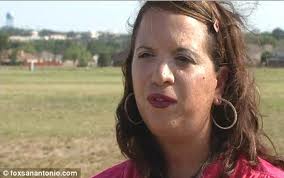
“Twenty-four of those kids hit him and he said that most of them hit him twice,” Amy Neely (pictured above), the mother of 6-year-old Aiden, told KENS-TV. She did not specify what injuries her son may have received.

Neely said her son is not a problem child and that this was the first she’d heard of teachers having issues with him. She said she wants to make sure the teacher who ordered the hitting does not work in a classroom again.

“She doesn’t need to be around any children,” Neely told the television station.

The mother added — and the police report confirmed — that some of Aiden’s classroom friends told him they didn’t want to hit the boy but did so because they were afraid not to.

Primary School Introduces Insane No-Touching Policy

June 15, 2012

As a teacher it distresses me greatly that schools are becoming less progressive, less inviting and less humane. Problems are dealt with in nonsensical extreme measures.  The political correct police have all but taken over and the fear of lawsuits prevails in place of a desire to accommodate the true needs of its student population.

Introducing a no-contact rule as a means to prevent schoolyard injuries isn’t just reactionary, it’s insane!

Guess what? Children hurt themselves. It’s a fact of life! To ban contact sports, hugging and high fives as a result of incidental knocks and bruises reduces the playground atmosphere to that of a doctor’s waiting room. Is that what we want for our children?

Parents claim they were not told directly of the new rule, which extended a ban on contact sports to a ban on any physical contact at all, such as playing “tiggy”, hugging or giving each other high-fives.

They claim the new rule was explained to pupils over the public address system, and students were left to tell their parents.

One parent, Tracey, said her son was winded on the playground yesterday and, when his friend tried to console him by putting his arm around his shoulder, the friend was told his actions were against the rules.

The friend then had to walk around with the teacher on playground duty for the rest of lunch as punishment, Tracey told radio 3AW.

“I’m just a bit outraged that it has come to this. There must be other ways,” Tracey said.

Another parent, John, said his children were told they could not high-five each other.

“I have a couple of children, and they have been told that if they high-five one another that’s instant detention, and if they do it three times they will be expelled,” John said.

“I mean, what are they actually trying to teach?”

One child was reportedly told that if students wanted to high-five, it would have to be an “air high-five”.

Principal Judy Beckworth said it was “not actually a policy, it’s a practice that we’ve adopted in the short-term as a no-contact games week”.

She said the new practice was introduced yesterday after students suffered a number of injuries on the playground in recent weeks, and the new no-touching rule was only due to last for one week.

However one parent, Nicole, claimed that the school was backpedalling because some parents were told by the school that the new rule would be in place for a minimum of three weeks, which would be extended if the children did not behave themselves.

What’s next? Soon schools will ban chairs because students sometimes lean back dangerously. Staples and scissors will have to go, as will monkeybars, sharp pencils, bunsen burners, glass bottles, electrical sockets, polls, doors and polished floors. Soon the only activity that students will be allowed to engage in is high fiving each other. No, wait! That’s banned too.

Protecting Your Kids on the Internet

June 13, 2012

Seven very helpful tips on protecting your children online courtesy of expert Dr. Leigh Baker:

1.  Spend time with your child on the computer. Put the computer in a place that can be easily accessed by the entire family. Use the Internet with your child to play games, plan for a family vacation, or learn about new places and people. Ask your child to teach you more about the computer and to show you certain tricks he or she may have learned. Not only will you gain computer knowledge, you will also get valuable information on just how savvy your child is on the computer. Make sure to ask your child what he or she likes on the Internet and to show you favorite sites.

2.  Let your child know that you will be periodically watching and monitoring his or her online activities. (Internet security software from companies like OnlineFamily.Norton often include parental controls that can help you encourage safe surfing.)

3.  Share an online pseudonym, password, and email account with your child. In this way, you can monitor online correspondences and the Internet sites that your child has accessed.

4.  Never, under any circumstances, allow your child to have face-to-face contact with someone they met online without your permission. If you agree to the meeting, accompany your child and arrange for it to take place in public.

5.  Don’t allow your child to go into private chat rooms without your permission and supervision.

6.  Monitor your credit card bill. Many pornographic online vendors require credit cards in order to have access to their sites.

7.  Alert your Internet provider if you or your child come across sexually obscene material.

I hope this proves helpful.

It is Doctors Not Teachers Who Are Helping Children Get Good Grades

June 12, 2012

A big thank you must go out for all overprescribing doctors who are doing their bit to have children improve their grades. Thanks to your desire to see children succeed and your devotion to health, you have made amphetamine readily available to all those in need (and even for those not in need).

He steered into the high school parking lot, clicked off the ignition and scanned the scraps of his recent weeks. Crinkled chip bags on the dashboard. Soda cups at his feet. And on the passenger seat, a rumpled SAT practice book whose owner had been told since fourth grade he was headed to the Ivy League. Pencils up in 20 minutes.

“No one seems to think that it’s a real thing — adults on the outside looking in. The other kids in rehab thought we weren’t addicts because Adderall wasn’t a real drug. It’s so underestimated,” said a recent graduate of McLean High School in Virginia, who was given a diagnosis of A.D.H.D. and was prescribed Adderall.

Adderall and similar drugs are not hard to obtain at high school, many students say. They can also be found online.

The boy exhaled. Before opening the car door, he recalled recently, he twisted open a capsule of orange powder and arranged it in a neat line on the armrest. He leaned over, closed one nostril and snorted it.

Throughout the parking lot, he said, eight of his friends did the same thing.

The drug was not cocaine or heroin, but Adderall, an amphetamine prescribed for attention deficit hyperactivity disorder that the boy said he and his friends routinely shared to study late into the night, focus during tests and ultimately get the grades worthy of their prestigious high school in an affluent suburb of New York City. The drug did more than just jolt them awake for the 8 a.m. SAT; it gave them a tunnel focus tailor-made for the marathon of tests long known to make or break college applications.

“Everyone in school either has a prescription or has a friend who does,” the boy said.

At high schools across the United States, pressure over grades and competition for college admissions are encouraging students to abuse prescription stimulants, according to interviews with students, parents and doctors. Pills that have been a staple in some college and graduate school circles are going from rare to routine in many academically competitive high schools, where teenagers say they get them from friends, buy them from student dealers or fake symptoms to their parents and doctors to get prescriptions.

Of the more than 200 students, school officials, parents and others contacted for this article, about 40 agreed to share their experiences. Most students spoke on the condition that they be identified by only a first or middle name, or not at all, out of concern for their college prospects or their school systems’ reputations — and their own.

“It’s throughout all the private schools here,” said DeAnsin Parker, a New York psychologist who treats many adolescents from affluent neighborhoods like the Upper East Side. “It’s not as if there is one school where this is the culture. This is the culture.”

Thank you doctors! What would the educational fraternity do without you?

Children as Young as 7 are Cutting Themselves

June 11, 2012

It is terribly tragic to read of the number of children harming themselves on purpose. What makes it even more unsettling is that these children don’t take up this practice based on peer pressure, television, advertising or any other common triggers for unhealthy child behaviour.

When a child decides to cut themself, they are expressing deep and complex issues such as hopelessness, self-hatred, loneliness and anger. Often a child’s cuts goes unnoticed.

I am grateful that a study has brought this silent but shocking issue to the fore:

Studies have suggested about one-fifth of teens and young adults engage in self-injury at some point to relieve negative emotions or reach out for help, for example. But this report is the first to ask the question of kids as young as seven. Researchers found one in 12 of the third-, sixth- and ninth-graders they interviewed had self-injured at least once without the intention of killing themselves.

“A lot of people tend to think that school-aged children, they’re happy, they don’t have a lot to worry about,” said Benjamin Hankin, a psychologist from the University of Denver who worked on the study. “Clearly a lot more kids are doing this than people have known.”

Hankin and his colleagues spoke with 665 youth about their thoughts and behaviors related to self-harm. They found close to eight percent of third graders, four percent of sixth graders and 13 percent of ninth graders had hit, cut, burned or otherwise purposefully injured themselves at least once. In younger kids hitting was the most common form of self-injury, whereas high schoolers were most likely to cut or carve their skin.

Ten of the kids, or 1.5 percent, met proposed psychological criteria for a diagnosis of non-suicidal self-injury, meaning they had hurt themselves at least five times and had a lot of negative feelings tied to the behavior, the researchers reported Monday in Pediatrics. Youth who self-injure often say they do it to help stop bad emotions, or to feel something — even pain — when they are otherwise feeling numb, according to psychologists.


Toddlers are Using Bad Language. Should we Really Care?

June 11, 2012

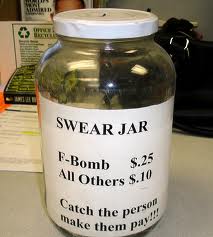
Unfortunately swearing has become part of our vernacular. Curse words are no longer seen as rude or unsociable and parents are less conscious of avoiding sprouting certain words around their children. Many will not see this as a problem. They will argue that swearing is harmless and a popular fixture of everyday conversation.

I do not find swearing offensive per se, but I am grateful that my parents brought me up to express myself in a more dignified way. It would greatly upset me if my children swore, like many children are nowadays:

CHILDREN as young as three are swearing – and it’s not just “bloody” coming out of the mouths of babes either.

“F—” and “s—” are the first naughty words that toddlers usually let fly.

They pick up swear words from the playground, at home and on TV and they do it because it gets them “maximum attention”, linguistics expert Kate Burridge says.

“In the old days they might have had their mouths washed out with soap or been sent to the bedroom with no supper,” Prof Burridge, of Monash University, said.

“But (now) they get maximum attention and learn how potent these word are.”

Parents say almost 60 per cent of children swear by three years of age and that by kindergarten more than 90 per cent of children have uttered their first rude word, an exclusive Herald Sun survey found.

Etiquette expert June Dally-Watkins said the level of swearing on TV and in public was unacceptable.

“I think it is disgusting,” she said.

“Parents should not permit it.”

Most parents agree with Ms Dally-Watkins – 70 per cent believe schools and parents should do more to crack down on swearing.

But parents (52 per cent) admit their children often hear their first curse at home.

Second was the playground (48 per cent) at school or pre-school, followed by TV (31 per cent).

Most parents (78 per cent) still actively discourage swearing.

Prof Burridge advises parents not to panic if their child swears.

She says: “It is probably best to treat these as ordinary words, because they are.

They have always been an important part of the Australian vernacular.”

Teacher Tells Graduating Class they are Not Special

June 10, 2012

There has been an overwhelming amount of approval from the general public following teacher David McCullough Jr’s declaration to his graduating class that they are “not exceptional.”

I can understand why people have agreed with his comments and I, like many, found his speech very entertaining. However, I do not agree with the method of reducing people down to a lowly level.

Sure, the standard graduation speech, like many parenting styles, reveal an untruthful optimism that makes the student/child believe they are more than they really are and are bound to achieve more than they really do.

But don’t replace one extreme viewpoint with another.

Sure, the students at a graduating ceremony may not be exceptional, but that doesn’t mean they can’t be. Who is exceptional anyway? Who has the authority to label someone as exceptional?

I believe that everyone in the world has the capacity to live a life of integrity. Is integrity not an exceptional character trait? Not according to David McCullough Jr . I believe everyone has the potential to make others feel better about themselves. Is that an exceptional character trait? Not according to David McCullough Jr .

According to David McCullough Jr.’s standards we should just all replace our arrogance with something that doesn’t seem especially satisfactory:

A Massachusetts high school teacher who told graduating students in a speech that they were nothing special and should learn to come to terms with it has won widespread approval.

The no-nonsense David McCullough Jr told Wellesley High School’s “pampered” and “bubble-wrapped” class of 2012 that they were “not exceptional” at a graduation ceremony last weekend, the NY Daily News reports.

“Capable adults with other things to do have held you, kissed you, fed you, wiped your mouth, wiped your bottom, trained you, taught you, tutored you, coached you, listened to you, counselled you, encouraged you, consoled you and encouraged you again,” Mr McCullough said.

“But do not get the idea you’re anything special. Because you’re not.”

The English teacher illustrated his point mathematically.

“Think about this: even if you’re one in a million, on a planet of 6.8 billion that means there are nearly 7,000 people just like you,” he said.

The son of Pulitzer prize-winning historian David McCullough told the graduates and their parents that around 3.2 million other students would be graduating from over 37,000 US high schools that year.

“That’s 37,000 valedictorians. 37,000 class presidents. 92,000 harmonising altos. 340,000 swaggering jocks”.

The teacher warned that gestures have taken precedence over deeds and that today people sought to accomplish thing for the recognition rather than the pursuit of a goal.

“As a consequence, we cheapen worthy endeavors, and building a Guatemalan medical clinic becomes more about the application to Bowdoin than the well-being of the Guatemalans,” he said.

Despite his unusual approach the speech was welcomed by students and parents alike who said they appreciated being told “what we need to hear and not necessarily what we wanted to hear,” local newspaper The Swellesley Report commented.

Mr McCullough told FOX News in an interview that parents are often overly protective of their children and this doesn’t help them learn to deal with a tough and competitive world.

“So many of the adults around them — the behaviour of the adults around them — gives them this sort of inflated sense of themselves. And I thought they needed a little context, a little perspective,” he said.

“To send them off into the world with an inflated sense of themselves is doing them no favors.”

I quite liked aspects of the speech and think that it made some very good points expressed with great humour. What I didn’t buy into however, was his version of what life should be like. It seemed almost as unsatisfactory as the things he warned against.

I wish that graduating class well. I hope they grow up to be kind, caring, selfless people who try to enrich the lives of others and resist from judging or ignoring the people around them. I hope they grow up to use their skills for good, be charitable with their time and money and raise children that will do the same.

Is that exceptional? Not according to David McCullough Jr .

Teaching Your Children to be Grateful

June 6, 2012

Below are 7 helpful tips by Dr. Caron B. Goode on helping children to become grateful for the relative luxuries they enjoy:

  • Daily Dose. Take time each day to encourage your children to express gratitude. They can do this by making an entry in a family journal or by simply talking about what they are grateful for.
  • Model Thanks. As with everything, modeling is the best way to teach your children to be grateful. Be lavish with your thanks. Thank your children for hugs. Thank the cashier for ringing up your groceries. Thank the bus driver for returning your students home safely. Letting your children see that you are grateful will encourage them to be so as well.
  • Establish Rituals. We all know the importance of family rituals. Establishing rituals that highlight being thankful is a wonderful teaching tool. Start dinner with each family member sharing what they are most grateful for. Say goodnight by sharing what you were thankful for that day. Any ritual that based on gratitude will reinforce its power.
  • Volunteer. Volunteering is a great way for your children to see gratitude in action. There are numerous chances in every community to volunteer. Homeless shelters, nursing homes, and mentoring programs are just a few. There may also be other opportunities closer to home. Perhaps an elderly relative or neighbor could use a hand. It feels good to help others. Therefore, your children not only benefit from that, but they also get to experience the warmth of appreciation. Two things for which they can be grateful.
  •  Assign Chores. Children learn by doing chores. They learn what it means to be part of a whole. They learn their contributions are important. They also learn that most things take effort. Simple household chores can help children learn to be grateful when they benefit from the efforts of others.
  • Thank You Notes. Writing thank you notes for gifts is a very literal way of teaching your children gratitude. Putting down on paper what they enjoyed about a particular gift, reminds your children why they are grateful for it.
  • Find Your Gratitude. Always be on the lookout for things to be grateful for and express your gratitude. When your children hear you say things like, “Buster is such a good dog” or “What a beautiful day”, they realize they can be grateful for even the smallest of things.