Posts Tagged ‘life’

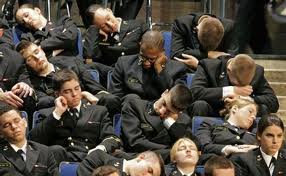
The Desperate Need to Keep Students Awake

December 3, 2010

Oh, the things educators do to keep their students awake!  Engaging students are a critical part of teaching.  What we teach shouldn’t just be comprehensive and relevant, but also interesting to the children.  However, there are some terrible methods out there for attempting to bring students out of their slumber.

Take this scatter-brained idea from Germany for example:

Few things rile a teacher more than seeing a pupil chewing gum in class, but a primary school in southern Germany is now actively encouraging them to do so — in order to improve their grades.

Not allowing students to chew, but encouraging!

“Chewing gum is good for the children’s health and improves their cognitive performance,” said Wolfgang Ellegast from the education ministry in Bavaria, home to the Volkenschwand school where the new pilot project is being run.

School headmaster Siegfried Lehr agrees: “The prerequisite for learning with fun is that kids come to school without fear and that they feel happy… Therefore we are encouraging them to chew gum in break and in lessons.”

Does anyone else think that this idea is just plain loopy?  Do they honestly think that by encouraging their students to chew in class they will suddenly get happy and engaged learners?

I am not in favour of restrictive rules in the classroom, yet my school doesn’t allow chewing gum in the classroom, and I stand by that rule.  Chewing gum is messy, distracting and not at all likely to bring about positive outcomes in the classroom.

There are so many bad ideas out there in a bid to get students onside.  For example, the teacher that gives her students a 5-minute break so they can make text messages.

What’s next?  Allowing kids to kick their feet up on the desk for comfort?

Here’s an idea.  How about engaging students with interesting and exciting lessons instead of gimmicks like text breaks and chewing gum?


Educating Teens About Money

December 2, 2010

At a time when the importance of saving money has arguably never been greater, I am pleased to see a new program with the aim of getting teenagers to becoming more financially savvy. It’s high time that teenagers were prepared for the realities of financial responsibility, were informed of the risks of charging on credit and instructed to spend less than one earns.

FoolProof, a consumer education agency dedicated to increasing financial literacy through the use of multi-media learning modules, has released a new video series Burning Money.

While the free program is designed for use in classrooms, the series strives to tackle teenage financial issues like the twin forces of pointed advertising and peer pressure. This video addresses how much a teenager actually needs to buy designer jeans.

Burning Money tries to introduce students to the potential bad decisions that they make which may hurt their financial health further down the line. The films explain how a late payment now can adversely affect jobs, apartments, and loans in the future. The videos emphasize that it doesn’t take a millionaire to save, just someone who knows how to spend and how to save.

I remember standing behind a woman in a fish shop, eavesdropping on her conversation with the lady at the checkout.  She explained that she teaches adults how to keep control of their finances.  She went on to say that she is currently lobbying for the “savings” account option on eftpos and atm machines to be changed to “spending” account.  Because after all she said, “It isn’t a true savings account if you are constantly taking money out of it.”

As a teacher of nine and ten year olds, this program is too advanced for them.  Instead, I teach them a unit on being aware of the manipulation involved in the advertisements they watch, and helping them to identify when and how they are being used as a tool of the marketing industry.

No More Asbestos Riddled Classrooms!

November 30, 2010


Enough is enough!  How long does it take for those in charge to take notice and become proactive?  This isn’t the 60’s!  More has to be done to ensure that teachers and students aren’t subjected to asbestos exposure.

Reading about Queensland’s problems with asbestos debris in their classrooms makes me very upset.

Education Queensland has been unable to give a statewide figure for the number of children who have their names on asbestos-related school registers, stating the information is not kept centrally.”

The department has also revealed 98 temporary closures of classrooms, playgrounds and other state school sites were recorded in about six weeks recently  comparable to the rate of closures for all of last year.

If you’re concerned like me, have no fear because Education Queensland’s acting deputy director-general Graham Atkins has come up with the worst attempt at spin one could ever imagine.

“Principals and staff have a heightened awareness about managing asbestos-containing materials,” Mr Atkins said.

“This (awareness) can account for the high number of incident alerts recently, which is always a good thing, as our staff are trained to be extra-cautious,” Mr Atkins said.

Doesn’t that make you feel better?

Whilst you and I might have been indifferent to Mr. Atkins’ s spin, the Queensland Association of State School Principals president Norm Hart obviously thought it was gold.

“… Norm Hart said managing asbestos risk had become a growing part of a principal’s role and recent training would be behind the incident spike.

“It is obviously frustrating that we have buildings that have asbestos in them and that we have to manage it, but we are not prepared to put safety second,” he said.

So if you are a concerned parent, rest assured, your child’s teacher and principal are experts at spotting asbestos.  Forget about teaching literacy or numeracy.  No, our teachers are trained to spot potential carcinogens in the classroom.  Feel better now?

The Courier-Mail earlier revealed Department of Education and Training staff had made more than 400 workers compensation notification claims since 2005 after potentially being exposed to asbestos.

EQ figures show 18 DET staff have had WorkCover asbestos-related claims accepted since 2002. Seven were for asbestos-related illnesses, seven were for psychological injury related to exposure and four were for possible exposure.

But it’s alright.  We have it under control.  We’ve trained our principal’s ….

Who Steals From Disabled Kids?

November 29, 2010

I was very saddened to read about the animals stolen from the Echuca Specialist School’s premises. The theft has almost certainly forced the school to scrap a program involving animals.

Eight chickens and two ducks were stolen from the Echuca Specialist School’s kitchen garden in two separate incidents.

Three of the chickens have been recovered, but one was found dead.

Principal Christine Wakefield says the school can no longer keep animals on site.

“[It’s] very disappointing because it’s good for the kids’ learning to have these experiences with animals,” she said.

“If we can’t keep animals on the grounds without them getting injured or stolen, we’ve really got to change our programs, unfortunately.”

Ms Wakefield talked of the effect these callous robberies were having on her students:

“One of our girls in particular just loves them and she knew exactly which ones were missing and I think they’ve named some of them as well.”

How much of a lowlife do you have to be, to repeatedly deprive disabled students from enjoying the experience of having animals at school?  What satisfaction could one ever take in doing such a heinous crime?

I hope the school set up hidden surveillance and catches the scumbags.

Pressure in the Workplace

November 26, 2010

I feel under extreme pressure in the workplace.  My colleagues want us to join the Education Union so we can make a new enterprise agreement with the school.  My colleagues want improved work conditions and the union wont represent them unless the whole staff sign up.

I am not a huge fan of the unions.  I don’t like what they do with the money they have, such as splurge on campaign donations.  I don’t like the unfair rule that staff who have paid their fees will not get full representation from them unless they get their colleagues to do the same.  I hate the lack of scrutiny they have for current Government legislation because of their political leanings.

Yet, I am faced with a conundrum.  Do I give into the pressure and pay the thousand dollars a year membership fees, or do I stand my ground?  I do feel conditions aren’t up to standard.  I do want my colleagues to be well served and looked after.

Would not joining the union be selfish?

Teacher Training Fails Us

November 25, 2010

It is my opinion, and I am certainly influenced by my own experience, that teachers are being let down by inadequate and highly pressured teacher training.  I believe that student teachers are not given enough exposure to practical teaching experiences and are left unprepared for the classroom upon entering the profession.

I remember how difficult it was for me to adjust to life as a teacher in the first year in particular.  On only a one-year contract, I felt I couldn’t approach colleagues for advice, because without their respect, I felt I wouldn’t earn a second contract.  Instead I had to work it out on my own, as quickly as possible, to restore the faith my school had in me when they employed me.

I found my University course high on pressure and theory, but low on substance and opportunities to observe teachers and teach classes.  I remember almost having to repeat a full year of the course because I failed an assignment for Sport.  I had to submit a series of lesson plans for Sport (not a discipline I have a passion for).  My lessons were very well-developed – except for one detail that awarded me an automatic fail.  In one of the lessons, I let the students pick the teams themselves.  Whilst I realise that I should have known better, I almost had to repeat the full year (regardless of how well I was doing in other subjects), because I failed that assignment.

That’s why I agree with the submission by Michael Grove in the UK, that plans to shift the focus of teacher training from universities to schools.

It says that “too little teacher training takes place on the job” and proposes the creation of a national network of “teaching schools” based on the model of teaching hospitals.

Mr Gove said that great teaching was a mix of academic and “emotional” intelligence, and working with children and exceptional teachers would enable trainees to grasp this fact.

So many teachers leave the profession because they found it too difficult in the early years.  Others quit during the training period because they are so worn out by assignments and hurdle requirements that have little resemblance to the realities of a classroom.

My advice to teachers in training is to hang tough, get back to the reason why you signed up for this wonderful profession and try to get through.

I feel a lot more confidant in the classroom now.  No thanks to my training though …

We Are Losing the Fight Against Bullying

November 24, 2010

This is a point made very clear in a recent article entitled, Why we’re losing the fight against bullying.  The article suggests that school policies are flawed or just simply ineffective and bullying continues to be as rampant as ever.  Before I discuss my approach to the issue, I want to point out some interesting points made in the article:

“Some parents, I am sad to say, are not at all bothered if their child is a bully. In fact, they can be quite proud of it,” explains Ken Rigby, a bullying expert in Australia.

Schools can post warm and fuzzy messages about tolerance in the hallways, and hand out good-citizen awards at assemblies – both well-meaning, and necessary – but that strategy speaks loudest to students who wouldn’t bully in the first place, and many of those who do (between 10 and 20 per cent) don’t necessarily see their behaviour that way.

Schools can post warm and fuzzy messages about tolerance in the hallways, and hand out good-citizen awards at assemblies – both well-meaning, and necessary – but that strategy speaks loudest to students who wouldn’t bully in the first place, and many of those who do (between 10 and 20 per cent) don’t necessarily see their behaviour that way.

Zero-tolerance policies on fighting, as cases in Canada have shown, do not solve the problem either, often leading to punishment without investigation, and little follow-up.

I have very strong views on bullying and anti-bullying policy formulation.  It is my opinion that we have our emphasis wrong.  Bullying isn’t a priority – it is THE PRIORITY.  As a teacher, I am entrusted not with people’s money or belongings but with the most important and precious things they have – their children.  It is my responsibility to ensure that they are safe and secure.  Sure, I have to teach them and help them grow academically, but even more so, I have to do my best to make sure that the child they dropped off at my classroom is going to come back in as good if not better emotional shape than when they arrived.

When I speak to my class at the beginning of the year, I tell them there is a sure-fire way for them to have to repeat the year a second time.  It’s not if they find the work difficult or are struggling to pass assessments – it’s if they are not treating their classmates with respect.  Because if they are not ready to treat others with respect, they are not emotionally ready to go up a year level. 

I’m not joking.  I really do mean it.

There is a lot of talk about child centered learning vs teacher centered learning.  I prescribe to neither.  Instead, I believe in what I call “class centred learning”.  The main focus of my teaching is that everyone in the class must respect each other.  It is the fundamental rule for assessing my own performance.  They don’t have to like each other.  But they absolutely must respect each other.  And ultimately, it is my duty to empower the class and create an environment of closeness and mutual respect.

Does it mean that there is no bullying in my classroom?  Absolutely not.  I wish.  I’m only an average teacher.  What it means is, I take more interest in the welfare of my class than any other consideration.

So that means your actual “teaching” suffers?  Absolutely not.  In fact, if there is tension, poor self-esteem, bullying and disharmony in the classroom, there is no way a teacher is going to get the class to work at their potential.  Think about how hard it is for us adults to operate at work with colleagues that don’t respect us.

I think of it this way.  If my students go home still unsure about a maths problem, I can fix that up the following day.  But, if my students go home victimised by fellow classmates due to my inaction – then I may have caused potential damage.

Is it Harder Being a Kid Nowadays?

November 23, 2010

I never would have thought so.  In actual fact, I would have guessed that it is easier being a teenager now than it has ever been.

Not so according to the annual Mission Australia report.  The report which quizzed 50,000 young Australians primarily aged between 11-19 revealed that:

27 per cent of them were concerned about stress levels, while 20 per cent aged 11-14 said they were struggling to cope.

Respondents spoke of the high expectations and soaring levels of pressure experienced by young people “nowadays”, seemingly in comparison to the angst-free utopia enjoyed by previous generations.

“We’ve got more responsibilities, like part-time jobs,” one high school student offered by way of explaining the apparent cause of this skyrocketing stress.

Now, I could be wrong, but I doubt highly that our teenagers are under more pressure than generations before.  I think they are more mollycodled and  protected than they have ever been.  Teenagers have always had jobs.  The only difference is, they used to get jobs to support their family, now they are getting jobs to support their consumerism.

Perhaps they’re just better wingers than ever before?

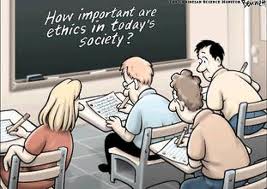
The Ethics Debate

November 22, 2010

For the past few years there has been much debate about the place Ethics classes have in Primary school education.  There has been resistance from religious groups on the basis that it is competing with formal RE (Religious Education lessons) for numbers and government funding.  Proponents of having ethics instruction in our government schools claim that people have a right to choose what is the best for their children, and that non-religious students are better off having an alternative program rather than just sitting out of RE and taking part in an unstructured lesson (basically consisting of free time or watching a movie) instead.

In a new law about to be passed in NSW, parents will have the right to ethics classes as an alternative to scripture in their child’s school even if the principal and the majority of the school community opposes them.

A Baulkham Hills parent, whose child participated in the trial, said: ”The majority of parents, ethics teachers and children at our school found the ethics classes an enriching complement to the many good SRE [Special Religious Education] classes on offer”.

However, many of those opposed were concerned about ethics competing with scripture classes.

”Ethics is already taught in other forums in state primary education and should not be allowed to attract students away from meaningful faith-based studies,” wrote one.

Whilst I am not opposed to have Ethics lessons taught at our schools, I would like to make the following points:

1.  I would like to see RE and Ethics material being submitted to a curriculum board for approval.  Everything taught at school must be rich, stimulating, engaging and subject to curriculum style scrutiny.

2.  Every teacher should, and most do, invest time in their day-to-day teaching, imparting ethics by teaching their students right from wrong, helping them to make healthy choices and showing them how to maximise their potential.  The idea that students without an Ethics program at their school are is some ways missing out on ethics instruction is just wrong and disrespectful to hardworking, caring teachers.

Is the RE vs Ethics debate prevalent in countries other than Australia?  What is your opinion regarding the validity of ethics instruction?

Drunken Teachers Beat-Up

November 21, 2010

The Sunday Telegraph should be reprimanded for an appalling article which claims that teachers in Catholic schools drink alcohol in the staff room on a Friday evening.  The article doesn’t ring true, seems designed for shock value rather than true journalism and fails to give proper evidence to back up its claims.  Read the article here:

http://www.dailytelegraph.com.au/news/happy-hour-in-school-staff-rooms/story-e6freuy9-1225957381180

Example 1:  The Sunday Telegraph understands many of the 200-odd Catholic schools in NSW to have refrigerators stocked with alcohol in staff rooms and to publicise cheap alcohol.

Yeah?  How many of these schools?  Prove it!

Example 2:  Drug & Alcohol Research & Training Australia’s Paul Dillon said he had grave concerns about the example being set for students by the behaviour.

What behaviour?  You have yet to prove such a culture of drinking exists.  You have yet to name 1 of the 200 schools.

Example 3: “Certainly I have confronted schools and principals about the practice and the worst thing I’ve seen is actual prices of alcohol pinned on fridges,” Mr Dillon said. “Young people go into the staff room, they see the fridges.”

Students do not have access to staff room fridges.  Heck, they shouldn’t have access to the staff room!  How many schools have you visited with alcohol prices?  Does it really matter anyway?

Example 4:   “There is also the issue that [teachers] are doing this on a Friday night. They are then getting behind the wheel and driving home.

“When I’ve raised this, the teachers have become very, very defensive. They say things like, ‘It is our right to do this’.”

If they went straight to the pub it would be none of your business, and since you have yet to establish that this is a clear problem, I still ascertain, it is none of your business.

So what do we have here?  Figures to prove its a problem?  Nope.  Pictures or video footage of beer-loaded fridges and booze-ups? Nope.  Can we name and shame a school that has transgressed in this way?  Sorry, we don’t have that information.  How about a quote from a student who witnessed this behaviour or saw evidence of alcohol in the staff room?  No, we don’t have that either.

There is no story here.  If I was affiliated with a Catholic school I would be ropable.  What an abominable piece of gutter journalism!

Shame on you Sunday Telegraph!