Posts Tagged ‘life’

Protecting Your Kids on the Internet

June 13, 2012

Seven very helpful tips on protecting your children online courtesy of expert Dr. Leigh Baker:

1.  Spend time with your child on the computer. Put the computer in a place that can be easily accessed by the entire family. Use the Internet with your child to play games, plan for a family vacation, or learn about new places and people. Ask your child to teach you more about the computer and to show you certain tricks he or she may have learned. Not only will you gain computer knowledge, you will also get valuable information on just how savvy your child is on the computer. Make sure to ask your child what he or she likes on the Internet and to show you favorite sites.

2.  Let your child know that you will be periodically watching and monitoring his or her online activities. (Internet security software from companies like OnlineFamily.Norton often include parental controls that can help you encourage safe surfing.)

3.  Share an online pseudonym, password, and email account with your child. In this way, you can monitor online correspondences and the Internet sites that your child has accessed.

4.  Never, under any circumstances, allow your child to have face-to-face contact with someone they met online without your permission. If you agree to the meeting, accompany your child and arrange for it to take place in public.

5.  Don’t allow your child to go into private chat rooms without your permission and supervision.

6.  Monitor your credit card bill. Many pornographic online vendors require credit cards in order to have access to their sites.

7.  Alert your Internet provider if you or your child come across sexually obscene material.

I hope this proves helpful.

Most People Think This Woman is Fat

June 3, 2012

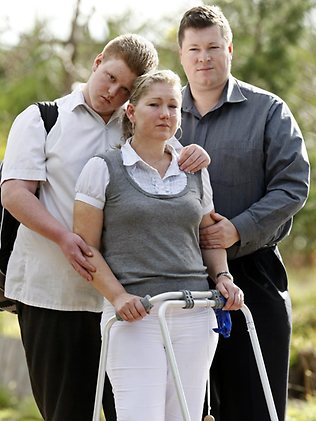
This morning’s newspaper asked readers to comment on whether or not they thought this woman was fat. Whilst I don’t think this woman is fat at all, it is the question itself that got me worked up.

It reminded me about how obsessed we are about weight, and how this obsession is going to ensure that our children will spend more time aspiring to fit a certain look rather than to become good people.

Nobody seems to care anymore whether a person is caring, selfless, charitable or kind. These are attributes of losers. Surveys that ask what we would prefer to be, beautiful or kind, favour beautiful every time. The rationale being, that nobody is jealous of a kind person in the way they are of a good-looking one.

How are our children supposed to make sense of this?

It upsets me to see Primary aged children so conscious of their weight. It bothers me no end that 8-year olds know everything there is to know about the perfect body size and shape, but have no insights on the correct protocol for offering ones seat to an elderly person on a crowded train. The thought would never have entered their mind.

Haven’t we learnt our lesson? Did we not realise that an obsession with looks leads nowhere. It doesn’t make one happy. Why are we creating kids that follow our sick ways? Why are we perpetuating the message that there’s nothing wrong with gossiping, fakery and selfishness, but eating ice-cream is a sin?

So, no, I don’t find the woman fat. But guess what? I don’t care whether she is fat or not. I care whether she is a good woman, a kind wife, a loving mother, a loyal friend, a friendly co-worker etc. And ultimately, that’s what I want us all to look for.

There are frumpy, unfit people out there, with pale complexions who have unpopular taste in clothes. Some of these people are also tremendously kind and good-hearted. It would be criminal for us to marginalise these people, as some of them are the real beautiful people!

Student Sues School for Failing to Get into Preferred Law Course

May 17, 2012

Does anybody want to take personal responsibility for anything anymore? We are become a society of ‘blamers’. Fancy a student in an exclusive Private school suing for a lack of assistance! Those schools give so much more support than Private school. Did it ever occur to her that getting into a course relies on ones own aptitude over anything else? Did it ever occur to her that there were students studying night and day to get into that course? Meanwhile, it is claimed, she was serving suspensions for coming to class late and failing to complete set work tasks.

A former student of one of Australia’s most prestigious private schools is suing the academic institution after she failed to get into the law course of her choice.

Rose Ashton-Weir, 18, claims that the elite Geelong Grammar School, where Britain’s Prince Charles spent two terms as a student in 1966, did not provide her with adequate support, The Age reported Thursday.

As a result, the teenager’s final high school score was insufficiently high enough to gain admittance to law at the University of Sydney, the Victorian Civil and Administrative Tribunal heard Wednesday.

Ashton-Weir is currently pursuing an arts and sciences degree at the University of Sydney.

She had attended Geelong Grammar, 48 miles (77km) south of Victoria’s capital city Melbourne, in 2008 and 2009, but left to continue her high school education in Sydney.

Ashton-Weir told the Geelong Advertiser that the school had failed her.

‘It was incredibly detrimental to my academic skill and development,’ she said.

Ashton-Weir, who was a boarder at the school, reportedly struggled with mathematics, and scored eight out of 68 in one test. Despite this, she was placed in a regular class. The school’s representative, Darren Ferrari, said every effort had been made to help the teen.

Ashton-Weir’s mother, Elizabeth Weir, is also suing Geelong Grammar, The Age reported.

Weir wants AU$39,000 (US$38,740) compensation for rent she paid when they moved to a new home after her daughter relocated from Geelong to Sydney.

Weir also claims that Ashton-Weir’s move resulted in her giving up her cookie business which would have raked in AU$450,000 over a three-year period.

Ferrari told the tribunal that Ashton-Weir had been suspended several times at Geelong Grammer, was absent from classes often and had failed to complete required school work.

I suppose if she wins this case, it would be ironic. Trust a future lawyer to endorse dodgy lawsuits that puts the ‘blame game’ over personal responsibility.

Attack of the Crazy Suspension Addicted Schools

May 9, 2012

There was a time there when suspensions actually meant something. If you were given a suspension, you knew it was for something major and you dreaded the inevitable grilling by your parents when they reluctantly turned up at your school. Whenever I was sent to the Principal’s office, I was on edge that my misdemeanor might lead to a suspension. The fact that I am still alive to write this post tells you that I never got one.

But today, for whatever reason, schools find it necessary to cheapen and make mockery of the very punishment that was a proven success over many years. Nowadays, you can get a suspension for scratching your head or making snorting sounds when you laugh.

You don’t believe me? Well then read this:

A school north-west of Melbourne has been forced to apologise to a student with a learning disability after he was suspended because his parents failed to attend a parent-teacher interview.

Brendan Mason was allowed to return to classes at Sunbury Downs College in Sunbury today, the Herald Sun reports.

Brendan’s father Andrew Mason said the meeting was one of many they had throughout the year with his teachers, integration aides and pathways teachers to discuss his progress.

Principal Brett Moore said Brendan was wrongly issued two detentions after his parents missed the meeting, and this was increased to a one-day suspension after Brendan failed to turn up to either punishment.

Mr Moore said the staff member who issued the detentions made a mistake. The staff member did not understand that Brendan’s parents were not required to go to the meeting because they had already attended a group session with his aides, Mr Moore said.

“I’ll investigate this matter … I’ll unreservedly apologise — I have to the father and I will in person.”

But Brendan’s father said his son would struggle to make up classes he had missed.

“I don’t think he can go back today — he’s not up to it, part of his problem is he gets affected by stress … he definitely can’t go back today,” he said.

In Australia, it is the politicians that are accused of being reactive and low on conviction. However, in my opinion, there is no better current day example of a ‘turncoat’ than schools. They seem to make these incredibly big mistakes. Mistakes that they would happily continue making, until someone gathers the courage to stand up for themselves and notifies the media. Then, without a moments hesitation, they do a complete 180 degree turn and blame their mistake on an errant staff member.

Schools come across as fickle, naive, incompetent and asleep at the wheel. They are quick to blame Governments, parents and students, but are almost never blameless themselves.

It’s time our schools woke up to their failing and got there acts together. Restoring confidence in our schools is pivotal to the hopes and aspirations we have for our children.

The Uplifting Message of a Dying Child

May 5, 2012

I was deeply moved by dying teenager Shaun Wilson-Miller’s YouTube video. Filmed as a farewell to all his friends and a request that his father is taken care of, Shaun amazingly, talks positively about his life experiences and how his girlfriend Maddie has made him a very happy person. I commend Shaun for the message, which I feel will strike a chord with adults and children alike.

What I abhor is the vile, disgusting comments that are attached to this heartrending clip. They are crude, demeaning and completely unacceptable! YouTube has a responsibility to ensure that these sorts of comments are taken down and those writing them have their accounts banned! I am appalled that a dying child can be subjected to such bullying.

This YouTube clip presents the very best and worst of what life has to offer. It shows a child that refuses to play the victim, even when faced with the toughest and most dire of situations, and it demonstrates the most disgusting sections of society – those that hide behind false names and keyboards whilst taunting and degrading an innocent person.

Because of those awful people, poor Shaun has had to make another clip refuting their claims.

Adults Need Positive Rolemodels Too

May 2, 2012

Thanks to the explosion of reality television shows we have a vast selection of horrendous parenting examples to choose from. Shows like Toddlers and Tiaras and The Real Housewives of New Jersey as well as Jon and Kate Plus 8 showcase styles of parenting that are not to be emulated.

These shows sicken me because they are intended to make deeply flawed parents feel better about their half-hearted approach to parenting by presenting them with examples of worst practice.  It is not responsible for television networks to give parents the impression that as long as they resist spray tanning their toddler they are doing a satisfactory job of raising their kids.

The trials and tribulations of Octomom is a perfect example of gutter television appealing to parents who haven’t yet earned the right to judge. By focussing on the exploits of Octomom, we have denied parents what they should really be seeing on television – examples of good parenting. Adults, like kids, need to see positive rolemodels who can inspire them to make positive change, alter their priorities and help them make good, sensible and selfless life choices.

It may not rate, but it’s got to be better than this:

“Octomom” Nadya Suleman filed for bankruptcy this week, citing $1 million in debts to her landlord, her father, the water department, DirecTV and Whittier Christian School, where several of her 14 children are students.

In 2008, Suleman, 36, famously conceived octuplets through in-vitro fertilization (as she had done with her previous six children) by Dr Michael Kamrava, and became a national obsession. Since the birth, she has cut deals with media outlets and posed in tabloid photo spreads and promoted products and books that somehow never made it to market. In 2009 she turned down a $1 million offer to appear in an adult video for Vivid Entertainment and is currently relying on welfare, food stamps and Social Security disability payments to raise her 14 children, who are all under the age of 10.

Speaking of sound decision-making, in a reversal of her 2009 decision to pass on porn, Suleman told reporters on Monday night’s “Showbiz Tonight” that these days she’ll do just about anything for the benefit of her brood: “You know if the opportunity comes up, I’ll be the first to admit, I’m gonna eat my words,” she said. “Because all that matters is that I can take care of my family.”

Reality television was supposed to allow the viewer to experience the life of another. This can be a very useful device. It can help the average viewer relate to another person by allowing them to experience life in their shoes. Instead, reality television is content in providing us with the very worst society has to offer.

As a parent with a lot to learn, I am sick and tired of being bombarded with ‘polluted parenting’ on the small screen. Where are the shows that explore helpful advice by experienced parents who have overcome adversity and addressed major challenges?

Surely there is a place for a bit of balance in television scheduling?

Both a Parents’ Best Friend and Worst Enemy

April 21, 2012

I witnessed a 10 year-old boy having a major meltdown at the shoe shop last Sunday. He acted in an obnoxious way and completely embarrassed his mother. Kicking out in obvious frustration, he berated his mother for taking him to the shop (even though she took him because he needed new shoes!) He screamed out on a number of occasions, “This is so boring!”

It took a while for the mother t0 react decisively. At first she tried to reassure him, then sweet talk him. Finally she decided to threaten him. Nowadays, when a parent threatens their child there seems to be a standard “go to” consequence – the use of the family game console. The mother said, “That’s it! No more Playstation for the rest of the day!”

And then she paused, if only to reflect on what she had just done and whether she was comfortable with the challenges that come with setting such a punishment.

“What?” came the boy’s reply. “No Playstation? For the whole day? Why?”

“Because of your tantrum. I’m fed up with it!”

“But that’s not fair! I was just bored, that’s all!”

And then, as if the penny dropped, the mother realised what she had done. In a haste to punish her child, it dawned on her that she had in fact punished herself. She realised that her child is tolerable in front of the Playstation and a considerable challenge away from it. So she scrambled for an “out clause.”

“If you behave for the rest of your time here I might reconsider.”

Unfortunately, this is becoming standard practice among parents. As much as they hate watching their children becoming couch potatoes and gaming addicts, as much as they wish that they could get their attention quicker and steer them away from these distractions when it’s time to do homework, they have come to rely on it for peace and quiet. Here this mother had the perfect punishment for her son’s terrible exhibition. Following through would certainly be a “game changer.” It would make the statement that if you want to misbehave like that in public again it may come at a major price.

But no, this parent wasn’t prepared to risk ruining the rest of her Sunday for the sake of this statement. She probably wanted her son to be out of sight and mind for the rest of the day and there was no way that was going to happen with the punishment she nominated.

I am not trying to judge this parent. We have all breathed a sigh of relief as our child has camped in front of television or computer screen at some stage.

I am merely commenting on the stranglehold this technology has over parents, children and families.

Kids and the Choking Game

April 16, 2012

A dull, dormant life can not be fully responsible for the rise of the infamous “choking game” played largely amongst kids, but it surely must be a contributing factor. The constrictive and restrictive nature of school, regulations, non-active lifestyles and anti-socialised extra-curricula activities must be factored into the increased popularity of this dangerous game.

Although the choking game is not new, very little research has been done to investigate how often it happens or which kids are more likely to try it. But the new study published today in the journal Pediatrics gives a snapshot of who is engaging in this risky activity.

Researchers surveyed nearly 5,400 Oregon eighth graders, and 6.1 percent reported playing the choking game at least once in their lives. Among those who had played, 64 percent had played more than once and 27 percent had done it more than five times. Boys and girls were equally likely to have participated.

The researchers found that kids who participated in the game commonly engaged in other risky health behaviors. About 16 percent of boys and 13 percent of girls who reported using alcohol, tobacco or marijuana on the health survey also reported playing the choking game. Girls who reported being sexually active were four times as likely to participate in the choking game as those who had never had sex.

Robert Nystrom, adolescent health manager at the Oregon Public Health Division and one of the study’s authors, said it’s significant that kids who play the choking game are also experimenting with alcohol, drugs and sex.

“Risk-taking is a part of normal adolescent development. The fact that a lot of adolescents are participating in these behaviors shouldn’t surprise us,” Nystrom said. “What we want to do is prevent it.”

Nystrom noted that the choking game is different from autoerotic asphyxiation, where the goal of near-strangulation is sexual gratification. In the choking game, kids simply seek the rush that comes from passing out.

Before adults become hysterical about this growing trend, I ask them to consider the life of a standard teenager and reflect on what we can do to help them appreciate the real thrills that life has to offer.

Children Outsmart Their Parents Online

April 14, 2012

They keep on telling us that this is the age of computer technology and that online skills are vital to success. Why then does our standardised tests not recognise this very theory. Standardised testing worldwide ignores the very skills our students are told they need to obtain.

Perhaps it is because our kids are fast outsmarting us when it comes to online activity:

MORE than half of Australian children are smarter than their parents when it comes to going online, enabling them to outwit adult restrictions.

Fifty nine per cent of children have ways of hiding what they’re doing online – and their parents know it, a survey by internet security specialist McAfee has found.

Of all age groups, children are the most adept at managing their “digital footprint”, or how they appear online.

“Children are far better at managing their profile controls and what their identity looks like to others,” Young and Well Co-operative Research Centre CEO Associate Professor Jane Burns said.

In a thetelegraph.com.au survey, one in four people said they had been left behind by their children’s online knowledge and one in three were worried they weren’t able to protect their children from web dangers.

Associate Professor Burns said that, rather than be embarrassed about asking for help, parents should embrace their children’s cyber smarts.

“There is a great capacity for them to be a teacher for you,” she said.

Building trust and rapport early was the key to being a parent in the online age: “Young people are far more technically savvy than their parents.

The reality is, even if parents think that they have control of what their children are doing online, they are pretty savvy and eventually the shift will occur. Children will tell them to back off.”

She said parents should treat internet conversations the same way they first taught their children to cross the road or play in the park.

“The first time you do this you make sure they’re with you and they’re holding your hand and you explain to them why it is important,” she said.

“If you’ve got the rapport it becomes a lot easier to ask your children to show you how they keep themselves safe – and they can teach you things as they get older.”

She said parents trying to start a conversation with their children should understand that they saw the web in completely different ways.

“Technology is now so embedded in children’s lives that they don’t differentiate between online and offline worlds,” she said.

“There is no distinction – you are creating relationships, full stop – and they can teach you things.”

“If you’ve got the rapport it becomes a lot easier to ask your children to show you how they keep themselves safe – and they can teach you things as they get older.”

“If you’ve got the rapport it becomes a lot easier to ask your children to show you how they keep themselves safe – and they can teach you things as they get older.”

Whilst this survey clearly presents a worrying case when it comes to cybersafety issues, it also goes to show that our young are very confident online. Why shouldn’t their skills be taken into account like all other skills currently contained in National standardised tests?

Proof That Educational Programs Are Ineffective

April 11, 2012

At first glance, who would you think would be the least likely group to be calling for education against improper gambling?

CLUBS Australia is calling for responsible gambling education to be part of the national school curriculum.

The registered clubs movement, in a submission to a parliamentary inquiry into problem gambling, is keen to see gambling education and awareness programs integrated into personal health and financial literacy lessons.

“Youth are at increased risk of developing a gambling problem,” Clubs Australia said.

“Research has found that education programs can be an effective tool in preventing the development of problematic gambling behaviours.”

Clubs Australia said the program should dispel common myths about gambling and educate people about how to gamble safely.

It would also highlight consequences of problem gambling and promote avenues of help and ways to intervene, it said.

But the more you think about it, the more it makes sense. Clubs Australia achieve two important objectives by supporting gambling education.

1. They can boast about how they are all about social gambling and very much opposed to problem gambling. This is potentially a great PR coup for them; and

2. It’s not as if they will lose anything out of it. Since when does a three lesson program on gambling behaviour have any effect in later life?

They have argued that such programs have proven effective. I dispute that claim. I don’t think they really believe it makes much of a difference either.

The bigger question is how many “good cause” programs are we going to have to put up with in the new National Curriculum? It’s all well and good to adopt educational programs, but a teacher cannot afford to spend too much time on them. Not only are they dubious in their long-term effectiveness, but they can potentially hijack the curriculum.

I personally am sick of the abundance of such programs. It takes so much teaching time away from maths, science, reading, writing and history, that it ultimately, for all its good intentions, puts teachers under greater pressure to cover important skills in a reduced amount of time.

Clubs Australia will get a lot of good press out of this story. Ultimately, I wouldn’t be surprised if there will be more problem gamblers as a result of the positive spin of this story that there will be responsible gamblers as a result of educational programs.