Posts Tagged ‘life’

Be Careful How Much Power You Give Schools

February 14, 2011

Multiple choice time:

You have a 6-year old boy suffering from separation anxiety because his father, an Army commander, is leaving for Iraq.  The boy is found drawing zombies and writes underneath the drawings that he wants to die.

As a school administrator, do you:

a. Take the child aside and offer help, sympathy and a listening ear.

b. Call his mother to set up a plan for how to join forces and help the child during this tough period of his life.

c. Refer the situation to a counsellor or recommend that the mother take the child to a psychologist to get expert help.

d. Call an ambulance and get that child to a psychiatric ward, so he can be committed to a 72-hour psychiatric hold.

If you answered “d” you are probably from Los Angeles, the home of mystifying school decisions.

A mother has criticised school authorities for committing her six-year-old son to a psychiatric ward against her wishes because of a picture he drew in class.

Jack Dorman was pulled out of his elementary school classroom after he sketched a drawing of zombies and stick figures and wrote that he wanted to die.

But the boy’s furious mother, Syndi, said her son was simply upset that his soldier father was being deployed to Iraq.

She said the way Los Angeles school officials treated her son ’was right up there with my worst nightmare.’

Mrs Dorman added: ‘They said they were concerned about a picture he drew. I said he plays video games and it’s a picture from a video game.’

She claims Jack suffers from separation anxiety and was particularly upset on the day he drew the disturbing picture after learning his father, an Army commander, was leaving for Iraq on Thursday.

‘I explained to them what was happening, that my husband was being deployed to Iraq, that he was upset when he came to school today, that he wanted to be at home,’ she said.

‘I’m saying, “I will deal with it, that we have a therapist and that we’ll make sure he’s seen today”.’

‘They said it was out of my hands. They said they were in control and they could do this and had already called an ambulance.

‘I said, “Can you do this?” and they’re like, “Yeah”, Mrs Dorman said in an interview with NBC. ‘I’m just like, “What? Can I get a lawyer? How is this happening?”.’

Mrs Dorman said the ambulance ride was terrifying for her son, who was already seeing a therapist because he became anxious when he was separated from his family.

‘I was trying to reassure him that it would be okay and he asked if I’d come back for him and I said of course I am going to come back for you,’ added Mrs Dorman.

Jack was released after 48 hours, but his mother fears the ordeal has traumatised her son.

‘My son doesn’t want to go back to school. He’s afraid they are going to take him away again,’ she said.

In a statement, Los Angeles Unified School District Superintendent Ramon Cortines insisted his staff took the appropriate action.

‘We did the right thing here,’ he said. ‘I can unequivocally state that correct procedures and protocols were followed, including contacting the parents and accessing community resources such as the Los Angeles County Psychiatric Mobile Response Team.

‘When any student indicates a desire to take his or her own life, the LAUSD is required to follow strict protocols to ensure the safety of the student. The safety of LAUSD students is paramount,’ he added.

Where is the common sense in this story?  The boy is 6-years old!  A 6-year old boy with a father being sent off to war who threatens his life on the back of a drawing needs care and support from his school.  He needs the school to be sensitive and compassionate.  So what do they do to this poor kid?  They send him off to a psychiatric ward!  The person that was responsible for calling the ambulance is a more suitable candidate for the ward!  What were they thinking?

The unfortunate modern reality of living in a litigious world, in my opinion,  is that school’s care more about being sued than for the rights of the children.  It is for this reason, we need to be mindful that in all kinds of sensitive circumstances, school’s are likely to put their interests ahead of the child’s.  We must be careful how much power we give them.  This includes teacher’s being given authority to greatly influence the decision of a doctor in prescribing powerful medications to a child.

And it isn’t just the school that is to blame.  It’s the regulations which were instituted with one massive, gaping hole in it – the common sense clause. Even with the best of intentions, a law that ignores common sense, is a terrible law!

And notice the lack of apology.  No, they are still defending their decision!  Shame on you!

Time to change the law folks

My Solution to a Major Problem in Education

February 11, 2011

THE PROBLEM

There are two different categories of teacher that are affected by this problem.

Category 1: In my opinion teacher training is ineffective. New teachers don’t get enough practical exposure to the workings of a classroom and do not come fully prepared to deal with the issues that arises when teaching their own class. Because they are new, and yet to earn their stripes they are less comfortable than most to ask for help or seek guidance. They also often begin on trial 1 year contracts, thus pressurising them into showing their worth and instilling confidence in their colleagues. Such a teacher will not want to seem incapable or lacking in proficiency.

Category 2: Many teachers are being roundly criticised at the moment for not performing up to standard. It seems to be in vogue to blame teachers, when in truth there is a lot wrong with education – it isn’t just about the quality of teachers. These teachers do exist and require much more support rather than the threat of being cut and left unemployed.

THE SOLUTION

The solution that I propose is two tiered:

1. Experienced teachers who are deemed to be excelling at a certain standard are offered a mentoring role for higher wages. If accepted to take on that role, these teachers would offer new teachers the chance to spend a few days in their classroom, let them observe their lessons, give them access to the their planning material and be someone out of that teacher’s school environment who can deliver advice and guidance via email and phone. This challenges the mentor teacher to strive in their new position as well as their underling.

2. For the second category of teacher, I recommend that newly retired teachers, who have left the profession with a wealth of knowledge and an eagerness to maintain links with the profession, be paid to mentor and assist teachers who have not been performing at the required benchmarks. Instead of firing teachers in the first instance, I propose that these teachers get the opportunity to improve with a greater deal of support and collaboration.

WHAT THIS SOLUTION ACHIEVES

• Provides the opportunity for excellent teachers to be better paid;

• Allows retired teachers to maintain links with their profession and share their wealth of experience;

• Gives new teachers greater confidence and a non-judgemental mentor who they can approach; and

• Allows teachers currently not working at their premium a second chance that may reinvigorate and refresh them.

Why Aren’t Kids Held Back Anymore?

February 11, 2011

“It is our policy not to hold kids back unless there are exceptional circumstances.”

This is the standard line that Principals use nowadays when a teacher raises the topic of kids repeating grades.

Why isn’t it school policy?  What is stopping schools from having the courage to recommend it?

EXCUSE 1: “There is a stigma about kids that are forced to repeat a year.”

Well, that stigma is partly generated by an educational system that refuses to think logically about this issue.  When policy makers decide that some students would greatly benefit from redoing the year, they are assisting in breaking that stigma.  When they decide that they would prefer letting thE child flounder in a year level they aren’t equipped for they are helping to maintain the stigma at the cost of progress.

EXCUSE 2: “A child’s confidence could be tarnished by making them repeat.”

Since when is a school content in letting students fail, looking out for their self-esteem?  How is being miles apart from the rest of the class a confidence boost?  On the contrary, a child can get a new lease on life when they repeat a year.  They are given extra time to fill in the gaps and improve their basic skills.

EXCUSE 3:“But the parents would be devastated if we even raised it.  They may even remove the child from the school. “

A school that makes its decisions based on whether or not the parents will remove their child, is deeply compromised and lacks integrity.  The reason why parents may be devastated is because such an occurrence is rare.  The reason why it is rare to recommend that a child repeat a year is because schools don’t do it enough.  You have to break the cycle before such a measure gains wider acceptance.

Ultimately, a school should do what is right for the child, not what is popular or easy.  That is why I congratulate the Indianapolis school system for its brave new policy:

A new statewide third grade reading test will be a new test developed by the same company that produces the ISTEP statewide exams. About a third of third grade students fail the English and language arts ISTEP test each year, but the new exam will be designed with the expectation that all students who can read will pass the test.

“This is so fundamental to a child’s success, I think we absolutely must draw a line in the sand,” said board member Jim Edwards.

Under provisions adopted by the board Tuesday, students who do not pass the test on the first try could attempt the test again during locally-offered summer school, and could move to fourth grade if they pass on that attempt. All students would have to pass the exam to advance unless they qualified for one of the plans’ three exemptions: one for special education students, one for English language learners and one for students that have been retained twice prior to fourth grade.

I realise that repeating a year has implications, and that sometimes the result of doing so will end up being negative.  I simply feel that schools should be caring and supportive enough to do the right thing by the child and help replace stigmas with good decisions.

Teachers Can Now Be Fired For Being Human!

February 10, 2011

Reality check: Teachers are REAL people!  They are not robots, and yes, they make mistakes.  Sure, teachers are role-models with a responsibility to act with dignity and professionalism at all times.  But that doesn’t mean that they can’t enjoy the same privileges and opportunities as other people.

To fire a teacher over an innocuous Facebook photo is absolutely disgraceful!

A US teacher was fired for posting a picture of herself holding a glass of wine and mug of beer on Facebook, a report has said.

The happy holiday snap cost Ashley Payne her job after a parent spotted it on Facebook – and complained, the Daily Mail reports.

The picture was reportedly taken while travelling around Europe in the summer of 2009.

According to the Daily Mail, Payne, 24, was shocked when she was summoned to the head teacher’s office at Apalachee High School, in Winder, Georgia, and offered an ultimatum.

She reportedly told CBS News: “He just asked me, ‘Do you have a Facebook page?’

“And you know, I’m confused as to why I am being asked this, but I said, ‘Yes’, and he said, ‘Do you have any pictures of yourself up there with alcohol?’”

He then offered her an option: resign or be suspended.

She chose to resign.

Readers of my blog would be aware that I have previously written about the challenges that Facebook and other forms of social media has on educators and education as a whole.  I have been critical of teachers who post inappropriate material, as well as advised teachers to ensure that their privacy settings are on.  What makes this case different is that this teacher wasn’t doing anything illegal or unprofessional, especially since her settings were switched to private:

The English teacher reportedly later found out it was one anonymous emailer who turned her into the school board after seeing the picture on the social networking site.

But she is baffled how a parent could gain access to her page when she has all her privacy settings on “high””, meaning only her closest friends have permission to see her pictures.

According to the Daily Mail, she admits putting the “offensive” photos on Facebook but says she now feels as if she had stashed them in a shoebox at home for them to be stolen and showed to the head teacher.

Let our teachers have a life!  Let’s not fire every teacher who has holiday photos!

Payne added: “I just want to be back in the classroom, if not that classroom, a classroom. I want to get back doing what I went to school for, my passion in life.”

All those resposible for this teacher’s resignation – shame on you!

Parents, Don’t Do Your Kids’ Homework!

February 7, 2011

The other day I took my daughter to the museum to see an exhibit on Africa.  We sat down to do an African inspired craft activity where I witnessed a loving mother helping her daughter design and decorate her artwork.  I use the word “help” very loosely, because in fact she was basically doing the whole thing for her.  Soon the child’s father joined them.  What ensued was a disagreement between the child’s father and mother over what design strategy to use and what colours worked best.  What was supposed to be an activity for the child, became a chance for the parents to let their child sit aimlessly while her parents took over.

This is a common syndrome when it comes to homework.  Parents often end up doing their child’s homework.  Whilst I understand that they do this out of love as well as to diffuse some of their child’s anxiety over the complexity of the set task, I strongly urge parents to desist from this practice.  Even though in the short-term the child is grateful that the homework can now be submitted without too much heartache, in the long-term they have neither demonstrated capability in successfully mastering the task nor have they managed to calmly work through a challenge.  I accept that parents use homework as a chance to spend some quality time with their kids on a weeknight (where time with the kids is often at a premium), but there are better ways to show your children that you love them and support them.

Whilst there are some strong arguments for abolishing homework (which I will cover at a later date), I’d instead like to focus on what homework should be and how parents can help without feeling a need to take over:

  1. Homework should be revision.  It should not introduce a new concept or skill.  It should simply be a vehicle for students to demonstrate how well they understood what was covered in class that week.  If the child is bringing home work that was not introduced in class, I advise you to see the teacher.
  2. Most teachers give a few days to complete the homework.  I strongly urge my students to use night one to read over the homework and circle any question that they don’t understand.  Then, instead of approaching their parents, come see me the next day.  Of course, I am not restricting the parents from helping their kids, I am merely offering my help as the first option.  In my opinion, parents have already spent most of their youth completing homework, they have paid their debt to education and should now be allowed to enjoy a homework-free life.
  3. When the student approaches the teacher early on about difficulties in the homework, they are showing a great deal of responsibility and assertiveness.  This isn’t lost on the teacher.  So if the students maintains this sort of dialogue with their teacher, extensions are likely to be given should they struggle to meet the deadline.
  4. The best help you can give your children, when assisting them through a homework task is patience and perspective.  Offer your services by all means, but ensure that unlike the girl at the craft table, they end up having ownership of their work.  Kids are not proud of their parents homework, they are proud of their own achievements.  Whilst instilling independence and confidence in children may sometimes feel like an overwhelming proposition, the payoff is huge.  I would rather my students hand in a piece of homework that they took ownership of that was full of mistakes than a brilliant piece ultimately done by mum or dad.

We can easily look at parents who are doing their children’s homework in a judgmental light, whilst calling them enablers and accusing them of spoiling their children.  This is not the right approach.  These parents are often loving parents that don’t know how best to act in a complex situation.

Hopefully the above tips are of some assistance.

Facebook: Changing the Face of Education

February 6, 2011

There is something quite brilliant about social media when it is used in the right way.  Australia has been afflicted by floods, cyclones and fire in the past few weeks, and social media was instrumental in relaying messages and accessing information.  But like all technology, there is always negatives that erode some of the positive aspects.

Social media such as Facebook were invented to connect people, to make them closer, to bring people together.  It is so unfortunate to see the very innovation purporting to connect us being used for quite the opposite.  In the past weeks I have covered Facebook misuse stories such as the unfortunate trend of parents using Facebook to publicly campaign against teachers, the case of the student that bullied his teacher on Facebook, and now unfortunately, comes this new story:

A teacher working at a special needs primary school said it was like ‘working at a zoo’ and that she wanted to throw pupils out of the window.

The teacher at the Oakley School, for special needs children aged between five and 11 in Tonbridge, Kent, also said the pupils shared a ‘particular brand of special germ which made her ill’ on her Facebook page.

The teacher was hauled before education chiefs after they had looked through her Facebook account – which also contained a ‘joke’ about throwing pupils out of the window.

She also criticised pupils, saying they ‘smelled her legs’ and that she was ‘working in hell’ in posts made in September last year.

Parents were furious that the teacher at the 50-pupil school was ‘mocking’ their children on the popular site and demanding she get the boot.

School chiefs have not said whether the teacher was sacked or whether she left after being confronted with the evidence – and say the matter remains ‘confidential’.

Teachers often get quite frustrated with a class or student and say things they later regret.  However, these words far and away exceeded what a typical frustrated teacher says.  What makes it so much worse is that the teacher had the foolishness and temerity to post her thoughts on Facebook.  Teaching is a privilege – especially disabled children who rely on their teacher for support and guidance more than most. No teacher should ever speak of their students in that way!

I have heard teachers talk up Facebook as an educational tool, claiming that it’s perfect for the classroom.  As a teacher myself, I remain unconvinced that it is a wise move to introduce Facebook to the classroom.  Even if half the class are on it anyway, teachers should think twice before endorsing the innovation.

After all, we are seeing far too many cases of Facebook abuse.

Bullying a Teacher is not Free Speech!

February 4, 2011

There is appropriate behaviour and then there is inappropriate behaviour.  Bullying a teacher is inappropriate – full stop!  It doesn’t matter if it is in the classroom, the schoolyard or on Facebook – it’s not on.  Students must refrain from slurring the reputation of their teachers.  Is that so difficult to live with?

When a student calls his teacher a “douche bag” and “fat ass” on Facebook, and then gets suspended from school as result, you would think that the matter has been dealt with and all can move on.  But that wasn’t the case when a grade 10 student in California referred to his teacher as a “fat ass who should stop eating fast food, and is a douche bag” in a Facebook post – apparently in reaction to getting a large pile of homework

Such a story should never have made the headlines or been discussed in the media.

Enter the ACLU – a U.S. charity that promotes free speech (and spends most of its time being a general nuisance).  The ACLU couldn’t let the school get away with protecting its teacher from being verbally insulted online.

After learning about the incident, ACLU attorney Linda Lye wrote a letter to the school, asking it to reverse its decision to suspend the student.

She argued that the student’s post did not constitute cyberbullying because it did not “materially or substantially [disrupt] the school environment.” Also, he posted the status update from home during non-school hours.

Didn’t disrupt the school environment?  Who do you think is responsible for establishing and maintaining the school environment? Teachers, Ms. Lye – teachers!  What kind of school environment do you have where it’s considered acceptable to say nasty things about a teacher on Facebook?

And so what if the offence took place out of school.  Does this mean a student can voice their displeasure about their teacher on talkback radio or graffiti insults at the local train station without any punishment?  Let’s just hope our students don’t know any skywriters!

But there’s more:

“Schools have an obligation to provide a safe school environment,” wrote Lye. But “petty comments, insults, ordinary personality conflicts … don’t rise to the level of harassment.”

You see that’s the problem.  Those insults were not petty, they were harmful.  I am sure if Ms. Lye was the subject of similar comments on Facebook she wouldn’t find them so petty.

Of course ACLU were successful with the suspension subsequently erased from the student’s record.

Freedom of speech is not supposed to allow students to insult their teachers on Facebook.  Teachers work every day to keep their credibility and authority intact.  If we allow students to undermine their teachers without consequences, we are sending a terrible message that will have potentially severe ramifications for our education system.

Modern Educational Thinking: Comedy or Tragedy?

January 31, 2011

Most of us acknowledge that school systems worldwide are deeply flawed and require fresh, new and innovative ideas to get them kickstarted again.  What we don’t need, however, are bizarre, extreme and non-sensical ideas that do more harm than good.

Last week I wrote about the Nebraskan senator trying to pass a bill that would allow teachers and administrators to carry concealed weapons for protection.

This week it’s Florida’s turn to create headlines for putting forward horrendous educational policy:

As lawmakers continue to debate education reform, Florida Rep. Kelli Stargel has a new idea: give teachers a break and grade parents instead.

Stargel has submitted a bill that would let teachers grade parent performance along with student outcomes, reports CNN.

Stargel said that parents should be just as involved in the education process as the students themselves.

“We have student accountability, we have teacher accountability, and we have administration accountability. This was the missing link, which was, look at the parent and making sure the parents are held accountable.”

The bill would give the option of grading parents as “satisfactory,” “unsatisfactory” or “needs improvement.”

Grading parents?  Are you kidding?  Is this some candid camera trick?

Because Stargel so evidently has failed to do her homework, I feel obliged to fill her in on some important points:

1.  Teachers should never judge parents.  It is the teacher’s job to co-operate with parents and assist them, not to assess them.  Unless a parent is abusing the child or engaged in any other form of criminal activity, it is not the business of a teacher to make judgements on parental skills.

2.  Yes, there are parents that do not involve themselves with their child’s education.  Teacher’s should see this as an opportunity rather than an excuse.  The child that doesn’t have actively engaged parents relies even more heavily on their teacher.  This scenario should be seen as a fabulous opportunity to inspire, influence and reinvigorate the child.  Stargel’s idea takes what some teacher’s see as a great opportunity to make a real difference and asks us to see it only as a negative.

3.  By calling on teachers to grade parents, you are turning two crucial stakeholders in a child’s education against each other.  Education is best administered when all major stakeholders are on the same page, or at least can work together harmoniously.  To muddy the waters with negative ideas and forced judgments, Stargel has overlooked the most important ingredients to successful teaching.

In one week we have seen two law makers come up with insane ideas that deal with important issues in a simplistic and scattershot way.  What is it with politicians?  How can such seemingly intelligent people come up such lousy ideas?

Teacher Myth #4

January 28, 2011

Teacher Myth: 4

Teachers should not become emotionally involved with their students


There is a prevailing philosophy in educational circles that teachers are best served by not involving themselves emotionally in the lives of their students.  According to this principle, a teacher must follow procedures without caught up in the difficulties and hardships of their students.

The rationale given for this is as follows:

  1. Teachers are not friends.  Any emotional connection between a teacher and student is unprofessional and breaks the much needed divide between the teacher and student;
  2. Teachers lose their ability to make objective decisions regarding their students when they are emotionally involved; and
  3. If teachers worried about every little thing that concerned their students they would be so overwhelmed and overburdened they would cease to have the energy to work effectively.

So strong are the proponents of this philosophy that some go as far as to say that teachers shouldn’t smile until Easter (Christmas in the US and Europe).  The logic being that is a teacher who smiles loses the authority required to teach effectively.

I personally despise this philosophy.  I find it to be negative, destructive and absolutely outrageous.  If I was forced to teach in such a manner, I would be handing my resignation in before you could say the words, “No smiling!”

When a teacher decides not to become emotionally available to their students, they automatically become emotionally distant.  They become cold, unapproachable, lose their empathy, and lose the respect they thought they could only achieve by acting this way.  Sure they may preside over a quiet and orderly class, but it ultimately would be doing their students more harm than good.

Teachers are the most crucial of role-models.  An integral part of a teacher’s job is to model healthy behaviours.  One of the most humane and important qualities a person can have is empathy.  Without empathy, a person finds it hard to relate and connect with others.  They can become insular, cold and selfish.  These are not the ideal characteristics of a teacher.

Yes, teachers are not friends, and they never should be.  But you don’t have to present yourself as a friend to connect, worry, defend or care about your students.  Sure teachers must be aware that they can’t interact with their students as they would with their friends, but it doesn’t mean that they can’t share a joke or feel bad for a student going through a tough time.

The notion that a teacher loses their objectivity just because they care about their students is utterly false.  Teachers can certainly can maintain objectivity whilst providing care and support for their students.

Whilst I have lost sleep on the account of students’ hardships, it did not overburden me one bit.  In actual fact, I would be far more overtaxed by forcing myself to keep an emotional distance.

This terrible philosophy cost me a number of times during my teaching rounds.  On one occasion it almost caused me to fail.  I had a University inspector sit in on one of my lessons.  Her job was to grade me on my performance.  If I received anything less than a 4 out of 7, I would not only have to repeat the rounds, I would probably have to repeat the entire year.  The lesson went very well.  I prepared my class beforehand for the likelihood that there would be a visitor inspecting me, just so they weren’t freaked out by having a strange adult sitting in the back of their classroom.

I was really happy with how the lesson transpired.  The kids were incredibly well behaved, seemed to enjoy the activity and produced very pleasing work.  After the session, the inspector let me know that she graded me a 4 out of 7.  She said that the class was too well behaved and that she had to mark me down accordingly.  I asked her how teaching a well behaved class could possibly earn me a deduction.  She said that the students were clearly behaving, not because I was a good teacher, but because they liked me and wanted me to succeed.  She said that it is not viable for a teacher to teach in such a friendly manner as opposed to a firm and authorative manner and maintain control of a class.

I absolutely detest this argument.  I had cold, emotionally distant teachers when I was at school, and there’s no chance I am going to become that sort of teacher.  My experience since that episode has shown me that I was right.  Whilst my students are not the best behaved students in the world, and I clearly don’t control a classroom nearly as well as some, my students are happy, respectful, engaged and a pleasure to teach.  They respect me not because I am overly firm, but because they don’t want to disappoint me.  They know I care about them and in turn they want to please me and make me proud of them

Students deserve a teacher who cares about them.  There are plenty of other career options for people who pride themselves on emotional distance such as parking inspectors and tax auditors.


There is Something Seriously Wrong Happening Here!

January 28, 2011

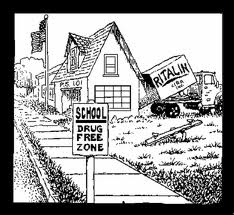
I am no expert and don’t pretend to be one, but I can’t help being quite disturbed by the incredible amount of young children being prescribed medication.  As a teacher and parent, it hurts to know that kids all over the world are being prescribed these drugs in vast numbers.

I realise that there are children that legitimately require medication – but surely we are prescribing these drugs far too easily and haphazardly.  This is not Aspirin!  These are powerful drugs.  Surely, a global body needs to be set up to review the practice of mass prescriptions and to further tighten the regulations.  I am scared for the next generations of children.  I never want to live in a society where prescribing powerful drugs to kids is seen as normal or standard practice.

In the past week alone I have read countless articles on this issue.  The article below from the UK claims drugs are being prescribed for ‘normal’ reasons, such as shyness:

Children are being prescribed mind-altering “chemical cosh” drugs for conditions such as shyness and mild social anxiety, behaviour experts have warned.

Young people are routinely being given medication to treat normal childhood conditions, it was claimed, despite fears over their long-term health.

The disclosure came as it emerged that the number of eight- to 13-year-olds on drugs such as Ritalin has soared seven-fold since 1997.

But Dave Traxson, a senior educational psychologist who works in schools in the West Midlands, warned that children were increasingly prescribed drugs for “normal” conditions.

“I feel very strongly that the time is right to challenge the growing practice of medicating our children for displaying behaviours and thought processes that until recently would have fallen within the normal range,” he said.

There was this article along the same lines from Australia:

THE use of stimulant drugs to treat attention deficit hyperactivity disorder (ADHD) is soaring, with data showing prescriptions for some medications grew by 300 per cent over seven years.

Prescription of the stimulant drugs rose by 87 per cent between 2002 and 2009, Australian researchers have found. Use of one drug commonly sold as Ritalin, methylphenidate, increased by 300 per cent.

Most studies of stimulant medication only tested its effects for between six and 12 weeks, and there was no evidence it improved educational or life outcomes, Associate Professor Jureidini said.

This description from the US site defending the use of Ritalin and other such drugs:

Stimulants are safe and effective for most children, helping them to focus their thoughts and control their behavior. In some children, these medications may cause mild side effects, such as decreased appetite, weight loss, stomachaches, sleep problems, headaches and jitteriness. Rarely, there may be more serious side effects, such as dizziness, stuttering, tics or increased blood pressure.

This article was printed in a Malaysian newspaper:

ALMOST one million children in the United States are potentially misdiagnosed with Attention Deficit-Hyperactivity Disorder (ADHD) because they were the youngest and least mature in their kindergarten classes, a US study found.

And finally, another damning article from the US:

While stimulant drugs have long been known to help children with ADHD alleviate symptoms, new studies have shown the opposite effects.

Many experts recommend prescription of a stimulant drug in severe cases, and often believe ADHD symptoms can be treated by using methods other than medication.

One dangerous possible side-effect of Ritalin is the potential alteration of personality. Some individuals have explained that when medication is stopped, the actions, thoughts, and feelings are vastly different than when taking the medication.

Whilst ADHD no doubt exists, and is often best treated with drugs, I am still of the opinion that we are drastically overprescribing these drugs.  I may not be an expert, but I still feel sufficiently concerned to speak up about it.

As teachers have a part in the decision as to whether or not a child is prescribed medication, I make the following request.  Please don’t take the decision lightly.  Don’t let an easier classroom experience ever taint your objectivity.