THEY were meant to inspire young people to engage with sport, but the London Olympic mascots have been branded too creepy for children.
The one-eyed Wenlock and Mandeville – who were apparently born from the “last drops of steel” from the Olympic Stadium – were the product of an 18-month creative process using more than 40 focus groups.
Scores of giant statues of the creatures are about to be unveiled across London as part of a $48.5 million (STG 32m) makeover to drum up enthusiasm in the run-up to the Games.
But the Cyclops-like cartoon characters have faced a barrage of criticism online.
In merchandise reviews for the mascots on Internet shopping site Amazon, buyers have called the creatures “menacing” and “terrifying”.
“Like a nightmare, this evil eyed monster stares straight into your soul looking for the slightest weakness,” reviewer Mr Nicholas Shearer wrote.
The problem with being a credible hulk is no matter how credible the story, he’s still a hulk.
Such is the hard truth for an obese Ottawa dad deemed too fat to keep his kids.
We’ll call him Dad because he can’t be named or identified.
Dad, 38, claims there’s no adequate oversight of Children’s Aid judgements in this province.
His two sons – age 5 and 6 – have been put up for adoption. He’s not been granted custody because – among other things – he’s 360 lbs and has been as much as 525 lbs.
It appears the judge used Dad’s obesity as a major reason as to why he can’t have custody of his kids. That’s created a lot of chatter and created a debate about whether obese people make good parents.
The judge may have some good reasons for not allowing this man to be with his children but his obesity should not be a factor.
I’m sick of reading excuses for why a bus full of middle school children acted in a most deplorable way to their bus monitor. There are no excuses for such vile behavior. I don’t care what age you are, you have a responsibility to be a good citizen and decent person. It sickens me to see a pack bullying situation where a soft target is exposed and then tormented without any resistance whatsoever.
Explanations like this are both unhelpful and insensitive to poor bus monitor, Karen Klein:
When kids reach middle school, bullying becomes more common and more sophisticated, experts says.
“Middle school-age kids are sort of an age group that is notorious for an uptick in the intensity of bullying,” said Dr. Gail Saltz, a psychiatrist in New York and TODAY contributor.
During the middle school years, kids are facing intense peer pressure, the pack mentality is strong and kids feel a growing sense of independence – all while their moral compasses are still developing, she said.
“It’s a time when they’re figuring out who they are by sometimes crossing the line and breaking the rules,” Saltz says. “Their insecurity drives a lot of cliquishness and defining themselves as better by making someone else feel worse.”
Don’t even try to excuse this behaviour in any way based on the age of the perpetrators. This is a culture problem. The parents of these children need to do as much soul-searching as the children themselves.
I am saddened to hear about the families of the students getting death threats. What kind of response is that? What is the sense in dealing with bullying by continuing the chain of bullying? This is isn’t even about a bus full of children. This has even wider implications.
Middle school children worldwide should be put on notice. No more excuses. I don’t care how old you are. It’s time to grow up and treat others with respect!
I couldn’t disagree more with the opinions expressed in Susie O’Brien’s column today. Allowing teachers to touch students, even innocently, is a step backwards. Every day we read news articles of teachers who have misused the privilege of working with kids and have overstepped the boundaries. It’s because of the evil minority that continue to heap shame on our wonderful profession, that these regulations are vital.
The rules that restrict teachers from hugging and touching our students without justifiable cause are not about political correctness, they are about common sense. They exist to protect students, but in doing so, they also protect teachers from false accusations. I agree that it’s a sad state of affairs that I am obliged to keep my door open when having a private meeting with a student, but isn’t that a small price to pay for transparency?
I find Ms. O’Brien’s intimation that I can’t provide my students with the same standard of care due to the fact that I don’t touch them quite upsetting:
WHY can’t teachers touch kids any more? It used to be that teachers had total control over the children in their care.
They were allowed to hit them, cane them and handle them in pretty much any way they saw fit.
But they could also hug them, comfort them, and even check their hair for nits.
With the advent of political correctness, everything changed.
Teachers should be able to judge for themselves what contact is appropriate in any situation.
If we think any teacher lacks the ability to make such judgments, then they shouldn’t be in front of our classrooms.
For instance, take a look at the rules imposed on teachers in this state by the Victorian Institute of Teaching, which is the professional regulation body.
Their code of conduct says teachers are violating their professional relationships when they touch a student without a valid reason.
It’s a bit depressing that it’s come to this.
The code says teachers can touch students, but goes on to say it is a “difficult issue for teachers in the present climate”.
Apparently, teachers can touch students for comfort, guidance or acknowledgment, but not for any other reason.
And teachers are not meant to have any meeting with a student alone with their door closed.
It seems a pretty sad state of affairs.
As sad as it is that the evil few spoil it for the majority, these rules are vital. They protect teachers and students alike.
The moment Facebook first made the sensible and responsible age requirement rules they have been trying to soften, if not repeal them. The age restriction guidelines exist for the safety and wellbeing of underaged children. Yet we are constantly confronted with the reality that Facebook is desperate to recruit the underaged demographic.
An alliance of consumer rights groups on Monday pressed Facebook not to aim advertisements at preteen children or track their activities online if it formally opens its site to them.
Facebook has millions of underage users who claim to be over the required age of 13, and the company has had discussions with some advocacy groups over how to keep children safe on the site if they insist on signing up.
The topic of whether children under 13 should be on Facebook is hugely contested. One side argues that under no circumstances should young children be permitted on a social networking site, and another argues for an array of restrictions and conditions on how they can use the site.
The groups that sent the letter on Monday to Mark Zuckerberg, chief executive of Facebook, include Consumers Union, the Center for Digital Democracy, Consumer Action and the Consumer Federation of America. They called on Facebook to refrain from tracking children under 13 both on the Facebook site and on other sites that have Facebook widgets, such as the “like” button. In addition, they called on Facebook to enable parents to monitor and review their preteen children’s activities, offer parents “granular control” over every application they use on the Facebook platform and keep children’s account settings as private as possible.
The letter read: “We want assurances that any space created for children under the age of 13 on the site is safe, parent-guided and controlled, and, most importantly, free of ads.”
Advertising is not the only reason Facebook would want to allow under-13s on its site. It could widen its user base, guard against children becoming attached to another social network, and potentially build a trove of information on users as they grow into adulthood. By developing special conditions for them, the company could also protect itself from a federal regulation that requires companies that gather information about children under 13 to obtain written consent from their parents; those regulations are being revised.
I heard a very surprising fact on the radio the other week. A nutritionist asked the listeners what they thought the leading cause of death was. Like most, I thought the answer was something like heart disease, obesity or cancer. It was none of the above. Apparently, the leading cause of death is inactivity.
That’s why it is so vital that we help our children to become more active. Here are some helpful hints by Steve Ettinger, a children’s fitness expert and author:
Be creative
Whether you live in an urban, suburban or rural environment, use the space, time and resources you have to find ways to exercise. For example, if you live in the city and don’t have access to outdoor space, find indoor activities. Ettinger also says if kids are sitting in front of the TV, challenge them to exercise in short spurts during commercials. It is a far better solution than having them get up to snack on junk food.
Schedule time to exercise
Writing down time to exercise makes it much more likely that you will do it. Even if it’s just playing at the park, schedule that time in your calendar.
Ettinger also says children who eat poorly will naturally not have as much energy and as high of an activity level as children who eat nutritiously.
Get involved as a family
One of the best ways to get children to exercise is for the family to participate together. Find something that everyone enjoys doing, such as bike riding or going for a walk around the neighborhood, and do it together. That way, there are fewer safety concerns because kids aren’t out by themselves, and everyone in the family – including yourself – gets to benefit from moving around.
Find something your kids enjoy
One reason kids stop exercising is that they are forced into activities they don’t enjoy. If your child doesn’t like a particular activity or organized sport, be patient and take the time to explore different options. Ettinger says if kids find activities fun, they will usually stick with them. He also says it’s best to find an activity for children before age 10 – otherwise, inertia will become a habit.
Educate yourself
Modeling proper nutrition and exercise is the best way to teach your kids about maintaining a proper weight and a healthy lifestyle. Ettinger says he is amazed by the number of parents who have misconceptions about proper nutrition. Seek out resources so you can learn the basics and incorporate these lessons into your own life.
What is the point of filling curriculums with the latest in nonsensical new-age methodology and a raft of programs that are time-consuming but utterly ineffective when our children don’t even know the basics? It seems that we are allowing our kids to become selfish and insular, far more concerned about themselves than the world around them. It is essential that our children become more aware of the world around them.
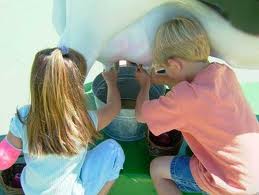
More than a third of 16 to 23-year-olds (36%) do not know bacon comes from pigs and four in 10 (40%) failed to link milk with an image of a dairy cow, with 7% linking it to wheat, the poll of 2,000 people for charity Leaf (Linking Environment and Farming) found.
Some 41% correctly linked butter to a dairy cow, with 8% linking it to beef cattle, while 67% were able to link eggs to an image of a hen but 11% thought they came from wheat or maize.
A total of 6% of those questioned knew that salad dressing could come from rapeseed oil, compared with the national average among all age groups of 24%.
Although four in 10 young adults (43%) considered themselves knowledgeable about where their food comes from, the results revealed a “shocking” lack of knowledge about how the most basic food is produced, the charity said.
Leaf chief executive Caroline Drummond said: “We often hear reports that our food knowledge may be declining but this new research shows how bad the situation is becoming.
“Despite what they think, young adults are clearly becoming removed from where their food comes from.
“Three in 10 adults born in the 1990s haven’t visited a farm in more than 10 years, if at all, which is a real shame as our farmers not only play an important role in food production but are passionate about engaging and reconnecting consumers too.”
The charity, which is organising an Open Farm Sunday event this weekend, also found almost two-thirds of young adults (64%) did not know that new potatoes would be available from British farms in June, and one in 10 (10%) thought they took less than a month to grow.
OnePoll surveyed 2,000 C adults online between May 11 and 14.
Daily Dose. Take time each day to encourage your children to express gratitude. They can do this by making an entry in a family journal or by simply talking about what they are grateful for.
Model Thanks. As with everything, modeling is the best way to teach your children to be grateful. Be lavish with your thanks. Thank your children for hugs. Thank the cashier for ringing up your groceries. Thank the bus driver for returning your students home safely. Letting your children see that you are grateful will encourage them to be so as well.
Establish Rituals. We all know the importance of family rituals. Establishing rituals that highlight being thankful is a wonderful teaching tool. Start dinner with each family member sharing what they are most grateful for. Say goodnight by sharing what you were thankful for that day. Any ritual that based on gratitude will reinforce its power.
Volunteer. Volunteering is a great way for your children to see gratitude in action. There are numerous chances in every community to volunteer. Homeless shelters, nursing homes, and mentoring programs are just a few. There may also be other opportunities closer to home. Perhaps an elderly relative or neighbor could use a hand. It feels good to help others. Therefore, your children not only benefit from that, but they also get to experience the warmth of appreciation. Two things for which they can be grateful.
Assign Chores. Children learn by doing chores. They learn what it means to be part of a whole. They learn their contributions are important. They also learn that most things take effort. Simple household chores can help children learn to be grateful when they benefit from the efforts of others.
Thank You Notes. Writing thank you notes for gifts is a very literal way of teaching your children gratitude. Putting down on paper what they enjoyed about a particular gift, reminds your children why they are grateful for it.
Find Your Gratitude. Always be on the lookout for things to be grateful for and express your gratitude. When your children hear you say things like, “Buster is such a good dog” or “What a beautiful day”, they realize they can be grateful for even the smallest of things.
If you are finding your job quite challenging lately and you are at a loss to work out how to restore order in the classroom, I hope these tips will prove useful:
1. You Have Nothing to be Ashamed of: Even the best of teachers often struggle to keep control of a classroom. You should not feel deflated if your current crop of children are making your life difficult and testing your patience. This is nothing unusual. Make sure you keep a positive front. Children do not tend to feel empathy for a defeated teacher. On the flip side, they have respect for a teacher that can overcome difficult moments and stay positive, enthusiastic and show a willingness to intoduce new ideas to make things work.
2. What you Teach is not as Important as who you Teach: As much as it can frustrate when you have a lot to cover and so little time to cover it, it is important to note that the most important aspect of your job is to look after the wellbeing of your students. It is perfectly alright to interrupt a maths class for a discussion on bullying or respect. It is also important to realise that whilst Timmy may frustrate you and come to class with a poor attitude, the best thing you can do for him is to plant a seed of positivity. He may leave your class without the skills you have taught, but at least you have let him know that you believe in him and are there for him regardless.
3. If They are not Listening, Perhaps you Should Stop Talking: Teachers often complain about the lack of concentration among their students. This is commonplace, but not always entirely the students’ fault. Teachers often talk too much. From laboured mat sessions to interminable board work, teachers have got to realise that the more they talk, the more the students program themselves to daydream. Teachers have got to spend less time talking to the class and more time going from individual to individual. This is less threatening, more effective and better for charting individual progress. Other ideas include: Group work, games and interactive programs.
4. Stop Threatening: Detentions, suspensions and other punishments are important tools in a teachers toolbox, but boy they can get overused! A teacher’s attitude sets the tone for the classroom. If the “go-to” response is always to threaten and punish, the classroom will be a negative place. If the teacher instead put a privilege on the board (such as extra computer time) and during the class add under the privellege according to behaviour, attitude and work ethic, it sets a very different mood. Instead of feeling watched and judged, the students feel empowered to earn the teacher’s respect and motivated to win the reward.
5. Small Changes Make a Big Difference: When you are in a rut, the desperate part of you wants to change the world in a day. This is impossible. A better approach would be to isolate a goal or two such as; working on an orderly line-up, getting the students to raise hands before asking questions or getting the students to reflect on how they treat each other. These goals may seem insufficient in the grader scheme of an uncontrolled classroom but I assure you small goals can make big changes to the classroom dynamic.
I hope these tips are of use. We all struggle at times to teach effectively. You are not alone!
This morning’s newspaper asked readers to comment on whether or not they thought this woman was fat. Whilst I don’t think this woman is fat at all, it is the question itself that got me worked up.
It reminded me about how obsessed we are about weight, and how this obsession is going to ensure that our children will spend more time aspiring to fit a certain look rather than to become good people.
Nobody seems to care anymore whether a person is caring, selfless, charitable or kind. These are attributes of losers. Surveys that ask what we would prefer to be, beautiful or kind, favour beautiful every time. The rationale being, that nobody is jealous of a kind person in the way they are of a good-looking one.
How are our children supposed to make sense of this?
It upsets me to see Primary aged children so conscious of their weight. It bothers me no end that 8-year olds know everything there is to know about the perfect body size and shape, but have no insights on the correct protocol for offering ones seat to an elderly person on a crowded train. The thought would never have entered their mind.
Haven’t we learnt our lesson? Did we not realise that an obsession with looks leads nowhere. It doesn’t make one happy. Why are we creating kids that follow our sick ways? Why are we perpetuating the message that there’s nothing wrong with gossiping, fakery and selfishness, but eating ice-cream is a sin?
So, no, I don’t find the woman fat. But guess what? I don’t care whether she is fat or not. I care whether she is a good woman, a kind wife, a loving mother, a loyal friend, a friendly co-worker etc. And ultimately, that’s what I want us all to look for.
There are frumpy, unfit people out there, with pale complexions who have unpopular taste in clothes. Some of these people are also tremendously kind and good-hearted. It would be criminal for us to marginalise these people, as some of them are the real beautiful people!







 Topical Teaching

