Posts Tagged ‘Health’

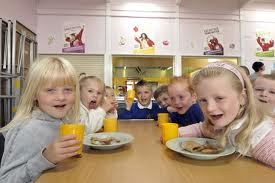
Breakfast Club a Huge Hit!

June 7, 2011

Breakfast is such a crucial meal.  I am a big supporter of the Breakfast Club program, and am delighted to here it is working well.

YEARS of public campaigns to persuade children to eat breakfast are paying off, with the number of children consuming a morning meal rising in the past decade. A national study by the University of Sydney has found primary and secondary school students are more likely to eat breakfast. Thousands of schoolchildren from years 2 to 12 were surveyed in 2000 and 2006. A follow-up study is planned for next year.

Researchers found high school students in particular were now more likely to eat breakfast.

University of Sydney nutritionist Jennifer O’Dea credited public campaigns and school ”breakfast clubs” for the improvement.

”It’s such a simple thing but it feeds the child’s brain, it improves their behaviour and reduces their risk of overweight and obesity,” she said.

The number of high school boys missing breakfast fell from 19.9 per cent to 12.1 per cent and the number of high school girls fell from 27.7 per cent to 18.7 per cent.

In primary school, the number of boys who did not eat breakfast fell from 9.4 per cent to 6 per cent, while the number of girls fell from 9.6 per cent to 6 per cent.

Dr O’Dea expects to see greater improvements when surveys are conducted again next year.

The nutritional quality of breakfast affects a child’s concentration and learning ability, Dr O’Dea found in separate research in 2008.

Congratulations to all schools that have invested their time and energy into Breakfast Club.  May it continue to assist students in desperate need of a nutritious meal.

Newsflash: Bullying Was Around Before Facebook

June 5, 2011

I’ve maintained frequently on this blog that cyber bullying is a major concern.  The rise of social networking sites like Facebook has meant that bullying is more rampant and invasive now than it’s ever been. But let’s not forget that cyber bullying is a manifestation of conventional bullying – and that cannot be blamed on Facebook.

That’s why I find then following article troubling:

CHILDREN as young as eight are being treated for anxiety problems triggered by social-networking sites.

Psychologists say modern technology is producing a growing number of children needing therapy to deal with distress arising from posts on Facebook and other sites.

Darryl Cross, a clinical psychologist from Crossways Consulting, said anxiety caused by technology was a growing concern.

“Modern-day technologies and social-networking sites are contributing significantly to child and adolescent anxiety,” he said.

“It is an international phenomenon.”

Although anxiety was an established disorder, more modern triggers were lead to more distressed teenagers, Dr Cross said.

“But also, it’s the ability to be in contact 24/7.”

“In previous generations, you had the telephone and if you were lucky, mum and dad let you make a call after you got home from school. But now, primary school children, not to mention adolescents, have mobiles, which means they are constantly in touch via text messages and Facebook.”

Dr Cross said children used networking sites to determine their identity and form a view of what society thought of them.

Clinical psychologist at The Children’s Psychology Clinic, Dr Elizabeth Seeley-Wait, said she was seeing kids suffering anxiety about “being out of touch or out of the loop” if they had their mobile phone taken away.

Adults are also falling victim to insecurities.

Equilibrium Psychology’s Gemma Cribb said Facebook came up in couples’ therapy. “Someone will check their partner’s Facebook and questions will come up such as ‘Where did you meet this friend?’ ” she said.

Whilst I am very weary of children having a Facebook page, especially under the age of 13, I think it’s important to note that the bullying itself is more important than the medium.  Whilst mediums change, what doesn’t seem to change are the bullies.

What is being done about it?

Sure school’s will give you their standard assortment of “P” words, like ‘policies’, ‘programs’ and ‘procedures’, to reassure you that they are taking decisive action, but these provisions are just there to avoid lawsuits.  The effect of policies and programs are minimal at best, and if there really was stringent consequences handed out, would there be such a huge problem?

Here’s some “P” words of my own – we need a more solid partnership between Principals, Parents and Practitioners.  We need schools to be as concerned about their culture and as passionate about the safety of their students as they are about their numbers, finances and academic reputation.  We need parents to be aware of how their children treat others and raise them to respect others rather than undermine, bully or belittle them.  And we need teachers to continue to fight for their students.

We have a choice, we can blame it all on the juggernaut that is Facebook, or we can fight bullying at its source whilst standing up for the rights of those who are victimised and powerless.

Doctors Prescribing Anti-Depressants to 6-Year olds!

May 31, 2011

It is high time we put pressure on the medical fraternity to explain their actions.  I am no expert, but the increase in prescriptions of anti-depressants to kids as young as 6 seems highly irresponsible.  What on earth do these kids suffer from that warrants prescribing such medication?  How can we sit idly while Governments pretend to investigate the boom in child anti-depressant prescriptions, whilst quietly doing absolutely nothing to deal with the problem?

THE number of children aged six and under being prescribed anti-depressants has soared since the Federal Government pledged to investigate the matter in 2008, new figures show.

The Herald Sun can also reveal that in the past two years, the deaths of five people aged 10-19 have been linked to anti-depressants. Federal Health Department data reveal prescribing rates of the controversial drugs in children aged two to six has risen from 852 in 2007-08 to 1264 in 2009-10.

In Victoria, the number has increased from 156 to 229, and, in the past two years, in the 7-11 age group, from 825 to 1085.

The Government has refused to release details on children under two since 2007-08, claiming the figures are unreliable.

But despite Health Minister Nicola Roxon’s ordering of an investigation three years ago, a Freedom of Information request shows just two meetings were held. 

The Royal Australian and New Zealand College of Psychiatrists said it was alarming that anti-depressants were being prescribed for children and demanded answers from government.

“I would be very very alarmed if these figures were true,” said Dr Phillip Brock, chairman of the Child and Adolescent Psychiatry faculty.

Australian Medical Association vice-president Dr Steve Hambleton said he had given anti-depressant scripts for two six-year-olds, and they had benefited.

A Health Department spokesman said the management of a child’s medical condition, including prescribing anti-depressants, was a doctor’s clinical decision.

The figures show Zoloft and Prozac were among the most prescribed of the drugs in the youngest age group.

Black Dog Institute director Professor Gordon Parker said while not all anti-depressants were used for depressive disorders in children, an investigation was needed to explore why they were being prescribed.

Are the Drug Companies giving substantial donations to the Government?  Is the medical fraternity happy with the reputation they are getting of treating children with prescription drugs before they reach the age of being able to read or write?  What’s next?  Are babies going to be prescribed anti-depressants?

Emeritus Professor John Werry, a child psychiatrist, expressed another opinion – as far as he knows giving SSRI antidepressants to babies would be of no harm to them. However, he acknowledged the medications influence basic bio-cyclic processes.

Does anyone else find this as disturbing as I do?


Our Kids Must Be More Active

May 4, 2011

I am not that old, yet I know that my experiences growing up in many ways are worlds apart from the current experiences of our youth.  When I was growing up we used to regularly ride our bike, play sporting games outside and sign up for after-school swimming or gymnastics classes.

I’m afraid those days are long gone:

One in six children cannot swim,  a survey has revealed.

It also found one in ten had not learnt to ride a bicycle and  almost a quarter had never run 400 metres.

The study found British children were more than twice as likely to spend their free time watching television (79 per cent) than playing sport (34 per cent).

Children were also more likely to surf the internet (56 per cent), chat on social-networking websites (45 per cent) and play video games (43 per cent) than take part in sports.

The study of 1,500 children aged six to 15 reveals a generation turning its back on sport.

‘This is another sad reflection on children today,’ said Tam Fry of the Child Growth Foundation.

A study found British children were more than twice as likely to spend their free time watching television

‘We have a generation of children being fed the wrong food, which makes them fat, and fewer and fewer get the exercise they need to burn it off. It becomes a vicious cycle.

‘We need to teach children from a young age that they have to exercise and take part in sport to stay a healthy weight.’

He added that there are often not enough places for children to play and ride their bikes because there are so many cars on the road.

The survey, which reveals a generation turning their backs on sport, was described as ‘staggering’ by the head of the British Triathlon.

Even for those who could swim and ride bikes, just a third (34 per cent) had swum the length of a pool and half (46 per cent) had ridden their bikes in the past week.

In contrast, nearly three quarters (73 per cent) had found the time to play a video game in the past week.

A further 15 per cent of the children polled said they had never played sport with their parents.

The study was commissioned as part of a series of mini-triathlon events being held this summer by Tata Steel in areas including steel regions such as Scunthorpe, Corby, Teesside, Rotherham, Swansea and Shotton in North Wales.

A third of those questioned (33 per cent) said they did not own a bike, compared with three quarters (77 per cent) who owned a games console.

Remember when the fad at school would fluctuate between down ball, 4 square, hop scotch, hula hooping and elastics?  Most girls growing up now would never have associated elastic with a game.  I find this so sad.  The future ramifications of bringing up a generation of couch potatoes is quite frightening.

The Horrendous Over-Prescribing of ADHD Drugs

April 21, 2011

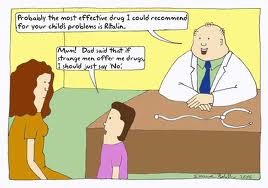
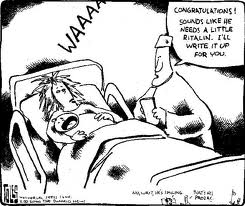
America is running our of Ritalin!  Parents are frantically running around trying to find pharmacies that still have some in stock.  You might think that what I have just written is the making of good fiction, perhaps a Hollywood satire, but I’m afraid that it’s a true story, with potentially huge ramifications.

Nationwide shortages of popular drugs used to treat ADD and ADHD are sending parents scrambling, with some combing multiple pharmacies for the Adderall and Ritalin that keep their kids calm.

Molly Taylor, 46, of Worcester, Mass., was turned away empty-handed this week when she went to pick up prescriptions of Adderall XR for herself and her 16-year-old son, Luke.

“They don’t have them,” an incredulous Taylor told msnbc.com. “You could be waiting several days, which would have a HUGE impact. If you can’t get it that day, it’s very, very difficult.”

In the past two weeks, federal Food and Drug Administration officials added the drugs methylphenidate hydrochloride and amphetamine mixed salts, the generic names for Ritalin and Adderall, to an expanding list of national drug shortages. Some distributors cite manufacturing delays and increased demand as the reasons; others offer no explanation for the shortages.

But the American Society of Health-System Pharmacists, which tracks drug supply issues, has listed the products in short supply for nearly a month, and there have been regional reports of spotty shortages even before that.

5.4 million children have ADHD

In the United States, an estimated 5.4 million children ages 4 to 17 have ever been diagnosed with ADHD, or attention-deficit/hyperactivity disorder, and 66 percent of those with current ADHD take medication to control the condition, according to the Centers for Disease Control and Prevention.

Last year, that amounted to 152 million units sold of Adderall and Adderall XR, the extended-release version of the pill, 35 million units of Ritalin and nearly 702 million units of generic ADHD drugs, with sales totaling more than $1.2 billion, according to data from Wolters Kluwer Pharma Solutions.

For millions of children — and adults — the stimulant medications ease the symptoms of ADHD, allowing them to control distracted thoughts and behavior well enough to participate in school, work and social life.

The drugs are taken daily, but when patients miss even one dose, the consequences can be swift, said Ruth Hughes, interim chief executive of the organization CHADD, Children and Adults with Attention-Deficit/Hyperactivity Disorder.

“The symptoms come back very quickly,” said Hughes, who is the mother of an adult son with ADHD. “If you start that spiral, within 24 hours you begin to get in the loop of negative feedback. It doesn’t take very long until it has a truly negative impact.”

The current shortages affect various doses of the medications supplied by several manufacturers of brand-name and generic drugs. That means patients who find they can’t get their usual prescriptions might be able to find a similar drug in a different strength, made by a different manufacturer.

However, because the drugs are tightly controlled by the U.S. Drug Enforcement Administration, prescriptions are doled out only a month at a time, and patients have to visit their doctors in order to authorize new drugs, which could be more expensive than the old ones.

“Tightly controlled”? You have got to be kidding me!  This is sickening!  How can we sit and watch our kids being prescribed these drugs in the millions and not wonder whether or not these kids really have ADD and ADHD?  How can you get to the point where demand for a drug for children is so readily prescribed that demand exceeds supply?

It seems like pharmaceutical companies are winning, and we are sitting there silently letting them.  It is time for a parliamentary inquiry on this issue.  Doctors and teachers in particular need to be accountable for their role in this situation.

Surely when a drug becomes so rampantly prescribed that drug companies struggle to meet demand, there is something not quite right going on?  Or am I the only one that thinks this is the case?

Poor Children Coming to School Tired and Hungry

April 15, 2011

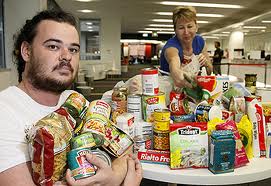
This is a universal problem that requires a lot more attention.  Teachers are not given enough credit for their role in supporting kids that come to school with inadequate food or no lunch at all.  It is not widely known that teachers often spend out of their own pocket to ensure that their poorer students have what to eat.  But the problem still exists, and it must be addressed.

A concerted campaign from schools by working with charity groups to ensure that meals are provided for students of poor families should ensure that heartbreaking articles like this one will be a thing of the past:

Teachers are reporting a rise in pupils entering the classroom feeling tired, hungry and dressed in worn-out clothes.

A study by the Association of Teachers and Lecturers found almost eight-in-10 staff had pupils living below the poverty line and a quarter believed numbers had increased since the start of the recession.

One teacher from Nottingham told of a sixth-former who had not eaten for three days as her “mother had no money at all until pay day”.

A teaching assistant from a West Midlands comprehensive told researchers that some pupils had “infected toes due to feet squashed into shoes way too small”, while another member from Halifax reported a boy who was ridiculed in the PE changing room because his family could not afford to buy him any underpants.

Some teachers told how pupils were consistently late for lessons as parents could not cover the bus fare to school. Other children from middle to lower income families have been forced to cut out school tips because money is so tight, it was claimed.

The disclosure follows the publication of figures showing a rise in the number of pupils eligible for free school meals as families struggle to stay above the breadline in the recession.

Almost 1.2 million five- to 16-year-olds claimed free lunches last year – a rise of more than 83,000 in just 12 months.

Mary Bousted, ATL general secretary, claimed that problems would escalate further because of Government funding cuts – putting the Coalition’s social mobility drive in jeopardy.

“It is appalling that in 2011 so many children in the UK are severely disadvantaged by their circumstances and fail to achieve their potential,” she said.

“What message does this government think it is sending young people when it is cutting funding for Sure Start centres, cutting the Education Maintenance Allowance, raising tuition fees and making it harder for local authorities to provide health and social services.

“The Government should forget empty rhetoric about social mobility and concentrate on tackling the causes of deprivation and barriers to attainment that lock so many young people into a cycle of poverty.”

It is time that we made the most crucial issues in education our first priority and main focus.  As important as debate over class size, ICT, male teacher numbers are for improved educational outcomes, such discussion often takes over.  We need to get back to basics.  The basic requirement for a school is to look after the welfare of its students.  That makes health and bullying among the most important priorities in my book.Here’s an opportunity for schools and charity groups to work together to tackle a problem that shouldn’t even exist in the forst place.

Banning Home-Made Lunches is a Dreadful Policy

April 15, 2011

Of all the things to ban at school, who was responsible for this terrible idea? How can you ban children from bringing a home-made lunch to school? How can you force parents into spending money for their child’s lunch when they could provide their own for less cost?  This is another case of we don’t trust parents and their children, so we’ll intervene.  Whilst this philosophy is often generated from good intentions, it seldom leads to good results.

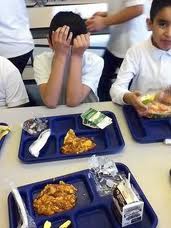
The days of brown bagging it are over for students in a Chicago school. In an effort to encourage healthy eating, their principal banned lunches brought from home.

Elsa Carmona, principal of Little Village Academy on Chicago’s West Side, forbade students from bringing food from home (except those students with a medical excuse) after she noticed kids eating “flaming hot” chips and drinking soda at lunchtime. “It’s milk versus Coke,” she said.

While the goal of healthy eating is a positive one, parents are understandably upset about the Carmona dictating what their kids can and cannot eat for lunch. Not to mention the fact that some parents may be able to send their kids to lunch with a meal that costs less (and one that could be even healthier) than the school’s offerings.

The kids are upset, too. When the Tribune reporter visited the school, one seventh grader led students in a chant of “We should bring our own lunch! We should bring our own lunch!” Students say the school’s food tastes bad. Bad-tasting food, parents say, often means that kids throw away the school lunch and go hungry.

It’s also worth noting, as reported by the Tribune, that the school district receives money from the federal government for each free or reduced-price lunch it serves, meaning that in banning homemade lunches could potentially put more money in the pockets of both the district and the school district’s food provider.

But Carmona maintains her school’s policy is simply about helping students make healthy choices. “Nutrition-wise,” she told the Tribune, “it’s better for the children to eat at the school. It’s about nutrition and the excellent quality food that they are able to serve (in the lunchroom).”

Is anyone surprised that this scheme looks very much like a money-making venture disguised as a realistic attempt in tackling childhood obesity?  What happens to a child who is caught bringing in a lunch from home that is more healthy and nutritious than what the school offers?  Does that child get punished?  What happens if the students hate the menu?  Why should they be forced to eat what they don’t like?

I am all for reducing the amount of junk that students have in their lunch boxes. But at the end of the day, I urge school’s to stop mirroring prisons.  Yes discipline is important, as is routine.  And yes, at times intervention is required.  But why do those involved in forming school policy show a lack of regard for making their students’ time at school a happy, comfortable or at the very least bearable experience?

How about forcing those involved in making stupid rules like this one to eat from the school cafeteria?  How about making them lead my example and banning them from eating a home-made lunch?

And you wonder why there is such a lack of respect from students nowadays?


Stop Banning Our Kids From Being Kids

April 7, 2011

Society pretends it isn’t so, but let’s face it – school is not a natural environment for the growing child. Kids have to sit in an often uncomfortable seat for hours on end, have no say who they can sit next to, can not talk unless spoken to, can not go to the toilet without permission and often cannot choose for themselves what they would like to wear.

As a teacher, I devote so much of my time to help maximise my students’ enjoyment for learning and appreciation for the positive aspects of school such as positive social interactions and self growth.  I am drawn to this profession because I can see that it is possible to create joy from the school experience. That kids who have only seen school as a negative can be turned around quite quickly.

That is why I get frustrated with the constant barrage of regulations and bans that lessen the students’ opportunity for enjoyment of school.

Take this unfortunate case for example:

Children at Pope Paul Catholic Primary School, in Baker Street, have been barred from playing the national sport over concerns there could be accidents.

An angry parent of a year five child contacted the Potters Bar Edition to say he thought “the world has gone mad” over the 
ball game ban.

The whistleblower did not wish to be named as he feared the school would “bear grudges” against his child.

He said: “I’m just rather fed up of the health and safety coming out of the school.

“Break times are time to let off some energy and relate with other kids.”

He also pointed to football’s ability to teach valuable life lessons like winning and losing and the importance of teamwork.

And speaking about the injury fears, he added: “Boys might fall over and hurt their leg, but you just get up, wipe it off and carry on.”

Headteacher Helen Lines said: “The children aren’t allowed to play football on the playground during the winter months because there isn’t enough room.”

She added: “Many of the children want their own game and there’s no room to do anything else.

“In the summer there are plenty of ball games on the field, but it’s too muddy in the winter.”

Despite the weather picking up as spring has sprung, Mrs Lines said pupils were still banned from playing football.

She said: “We’ve tried a rota system but it’s too tempting for others not to join in.

“We’ve got lots of people trying to play a very active sport like football, there are going to be accidents.

“There are lots of children who don’t want to play football.”

She added playing the sport in the confines of the playground was too “dangerous”.

Ms. Lines rationale makes no sense at all.  On the one hand she says there isn’t enough room because of the great demand for multiple soccer games and on the other hand she claims that there are children who don’t want to play, thereby intimating that their stance wont affect too many.

There’s a reason why kids like to play active sports during recess – they are kids!  Not only that, they are sitting down for hours on end.  Let them run!  Let them enjoy their recess!  Don’t even bother investigating why boys aren’t thriving at school when you want to ban the very activity that gives them an outlet for their restlessness and something to look forward to.

Ultimately, it’s not entirely the fault of schools.  They are entitled to cover their backs in the fear of being sued.

Here is an idea:  How about Governments passing legislation that makes it much harder for parents to sue schools for run of the mill accidents?

And how far will this go?  If you ban soccer, you have to ban monkey bars, slides, basketballs, cartwheels, running, bunsen burners, scissors and sharp pencils etc.

School is already a less than perfect place for our children.  Why make it so much worse?

Teacher’s Union Stuck on Viagra

March 10, 2011

I can see a sharp witted comedy writer pitching  a mockumentary to the studios about the inner workings of a teacher’s union.  While teachers are being layed off in their thousands, these unions defy logic with their soft approach and crazy fixations.  Never have they been so needed.  Never have they been so utterly useless.

Take what just happened in Milwaukee for example:

The Milwaukee teacher’s union has dropped its lawsuit to give male teachers access to free Viagra.

The union sued the Milwaukee district school board in 2010, with the aim of forcing them to include erectile dysfunction drugs on their free health insurance plan.

The union argued that, by excluding erectile dysfunction medications from this document, the board was discriminating against male employees.

However, union members were accused of having the wrong priorities, at a time when many teachers in the region were losing their jobs due to school cuts.

At the time the State Representative Jason Fields said: “You’ve got to be kidding me.”

The Milwaukee Democrat added: “The fact that is the point of contention is kind of frightening. What are our priorities? I’m all for love and peace. But almost 1 million dollars? [the estimate cost of adding Viagra to the bill] And you go to court over this issue?”

Lawyers for the school board also said that Viagra is mainly used for recreational sex and not to treat any long standing medical condition.

On the other hand, the counter argument went that erectile dysfunction is a genuine and widely recognised medical condition that affects millions of men, particularly older men. It was also argued by the union that male teachers suffering from the condition deserved access to Viagra, Levitra and Cialis. Impotence is associated with serious health problems such as atherosclerosis, high blood pressure and heart disease, and union members argued that ignoring the condition was therefore inappropriate.

This is an indictment on good, hard-working teachers on low saleries that pay big bucks every year to be part of what is arguably the most soft, useless union known to man.  To take a school board to court over Viagra when their members risk losing their jobs is insensitive, out of touch and just plain dumb.

Excuse the pun, but the teacher’s union has to harden up or refund their memberships!

Fighting for Our Kids’ Self-Esteem

March 4, 2011

There’s a reason why kids are suffering from body image related problems in greater numbers than ever before.  We let them.  Society has a responsibility to ensure that the same dreadful affliction that has had diabolical effects on our generation, doesn’t torment the next.  We have made the mistake of valuing people for all the wrong reasons, putting too high a price on weight, shade and form and too little emphasis on character, personality and integrity.  We place celebrities on pedestal so high, we barely notice that we don’t know anything about them.

Our young notice our insecurities and base a world view on them.  They see the pressures their parents feel about appearance and weight and base their own self-worth on precisely these factors.  Before you know it, you’ve got kids as young as five with eating disorders:

Children are suffering from eating disorders at younger and younger ages according to disturbing new research.

Media consumption, peer pressure and negative messages from parents are all contributing to the problem of poor self-image in children, which can trigger eating disorders such as anorexia, bulimia and binge eating. According to the Eating Disorder Resource Centre of Ireland, children as young as five are displaying signs of poor body image – and some seven and eight year olds have developed eating disorders.

Experts are stressing that such disorders are not confined to girls, with little boys also being susceptible. Psychologist and author Deirdre Ryan told TheJournal.ie that parents can unthinkingly pass on negative messages to their children: “I was speaking with a six-year-old boy who said that he wanted to lose weight – when I asked him why he said: ‘I have a wedding coming up’. That message was more than likely passed on by a parent,” she said, “Parents have to be aware of what they are saying, even in front of boys, and not engage in ‘fat talk’. Children of this age are hypersensitive.”

Parents need to be more aware of their relationship with their own bodies as well, Ryan said: “It is starting younger and younger – but it is also affecting people who are older – spreading across the life span. Now, there is an expectation that even if you’re in your 60s you should conform to a certain image. It’s very damaging.”

Our generation has already let ourselves down by buying in to the media driven lie about what a person should aspire to be like.  We have been fooled into believing that life is about striving to beat aging, keeping a toned figure and withstanding lines and wrinkles.  The beauty industry has made a bundle out of us, and all we are left with in return is confusion, pressure, anxiety and in many cases a battered self-image.  Is this what we want for our children?

It’s great to invest in one’s health and appearance, but it is important that these things don’t take over.  Our children need to see that we place more value in perfecting our character than our figure.  That we consider integrity, honesty, empathy and loyalty on a higher level than six packs or breast size.

As a teacher, there is only so much I can do.  As a parent, I have a big job ahead of me.