Posts Tagged ‘Education’

Stripping Summer Holidays and Lengthening School Days is Not a Solution

January 14, 2012

If I wasn’t a teacher I think I would have supported Michael Gove’s push for reduced summer vacation and longer school days. Non-teachers are quick to remind us teachers that our vacation time is too long and our contact hours are just as generous. These same people wouldn’t teach if their life depended on it!

Firstly, while it is true that are holidays are long, we teachers get burnt out by the demands of our job. As much as I love teaching, towards the end of a given term, I am crawling towards the finishing line. Teaching is such a physically and emotionally charged career, it is simply impossible to envisage a 4 week annual holiday like other professions experience.

Secondly, our working hours do not stop at the end of day bell. Unlike many other professions, teachers are expected to take their work with them. From planning and marking to writing reports, teachers are forever working. This includes night, weekends and yes, holidays!

Michael Gove seems to think that quality will come with quantity. I am not so sure:

The school day could be extended and summer holidays reduced, Michael Gove, the Education Secretary, said yesterday.

Under the proposals for the extended day, pupils could remain in school between 7.30am and 5.30pm and attend on Saturdays, with an extra two weeks potentially being added to school terms.

Over a five-year period, the extended hours would mean pupils gained as much as a year’s worth of extra education, allowing them to take vocational subjects in addition to their exam material.

Asked how this would affect teachers, he said: “If you love your job then there is, I think, absolutely nothing to complain about in making sure you have more of a chance to do it well.”

Mr Gove said the move would benefit “poorer children from poorer homes”, who “lose learning over the long summer holidays”.

Mr. Gove’s assertion that if teachers loved their jobs they would have nothing to complain about is quite insensitive and offensive. I love my job and do the best that I can. But I have limitations. I feel that if I was teaching in England, this proposal would burn me out earlier and more severely. I find it very sad that the Education secretary is so out of touch with teaching and the demands of a modern-day teacher.


The Bid to Make Barbie Bald

January 13, 2012

I am not a big fan of Barbie. However, I think the initiative to get Mattel to include a cancer suffering “Bald Barbie” has plenty of merit:

Most kids in America recognize Barbie immediately.

She’s tall, she’s thin, and she’s…bald?

Rebecca Sypin is one of the people behind this Facebook campaign urging Mattel to create a bald Barbie, one she says children battling cancer and other diseases that cause hair loss can relate to.

“When you go to the supermarket, sometimes you have little kids who’ve never seen it before, staring, and I think it would make it much more mainstream and more normal for kids to see that,” said Sypin.

Sypin knows about children and cancer all too well. Her daughter, Kin Inich, is battling leukemia.

“Everybody else has hair, even a boy has hair and you don’t. So it would make you feel like you’re Barbie, you would be the glamorous girl with the big lifestyle and everything now,” said Kin.

The Beautiful and Bald Barbie Facebook page has been up and running for less than a month, and already has more than 65,000 friends.

But despite that support, Sypin says the bald Barbie idea has gotten a cool reception from Mattel, saying that the company has told her they do not take unsolicited Barbie doll suggestions from outside sources.

A bald Barbie may still be a possibility though. Mattel released a written statement Thursday saying the company is honored that so many people are looking to Barbie as the face of such an important cause.

“We receive hundreds of passionate requests for various dolls to be added to our collection,” the statement reads. “We take all of them seriously and are constantly exploring new and different dolls to be added to our line.”

Let’s face it. The reason that Mattel seem less than enthusiastic about the idea, is that it would almost certainly make a loss. That, and the fact that the Barbie name is synonymous with looks and dimensions that lack realism and are deliberately out of proportion. A doll that humanises the Barbie name and presents her as flawed and vulnerable is not what they are setting out to do.

I will be watching closely to see whether or not Mattel has the conviction to bypass profits for this extremely noteworthy cause. If they don’t, it will only serve to reaffirm my current dislike of the product.

The Practice of Sending Troubled Kids to the “Scream” Room

January 12, 2012

The “scream” room could be quite useful if used differently. At present, some schools are using “scream” rooms as a way to provide disobedient students with a place to vent their anger.

I have an alternate use for them.

I believe the “scream” room should instead be reserved for teachers who have no control over their class.

And for teachers who have outgrown this room and who are so devoid of answers that they are at their wit’s end, I suggest using a “panic room.”

In all seriousness, the problem that I have with a “timeout” area is that students are often sent there without a proper understanding of what they did wrong and without the skills to manage further impulses. It becomes a very temporary band-aid solution to an often far greater problem.

In this case, the problem is further compounded by a seeming lack of supervision. Children should never be sent out of the classroom unsupervised. That is just poor management.

Parents, many of whom have children at Farm Hill Elementary School in Middletown, Conn., are outraged about the way the school is dealing with misbehaving students.

Teachers and staff put the children, including those with special needs, in what parents call “scream rooms.”

“My 1st grader is there and is not learning because there are so many behavioral problems at that school,” Tricia Belin said.

One parent described the rooms as, “scream closets, where kids bang their heads off of concrete walls.”

“The building custodians had to go in and clean blood off the walls and clean urination off the floors,” the parent said.

At a Board of Education meeting on Tuesday night, many parents questioned the use of the rooms that the district calls “timeout rooms.”

“I learned last year from my daughter that she was put in a closet that had holes in the walls and no windows and (was) locked in there,” one mother said.

My advise to the students currently sent to a “scream room”, is to please evacuate and give us poor teachers a chance to scream and  head bang.

Teachers Administered “Slave” Maths Problems

January 11, 2012

When I first heard about the story of a teacher who wrote maths problems such as, “If Frederick got two beatings per day, how many beatings did he get in 1 week?”, I was as angry as many of the people calling for the teacher’s sacking.

After further contemplation, I am no longer as irate.

This teacher made an awful mistake (and one that will brand him/her, rightly or wrongly, as a racist). It was a very poor choice of maths problem and I am sure that the teacher involved feels very ashamed about their role in this incident. I have to say, that I don’t think this teacher was being racist. But I wont go too far in my defence, as some acts of stupidity defy any plausible defence.

A Georgia school insisted today there was no “maliciousness” intended when a third grade math quiz asked students to compute the number of beatings a slave got a week and to calculate how many baskets of cotton he picked.

But the Gwinnett County School District has launched an investigation to determine how the offending questions made it onto the students’ homework sheets.

The math homework assignment was given to more than 100 students at Beaver Ridge Elementary school in Norcross, Ga., as part of a social studies lesson, Gwinnett County school officials said. The assignment outraged parents, community activists and members of the Georgia NAACP.

Sloan Roach, a Gwinnett County school district spokeswoman, told ABCNews.com that the students were studying famous Americans and as an attempt to create a cross-curricular worksheet, one teacher used Frederick Douglass and slavery beatings for two of the questions.

Although only one teacher wrote out the controversial questions, another teacher made copies of the assignment and it was distributed to four out of nine third grade classes at Beaver Ridge, Roach said. The school is not publicly naming any of the teachers who are suspected to be involved.

In lashing out against the school and its teachers, I think people are missing a small but still important side story. There is a growing obsession in educational circles to integrate the curriculum. Teachers are called on to integrate all subjects under an unbrella topic. For example, as this year in an Olympic Year, many teachers will plan their maths, language, science, art and music classes around the Olympic theme. This can work well, as the topic lends itself quite easily to the subjects listed above.

But then you have a subject like American History and Slavery. You are the maths teacher, and you have to find a way to cover the curriculum whilst at the same time, covering the topic of slavery. This is neither an easy task nor a fair one. I am glad that I haven’t been asked to combine the two, as I would find it all too hard.

It is time we realised that not every topic can be integrated across the curriculum. Sometimes you have to let the maths teacher teach maths, without imposing on them a topic that doesn’t fit well with skills such as chance and data and order of operations.

Was this teacher in the wrong? Absolutely! Was he/she a racist. Probably not. Should the teachers found administering this worksheet be fired? I don’t think so. Should a maths teacher ever be expected to combine maths problems with a slavery topic?

I would have thought the answer to that question was obvious.

Eight Tips for Teaching Shy Children

January 11, 2012

I once taught a child that refused to talk. He was already in fourth grade by the time I had him and some of his previous teachers had told me that they hardly recall a time when they heard the sound of his voice. No matter what I tried, nothing was working. By the end of Term 1 I was beginning to doubt I could do anything for him.

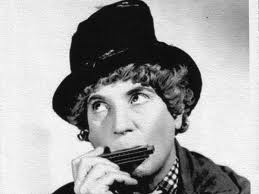
Then it hit me. It was a long shot, but I couldn’t think of anything else so it was worth a try. The boy reminded me of Harpo from the Marx Brothers. Not only didn’t he talk, but he had the same facial features and a similar haircut. I decided to show the class my favourite Marx Brothers movie, Duck Soup, and dedicate the screening to this student that refused to talk. I mentioned how Harpo Marx is cool and so is this student who happens to share a resemblance.

I figured that instead of trying to get him to talk and making his silence a negative, I would celebrate it and cannonise it. The class loved the Marx Brothers and particularly enjoyed Harpo Marx. In fact, no one loved it more than this particular child, who would mimic Harpo, get his parents to order the Marx Brother’s DVD’s and yes, the positive attention from peers in particular made him start to talk!

I recently stumbled on a valuable website that deals with helping parents and educators deal with shy children. The website is called shakeyourshyness.com and it features some useful tips. By following the link provided, the tips below are explained in more detail.

  1. Normalize shyness and depict it in a positive light.
  2. Make regular contact.
  3. Give shy children a job to do.
  4. Comment on their successes and post their work.
  5. Help Children Learn To Initiate Contact With Others.
  6. Educate Parents.
  7. Reward Small Improvements
  8. Keep an eye out for teasing

It turns out that he was just waiting for somebody to at least attempt to understand him. He didn’t want people to try to change him, he wanted people to appreciate him for who he was.

Later that year, this very child performed in the school concert. Thank you Harpo!

Healthy Eating May Help ADHD Kids: Don’t Tell the Doctors

January 10, 2012

I find the ADHD trends highly frustrating. I am not a doctor or medical professional of any kind so it’s not for me to speculate whether or not ADHD exists. What bothers me, is the rapid increases in children being diagnosed (and more importantly, medicated) with the syndrome. To me Ritalin and other types of ADHD medication must be the last resort. It’s side-effects are often quite pronounced and sometimes quite sad to experience. Kids with larger than life personalities and great bursts of creativity can often be left following their own shadows (I have personally witnessed this!)

When I first entered into the profession I was given medical forms to fill out about a particular student. A previous teacher must have recommended that this student be assessed due to the belief that she may have some ADHD symptoms. In my view she was just a child with poor self-esteem who lacked concentration. In my assessment of her I made it clear that I felt that beyond her concentration being poor there was no other reason to suspect that she may have ADHD.

It didn’t help. Unfortunately, within weeks of being presented with this patient, the doctor prescribed her with Ritalin. No suggestions of a change of diet, no therapy to examine if there is any cause for her low self-esteem and no evidence that she was sent to have her language skills tested. Just the “go to” method, the “one pill fits all” strategy – the blasted pill!

I am proud to say that this child is now off the medication. Her parents decided it was not something they wanted her to be on permanently so they eased her off it. Doctors would be shaking their heads right now and accusing the parents of being irresponsible. But the parents were right. She is now a happy, focussed, non-medicated young teenager.

Doctors can be far too quick to diagnose and prescribe. In my view, they do this out of self-interest. If they were more considerate they would seriously look at diet before prescribing Ritalin.

SIMPLY eating healthier may improve the behaviour of children with attention deficit hyperactivity disorder (ADHD) if therapy and medication fail, says a study published in the journal Pediatrics.

Nutritional interventions should therefore be considered an alternative or secondary approach to treating ADHD, not a first-line attack, said the review by doctors at Northwestern University Medical School in Chicago, published on Monday.

What they mean by that is first pop the pills and then consider your sugar intake. This is ridiculous. What is the big deal about investigating diet and other possible causes before, as a last resort, prescribing the medication?

Click on the link to read Who Needs Quality Teaching or Parenting When You Have Medications?

Click on the link to read Get Your Kids on Ritalin Before Their Grades Suffer

Click on the link to read It is Doctors Not Teachers Who Are Helping Children Get Good Grades

The Sad Reality of Teacher/Student Facebook Communication

January 9, 2012

People who draw attention the benefits of teacher/student Facebook communication miss the point. There is no doubt that there are some fantastic innovations through social media that would allow teachers to respond to the educational needs of their students. But all benefits go out the window when one considers the dangers.

High school teacher Jennifer Kennedy has a prepared response for students who send her “friend” requests on Facebook.

No. Or, at least not until they graduate.

It’s a rule she said she shares with fellow teachers at Sacramento New Technology High School.

Increasingly, school district officials across the region and throughout the country are coming up with their own guidelines for what kind of online and electronic communication is acceptable between teachers and students.

Is it OK to be Facebook friends?

What about direct messages on Twitter?

Or text messaging from personal cellphones?

“We have a generation of kids who communicate this way,” said Kennedy, who teaches sophomores and seniors. “If you say absolutely no Facebook or texting, you are cutting off an important relationship with students.”

In districts with policies against such behavior, officials have said social media sites blur the line between the professional and private lives of teachers. And then there are the rare but widely reported allegations of abuse initiated or intensified through social media.

These allegations of abuse spoil any chance teachers and students have of communicating via social media sites. Perhaps this if for the best.
What is your opinion on this issue?

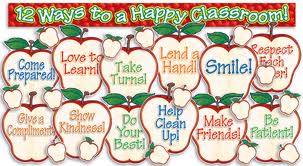
Six Tips For a Happy Classroom

January 6, 2012

These valuable tips come from Professor Dylan William, the inspiration behind the BBC2 series ‘The Classroom Experiment’.

* Stop students putting their hands up to ask questions – it’s the same ones doing it all the time. Instead introduce a random method of choosing which pupil answers the question, such as lollipop sticks, and thus engage the whole class.

* Use traffic-light cups in order to assess quickly and easily how much your students understand your lesson. If several desks are displaying a red cup, gather all those students around to help them at the same time.

* Mini-whiteboards, on which the whole class simultaneously writes down the answer to a question, are a quick way of gauging whether the class as a whole is getting your lesson. This method also satisfies the high-achievers who would normally stick their hands up.

* A short burst of physical exercise at the start of the school day will do wonders for students’ alertness and motivation. As any gym addict or jogger will tell you, it’s all about the chemicals released into the brain.

* Ditch the obsession with grades, so that pupils can concentrate instead on the comments that the teacher has written on written classwork.

* Allow students to assess the teachers’ teaching – they are the ones at the sharp end, after all. Letting pupils have a say is empowering and, if handled constructively, is highly enlightening.

I particularly like tip 5. We have become far too obsessed with grades. Comments from the teacher are a much better way of helping children achieve.

What ideas have you put into place that have improved the atmosphere of your classroom?

It’s Time to Change the Culture of the Classroom

January 5, 2012

I have a confession to make. As driven as I am to help my students master the curriculum, there is something more important to me than their academic achievement. I would not be even remotely satisfied if my students were at or above the national standard in numeracy and literacy if they also happened to be bullying, bullied or struggling to cope with everyday life. Conversely, if my students were below national standards but were functioning well and getting along with each other, I would be far more satisfied.

That’s not to say that I don’t understand that a vital function of my job is to educate. I know that all too well. It’s just that I wont let that distract me from my mission in setting up a classroom that is caring, friendly and allows each child to express themselves in their own unique way.

I am sick and tired of reading about how bullying is causing kids as young as 7 to diet. It infuriates me that so little is done by teachers to protect young kids from this stigma and prevent bullies from causing distress. I know what I am claiming will be seen as a gross generalisation, but how many teachers are prepared to overlook a hurtful comment about weight or ignore the activity by the “in-crowd?”

No classroom should have an “in-crowd”. In-groups cannot exist without a readily defined “out-group”. It is a teacher’s job to foster a classroom environment without such divisions. It is more important than any equation or scientific experiment.

Award Slim Kids Higher Marks: Dukan

January 4, 2012

It is disgusting how some sections of society treat overweight kids. As if the stigma of being overweight in a “body beautiful” obsessed world isn’t hard enough. I am sick to death of reading negative ideas when trying to solve childhood obesity. The latest negative idea, which seeks to reward slim kids by giving them extra marks for no other reason than their body mass index readings, not only compromises the fairness of the exam process but makes children already suffering from feeling neglected and judged, feel like dirt.

Pierre Dukan, the nutritionist behind the popular but controversial Dukan diet, has suggested that France tackle child obesity by giving extra exam marks for slimness.

Dukan, who has sold 8 million copies of his diet book worldwide, made the proposal in a 250-page book called ‘An Open Letter to the Future President’, which he sent out on Tuesday to 16 candidates for France’s presidential election.

The plan calls for high school students to be allowed to take a so-called “ideal weight” option in their final year exams, the “baccalaureat”, under which they would earn extra points if they kept a body mass index (BMI) of between 18 and 25.

Those already overweight at the start of the two-year course would score double points if they managed to slim down over a period of two years.

“It’s a fantastic motivator,” Dukan told Reuters.

When we even consider adopting methods like Dukan’s we do a monumental disservice to kids struggling with their weight. These kids are often well-mannered, generous, talented and caring individuals. These are traits we should be focussing on, not weight! You will never see a suggestion that caring, empathetic, selfless and considerate kids get extra marks. These qualities pale into insignificance compared to a person’s weight.

When we employ negative inducements to entice children to lose weight, we not only make it harder for them to succeed but we also make them feel not good enough.

My view (as espoused in my novel) is that whilst I hope our overweight children are successful in losing their excess kilos, either way, let’s not let weight distract us from the qualities and unique characteristics of the person.

Whilst childhood obesity isn’t ideal, ignoring who the child is and concentrating on how much they weigh, is infinitely worse.