Posts Tagged ‘Drugs’

Experts: Medicate Your ADHD Kid or We’ll Report You To The Authorities

November 21, 2011

I suppose it was only a matter of time.  The writing was on the wall earlier this year when experts were outraged when a mother, Christie Haskel, claimed that coffee had cured her son of ADHD.  The medical experts came out in force against Ms Haskel.  How can this woman treat her child with something other than a drug with pharmacological effects that resemble closely those of cocaine and amphetamines?  And coffee? That could damage the poor child’s health!

Now it seems they have taken their pro-drug, anti-choice platform a further step into the ultra-extreme. Now they are threatening parents – take the drugs or you’ll be reported:

EXPERTS have warned that parents who don’t medicate children with ADHD could be referred to child protection authorities under controversial draft guidelines being considered by the National Health and Medical Research Council.

The practice points, to guide doctors who treat the disorder, were drawn up by an NHMRC expert working group to address community concern over the use of stimulant medication to treat attention deficit hyperactivity disorder. They state: “Consideration should be given to the ability of the child/adolescent and their caregivers to implement strategies. As with any medical intervention, the inability of parents to implement strategies may raise child protection concerns.”

Child psychiatrist and Monash University lecturer George Halasz says the situation should not be seen as unique to ADHD and parents who fail to manage serious conditions such as their child’s asthma or diabetes could also be considered to be failing their duty as a parent.

Dr Halasz said the new guidelines were a step in the right direction because they asked doctors to first try to find other explanations for a child’s behaviour before they diagnosed ADHD.

Firstly there is a gulf of difference between a parent’s decision not to administer ADHD drugs and a decision not to treat a child for asthma and diabetes. Secondly, this move does not promote trying alternate methods but reinforces what many suspect; that Ritalin and it’s type have become a one-stop fix for a condition yet to be fully proven.

The British Psychological Society said in a 1997 report that physicians and psychiatrists should not follow the American example of applying medical labels to such a wide variety of attention-related disorders: “The idea that children who don’t attend or who don’t sit still in school have a mental disorder is not entertained by most British clinicians.”

Another problem I have, is how can you even consider reporting parents for not giving their children a drug that has the following possible side-effects:

How about we report lazy doctor to the authorities who prescribe this drug without due process? How about we report bullying tactics by so-called experts? How about we let parents decide for themselves what is in the best interests of their children?

How about you think about the consequences of drugging such a large proportion of our young?

Study: Clever Children More Likely to End Up On Drugs

November 15, 2011

There have been a lot of studies recently where the findings were so obvious you wondered how they managed to get a research grant for it in the first place.But every so often you stumble upon a study where the findings were not as you might have predicted.

A recent study that found that clever children are more likely to use drugs surprised me greatly:

Intelligent girls and boys are much more likely than average to take illegal drugs like cocaine, cannabis and ecstasy when they grow up, a study has found.

Scientists think they do so in part as a “coping strategy” to avoid bullying from their peers, and partially because they find life boring.

The effect is more pronounced in girls than boys, with those exhibiting high IQs as children more than twice as likely to have tried cocaine or cannabis by the age of 30, as those of lower intelligence.

The effect in boys with high IQs is also marked, with them being around 50 per cent more likely to have done so by that age as their less intelligent former classmates.

A team at Cardiff University analysed data from almost 8,000 people born in one week in April 1970, who were enrolled at birth in the ongoing British Cohort Study, which follows participants through life. All these children had their IQs tested between the age of five and 10.

Drug use, as reported by the participants themselves, was then recorded at 16 and 30 years of age.

At 16, 7.0 per cent of boys and 6.3 per cent of girls had used cannabis. This minority had “statistically significant higher mean childhood IQ scores” than non-users, according to the authors of the report, published in the Journal of Epidemiology and Community Health.

The authors noted: “Across most drugs (except amphetamine in men), men and women who reported using in the past 12 months had a significantly higher childhood IQ score than those who reported no use.”

They concluded: “High childhood IQ may increase the risk of substance abuse in early adulthood.”

Well that explains it – no wonder why I’ve never taken drugs!

Introducing -The Truacy Drug!

August 2, 2011

Sooner or later there will be a drug for everything.  No problem self-made or genetic will be without its own medication.

And we will all be worse for it.

I have a very cynical view of the pharmaceutical industry.  I don’t believe what they are telling us about how they are giving children with poor concentration a quality of life they wouldn’t ordinarily have.  Maybe I should buy in to it, but I don’t.  Instead, I believe that they are replacing one problem with the threat of a much bigger problem.  The effect of drugs on a child isn’t fully known yet.  I fear that when we do have comprehensive data on the effects of drugs such as Ritalin on young children, we won’t like what we see.

The latest drug to concocted is a truancy drug.  That’s right, a drug for not wanting to go to school!  It is recommended that no child under 18 take it, but whoops, that rules out school aged children!  Not much point making a truancy drug for adults.

So  they scrap the idea, right?  Nope.  They find a way to trial the drug on kids aged as young as 11:

SCHOOL truants as young as 11 are being given a powerful ADHD and antidepressant drug in a controversial trial.

The drug, Lovan, is not recommended for anyone under the age of 18 but is being prescribed for children as part of a School Refusal Program being led by Professor Bruce Tonge.

Prof Tonge is chairman of a federal government committee setting new guidelines for the treatment of attention deficit hyperactivity disorder.

But the side-effects are minimal, right?  Nope.

Prof Tonge said the children on the trial and their parents had been warned of potential side-effects of Lovan, including suicidal tendencies.

The question I am bursting to ask is, why do we need a drug for something which is a product of  factors likely to be unrelated to the child’s mental state.

But asking that questions will show me up as a pharmaceutical non-believer.  Because logic isn’t important here.  What is important is that every problem must have its own approved drug.

I’d love to write more on this issue but I’ve got to take my pills now.  I’m trialling a new drug for people who don’t enjoy paying bank fees.

Kindergarten Teacher Calms Students During Shootout

June 1, 2011

Experienced teachers always say, “expect the unexpected”, but who could ever expect to be teaching while there is a shootout outside the classroom.  Mexican kindergarten teacher Martha Rivera Alanis, shows us what a fabulous teacher can achieve in the worst of circumstances.  As a shootout takes place outside her window she calmly reassures her young students before engaging them in a sing-a-long.

In the video, the frightened but determined voice of a schoolteacher is heard as she attempts to maintain calm among a group of kindergartners lying on the floor before her, asking them to join her in a singalong as gunfire shatters the air outside.

The teacher refers to the children as “my love,” “precious” and “little ones” during the stirring clip filmed last week in the city of Monterrey, in northern Mexico. It’s gone viral, igniting once more a public debate over the government’s campaign against drug gangs and earning accolades for maestra Martha Rivera Alanis, reports the Associated Press.

The Nuevo Leon state government honored Rivera for “outstanding civic courage” in a ceremony today.

The 33-year-old mother of two said she was frightened, but that her “only thought was to take their minds off that noise.” The song she chose during the ordeal is a Spanish-language version of a tune popularized by the children’s TV program “Barney and Friends,” and makes reference to chocolate droplets falling from the sky.

Rivera filmed the video during a gunfight Friday in which five people were killed at a taxi stand in La Estanzuela, a district in south Monterrey. According to a local news site, Regioblogs, the teacher posted the video to her Facebook account and then was asked permission to have it reproduced on YouTube and linked to the site. So far the original clip has garnered more than 714,000 views.

“We do drills constantly, because the area where we are is a high-risk zone,” Rivera said, according to reports. The children, she added, “behaved in the way we had practiced.”

I hope to never be in the situation Martha Rivera Alanis was in, but should I ever find myself in a delicate or dangerous predicament I can now draw on the example of this fine, selfless, courageous and dedicated teacher.  What a wonderful role we can play in our students’ lives.  What a positive and calming influence we can have on them.

Thank you Martha Rivera Alanis for showing us how it’s done!

Meet the 7-Year Old Heroin Dealer

May 22, 2011

I am so glad that I’ve never had to apprehend a seven-year old student giving away heroin by the bag full:

In what sounds like a terrible business move, a Pittsburgh 7-year old was caught giving away bags of heroin for free in class, authorities say. Police are investigating after a teacher caught the student with 18 bags of heroin, reports CBS station KDKA.

The incident took place at Roosevelt Elementary School in Carrick, which houses grades pre-K to 5. Police Cmdr. Maurita Bryant says police are still trying to determine the source of the 18 individual dose packets stamped “magic ticket” that the boy brought to the Roosevelt Primary School on Wednesday Sources say school authorities became suspicious after the boy cut his finger on a razor blade.

Upon questioning the student, a teacher found the 18 suspected bags of heroin in his backpack and locker. Besides the “magic ticket” label, the packets features a bunny coming out of a hat. The boy reportedly told authorities that he got the packets of drugs from his father’s bedroom. When police checked the student’s home, however, they found no trace of drugs. Police spokeswoman Diane Richard said the boy didn’t know what the substance was, but a public schools spokesperson said the boy will face unspecified school discipline. Allegheny County child caseworkers are also investigating.

According to KDKA, the spokesperson said three parents contacted the district after their children brought the drugs home from school.

My mother used to get really angry at me if I returned home from school with my apple still left uneaten in my lunch box.  Imagine her reaction if I turned up with a bag of heroin?

The Horrendous Over-Prescribing of ADHD Drugs

April 21, 2011

America is running our of Ritalin!  Parents are frantically running around trying to find pharmacies that still have some in stock.  You might think that what I have just written is the making of good fiction, perhaps a Hollywood satire, but I’m afraid that it’s a true story, with potentially huge ramifications.

Nationwide shortages of popular drugs used to treat ADD and ADHD are sending parents scrambling, with some combing multiple pharmacies for the Adderall and Ritalin that keep their kids calm.

Molly Taylor, 46, of Worcester, Mass., was turned away empty-handed this week when she went to pick up prescriptions of Adderall XR for herself and her 16-year-old son, Luke.

“They don’t have them,” an incredulous Taylor told msnbc.com. “You could be waiting several days, which would have a HUGE impact. If you can’t get it that day, it’s very, very difficult.”

In the past two weeks, federal Food and Drug Administration officials added the drugs methylphenidate hydrochloride and amphetamine mixed salts, the generic names for Ritalin and Adderall, to an expanding list of national drug shortages. Some distributors cite manufacturing delays and increased demand as the reasons; others offer no explanation for the shortages.

But the American Society of Health-System Pharmacists, which tracks drug supply issues, has listed the products in short supply for nearly a month, and there have been regional reports of spotty shortages even before that.

5.4 million children have ADHD

In the United States, an estimated 5.4 million children ages 4 to 17 have ever been diagnosed with ADHD, or attention-deficit/hyperactivity disorder, and 66 percent of those with current ADHD take medication to control the condition, according to the Centers for Disease Control and Prevention.

Last year, that amounted to 152 million units sold of Adderall and Adderall XR, the extended-release version of the pill, 35 million units of Ritalin and nearly 702 million units of generic ADHD drugs, with sales totaling more than $1.2 billion, according to data from Wolters Kluwer Pharma Solutions.

For millions of children — and adults — the stimulant medications ease the symptoms of ADHD, allowing them to control distracted thoughts and behavior well enough to participate in school, work and social life.

The drugs are taken daily, but when patients miss even one dose, the consequences can be swift, said Ruth Hughes, interim chief executive of the organization CHADD, Children and Adults with Attention-Deficit/Hyperactivity Disorder.

“The symptoms come back very quickly,” said Hughes, who is the mother of an adult son with ADHD. “If you start that spiral, within 24 hours you begin to get in the loop of negative feedback. It doesn’t take very long until it has a truly negative impact.”

The current shortages affect various doses of the medications supplied by several manufacturers of brand-name and generic drugs. That means patients who find they can’t get their usual prescriptions might be able to find a similar drug in a different strength, made by a different manufacturer.

However, because the drugs are tightly controlled by the U.S. Drug Enforcement Administration, prescriptions are doled out only a month at a time, and patients have to visit their doctors in order to authorize new drugs, which could be more expensive than the old ones.

“Tightly controlled”? You have got to be kidding me!  This is sickening!  How can we sit and watch our kids being prescribed these drugs in the millions and not wonder whether or not these kids really have ADD and ADHD?  How can you get to the point where demand for a drug for children is so readily prescribed that demand exceeds supply?

It seems like pharmaceutical companies are winning, and we are sitting there silently letting them.  It is time for a parliamentary inquiry on this issue.  Doctors and teachers in particular need to be accountable for their role in this situation.

Surely when a drug becomes so rampantly prescribed that drug companies struggle to meet demand, there is something not quite right going on?  Or am I the only one that thinks this is the case?

The Cost of Sedating Our Boys

February 20, 2011

I recently came across an interesting opinion piece by Elizabeth Farrelly in the Sydney Morning Herald.  Whilst I wouldn’t go as far as to connect the lack of representation of male teachers to the number of boys on Ritalin, some of her points do resonate.  There is no doubt that Ritalin does have a place, but with the numbers of children (boys in particular) taking the drug climbing markedly from year to year, it is more than fair to raise some strong concerns.  Ms. Farrelly certainly does just that:

The Ritalin wars are usually treated as just another tussle between the pharmaceutical companies and the rest, but is there something else going on here as well? Is it part of a more generalised, covert war on boyhood? //

Thirty years ago Australian primary schools employed five male teachers for every four females. By 2006 there was one male teacher for every four females. This overwhelming feminisation of primary education, and of culture generally, has made boy-type behaviour stuff to frown upon. Are we in danger of seeing boyhood itself as a disorder?

When Christopher Lane, author of Shyness: How Normal Behaviour Became a Sickness, quoted a psychoanalyst saying “We used to have a word for sufferers of ADHD; we called them boys”, he probably did not expect it to become the most famous line of his book.

What was once introversion is now “avoidant personality disorder”, nervousness is “social anxiety disorder” (SAD) or dating anxiety disorder (DAD) and so on. It’s not that these disorders don’t exist, says Lane, a Guggenheim fellow studying the ethics of psychopharmacology, but that our definitions are so broad that the entire mysterious subconscious is reduced to chemical balance, and any deviation looks like disease.

Why, he asks, is ADHD so commonly diagnosed in boys? Is it new behaviour? Or just a new attitude to that behaviour?

But why the gender imbalance, and why now? We know that boys tend to be late maturers anyway, but Scott concedes there are also social and perceptual factors at play. Teachers with “less structured” teaching style and “more distracting” classroom environments, he says, yield many more of his clients than their more disciplined (my word) colleagues.

Whereas ADHD girls “sit quietly in a corner”, the boys are more disruptive and more noticed, more referred, more medicated. And although much the same is true of ”normal” boys and girls, the upshot is that ”girl” is a norm to which boys are expected to strive. Scott sees it as “an unintended consequence of how society operates”.

But consequences this important should be either clearly intentional, if girlifying boys is really what we want, or remedied. Personally, I reckon the crazily creative are types we’ll need more of, rather than fewer of, in the future, even if they are male.

The above are just some snippets from this very thought-provoking opinion piece.  It has never sat well with me that such a large proportion of children taking Ritalin are boys.  Whilst I wouldn’t go as far as to blame it on few male teachers, it does make you wonder whether we are getting it right.

It seems like society may be letting boys down very badly.

The Drug Companies Are Winning at Our Children’s Expense

February 17, 2011

I have a confession to make.  I hate drug companies.  No, worse, I despise drug companies.

I may not be a doctor, pharmacist or  expert, so you can discount my views as just ramblings from an ignorant blogger if you like, but that isn’t going to change my position.

It is my belief that the drug companies have a vision.  That vision is to see children being given medication as if it were candy.  Last month I wrote about the fact that more than a quarter of kids in the US are on medication, with almost 7% on two or more prescription drugs.  The drug companies probably see that figure as merely a good start, with plenty of room for improvement.

And as much as I wish we could see through what they are doing, I’m afraid, they continue to prevail.

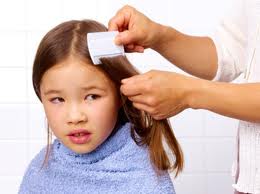
I was really disappointed to hear that a lice drug called Natroba,  has been approved by the U.S. Food and Drug Administration for use on children ages 4 and older.

A lice drug?  So let me get this straight.  You give your child a drug that goes into the bloodstream to fight a problem which is external to the body.  How on earth does that work?

The product — which is applied to dry scalp and hair, then left on for 10 minutes — contains spinosad, a compound that excites the central nervous system of head lice. The bugs, which are most common in children ages 3 to 12, become paralyzed and die.

And what about the “known” side-effects?

Common side effects of Natroba include redness or irritation of the eyes and skin.Because it contains benzyl alcohol, which can be harmful to newborns and low-birth-weight infants, the drug should not be used on children younger than 6 months.

6 months?  Why would you give a prescription drug to a baby suffering from lice?

The sad part of this is that we live in the age of the quick fix.  The solution to every problem must come at the click of a finger.  No matter how many of these drugs get released, there will always be doctors happy to endorse and prescribe them and parents only too happy to avoid the time and energy used to treat their children in the traditional way.

If this keeps up, soon it will be rare to find a child not on medication.  What a tragedy!

There is Something Seriously Wrong Happening Here!

January 28, 2011

I am no expert and don’t pretend to be one, but I can’t help being quite disturbed by the incredible amount of young children being prescribed medication.  As a teacher and parent, it hurts to know that kids all over the world are being prescribed these drugs in vast numbers.

I realise that there are children that legitimately require medication – but surely we are prescribing these drugs far too easily and haphazardly.  This is not Aspirin!  These are powerful drugs.  Surely, a global body needs to be set up to review the practice of mass prescriptions and to further tighten the regulations.  I am scared for the next generations of children.  I never want to live in a society where prescribing powerful drugs to kids is seen as normal or standard practice.

In the past week alone I have read countless articles on this issue.  The article below from the UK claims drugs are being prescribed for ‘normal’ reasons, such as shyness:

Children are being prescribed mind-altering “chemical cosh” drugs for conditions such as shyness and mild social anxiety, behaviour experts have warned.

Young people are routinely being given medication to treat normal childhood conditions, it was claimed, despite fears over their long-term health.

The disclosure came as it emerged that the number of eight- to 13-year-olds on drugs such as Ritalin has soared seven-fold since 1997.

But Dave Traxson, a senior educational psychologist who works in schools in the West Midlands, warned that children were increasingly prescribed drugs for “normal” conditions.

“I feel very strongly that the time is right to challenge the growing practice of medicating our children for displaying behaviours and thought processes that until recently would have fallen within the normal range,” he said.

There was this article along the same lines from Australia:

THE use of stimulant drugs to treat attention deficit hyperactivity disorder (ADHD) is soaring, with data showing prescriptions for some medications grew by 300 per cent over seven years.

Prescription of the stimulant drugs rose by 87 per cent between 2002 and 2009, Australian researchers have found. Use of one drug commonly sold as Ritalin, methylphenidate, increased by 300 per cent.

Most studies of stimulant medication only tested its effects for between six and 12 weeks, and there was no evidence it improved educational or life outcomes, Associate Professor Jureidini said.

This description from the US site defending the use of Ritalin and other such drugs:

Stimulants are safe and effective for most children, helping them to focus their thoughts and control their behavior. In some children, these medications may cause mild side effects, such as decreased appetite, weight loss, stomachaches, sleep problems, headaches and jitteriness. Rarely, there may be more serious side effects, such as dizziness, stuttering, tics or increased blood pressure.

This article was printed in a Malaysian newspaper:

ALMOST one million children in the United States are potentially misdiagnosed with Attention Deficit-Hyperactivity Disorder (ADHD) because they were the youngest and least mature in their kindergarten classes, a US study found.

And finally, another damning article from the US:

While stimulant drugs have long been known to help children with ADHD alleviate symptoms, new studies have shown the opposite effects.

Many experts recommend prescription of a stimulant drug in severe cases, and often believe ADHD symptoms can be treated by using methods other than medication.

One dangerous possible side-effect of Ritalin is the potential alteration of personality. Some individuals have explained that when medication is stopped, the actions, thoughts, and feelings are vastly different than when taking the medication.

Whilst ADHD no doubt exists, and is often best treated with drugs, I am still of the opinion that we are drastically overprescribing these drugs.  I may not be an expert, but I still feel sufficiently concerned to speak up about it.

As teachers have a part in the decision as to whether or not a child is prescribed medication, I make the following request.  Please don’t take the decision lightly.  Don’t let an easier classroom experience ever taint your objectivity.

Think Before You Medicate Our Children!

December 30, 2010

Dear Medical Profession,

Whilst I am no expert and don’t pretend to be, I am bewildered at the rate in which kids are being prescribed medication in the US especially.  I read the Wall Street Journal article about prescription drug use among children and teenagers in the US, and I just shook my head in disbelief.

Below are some of the passages from the article that disturbed me:

These days, the medicine cabinet is truly a family affair. More than a quarter of U.S. kids and teens are taking a medication on a chronic basis, according to Medco Health Solutions Inc., the biggest U.S. pharmacy-benefit manager with around 65 million members. Nearly 7% are on two or more such drugs, based on the company’s database figures for 2009.

Doctors and parents warn that prescribing medications to children can be problematic. There is limited research available about many drugs’ effects in kids. And health-care providers and families need to be vigilant to assess the medicines’ impact, both intended and not. Although the effects of some medications, like cholesterol-lowering statins, have been extensively researched in adults, the consequences of using such drugs for the bulk of a patient’s lifespan are little understood.

But children and teens are also taking a wide variety of other medications once considered only to be for adults, from statins to diabetes pills and sleep drugs, according to figures provided to The Wall Street Journal by IMS Health, a research firm. Prescriptions for antihypertensives in people age 19 and younger could hit 5.5 million this year if the trend though September continues, according to IMS. That would be up 17% from 2007, the earliest year available.

So, one-quarter of kids in the US are on medication.  Is this acceptable?  Is this not far too high?  Is it going to get higher in the future?  Are we going to have half of our kids on medication?  Why don’t we put all kids on meds?  That’s where we are going, aren’t we?

As I stated, I am no expert.  I just find it hard to believe that so many kids rely on medication.  It doesn’t sit well with me.  Am I just behind the times, or is this generation of medical professionals comfortable with prescribing medication to kids in such high numbers without adequate research?

Yours sincerely,


MICHAEL