Posts Tagged ‘Children’

Students Should not be Prosecuted for False Allegations

April 10, 2012

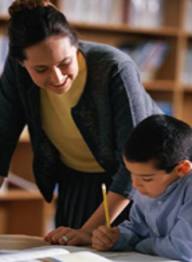
Those of you who follow my blog know how concerned I am about the threat of false allegations against teachers. Data has shown that it is one of the major factors for driving potential male teachers away from the profession. I have a friend who was accused of innapropriate touching by a child for doing nothing more than guiding the child’s hand in a handwriting exercise. She did nothing more than help the child hold the pencil correctly and it landed her in hot water, until the child recanted on his original claim.

But as much as I abhor false accusations, I am aware that the role of the teacher is to put the welfare of the child over their own. If students were prosecuted for false claims, it would have dire consequences for the wellbeing of the student population. The threat of prosecution would ultimately deter students from speaking up against teachers who have genuinely molested them. It is already difficult for victims of sexual assault to speak out and name their perpetrators, lets not put any stumbling block that may keep them quiet.

Still, it seems as though I am in the minority of teachers on this one:

Pupils should be routinely reported to the police after making unfounded claims simply to get their own back on teachers, it was claimed.

The NASUWT union said lying schoolchildren “must understand there is a consequence” to making allegations that are “unjust and malicious”.

The comments came as new figures showed the vast majority of claims made against teachers were unsubstantiated.

Data from the NASUWT shows that fewer than one-in-20 allegations of unlawful behaviour made against teachers last year – including assault, sexual abuse and serious threats – resulted in court action.

Addressing the union’s annual conference in Birmingham, activists insisted that pupils who make false claims should be prosecuted.

Ian Brown, a teacher from North East Derbyshire, said: “Schools must have procedures in place where, when allegations are made, the pupil is made aware at the earliest point of the investigation, through their parents if necessary, that if they wish to proceed with the allegation and are found to be lying, then they will face sanctions.

“They must understand there is a consequence in making those allegations if they are found to be unjust, lies and malicious.”

According to figures from the NASUWT, most allegations made against teachers last year failed to result in court action.

Some 103 claims were made, with no further action being taken in 60. Some 39 are yet to be concluded, although the union claim the vast majority are unlikely to ever make it to court.

Just because most claims against teachers fail to lead to conviction doesn’t mean they were erroneous. Protecting the welfare of children is tantamount, even when it comes to the expense of teachers.

As much as I would like to see children punished for any salacious lie, I desperately don’t want any prohibitive regulation that would deter genuine victims from seeking justice from their perpetrator.


Are Parents Creating a Generation of Spoilt Children?

April 4, 2012

I think teachers should be very careful when criticising parents. Whilst I have no doubt that parents who don’t demand help around the house often breed lazy kids who lack independence and motivation, school isn’t necessarily the place to gauge whether or not a child is spoilt.

Teachers have been instructed for many years to become emotionally distant. This philosophy has become very prevalent and the results are as gloomy as the methodology. No teacher adopting this style of teaching can ever compare themselves to a parent. When parents set boundaries they do it with love and deep concern. If a teacher decides to become emotionally distant, they lead their students to believe that their boundaries are set without a deep-rooted connection to the child. The child comes to believe taht the rules were set for selfish reasons, because “it’s not as if my teacher cares about me anyway!”

That’s why I am not sure the connections made in this article are necessarily accurate:

Some middle class parents are turning their children into “little Buddhas” by “waiting on them hand and foot” at home, a teachers’ leader has said.

Association of Teachers and Lecturers general secretary Dr Mary Bousted warned spoilt children had “disproportionate” consequences for behaviour in schools.

Parents needed to be confident in saying no to their children, she said.

It come as the union debated calls for tough behaviour sanctions in school.

The ATL conference in Manchester earlier heard that measures such as detention, suspension and exclusion, were failing to deal with behavioural issues.

But Dr Bousted laid the blame firmly with poor parenting in both poor and middle class homes.

While acknowledging most parents did a good job, she told reporters: “Children without boundaries at home resent boundaries imposed at school.

“We need to be confident in saying we can go so far but no further we need to be more confident in what we think is reasonable.

“How many parents ask their children regularly to contribute to the running of the house?

“Far too many children are waited on at home hand and foot. They don’t do the washing up and they don’t do the hoovering and the don’t have to make their own beds.

“We are not doing them any favours if we make them into little Buddhas at home,” she said.

“And it certainly doesn’t do them any favours in school”.

I also don’t agree that this style of parenting is more prevalent in lower and middle class families than wealthy families.

At the end of the day, until our teachers uniformly dispense with strategies that preach distance rather than concern, we can never connect symptoms in the classroom to habits taught from home.

Boundaries are more likely to be respected when the child feels that the person setting them respects them.

Teachers Concerned About Violent Video Games

March 28, 2012

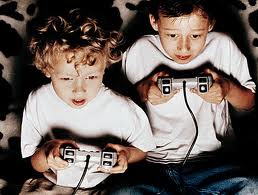
Whenever teachers dispense parenting advice, the outcome is almost never a positive one. As much as I agree that children who are exposed to violent movies and video games are worse for it, I think it is essential that teachers spend less time judging parents and more time concentrating on the curriculum.

Still, in a perfect world, parents should reflect on some of the criticisms conveyed by teachers:

School pupils are being allowed to stay up until the early hours of the morning playing games that are inappropriate for their age, said Mary Bousted, general secretary of the Association of Teachers and Lecturers.

She said many parents were failing to adhere to age-restrictions on the most violent games, raising concerns that children are growing up desensitised to aggression and bloodshed.

It was also claimed that over-exposure to screen-based entertainment was robbing children of valuable time interacting with friends or playing outdoors – harming their education and long term development.

It follows repeated concerns from psychologists that watching violent films and playing games such as Grand Theft Auto, Mortal Kombat and Modern Warfare makes youngsters more prone to violence.

Speaking yesterday, Dr Bousted said: “I think what we are talking about, first of all, is the amount of time children spend locked in their room. The fact that children spend hours locked in their rooms playing computer games, which means they’re not interacting, they’re not playing and not taking exercise.”

Some of these games were “very violent”, she said, and risk having a major effect on “tender young minds of children and young people.”

Dr Bousted said that many teachers fear parents are ignoring age restrictions on computer games, which often ban their sale to children aged below 18.

“The watershed tends to work quite well, but with online TV and video children and young people are probably watching inappropriate content over a range of media,” she said.

It would be great to share criticisms with parents without fear of reprisal. But, in my experience, the importance of having parents on side means that these criticisms can interfere with a healthy parent/teacher partnership.

Absent-Minded Kids Are Smarter: Study

March 18, 2012

For an absent-minded teacher like myself, this is very encouraging news. To think that we could be smarter, regardless of whether we know what day it is or recall what our passwords are, is surprising to say the least:

Is your child absent-minded? You should feel happy, for a new study says that it may well be a sign that the kid is intelligent. Researchers have found that children who have wandering minds actually have sharper brains — in fact, those who are constantly distracted are able to hold far more information than their diligent peers.

The study has shown that those who appear to be constantly distracted have more “working memory”, giving them the ability to do two things at the same time, the Daily Mail reported.

Those who appear to be constantly distracted have more “working memory”.

Participants in the study had to either press a button in response to the appearance of a certain letter on a screen, or tap in time with their breath. The researchers checked periodically to ask if their minds were wandering.

At the end, they measured the participants’ working memory capacity, giving them a score for their ability to remember a series of letters interspersed with easy maths questions.

Daniel Levinson of University of Wisconsin-Madison, who led the study, said those with higher working memory capacity reported “more mind wandering during these simple tasks” even though their performance was not compromised.

The results are the first to show the association with mind wandering and intelligence. It is thought the extra mental workspace is used, for instance, when adding up two spoken numbers without being able to write them down. Its capacity has been associated with general measures of intelligence, such as reading comprehension and IQ score.

I could sit here and show-off about these findings but I’m too busy trying to find my darn car keys …. again!

The Difficulties of Parenting a Special Needs Child

March 10, 2012


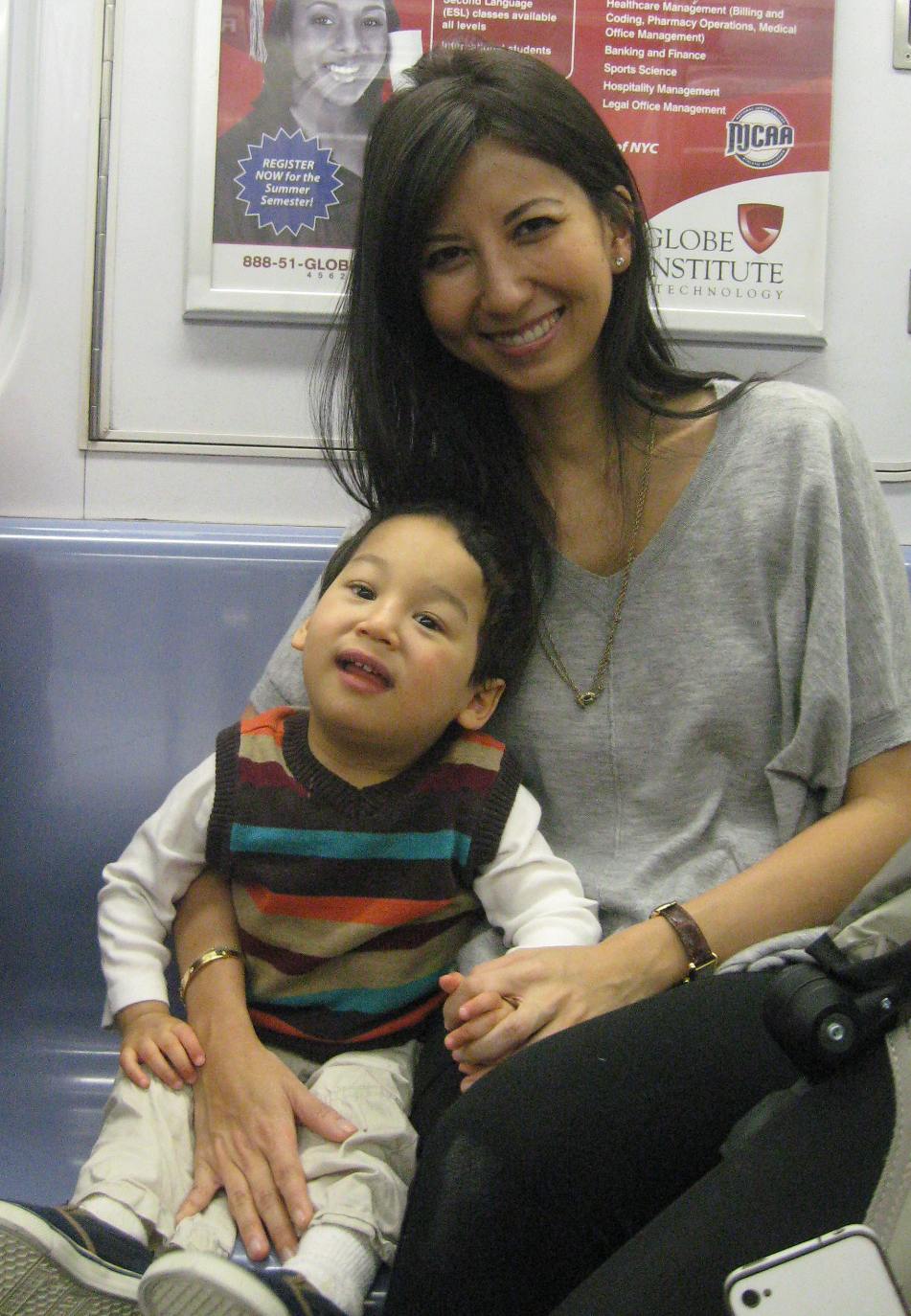
Teaching a Special Needs child can be a most difficult proposition, but parenting one is infinitely harder.

I read a brilliant piece entitled, “6 Things You Don’t Know About a Special Needs Parent.” It’s honesty provides the reader with great insight into the difficulties of raising a child that suffers from a disability. Maria Lin, the author of this wonderful article, is the parent of a 3-year-old suffering from a disorder of the 18th Chromosome. Up until now she has been tight-lipped about her experiences. I have no doubt that this article will serve to educate people like myself and will provide some comfort to other parents who are in a similar situation.

Below is her list of 6 insights:

1. I am tired. Parenting is already an exhausting endeavor. But parenting a special needs child takes things to another level of fatigue. Even if I’ve gotten a good night’s sleep, or have had some time off, there is a level of emotional and physical tiredness that is always there, that simply comes from the weight of tending to those needs. Hospital and doctors’ visits are not just a few times a year, they may be a few times a month. Therapies may be daily. Paperwork and bills stack up, spare time is spent researching new treatments, positioning him to sit a certain way, advocating for him in the medical and educational system. This is not to mention the emotional toll of raising a special needs child, since the peaks and valleys seem so much more extreme for us. I am always appreciative of any amount of grace or help from friends to make my life easier, no matter how small, from arranging plans around my schedule and location, to watching my son while I am eating.

2. I am jealous. It’s a hard one for me to come out and say, but it’s true. When I see a 1 year-old baby do what my son can’t at 4 years-old (like walk), I feel a pang of jealousy. It hurts when I see my son struggling so hard to learn to do something that comes naturally to a typical kid, like chewing or pointing. It can be hard to hear about the accomplishments of my friend’s kids. Sometimes, I just mourn inside for Jacob, “It’s not fair.” Weirdly enough, I can even feel jealous of other special needs kids who seem to have an easier time than Jacob, or who have certain disorders like Downs, or autism, which are more mainstream and understood by the public, and seem to offer more support and resources than Jacob’s rare condition. It sounds petty, and it doesn’t diminish all my joy and pride in my son’s accomplishments. But often it’s very hard for me to be around typical kids with him. Which leads me to the next point…

3. I feel alone. It’s lonely parenting a special needs child. I can feel like an outsider around moms of typical kids. While I want to be happy for them, I feel terrible hearing them brag about how their 2 year-old has 100 words, or already knows their ABCs (or hey, even poops in the potty). Good for them, but it’s so not what my world looks like (check out Shut Up About Your Perfect Kid). It’s been a sanity saver to connect with other special needs moms, with whom it’s not uncomfortable or shocking to swap stories about medications, feeding tubes, communication devices and therapies. Even within this community, though, there is such variation in how every child is affected. Only I understand Jacob’s unique makeup and challenges. With this honor of caring for him comes the solitude of the role. I often feel really lonely in raising him.

4. I wish you would stop saying, “retarded,” “short bus,” “as long as it’s healthy… “ I know people usually don’t mean to be rude by these comments, and I probably made them myself before Jacob. But now whenever I hear them, I feel a pang of hurt. Please stop saying these things. It’s disrespectful and hurtful to those who love and raise the kids you’re mocking (not to mention the kids themselves). As for the last comment, “as long as it’s healthy,” I hear a lot of pregnant women say this. Don’t get me wrong, I understand and share their wishes for healthy babies in every birth, but it’s become such a thoughtless mantra during pregnancy that it can feel like a wish against what my son is. “And what if it’s not healthy?” I want to ask. (My response: you will be OK. You and your child will still have a great, great life.)

5. I am human. I have been challenged and pushed beyond my limits in raising my son. I’ve grown tremendously as a person, and developed a soft heart and empathy for others in a way I never would have without him. But I’m just like the next mom in some ways. Sometimes I get cranky, my son irritates me, and sometimes I just want to flee to the spa or go shopping (and, um, I often do). I still have dreams and aspirations of my own. I travel, dance, am working on a novel, love good food, talk about dating. I watch Mad Men, and like a good cashmere sweater. Sometimes it’s nice to escape and talk about all these other things. And if it seems that the rest of my life is all I talk about sometimes, it’s because it can be hard to talk about my son. Which leads me to the final point…

6. I want to talk about my son/It’s hard to talk about my son. My son is the most awe-inspiring thing to happen to my life. Some days I want to shout from the top of the Empire State Building how funny and cute he is, or how he accomplished something in school (he was recently voted class president!). Sometimes, when I’m having a rough day, or have been made aware of yet another health or developmental issue, I might not say much. I don’t often share with others, even close friends and family, the depths of what I go through when it comes to Jacob. But it doesn’t mean that I don’t want to learn how to share our life with others. One thing I always appreciate is whenever people ask me a more specific question about my son, like “How did Jacob like the zoo?” or “How’s Jacob’s sign language coming along?” rather than a more generalized “How’s Jacob?” which can make me feel so overwhelmed that I usually just respond, “Good.” Starting with the small things gives me a chance to start sharing. And if I’m not sharing, don’t think that there isn’t a lot going on underneath, or that I don’t want to.

Parents Urged to do the Job of a Teacher

March 1, 2012

It is my belief that the job of a parent is to parent and the job of the teacher is to teach. Sure it’s wonderful when parents take it upon themselves to help reinforce skills taught in class. I am always appreciative of parents that spare some time to revise concepts covered during the school day. But essentially, I am paid to ensure that the parents can spend textbook-free quality time with their children. This is in my view essential to maximising the relationship of child and parent. Children often show a reluctance to work through school material with their parents and parents often get very anxious when trying to get their children to concentrate and listen to their explanations.

It is my job to see it that parents are free to spend time with their children without having to go through the ordeal of maths and science work. That’s what they pay me for.

But unfortunately, it seems that we are not doing a good enough job. It seems as if parents have often been given little choice but to try to fill in the gaps we have left behind. You hear too many stories of parents frantically trying to complete their own childs’ homework, sometimes struggling to work out the answers themselves:

A quarter of parents in Reading admit that helping their children with homework leads to family arguments, according to a survey.

Research by tuition provider Explore Learning also showed 9.2 per cent rarely helped their children with homework with more than two thirds struggling when they did.

Maths confuses parents the most with 41.2 per cent of parents finding the subject hard to grasp compared to the 11.1 per cent of parents who find English difficult.

Nationally, nearly a third of parents admitted homework had caused friction in the family with Reading not straying far from the average when it came to struggling in maths and English.

It’s time we let parents bond with their children instead of getting them to do our dirty work. Homework, if administered at all, should be revision of concepts covered in the class. If the children are not capable of doing it independently it shouldn’t have been given to them in the first place.

5 Tips to Better Connect with Students

February 16, 2012

I stumbled upon an extremely useful guide for improving the teacher/student relationship. The following are 5 tips for assisting teachers in reaching out to their students more effectively:

 
1- Pay attention to your students’ interests
Now that I’ve been teaching 10 years and I’ve mastered my subject area and the pedagogy of how to teach and reach every child’s learning style, I’m able to focus on the interpersonal things that make a big difference.

Administrators, school boards, and districts may see numbers, but numbers are not children. No child is a number. Children have names and hobbies and interests and family lives. Children are individuals and it is my job as a teacher to help them find their unique talents. I want to be the one that helped them on their journey of self-discovery.

2- Tell your students what they need to hear not what they want to hear.
I’m not here to be popular, I am here to teach. I am here to love these kids and to do what is right by their future selves. I believe I have succeeded when my students come back in 10 years and thank me. Sometimes they think I’m tough now and they groan, but I know that I’m doing right by them.

3- Take time to think about individual students
.
One of my heroes is the director of our learning lab here at Westwood, Grace Adkins. Every weekend she carries home a folder with the learning profiles, test results, and current work of 3 children who she works with in the lab, and she has been doing this for 60 years. She studies her students like a college student studies a textbook. She has doctors, lawyers, and bankers who credit her with helping them learn how to learn.

4- Learn to teach using many modalities.
Lecture may be ok some of the time, but it is never ok to do this all the time. Good teachers learn about pedagogy, the methods used to teach. Yesterday, I had a student dress up in a chef’s outfit with a mixing bowl and a recipe book with labels on everything to teach how microprocessors work. When I finished, my students said, “that is easy to understand.” A good teacher can demystify a complex topic and make it simple to understand.

5 – Let your passion come through.
If you love your topic, it will come through in your voice, your body language, and everything you do. There are times I’ve loved one subject more than another, but I can always get excited about teaching a child something for the first time that I know is valuable. I think it is important to let your own personality come through in your teaching.

The greatest challenge of teaching is reaching as many children as possible. Touching every student is an impossible task — but every moment in our lives as educators brings new opportunities.

I absolutely love this list. I think they have nailed some of the most essential methods for maintaining a strong connection between teacher and student.


Keeping Kids Safe Online

February 5, 2012

I agree with Adam Turner. Cybersafety is something parents need to address. They have the primary duty to ensure that their children are following safe online practices.

As far as I’m concerned cybersafety is primarily a parent’s responsibility, just like teaching about stranger danger or how to cross the road safely. The fundamentals of cybersafety are no different to the real world; don’t wander off, don’t talk to strangers, don’t reveal too much about yourself and call a parent if you’re unsure of something.

Some parents might complain that it’s all too complicated, but it’s not if you take an interest in your children’s activities and take the time to learn the basics. Talk to them about computers and the internet. Ask them what they’re learning at school and what they’re doing at home. Take an interest, just as you should in their other activities. 

Turner suggests ways in which parents can better supervise their children:

A common cybersafety rule is that the computer stays in the living area, positioned in such a way that anyone who walks into the room can see what’s on the screen. If notebooks are permitted in the bedrooms for studying, perhaps it’s on the condition that they recharge on the kitchen bench at night. The same rule can apply for mobile phones, which can also help combat cyberbullying.

You can split cybersafety into two key areas. The first is protecting young children from accidentally stumbling across inappropriate content. This isn’t hard if you can set up a list of appropriate bookmarks and trust your kids not to wander. Installing an ad and pop-up blocker offers an extra layer of protection. If children can’t be trusted not to wander, even by accident, you might consider a whitelist plug-in for your browser, which lets you limit access to a specific list of sites.

The second area of cybersafety is hindering older children who are deliberately seeking inappropriate content. This area is much harder to deal with, as smart and determined kids will find a workaround to just about any security measure (remember, help is only a Google search away).

There’s a big market for desktop filtering software, but don’t walk away and trust it to do a parent’s job. In my experience it tends to cripple your computer, but your mileage may vary. If you do want to restrict internet access, look at services that are independent of your end device – particularly useful if your house contains a variety of internet-enabled gadgets.

It’s worth investigating the filtering options built into wireless routers. Some let you create blacklist and whitelists, or switch off the internet at specific times. You could even run a separate wireless network for the children, making it easier to control their access without affecting your own. Another filtering option is DNS-level services such as OpenDNS. 

Whilst teachers should also take an interest in cybersafety issues, it’s up to the parents to take the lead.

The Exploitation of Children Reaches a New Low

January 27, 2012

For a developed country like Australia to stoop so far as to allow cafes to give free food to children whilst their parents gamble is simply unacceptable.

CHILDREN are being offered free food as an enticement for their parents to play pokies, in what is being labelled as a gambling loophole.

The gambling watchdog is investigating as inducements for gamblers are banned in South Australia.

In one instance, Cafe 540 – on Port Rd, Allenby Gardens is offering the food to children of gamblers playing nearby poker machines at Tavern 540.

A spokesman for Cafe 540 said the business was a separate entity from Tavern 540 but acknowledged it was “under the same roof”.

He said the free food was served in an area totally separated from the gaming machines of Tavern 540 and was not an enticement to gamble. The Advertiser investigated the issue after a reader complained that the school holiday free food deal was offered “all day every day”.

How to Get Kids to Eat From Their Packed Lunch

January 26, 2012

Hazel Keys, the author of The Clever Packed Lunch has come up with a system for getting kids to eat the contents of their lunchbox.

Below is a portion of an interview of Ms. Keys conducted by the Courier Mail:

Q: You’ve run a tuckshop – what’s your take on ensuring kids leave home each day with a properly packed lunchbox?

 A: It’s essential. A healthy nutritious lunch supports learning by allowing children to settle, focus and learn. Processed, refined and sugary foods have been shown to do the opposite.

Q: What motivated you to write The Clever Packed Lunch?
A: My many years of parenting and preparing school lunches resulted a system that I felt could benefit families and I wanted to share that.

Q: What are your three top tips when it comes to creating great packed school lunches?
1. Involve your kids in the preparation; listen to them and try to accommodate their preferences within the guidelines of health and balance.
2. Include plenty of fresh fruit and vegetables, preferably choosing in-season varieties.
3. Choose “whole” foods and ingredients that are as close to their natural state as possible, like seeds and whole grains.

Q: You suggest parents should try to get their children actively involved in making lunchbox choices – what are the benefits?
A: This is a great way to achieve a number of goals, so that:
• children feel empowered
• they’re far more likely to eat their lunch
• they’ll learn how to cook and feed themselves healthily in the process.

Q: Can you give us an example of a delicious and balanced lunchbox that could turn fussy eaters into fans?
A: Kids are attracted to “fast” food, there’s no doubt, and in my experience they love pizza. Pizza can definitely be healthy as long as you use quality ingredients like (some) wholemeal flour, olive oil and organic tomatoes. I serve it with salad, or the mixed potato wedges recipe from the book, which uses sweet potato, a highly nutritious food. And then there’s my healthy chocolate cake recipe!

Q: It’s Sunday night and the fridge is looking bare any lunch items that can be made up from simple pantry staples?
A: Yes! I always keep small tins of prepared salmon in the pantry, along with dried egg (not wheat) noodles, and frozen vegetables like corn and peas. The other items I always have on hand are a wide range of seeds. The noodles, once cooked, can be combined with the salmon, veggies and some sesame seeds, perhaps with a little sesame oil.

Q: Top three sandwich combos?
A: Ooh, yes! For kids I find the following are popular:
– sliced turkey breast, cranberry sauce and sliced green apple
– salmon, chopped gherkin, egg mayonnaise and cucumber
– grated cheddar, creamed corn and diced red capsicum toasted

Q: We automatically think of sandwiches when it comes to packed lunches? Can you suggest three options we could consider instead?
A: Yes, I’ve a recipe in the book I call “Sleeping Dogs”, which is a healthy version of hot dogs or sausage rolls. Home-made dips with wholegrain rice crackers or pappadams are a nutritious gluten-free choice. And my personal favourite, also from the book; the creamed corn puddings, which are rich in eggs and served with sour cream and guacamole. Yummy!

Q: How important is it to include a treat?
A: I think it’s important not to give “treat” foods too much attention, but to demonstrate flexibility by including them now and again, although not in the lunchbox unless the food has a nutritional benefit, like quality dark chocolate. That’s a real win-win treat!

Q: You suggest doubling up lunch box prep with dinner – can you give us a couple of examples to get us thinking on the right lines?
A: When making meatballs I double the quantity and shape some into patties instead. I serve them for dinner in a wholemeal or multi-grain roll with lots of salad. And when I make chicken and corn soup, I add the uncooked chicken to the stock. Chicken cooked this way is both moist and tender and adds flavour to the soup. So I often double the amount of chicken, and once cooked, remove half. Then I freeze it and use it for Asian dishes another day.

Q: What do you think are the main issues facing families in relation to providing healthy lunches for children at school, and what solutions can you offer?
A: It seems to me that families are finding themselves over-stretched, and lacking the time and money to provide really nutritious lunches. I’m convinced that this is contributing to the growing issue of child obesity. My answer is to move away from packaged and processed foods and choose fresh, simple, high quality foods instead. So much of our money goes straight into the bin wasted on fancy packaging and clever marketing, and the ingredients are often inferior. Feeding ourselves properly takes a little effort, but it’s absolutely worth it. Good food, like charity begins at home and offers an opportunity to develop in your children healthy eating habits that will last a lifetime. It’s one of the greatest gifts you can give them. And there are clever systems that can make the process fast and efficient too, such as the one outlined in my book.


The author can be contacted at hazel@lunchideasforschool.com