Posts Tagged ‘Childhood Obesity’

Ten Rules for Getting Kids Fit

June 20, 2011

I found a useful article that gives ten rules for keeping your kid active.  The ten rules are as follows:

Rule #1: Don’t Rely on Organized Sports

Rule #2: Keep Play Fun

Rule #3: Turn off the TV…

Rule #4: …Unless You’re Playing Wii

Rule #5: Never Reward Kids with Food

Rule #6: Instruct by Showing, Not Telling

Rule #7: Know When to Praise

Rule #8: Make a Play Date with Friends

Rule #9: But Don’t Compare Your Kids with Others

Rule #10: Give Them Your Blessing

For an explanation of what each rule means, click on the link at the top of the post.


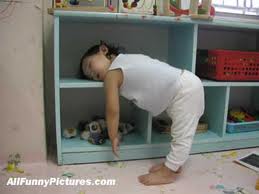
The Result of Sleep Deprivation for Kids

May 29, 2011

A new study suggests that there is a clear correlation between kids with limited sleep time and weight gain:

Preschoolers who do not get enough sleep are at higher risk of becoming overweight, researchers in New Zealand have concluded.

Getting less sleep seems to be related to increased body weight in children but doctors aren’t sure how.

Prof. Rachael Taylor of the human nutrition department at the University of Otago in Dunedin and her colleagues followed 244 children between the ages of three and seven. Young children who don’t get enough sleep risk becoming overweight. 

The children had their weight, height, body mass index and body composition measured every six months. Parents filled in questionnaires about the sleep and diet habits of their sons and daughters at three, four and five years of age. At those ages, the children also wore accelerometers to monitor their movements.

The boys and girls averaged 11 hours of sleep per day at all three ages.


Each extra hour of sleep per night at age three to five was associated with a reduction in BMI of 0.49 times and a 0.61 times reduction in the risk of being overweight or obese at age seven, the team found.

The researchers said the differences in BMI were from fat mass, which points to how poor sleep harms body composition in children.

The link remained after taking factors such as gender and physical activity into account.

As for why, the researchers proposed that having more time to eat and changes in hormones in the brain could affect appetite.

“The study is a valuable contribution to the understanding of the causal pathway whereby reduced sleep duration may directly contribute to overweight and obesity in children,” Professor Francesco Cappuccio and Associate Professor Michelle Miller from the University of Warwick said in a journal editorial accompanying the study.

Strengths of the study included use of accelerometers and sleep diaries, which offered reliable, direct and repeated measurements of time in bed and time asleep, the editorial said.

“It would do no harm to advise people that a sustained curtailment of sleeping time might contribute to long-term ill-health in adults and children,” the pair concluded.

What the article didn’t say is how many hours of sleep is ideal for a child?  Does it depend on the child? Surely, some children can make do with fewer hours than others?

Banning Home-Made Lunches is a Dreadful Policy

April 15, 2011

Of all the things to ban at school, who was responsible for this terrible idea? How can you ban children from bringing a home-made lunch to school? How can you force parents into spending money for their child’s lunch when they could provide their own for less cost?  This is another case of we don’t trust parents and their children, so we’ll intervene.  Whilst this philosophy is often generated from good intentions, it seldom leads to good results.

The days of brown bagging it are over for students in a Chicago school. In an effort to encourage healthy eating, their principal banned lunches brought from home.

Elsa Carmona, principal of Little Village Academy on Chicago’s West Side, forbade students from bringing food from home (except those students with a medical excuse) after she noticed kids eating “flaming hot” chips and drinking soda at lunchtime. “It’s milk versus Coke,” she said.

While the goal of healthy eating is a positive one, parents are understandably upset about the Carmona dictating what their kids can and cannot eat for lunch. Not to mention the fact that some parents may be able to send their kids to lunch with a meal that costs less (and one that could be even healthier) than the school’s offerings.

The kids are upset, too. When the Tribune reporter visited the school, one seventh grader led students in a chant of “We should bring our own lunch! We should bring our own lunch!” Students say the school’s food tastes bad. Bad-tasting food, parents say, often means that kids throw away the school lunch and go hungry.

It’s also worth noting, as reported by the Tribune, that the school district receives money from the federal government for each free or reduced-price lunch it serves, meaning that in banning homemade lunches could potentially put more money in the pockets of both the district and the school district’s food provider.

But Carmona maintains her school’s policy is simply about helping students make healthy choices. “Nutrition-wise,” she told the Tribune, “it’s better for the children to eat at the school. It’s about nutrition and the excellent quality food that they are able to serve (in the lunchroom).”

Is anyone surprised that this scheme looks very much like a money-making venture disguised as a realistic attempt in tackling childhood obesity?  What happens to a child who is caught bringing in a lunch from home that is more healthy and nutritious than what the school offers?  Does that child get punished?  What happens if the students hate the menu?  Why should they be forced to eat what they don’t like?

I am all for reducing the amount of junk that students have in their lunch boxes. But at the end of the day, I urge school’s to stop mirroring prisons.  Yes discipline is important, as is routine.  And yes, at times intervention is required.  But why do those involved in forming school policy show a lack of regard for making their students’ time at school a happy, comfortable or at the very least bearable experience?

How about forcing those involved in making stupid rules like this one to eat from the school cafeteria?  How about making them lead my example and banning them from eating a home-made lunch?

And you wonder why there is such a lack of respect from students nowadays?


Asperger’s Teacher Must Be Penalised for His Comments

April 1, 2011

I don’t know enough about Asperger’s Syndrome to be considered an expert on the condition.  Regardless, I am sure of this – a teacher who has a reputation for saying demeaning and insulting things to his/her students with some level of frequency needs to find another profession whether they have Asperger’s Syndrome or not.

I am a deep critic of the general lack of understanding and support given to students with autism and other related conditions, so I want to make it clear that I am not insensitive to the difficulties that such a condition poses on a person’s social skills.

Having said that, it is my belief that Robert Wollkind, if indeed it is proven that he did do what is alleged, needs to be fired for his behaviour:

A Connecticut high school teacher faces the loss of his job after asking a student, who is overweight, if he had eaten his homework. According to the Hartford Courant, officials in the Brookfield school district want to fire Robert Wollkind who, they say, has made a ‘string of inappropriate remarks over his 32-year career.’ Wollkind, a math teacher at Brookfield High School, was diagnosed in 2002 with Asperger’s Syndrome, an autism spectrum disorder in which individuals have normal or above intelligence but struggle with social, communicative and sensory skills. Wollkind has been on administrative leave since the November 2010 incident.

Lawyers representing the school district says that Wollkind has ‘used abusive language to others, including telling one student that he hated him.’ According to the News-Times:

The student, identified as “Student 21,” had been previously teased by peers about his weight, said the school district’s attorney Patrick McHale.

Wollkind’s personnel file also contains reported incidents of him screaming at a student, grabbing a student, and using “abusive and foul language” with students.

Wollkind counters that ‘many of those incidents have been described inaccurately.’

The fact that more than 1,000 Brookfield parents and students have signed a petition supporting him suggests he has some fine qualities as a teacher and that the parents of Brookfield are very understanding.

My issue is with his behaviour.  Teachers have an important role to fulfill that goes beyond the teaching of skills and knowledge.  They are there to build up the confidence of their students, empower them to take responsible risks and help them to realise their full potential.

Comments that hurt and strike at a child’s self-esteem do not belong in a teacher’s repertoire.  It hurts enough in the schoolyard by peers, but to get teased by your teacher is simply not acceptable and potentially destructive to the child.

Whilst I can understand that Mr. Wollkind’s jibe’s were a product of Asperger’s Syndrome, and I am deeply sympathetic to it’s likely influence over his actions, I am not sure I would want him teaching my child.