Posts Tagged ‘Child Development’

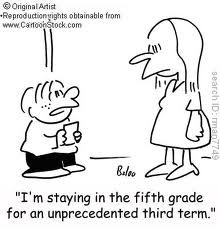
Repeating a Year Doesn’t Work: Report

October 12, 2011

New reasearch suggests that children who repeat a year suffer both academically and socially:

OECD figures released this year found about 8 per cent of Australian students were repeating grades at school, often with the intention of helping them catch up and get better educational outcomes.

But a University of Sydney study of more than 3,000 students in eight different New South Wales schools has found repeating a child could have the opposite effect.

Professor Andrew Martin says the research found the students who repeated did not only suffer academically, but they also struggled in other ways.

“We found that students who repeated a grade tended to be less likely to do their homework, they had more days absent from school, they tended to be a bit lower on the academic engagement and motivation scale, they were lower in academic confidence and they were lower in their general self-esteem,” he told ABC News Online.

“In many cases, it seems what educators and parents were hoping for does not quite happen.

“It seems that simply pressing the pause button does not get at the issues that might have led to the decision to repeat a child.”

Whilst I respect the findings of this study, the trend of promoting students for no other reason than to protect their self-esteem is quite challenging for teachers.  It means that the child is often far behind, is often missing basic skills and therefore cannot understand advanced concepts and sometimes disrupts the other students.  It means that there will be students that can’t read or write properly entering into high school.

How is that beneficial to the child?  How does being set vastly different work to ones classmates make that child feel any less of a failure?

Teachers will generally do anything they can to accelerate the divide between struggling students and the rest of the class.  The last thing they would ever want is for any of their students to suffer emotionally.

At the same time, the current closed mindedness of education experts when it comes to repeating year levels is a concern.  Surely, at some point, the child has a better chance repeating a year than they do being promoted on the back of under developed skills?

I am in no way an advocate for making children repeat year levels.  But I am also mindful that gaps can grow, and the result of a skills divide in the classroom can have a lasting effect on both class and struggling student.

I suppose it just goes to show the importance of good teaching in the early years, alertness in spotting any learning problems or difficulties and a well run and resourced Special Education/Remedial Education department.


It’s Time That Teachers Get Trained Properly

September 28, 2011

It’s just bewildering how unprepared our system seems to be in dealing with students who turn up to school without basic language skill.

When a person fronts up to a doctor with an ailment that came about from unhealthy eating habits and reckless behaviour, the doctor doesn’t throw his/her hands up in the air and tell them that they can’t properly help them because of their inability to look after themselves.

When a plumber gets called to a house to inspect a toilet that has been clogged due to the owners stupidity and laziness the plumber doesn’t refuse to take the job citing that they can’t fix a problem that wouldn’t have existed had the owner stuck to flushing toilet paper only.

There are professionals that are prepared to take on all kinds of cases regardless of the negligence or challenges involved.  And then there’s teachers …

Traditionally, teachers seem to crumble when presented with students who haven’t acquired basic skills at home.  I am glad to hear that our wonderful profession is taking more positive steps in dealing with this problem:

In socially deprived areas more than 50% of children begin school without the ability to speak in long sentences, which experts say can lead to problems in later life. Schools across England are taking part in a day without pens to tackle this speech deficit.

It took the whole class of five and six-year-olds six attempts to reassemble these jumbled words into a coherent sentence: “Past the walked we shops.”

Partly it was the noise in the classroom which made listening difficult.

Partly it was the distracting presence of a man from the BBC with a microphone.

But mostly it was unfamiliarity with the basic rules of English, their first language, which made the exercise so long winded.

The children, from Baguley Hall Primary School in Wythenshawe, south Manchester, are bright and normal children.

But they have had few opportunities to develop conversation skills.

It is a poor area with high unemployment and a large proportion of children living in lone parent households.

 Family discussions do not happen very often.
Of course I am making a generalisation  (and I am not comparing a child with a clogged toilet!). There are plenty of teachers fully equipped at dealing with this issue.  But there are too many that aren’t.
For me this has little to do with effective teaching and more to do with effective teacher training.  Teachers are not fully prepared for the child that doesn’t know how to carry a conversation because practical skills aren’t properly covered in a Teaching degree.
Whilst it would be nice for parents to ensure their children turn up to school with basic language skills this just can’t be relied upon.  Teachers need to be prepared for all types of scenarios.
Unfortunately, they are not prepared at all!

Parents Are Warned About SpongeBob

September 13, 2011

I think I’m in the wrong profession.  Perhaps I should give up teaching and apply for a research grant.  Every day the papers are rife with some obvious or completely warped research intended in making already insecure parents feel even more uneasy about the job they are doing.

Today’s message of fear to parents is a warning to avoid letting their kids watch shows like SpongeBob SquarePants which will bring on terrible (I use that word with the greatest of sarcasm) side-effects:

Researchers say this could be because children mimic the chaotic behaviour of their favourite TV characters, or because the fast-moving and illogical cartoons make them over-excited.

In other words children enjoy the show, they respond to it in an imaginative way and it excites them.  That’s a good thing, right?  Well, apparently not:

Tests showed that four year-olds who watched just a few minutes of the popular television show were less able to solve problems and pay attention afterwards than those who saw a less frenetic programme or simply sat drawing.

As a result, they suggest that parents consider carefully which programmes they allow their offspring to watch, as well as encouraging them to enjoy more sedate and creative activities such as playing board games.

Angeline Lillard from the University of Virginia, who carried out the experiment, said: “Parents should know that children who have just watched SpongeBob Squarepants, or shows like it, might become compromised in their ability to learn and behave with self-control.

“Young children are beginning to learn how to behave as well as how to learn. At school, they have to behave properly, they need to sit at a table and eat properly, they need to be respectful, and all of that requires executive functions.

What is wrong with varying forms of stimulus?  Sure watching too much television isn’t good for a child, but why can’t they combine drawing and board games with other activities that excite them?

Perhaps the problem is that in a bid to get children to follow rigid rules like sitting in classrooms without showing any signs of restlessness or boredom, we are instructed to take away the very pastimes which our children actually respond to?

Prof Lillard suggested: “It is possible that the fast pacing, where characters are constantly in motion from one thing to the next, and extreme fantasy, where the characters do things that make no sense in the real world, may disrupt the child’s ability to concentrate immediately afterward.

“Another possibility is that children identify with unfocused and frenetic characters, and then adopt their characteristics.”

Or perhaps kids just want something with a bit of energy and verve after a day of mat sessions and handwriting practise.  Perhaps the “real world” need to adapt to kids.  Perhaps we should be doing more to capture their attention rather than trying to dull their senses by making them play endless games of Monopoly.

I’ve got an idea for a research project.  The effects of a balanced, nurturing, moderate and non-restictive lifestyle on children.

I’m guessing my reasearch proposal isn’t loopy enough to get funding.

The Educational Implications of the London Riots

August 10, 2011

I couldn’t help but be struck by this excerpt from an article about the London Riots:

“… what I am saying is that for all of those who live and work in the poorer areas of London this disaster has been totally unsurprising. The fact of the matter is that we have manufactured within our society a sub-culture of sociopaths who care nothing for anyone or anything but themselves and are wholly unable to empathise with the suffering of others. The people most responsible for creating this social plague are the very same politicians, journalists and social commentators who are now asking “How did this happen?”

I believe that to a lesser extent the Educational system has bought into the plague too.  So consumed by its bottom line, so obsessed with the meaningless private vs public school debate and so content to take creative children and force them to conform with a robotic set of rules and regulations, that children get lost in the crowd.

I had a discussion with someone recently about the role of schools.  He felt that schools were nothing more than institutions with the responsibility of imparting knowledge.  According to him, as long as the school could point to the lessons that were taught and the curriculum that was followed, their job was done.

I believe schools have a far greater responsibility.  They must do a lot more than concentrate on prime numbers and single-celled organisms.  They must try to ensure that every child has a sense of self and an understanding of how they can use their unique skills and qualities to contribute to society.

It sounds fanciful and “airy fairy” but children today are more obsessed than ever before by wealth, gadgets, appearance and all things materialistic.  They spend so much time trying to outlook and outdo others simply because they are not happy with who they are and what they have.  The question has to be asked, besides close family members, who helps them to understand and appreciate who they are and what they can achieve?

The media is charged with unsettling them and making them fearful.  The advertising industry is charged with making them feel that without products and gadgets they cannot be happy. Where are our kids receiving the positive message they desperately need to hear?

Children often say, “Why should I be good to them if they aren’t to me.”  Those participating in the riots seem to be making that statement.  Whilst it is absolutely no excuse to do what they have done, one has to wonder who does look after the best interests of our children.  Shouldn’t the school system who has our kids throughout their crucial developmental years do more to help them find acceptance in who they are?  Shouldn’t the school system encourage them better to be themselves rather than conform?

There is no excuse for people who riot and willfully and violently break laws, but when reflecting on incidents lessons must be learnt.  Children that are supported and nurtured don’t riot.  Children who are in touch with their unique qualities and have been encouraged and accepted by others don’t riot.

We can go on preparing our students for calculus tests and chemistry assignments, but in a time of need and doubt, our students probably wont turn to calculus or tests tubes for salvation.


Lazy Parents Blamed for Kids Falling Behind at School

June 19, 2011

It is a gross simplification to blame parents for their children’s slow academic development.  Last time I looked, a large part of a child’s day is spent at school.  It is simply unfair to blame parents when the failings of the education system is so apparent.  Blame should be shared between all key stakeholders.

It is also unfair to blame parents as lazy.  Often these same parents that don’t play enough games with their children work multiple jobs and long hours to put their children into good schools.  I play games and practice reading with my daughter every night, but by the time I sit down with her she is exhausted from a long day at school.  If I can’t rely on her school in keeping up their end of the bargain, then even my best efforts may not be enough.

Whilst I do not in any way condone putting a child in front of a television, I believe that the school system should be able to make up any developmental lag as a result of misspent toddler time.  If the school system can’t help overturn a 4-year old’s slow development with 7 hours a day of school instruction, then it says a lot about the failings of our school system.

Neuro-psychologist, Sally Goddard Blythe, disagrees:

LAZY parenting is resulting in children starting school developmentally disadvantaged because they watch too much TV instead of playing and being read to.

A neuro-psychologist in the UK, Sally Goddard Blythe, researched the link between children who missed out on simple childhood activities and those who started school with learning problems.

She found many toddlers were watching 4.5 hours of TV a day instead of playing, and went on to start school with poor emotional development and motor skills.

Dr Marc de Rosnay, an early childhood development expert from the University of Sydney’s school of psychology, said children were put in front of a television screen too often.

“We are living in a world where there are lots of opportunities for a child to be engaged with no one for an extended time,” he said. “There is some decent research that shows that motor skills develop when kids are out and about and experiencing the physical world … as a nation (we now have) more children growing up with low levels of activity.

“There are government recommendations about how much TV kids should be watching, and it’s not much.”

While he stopped short of saying that parents who did not read to their children or interact with them were “neglectful”, Dr de Rosnay said there were developmental consequences for children who missed out on that nurturing.

“It’s fair to say that children who miss out on interacting with their parents, peers and siblings will find themselves at a disadvantage compared with children who have had that interaction,” he said.

But he added that using play to develop a bond and trust between parents and child was more important than teaching a child to read at a young age.

“We live in a world now where children are meant to be numerate and have the first steps of letter recognition before they start kindergarten,” he said. “We used to live in a world where kindergarten was the place that was done.”

Dr de Rosnay said there was no evidence that if a child started school unable to read and write it would affect their long-term learning.

Ms Goddard Blythe found that almost half of all UK five-year-olds who started school only had the motor skills of a baby, including the inability to hold a pencil. The cause, she said, was because parents had not spent enough time playing with their children or letting them play with others.

Ms Goddard-Blythe also argued that when children missed out on being read fairy tales, it impacted on their ability to understand “moral behaviour” and how to deal with emotions.

Instead of putting all the blame on parents, the educational system should get with reality.  They should prepare for the fact that students may not have motor skills that enable them to properly grip a pencil etc.  Instead of complaining that students show a lack of understanding of proper moral behaviour due to a lack of exposure to fairy tales, ensure that fairy tales is part of the early years curriculum.

Anyone that thinks a 5-year old can’t radically improve in motor skills and the ability to make moral choices has never been in a classroom.

Parents should always do their best to help their kids.  But they are not the only stakeholders in the education of our children.

Why Aren’t Kids Held Back Anymore?

February 11, 2011

“It is our policy not to hold kids back unless there are exceptional circumstances.”

This is the standard line that Principals use nowadays when a teacher raises the topic of kids repeating grades.

Why isn’t it school policy?  What is stopping schools from having the courage to recommend it?

EXCUSE 1: “There is a stigma about kids that are forced to repeat a year.”

Well, that stigma is partly generated by an educational system that refuses to think logically about this issue.  When policy makers decide that some students would greatly benefit from redoing the year, they are assisting in breaking that stigma.  When they decide that they would prefer letting thE child flounder in a year level they aren’t equipped for they are helping to maintain the stigma at the cost of progress.

EXCUSE 2: “A child’s confidence could be tarnished by making them repeat.”

Since when is a school content in letting students fail, looking out for their self-esteem?  How is being miles apart from the rest of the class a confidence boost?  On the contrary, a child can get a new lease on life when they repeat a year.  They are given extra time to fill in the gaps and improve their basic skills.

EXCUSE 3:“But the parents would be devastated if we even raised it.  They may even remove the child from the school. “

A school that makes its decisions based on whether or not the parents will remove their child, is deeply compromised and lacks integrity.  The reason why parents may be devastated is because such an occurrence is rare.  The reason why it is rare to recommend that a child repeat a year is because schools don’t do it enough.  You have to break the cycle before such a measure gains wider acceptance.

Ultimately, a school should do what is right for the child, not what is popular or easy.  That is why I congratulate the Indianapolis school system for its brave new policy:

A new statewide third grade reading test will be a new test developed by the same company that produces the ISTEP statewide exams. About a third of third grade students fail the English and language arts ISTEP test each year, but the new exam will be designed with the expectation that all students who can read will pass the test.

“This is so fundamental to a child’s success, I think we absolutely must draw a line in the sand,” said board member Jim Edwards.

Under provisions adopted by the board Tuesday, students who do not pass the test on the first try could attempt the test again during locally-offered summer school, and could move to fourth grade if they pass on that attempt. All students would have to pass the exam to advance unless they qualified for one of the plans’ three exemptions: one for special education students, one for English language learners and one for students that have been retained twice prior to fourth grade.

I realise that repeating a year has implications, and that sometimes the result of doing so will end up being negative.  I simply feel that schools should be caring and supportive enough to do the right thing by the child and help replace stigmas with good decisions.