Posts Tagged ‘Bullying’

New Website Launched Gives Bullied Children Support

March 16, 2012

I embrace anything that will help victims of bullying to overcome, or at least manage their situation:

The Bullying No Way! site was launched today as part of the national day of action against bullying and violence.

It offers facts about bullying for children and their parents and tips on how to deal with it or who to talk to.

The site will also have a choose-your-own-adventure game for students to learn how to deal with bullying and moderated forums where children can discuss their problems with peers.

West Australian education minister Elizabeth Constable said the website would promote strategies to help different jurisdictions and education authorities develop ways to address bullying.

“School communities are working hard to make school environments safer, more supportive and respectful for all young people and adults – places where everyone is free from bullying, harassment, discrimination and violence,” she said.

“The new Bullying No way! website contains the latest information on bullying and violence and is a useful resource to support school communities in this important venture.”

Dr Constable chairs the council of Australian education ministers, which launched the website.

The council will also launch an iPhone app which will let students access instant information about bullying and what to do about it.

The new website is at www.bullyingnoway.gov.au.

Cyberbullying is More Harmful than Traditional Bullying

March 15, 2012

I’ve been of the opinion for quite a while that cyberbullying is the form of bullying that does the most harm and is the hardest to address. By invading the home of the child, cyberbullying takes an environment that was traditionally safe and has ensured that victims of such bullying have nowhere to hide. Cyberbullying also reaches a far wider audience, replacing the half a dozen or so witnesses in a playground incident with literally thousands online.

Children think face-to-face bullying is more harmful than cyber bullying but new research shows that perception to be false.

Researchers from Queensland University of Technology surveyed over 3000 students in Years 6 to 12 from 30 schools nationally and found 45 per cent said they were bullied.

The victims of face-to-face bullying, often referred to as traditional bullying, reported it had harsher impacts than victims of cyber bullying. However, other signs show the opposite to be true.

Lead researcher, Associate Professor Marilyn Campbell, said victims of cyber bullying reported higher levels of anxiety and depression than children who had been bullied face-to-face.

“When we measured their social problems, children who had been cyber bullied had much higher scores than victims of traditional bullying but they didn’t see it themselves,” Campbell told Education Review.

Campbell said children were usually bullied by kids they knew and often because they were different.

“It’s a cycle. They go to school, they get bullied. They go home and get cyber bullied. They go back to school and are bullied again.”

It is absolutely vital that schools stop sitting on their hands and start becoming more proactive when it comes to fighting cyberbullying. Schools are quick to point out that since the bullying is done outside school gates it becomes a parenting issue rather than a school issue. That may be true when it comes to legal obligations but not moral obligations. Schools should be expected to do what they can to ensure that their students are protected from being harassed or bullied by other students, regardless of where the harassment takes place.

Schools have got to stop obsessing about potential lawsuits and handballing issues to other stakeholders. They must show they care and fight for the wellbeing of their students!

The Difficulties of Parenting a Bullied Child

March 2, 2012

It must be so difficult on parents to keep their child’s spirit up when they are getting bullied at school or online. My heart goes out to parents of bullied children. It must take quite an emotional toll.

None more so, than father of bullied teen Catherine Bernard:

A government partnership with Facebook is also on the cards to try and stamp out the scourge after schoolgirl Catherine Bernard took her own life earlier this month.

She died after returning home from her first day of year 12.

The 17-year-old Emmaus College student from Melbourne’s eastern suburbs told her dad Michael the night she died she had been bullied at school, and later on Facebook.

An emotional Mr Bernard this morning thanked Education Minister Martin Dixon for taking the issue seriously.

“He has pledged money to support the cause and if he does what he says then it can only be a good thing,” he said.

“All I wanted is to open people’s eyes and I think that is happening.

“People have to take this issue seriously.

“If we can save just one person then it means Catherine didn’t die in vain.”

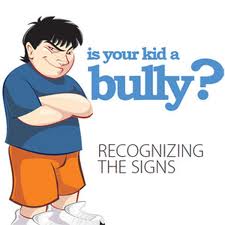
Psychologist Jodie Benveniste has outlined some tips for parents who suspect their child is a bully.

SIGNS TO LOOK FOR
– Aggressive behaviour beyond the usual sibling spats at home.
– Talking aggressively or negatively about others at school.
– Coming home with money or items that don’t belong to them.
– Spending more time on the internet than usual.
– Being hyped up, aggressive or arrogant after time on the internet.

WHAT PARENTS CAN DO
– Model good behaviour. Don’t be aggressive towards your child.
– Teach them appropriate ways to interact with others from a young age.
– Teach them appropriate coping strategies to deal with life’s challenges and disappointments.
– Keep the lines of communication open with your child. Talk to them often.
– Don’t be in denial. Work with your child’s school to address the bullying.

Beating Peer Pressure

February 24, 2012

Is a good sense of humour enough to ward off the threat of peer pressure? Child psychologist Kimberley O’Brien, thinks so:

A child psychologist from Sydney’s Quirky Kid Clinic said people should not trivialise peer pressure by saying it happens to everyone.

“We shouldn’t say it’s normal and it’s fine because it’s not,” Kimberley O’Brien said.

Ms O’Brien said parents need to encourage their children to choose friends they are comfortable with.

“It’s important to teach kids to be assertive. If parents model that behaviour and speak up in the community if they feel something is not right then children learn to do the same.”

The Quirky Kid Clinic advises teenagers to make a quick exit if they are feeling uncomfortable in a situation. They teach young people how to use humour to defuse a potentially risky situation.

“They can just laugh and say I’m not into this and leave,” Ms O’Brien said.

“If they are feeling under pressure, we encourage kids to trust their early warning signs and gut feelings and speak up and ask for help.”

Ashley Long and her friends had been drinking alcohol when the helium party trick turned deadly. The inebriating effects of alcohol can make it increasingly difficult to avoid being pushed into risky behaviour.

“[Teenagers] are much more easily influenced if they have been drinking, even physically if they are stumbling or can’t move properly,” Ms O’Brien said.

“They may have lost their phone or friends so it is more difficult to seek help.”


Would You Notice if Your Child Was a Bully?

February 21, 2012

Psychologist Jodie Benveniste thinks parents are so blinded by the belief that their child is perfect that they are startled when confronted with the possibility that their child has been bullying others:

Psychologist Jodie Benveniste says most parents don’t – until they get a call from their child’s school.

“That’s often the first time you hear about it because you’re not there to observe the behaviour,” she says.

Youth worker and school chaplain Nigel Lane says in his experience parents are usually in “total shock” or “total denial” when they learn their child is a bully.

The experts agree there are tell-tale signs parents can look for, including very aggressive behaviour towards siblings, talking aggressively and negatively about other children and coming home with money or items that don’t belong to them.

Lane, who has written several books and is working on another about how to recognise a bully, says most parents eventually accept there is a problem.

 “Generally I say to parents that the first thing they should do is listen. Listen to the accusation, don’t deny and ignore it,” he says.

“Then do exactly the same with your child. Sit down with your son or daughter and just listen. Ask broad questions, such as, ‘School gave me a ring today to tell me something happened at lunch time, what was it?’ rather than saying, ‘You’re a bully’, which could make them defensive.”

Lane says this “gentle” approach is more likely to bring out the truth or a version close to it.

The bullying stigma has become a massive one. It is essential that we don’t label people as bullies haphazardly. What that does is unnecessarily complicate the issue, while it also puts children who are involved in one-off incidents in the same basket as perpetual offenders.

Parents should be open to the fact that their children acts differently at school than they do at home. Schools must realise that such a disparity often comes as a result of the unnatural array of clicks and the deep social segregation that are a common fixture in many schools.

The reason why parents may be surprised to know that their child is bullying isn’t just due to their lack of objectivity, it’s also due to the ‘dog eat dog’ environment rampant in many schools. Kids are presented with an environment that is often vicious, unrelenting and difficult to navigate through.

This of course doesn’t excuse their behaviour. What it does do, is make schools equal partners with the parents in reforming bullying children.

Huge Setback for the Fight Against Cyberbullying

January 19, 2012

Today is a disappointing day for all Americans (and the vast majority don’t know it). The Supreme Court’s decision not to overturn a previous decision which found in favour of students who harassed and slandered two Principals on the grounds that the school did not have the authority to punish them for deeds committed outside of the school gates.

The court let stand the suspension of a West Virginia high school’s “Queen of Charm,” who created a Web page that suggested another student had a sexually transmitted disease, and invited classmates to comment.

The court also left alone rulings that said schools could not discipline two Pennsylvania students for MySpace parodies of their principals that the students created at home. An appeals court, following 40-year-old case law on student speech, said the posts did not create substantial disruptions at school.

Lawyers on both sides were disappointed that it will be at least another year before the high court wades into the issue. Federal judges have issued a broad range of opinions on the subject.

“We’ve missed an opportunity to really clarify for school districts what their responsibility and authority is,” said Francisco Negron, general counsel of the National School Boards Association. “This is one of those cases where the law is simply lagging behind the times.”

This is a bitter blow for American society. Cyber bullying is a significant problem. It is my opinion that schools should most certainly get involved when its students are bullying each other (irrespective of where they are when they do it). By working with the parents, schools can play a vital role in deterring  bullies from victimising others online.

I am very saddened to read that the Supreme Court is of the opinion that when a child call their Principals names like a “big fag”, “whore”, “hairy sex addict” and “pervert”,  their posts do “not create substantial disruptions at school.” Really? I would have thought it would certainly undermine the authority of the Principal. And should she/he is unable to take any action, it sets an awful message that you can get away with saying anything online.

Is this progress? I think not!

Students Using the First Amendment to Slander Their Principals

January 15, 2012

I am a big believer in free speech. I consider myself very lucky to be in a country where my thoughts and feelings can be expressed freely without recriminations. But like all other laws and freedoms there are boundaries. I might have free speech, but I am also restricted by sensible limitations to what I can say.

When students use social media to call their Principals names like a “big fag”, “whore”, “hairy sex addict” and “pervert”, and the consequence for their actions is nothing more than a suspension, I think they should count themselves very lucky. To then sue on the grounds of freedom of speech and win says a lot about the judicial system and the difficulties educators face in earning basic respect.

A middle school principal in northeastern Pennsylvania was shocked to see his photo online along with a description of him as a “hairy sex addict” and a “pervert” who liked “hitting on students” in his office.

A high school principal north of Pittsburgh saw a MySpace profile of himself that called him a “big fag,” a “whore” and a drug user. And in West Virginia, a school principal found out that a girl had created an online site to maliciously mock another girl as a “slut” with herpes.

All three students were suspended from school and filed suits against the principal and the school districts. They argued the 1st Amendment protected them from being punished for postings from their home computers. And in the two Pennsylvania cases, they won.

Whilst these awful slurs may technically be classified as “free speech”, verbal bullying of any kind can also be defended under the guise of free speech. Is this what we want? People supported by the courts to demoralise, slur and denigrate others? How are principals supposed to tackle bullying when they can’t even deal with bullies who are attacking them?

The exploitation of free speech will see bullying, especially cyber bullying, continue to gain momentum. These students should never have been suspended. They should have been expelled!

It’s Time to Change the Culture of the Classroom

January 5, 2012

I have a confession to make. As driven as I am to help my students master the curriculum, there is something more important to me than their academic achievement. I would not be even remotely satisfied if my students were at or above the national standard in numeracy and literacy if they also happened to be bullying, bullied or struggling to cope with everyday life. Conversely, if my students were below national standards but were functioning well and getting along with each other, I would be far more satisfied.

That’s not to say that I don’t understand that a vital function of my job is to educate. I know that all too well. It’s just that I wont let that distract me from my mission in setting up a classroom that is caring, friendly and allows each child to express themselves in their own unique way.

I am sick and tired of reading about how bullying is causing kids as young as 7 to diet. It infuriates me that so little is done by teachers to protect young kids from this stigma and prevent bullies from causing distress. I know what I am claiming will be seen as a gross generalisation, but how many teachers are prepared to overlook a hurtful comment about weight or ignore the activity by the “in-crowd?”

No classroom should have an “in-crowd”. In-groups cannot exist without a readily defined “out-group”. It is a teacher’s job to foster a classroom environment without such divisions. It is more important than any equation or scientific experiment.

Education New Years Resolutions 2012

January 3, 2012

Below are some New Years resolutions I suggest the Education sector should take on for 2012:

1. Schools Should Become More Involved With Cyber Bullying –  At present schools have been able to turn a blind-eye to cyberbullying.  As the offence occurs out of school hours, schools have been only too happy to handball the problem to the parents of the bully. Whilst I believe that parents are ultimately responsible for the actions of their children, I ask that schools do more to help deal with this ongoing problem.

The reason why I feel schools should involve themselves more actively with this issue is that most cyber bullying cases result from pre-existing schoolyard bullying.  Having started in the playground and classroom, the bullying then gets transferred online. Whilst the school isn’t liable for what goes on after school, the problem is often a result of what started during school hours.

To me, the best schools are the ones that work with the parents in a partnership for the wellbeing of their students.  For a school to excel it needs to show that it cares about its students beyond its working hours. That is why a teacher or staff member that is aware of cyberbullying must be able to do more than discuss the issue with the class.  They must be able to contact parents, impose sanctions and actively change the situation at hand.

2. Governments Should Stop Pretending and Start Doing – Every time the curriculum changes I think of the movie Groundhog Day. I’ve only been a teacher for a short time, yet already I have seen the curriculum change 3 times. First it was the CSF, then it became the CSF 2, followed soon after by VELS. And the curriculum is about to change yet again!

Why do they do it to us? Just when you get used to one curriculum, they change it from another.

In my view, the Government is bereft of ideas and would rather pretend to be do something than actually making the tough decisions. They know that education outcomes are underwhelming, that there isn’t much satisfaction in the quality of schools and performance indicators are not painting a rosy picture. Yet, they don’t have a clue what to do about it. They neither have the money, vision or gumption to make any real change, so they go for the obvious alternative – perceived change.

When asked to reflect on their achievements in Education, the Government will proudly point to overhauling the curriculum. In Australia’s case, they will triumphantly declare that by introducing a national curriculum, they have been able to do what previous administrations couldn’t.

But they will know the truth all along – you can’t change the fortunes of a countries academic performance by altering and renaming a curriculum. In fact, from my experience you can’t expect any change at all.

3. Schools Should Fight Problems Instead of Investing in Worthless Programs – Every week a new program is being established for schools throughout the world. If it’s not Sex-Ed it’s suicide prevention, bullying, cyber bullying, cyber safety, hygiene, traffic safety, Stranger Danger etc.  Whilst all these initiatives have good intentions and are worthy causes (with perhaps the exception of Stranger Danger), it causes a great strain on teachers already struggling with time constraints.  The more programs undertaken by schools the harder it is to cover the curriculum.

If schools have a bullying problem in particular, they ought to be doing a lot more than relying on their flimsy anti-bullying programs. Schools have got to ramp up their responses. Programs, procedures and policies is not enough. They will not work and never have. Appealing to kids to improve their communications wont work either.

4. It’s Time To Stop Blaming Teachers For Everything – Education is supposed to be a team effort.  All parts of the system are supposed to work with each other and for each other.  Yet, it always seems to be that the teachers get singled out for blame.  Poor testing results – blame the teachers, a bullying problem – blame the teachers, lack of classroom control – yep, let’s blame the teachers for that too.

The question has to be asked: At what point do we focus our attention on the administrators when handing out the blame? It seems to me that whilst there is always going to be poor teachers in the system, nowhere near enough focus is directed to policy makers as well as those in management positions and on school counsels.

5. Stop Banning Innocent Things and Let Kids Enjoy School – From banning hugging, ball sports and cartwheeling to making play equipment devoid of anything to climb or swing from, kids are becoming even more restricted at school. What measures like these do, is transform schools which are already unnatural places for children and make them even more dreary and dictatorial.

What’s next – banning students from complimenting each other?
It’s about time we started matching school bans on children by imposing bans on schools.  I would love to ban schools from implementing rules inspired by political correctness gone wrong!


Cyber Bullying is Getting Out of Control

January 1, 2012

Cases of cyber bullying are exploding and schools need to wake up about it. Anti-bullying programs are not sufficient. Schools must treat bullying via internet chat and social media sites as every bit as important as bullying in the playground.

Experts say 10 per cent of all children now claim to have been cyber-bullied, The Daily Telegraph reported.

The enraged father of one teenage schoolgirl became so incensed by comments he believed a boy had made about his daughter on a social networking site that he accosted him in the street and threatened to “slit his throat”.

The man approached the Year 8 boy as he walked to a bus stop on the state’s mid-north coast and pushed and threatened him before boarding the bus, where he issued further death threats to the boy and other students.

In another disturbing case, a mum went to a school in western NSW and urged her Year 10 daughter to assault another girl after an exchange on a social networking site.

Both girls were suspended, police were called and the mum was banned from entering the school under the Inclosed Lands Act.

In the Tuggerah Lakes area on the NSW central coast, comments on a social networking site led to a Year 8 female being assaulted by another Year 8 girl.

One of the students, who sustained swelling to her forehead and complained of feeling dizzy and nauseous, was taken to hospital. The other girl injured her hand.

Schools increasingly are asking police to investigate serious student online bullying and have shored up cyber safety programs in a bid to head off more trouble.

The reason why parents get involved (and in some cases overly involved) is simple. When schools refuse to act citing that the offense was made outside of school grounds it limits any possible consequence for the bully. To prove my point, I refer you to the following pathetic quote from this very article.

The Department of Education said Facebook could not be accessed on school computers.

What it really means is cyber bullying happens at home and needs to be sorted out exclusively at home.

This is simply a lazy and unworkable approach. The only way to tackle bullying successfully is with full school involvement.

It must be so hard for the cyber bullying victims parents. Sometimes it must feel like there’s no one to turn to and nobody who will listen. This must stop!