Posts Tagged ‘Body Image’

The Bid to Make Barbie Bald

January 13, 2012

I am not a big fan of Barbie. However, I think the initiative to get Mattel to include a cancer suffering “Bald Barbie” has plenty of merit:

Most kids in America recognize Barbie immediately.

She’s tall, she’s thin, and she’s…bald?

Rebecca Sypin is one of the people behind this Facebook campaign urging Mattel to create a bald Barbie, one she says children battling cancer and other diseases that cause hair loss can relate to.

“When you go to the supermarket, sometimes you have little kids who’ve never seen it before, staring, and I think it would make it much more mainstream and more normal for kids to see that,” said Sypin.

Sypin knows about children and cancer all too well. Her daughter, Kin Inich, is battling leukemia.

“Everybody else has hair, even a boy has hair and you don’t. So it would make you feel like you’re Barbie, you would be the glamorous girl with the big lifestyle and everything now,” said Kin.

The Beautiful and Bald Barbie Facebook page has been up and running for less than a month, and already has more than 65,000 friends.

But despite that support, Sypin says the bald Barbie idea has gotten a cool reception from Mattel, saying that the company has told her they do not take unsolicited Barbie doll suggestions from outside sources.

A bald Barbie may still be a possibility though. Mattel released a written statement Thursday saying the company is honored that so many people are looking to Barbie as the face of such an important cause.

“We receive hundreds of passionate requests for various dolls to be added to our collection,” the statement reads. “We take all of them seriously and are constantly exploring new and different dolls to be added to our line.”

Let’s face it. The reason that Mattel seem less than enthusiastic about the idea, is that it would almost certainly make a loss. That, and the fact that the Barbie name is synonymous with looks and dimensions that lack realism and are deliberately out of proportion. A doll that humanises the Barbie name and presents her as flawed and vulnerable is not what they are setting out to do.

I will be watching closely to see whether or not Mattel has the conviction to bypass profits for this extremely noteworthy cause. If they don’t, it will only serve to reaffirm my current dislike of the product.

It’s Time to Change the Culture of the Classroom

January 5, 2012

I have a confession to make. As driven as I am to help my students master the curriculum, there is something more important to me than their academic achievement. I would not be even remotely satisfied if my students were at or above the national standard in numeracy and literacy if they also happened to be bullying, bullied or struggling to cope with everyday life. Conversely, if my students were below national standards but were functioning well and getting along with each other, I would be far more satisfied.

That’s not to say that I don’t understand that a vital function of my job is to educate. I know that all too well. It’s just that I wont let that distract me from my mission in setting up a classroom that is caring, friendly and allows each child to express themselves in their own unique way.

I am sick and tired of reading about how bullying is causing kids as young as 7 to diet. It infuriates me that so little is done by teachers to protect young kids from this stigma and prevent bullies from causing distress. I know what I am claiming will be seen as a gross generalisation, but how many teachers are prepared to overlook a hurtful comment about weight or ignore the activity by the “in-crowd?”

No classroom should have an “in-crowd”. In-groups cannot exist without a readily defined “out-group”. It is a teacher’s job to foster a classroom environment without such divisions. It is more important than any equation or scientific experiment.

We Are Looking at the Anorexia Generation

December 30, 2011

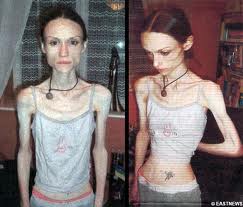
I thought we had enough awareness of anorexia and such diseases long ago to have made inroads in the prevention of this debilitating and tragic condition. It seems unacceptable that rates of anorexia in children have risen. I think that it is partially due to the perception that if you look a certain way you feel a certain way. Weight must only ever be seen to be an issue of health when it comes to children. It saddens me that children who have diverse skills and talents feel worthless because they don’t match up to the often unattainable physical attributes flaunted by the media.

KIDS should not have a care in the world – particularly about how skinny they look. But a shocking report yesterday revealed hundreds of children are being treated in hospitals for anorexia every year.

Two six-year-olds and four seven-year-olds were referred for life-saving care in one area alone. Horrifyingly, one child who got help was just three.

Health bosses yesterday warned the problem was the tip of the iceberg and only one in five young sufferers are having treatment. They also highlighted the growing pressures on children to be skinny, particularly from the celebrities they idolise.

Child psychiatrist Dr Malcolm Bourne said: “I estimate we only deal with 20% of the children who suffer from eating disorders. Long term eating disorders have the worst death rates in child mental health.

“Around 5% die from them eventually, people can be very resistant to treatment. There is no straight forward fix.”

Dr Dasha Nicholls, an adolescent expert, added: “For a minority of children it may be the start of a severe and enduring illness, with death rates comparable to some forms of leukaemia.”

The report yesterday showed 125 children under 18 were treated for anorexia or bulimia by the East Lancashire Child and Adolescent Service since 2007. The majority of those – 109 – were aged 12 to 16.

But many were under 10 including the three-year-old, who was helped earlier this year. Overall, 102 girls and 23 boys were treated by the service.

Childhood Eating Disorders on the Rise

November 8, 2011

I was hoping that since there hasn’t been a great deal of coverage about childhood eating disorders recently, that the numbers suffering this serious disease had dwindled.

It turns out that I was mistaken:

Doctors at the Westmead Children’s Hospital in NSW have told the ABC that child admissions for eating disorders, particularly anorexia, have tripled in the past decade.

Children as young as eight are being admitted, some of whose lives are at risk.

Like other articles on childhood anorexia, fingers are pointed to the media when it comes to metering out the blame:

The head of the hospital’s adolescent medicine department, Susan Towns, suspects the media is to blame.

“Media portrayal can affect the development of body image in young people and this can happen at a stage and an age where children and adolescents aren’t able to conceptualise things in a complex and abstract way and they can take these messages in a very concrete way,” she said.

Whilst I don’t like blaming the media for everything.  I couldn’t help but reflect on the damning study conducted in Fiji, where they found that within three years of introducing television cases of eating disorders among children rose significantly.

The Harvard Medical School visited Fiji to evaluate the effect of the introduction of television on body satisfaction and disordered eating in adolescent girls.

In 1995, television arrived and within three years the percentage of girls demonstrating body dissatisfaction rose from 12.7 per cent to 29.2 per cent.

Dieting among teenagers who watched TV increased dramatically to two in every three girls and the rate of self-induced vomiting leapt from zero to 11.3 per cent.


Sparing Young Children the Affliction of Body Image

July 31, 2011

A mother not associated with my school told me of her concerns regarding her 3-year old child.  The 3-year old is much shorter than others in her age bracket and the comments about her childs’ height have started to make the child self-conscious.  The mother is worried that the stigma of being much shorter than her peers may deeply erode the child’s self-confidence.  Doctor’s have recommended starting the child on growth hormones to alleviate some of the height discrepancy.  The mother is extremely dedicated and loving, and refuses to take that option as she doesn’t see it in the best interests of her child.

This example highlights a problem that keeps getting bigger and more difficult to deal with.  Why are young children more self-conscious about their body now than ever before?  What are we doing about it?

It seems as if the problem is getting worse and we are becoming less able to respond to it.

Pre-teens have never been so obsessed with their looks and so insecure about their imperfections. I read an article that points to a recent study in the UK where almost 600 children below the age of 13 have been treated in hospital for eating disorders in the past three years.

Many point to the advertising industry.  They blame magazine covers and their gaunt models for creating an unrealistic perception of the average body size and type.

But isn’t advertising just a mirror of our own hopes and dreams?  If they put more meat on Barbie’s unhealthily skinny body, wouldn’t sales be adversely affected?

What bothers me is that parents face an uphill battle with empowering their children to be content with their own looks.  No matter how much time and energy they put into trying to make their children feel secure and attractive, peers and others in society tend to tear them down.

Has the problem gone too far to remedy?  Is blaming the advertisers and media really worth the trouble?  How much power do parents have in helping their children overcome societies unhealthy and unrealistic obsession with body image and beauty?

Asperger’s Teacher Must Be Penalised for His Comments

April 1, 2011

I don’t know enough about Asperger’s Syndrome to be considered an expert on the condition.  Regardless, I am sure of this – a teacher who has a reputation for saying demeaning and insulting things to his/her students with some level of frequency needs to find another profession whether they have Asperger’s Syndrome or not.

I am a deep critic of the general lack of understanding and support given to students with autism and other related conditions, so I want to make it clear that I am not insensitive to the difficulties that such a condition poses on a person’s social skills.

Having said that, it is my belief that Robert Wollkind, if indeed it is proven that he did do what is alleged, needs to be fired for his behaviour:

A Connecticut high school teacher faces the loss of his job after asking a student, who is overweight, if he had eaten his homework. According to the Hartford Courant, officials in the Brookfield school district want to fire Robert Wollkind who, they say, has made a ‘string of inappropriate remarks over his 32-year career.’ Wollkind, a math teacher at Brookfield High School, was diagnosed in 2002 with Asperger’s Syndrome, an autism spectrum disorder in which individuals have normal or above intelligence but struggle with social, communicative and sensory skills. Wollkind has been on administrative leave since the November 2010 incident.

Lawyers representing the school district says that Wollkind has ‘used abusive language to others, including telling one student that he hated him.’ According to the News-Times:

The student, identified as “Student 21,” had been previously teased by peers about his weight, said the school district’s attorney Patrick McHale.

Wollkind’s personnel file also contains reported incidents of him screaming at a student, grabbing a student, and using “abusive and foul language” with students.

Wollkind counters that ‘many of those incidents have been described inaccurately.’

The fact that more than 1,000 Brookfield parents and students have signed a petition supporting him suggests he has some fine qualities as a teacher and that the parents of Brookfield are very understanding.

My issue is with his behaviour.  Teachers have an important role to fulfill that goes beyond the teaching of skills and knowledge.  They are there to build up the confidence of their students, empower them to take responsible risks and help them to realise their full potential.

Comments that hurt and strike at a child’s self-esteem do not belong in a teacher’s repertoire.  It hurts enough in the schoolyard by peers, but to get teased by your teacher is simply not acceptable and potentially destructive to the child.

Whilst I can understand that Mr. Wollkind’s jibe’s were a product of Asperger’s Syndrome, and I am deeply sympathetic to it’s likely influence over his actions, I am not sure I would want him teaching my child.


Our Children Must be Taught About Society’s Lie

March 18, 2011

It’s time to correct the mistakes of my generation by ensuring that our children aren’t given the same misleading message.  For too long society has fed our young a big, destructive lie.  For too long that lie has been allowed to take over our lives, muddy our relationships and bring out the worst in people.

It’s time to revisit the following question and change the answer:

What is success?

  • Success in Not Dependant on Money – For too long we have been programmed to look at wealthy people as successful.  This is simply unfair.  No matter how you structure a democratic society, there will always be a very small percentage of wealthy people.  Are we saying that only 5% of our population are going to be successful?  Surely success is something obtainable to a broader group of people?  We have seen how easily wealthy people lose their wealth.  We have also seen how dishonestly some wealthy people obtain their wealth.  Is this the trademark of success?  Surely not.  We must tell our young that a wealthy person is someone who can feed and clothe their family.  Not someone with cars they don’t drive and a holiday home only lived in for a few weeks during the summer.


  • Success is Not Dependant on Appearance – This one really upsets me.  It is a sentiment which allows the advertising agency to take control of our self-esteem, flog us products that don’t work and make perfectly “normal” and healthy people feel ugly.  By setting up a model of beauty that is impossible for 95% of society to ever achieve is tragic!  The current model of how we should look goes against the natural aging and metabolic process of the body.  It says that if you have wrinkles, freckles, dimples, big ears, a bent nose, cellulite, small breast or a certain complexion you are not beautiful.  Gone are the days where we can even say “Beauty is in the Eyes of the Beholder”, because this model of beauty has infiltrated and brainwashed the beholder.  Is it alright to look your best?  Sure.  Is it beneficial to look after yourself? Absolutely!  But an obsession with looks, like every other obsession is destructive.  Even those that are blessed with such looks soon find out that it doesn’t last forever, and when it goes, they often haven’t developed other parts to their character to fall back on.  I personally, don’t believe in forcing the media and advertisers to change their policy.  I believe in advocating a change of perspective starting from parents and supported by teachers.  We must redefine beauty and then show our children that our appearance has nothing at all to do with success.


  • Success is Not Dependant on a Title – Not everyone can win an Oscar or become a President, and nor should they to feel successful.  For too long society has peddled the belief that doctors and lawyers are successful while taxi drivers and house painters are not.  A taxi cab driver might not sound like a successful profession on face value.  But that same taxi driver has a crucial role to play.  They help the disabled and the aged, are crucial in keeping intoxicated people off the roads and protect vulnerable people from walking the streets and taking the trains late at night.  A house painter may seem like an ordinary profession, but have you ever looked at the difference a bright, well-painted room makes to a persons mood and outlook?  All jobs have a critical role to play in making life more enjoyable regardless of the pay involved.  We must tell our children and students that it’s not what you do that determines your success it’s how you do it.

So what is the measure of success?  If it has nothing to do with a person’s level of wealth, appearance or job description, what does success look like?  I prescribe to the following checklist:

Are you a good person?  Do you treat others with respect and show empathy and concern? Do you avoid speaking disparagingly about others (particularly behind people s backs)?  Do you refrain from spreading rumours about others?

Are you patient?  Do you allow others to have different views and opinions?

Do you follow the law? Are you truthful?  Are you fair in business?

Are you a good parent? Do you put your children first?  Do you spend enough time with them and take an interest in their passions?

Are you a good husband/wife/partner?  Do you accept your spouse for who they are?  Do you avoid putting down or heaping guilty on your partner?

My checklist isn’t dependant on characteristics that are only obtainable by a miniscule proportion of society.  Instead it reinforces my belief that all of society can be successful regardless of background or job description.  That’s why I think that an educator has an even more important job than simply covering the curriculum.  We get the chance to instill in our students a sense of self, what they can achieve, and how they can use their unique qualities and skills to positively affect the world.

I usually don’t impart my personal beliefs on my students.  I believe that teachers should allow their students the opportunity to form their own beliefs.  But on this subject, I gladly make an exception.

I will not hear it that only some of my students can achieve success. While I have them, I will continue to fight for their right to a self-esteem, an opportunity to claim “real success” and a an awareness of society’s lie about what success is.


Fighting for Our Kids’ Self-Esteem

March 4, 2011

There’s a reason why kids are suffering from body image related problems in greater numbers than ever before.  We let them.  Society has a responsibility to ensure that the same dreadful affliction that has had diabolical effects on our generation, doesn’t torment the next.  We have made the mistake of valuing people for all the wrong reasons, putting too high a price on weight, shade and form and too little emphasis on character, personality and integrity.  We place celebrities on pedestal so high, we barely notice that we don’t know anything about them.

Our young notice our insecurities and base a world view on them.  They see the pressures their parents feel about appearance and weight and base their own self-worth on precisely these factors.  Before you know it, you’ve got kids as young as five with eating disorders:

Children are suffering from eating disorders at younger and younger ages according to disturbing new research.

Media consumption, peer pressure and negative messages from parents are all contributing to the problem of poor self-image in children, which can trigger eating disorders such as anorexia, bulimia and binge eating. According to the Eating Disorder Resource Centre of Ireland, children as young as five are displaying signs of poor body image – and some seven and eight year olds have developed eating disorders.

Experts are stressing that such disorders are not confined to girls, with little boys also being susceptible. Psychologist and author Deirdre Ryan told TheJournal.ie that parents can unthinkingly pass on negative messages to their children: “I was speaking with a six-year-old boy who said that he wanted to lose weight – when I asked him why he said: ‘I have a wedding coming up’. That message was more than likely passed on by a parent,” she said, “Parents have to be aware of what they are saying, even in front of boys, and not engage in ‘fat talk’. Children of this age are hypersensitive.”

Parents need to be more aware of their relationship with their own bodies as well, Ryan said: “It is starting younger and younger – but it is also affecting people who are older – spreading across the life span. Now, there is an expectation that even if you’re in your 60s you should conform to a certain image. It’s very damaging.”

Our generation has already let ourselves down by buying in to the media driven lie about what a person should aspire to be like.  We have been fooled into believing that life is about striving to beat aging, keeping a toned figure and withstanding lines and wrinkles.  The beauty industry has made a bundle out of us, and all we are left with in return is confusion, pressure, anxiety and in many cases a battered self-image.  Is this what we want for our children?

It’s great to invest in one’s health and appearance, but it is important that these things don’t take over.  Our children need to see that we place more value in perfecting our character than our figure.  That we consider integrity, honesty, empathy and loyalty on a higher level than six packs or breast size.

As a teacher, there is only so much I can do.  As a parent, I have a big job ahead of me.