Are We Setting Up Our Children?

June 10, 2011

I personally don’t agree with closing down establishments that offer facials to kids under 13, as I feel that while it may be in poor taste, it is hardly outrageous.

What I do believe is that there far too much focus put on appearance. We are setting up our kids for failure if we continue to peddle the lie that:

a. You are happy if you look a certain way

b. You are ugly if you don’t look a certain way

c. That appearance is more important than character and integrity.

Still, as long as we allow our kids to stop acting their age and instead obsess about their appearance, cases like this will emerge:

Do children need a facial?

That question is actually being considered by some parents in Britain, where a salon that caters exclusively to children recently opened.

The salon, which opened earlier this week in the county of Essex, Britain’s answer to Jersey Shore, offers services such as manicures, pedicures, facials and hair styling to children under 13. The salon, called Trendy Monkeys also offers “princess parties” for groups of children, which comes with pink limousine service to and from the salon.

News of the salon has created an uproar in Britain, where child psychologists and advocates say that type of business promotes the sexualization of young girls and robs them of their childhood.

Owner Michelle Devine has defended her business, saying that daughters want to be like their mothers and that she is simply offering a service that many want.

“This shop will be specifically aimed at children and will cater to their need to feel good about themselves and take pride in their appearance in a fun-filled environment,” Ms. Devine told The Independent.

Critics disagree. A child protection consultant named Shy Keenan told the Daily Mail, “This is outrageous – it is giving children a complex about the way they look from the age of one.”

She might be onto something. Cosmetics companies and beauty businesses looking to widen their customer base have been increasingly courting the I-still-have-baby-teeth group in recent years.

A 2008 New York Times article detailed how a growing number of salons aimed at children as young as five were popping up, while retail giant Walmart came under fire earlier this year after news emerged it planned to sell anti-aging skin care products aimed at children 8 to 12, according to CBS local news in Pittsburgh.

While many parents may see nothing wrong with letting their child play dress-up or try on lipstick at home, a growing number of critics argue that marketing salon services and cosmetics to children is just plain wrong.

Whether that has any impact on business is another story. The business’ Facebook page (where, incidentally, photos of children who have visited the salon are accessible to anyone with an Internet connection) posted a message on Thursday expressing thanks for all of the attention it has received, apparently in belief that any publicity is good publicity.

You hear adults defend this practice by saying, “I spend a great deal of time focussing on my appearance, it’s natural.”

My response is, “How is that working for you?”

Do we want our kids to be spending inordinate amounts of time at salons, in front of the mirror and on the scales?  Do we want their appearance to guide their self-worth?  Do we want them to spend more time working out what to wear than how they can help others?

Is it not possible that we are setting up our children to take on the mindless anxieties that have so deeply tarnished our self-worth and affected our capacity to feel good about who we are and what we have achieved?


How Can Handcuffing Students Ever Be Legal?

June 9, 2011

In Australia, if a school Prinicipal was seen to be authorising the handcuffing of students to polls, all hell would break loose!  The Principal would be sacked immediately, and the school would be faced with closure.  In America, it seems that it’s more complicated than that.

A recent school alleged to have shackled its students for hours at a time needs to have been proven contravene a rule that allows handcuffing of kids in certain instances, before legal action  can be imposed.

US civil rights activists have filed a lawsuit against a school they claim shackled children to railings and poles to punish misbehaviour.

Five pupils at Capital City Alternative School in Jackson, Mississippi, claim staff there handcuffed by their wrists, and sometimes the ankles too, for up to six hours at a time.

Some say they were forced to eat lunch while handcuffed, and had to shout to be released to use the bathroom, sometimes unsuccessfully.

They allege school principals often ordered the shackling, WLBT reported.

The Southern Poverty Law Centre filed a lawsuit naming Jackson Public Schools and Capital City Alternative School officials and seeking class-action status on behalf of all the school’s students.

The complaint says the alleged punishments violate the US Constitution and school board policy.

The centre’s director, attorney Jody Evans, said that the policy states students can only be handcuffed if they present a danger to themselves or others, or if they are destroying property.

‘In these instances, none of these occurred. Students were simply (saying) I forgot my belt today, have the wrong shoes on. They were handcuffed,’ he said, according to WLBT.

Critics of the Capital City Alternative School in Jackson say the allegedly excessive punishment makes students more likely to drop out of school – and commit crimes later in life.

The school admits pupils in grades 4-12 who have been suspended or expelled from Jackson Public Schools for 10 days or longer.

School district officials said the agency takes the allegations seriously and will respond through legal channels.

It deeply upsets me that schools should ever have the authority to handcuff students.  That’s the job of the police.  Misissippi needs to change their education policy quickly.  It is not acceptable for this practice to be allowed in any form.

Parents Overdosing Their Kids on Paracetamol

June 7, 2011

It’s crucial for preserving the health of your child’s liver that you take care when administering painkillers with paracetamol:

Regulators are updating the information displayed on the labels of the medicines in order to make them clearer and better tailored to babies and young children.

The new guidance follows research published last month that showed one in four young patients is given too much of the pain reliever, putting them at risk of liver damage.

The study also found that parents often give their children Calpol or similar medicines containing paracetamol at home before going to the GP who then prescribes yet another painkiller.

At the moment, there is one age band for those aged six to 12 years-old, but this will now be split into three bands.

The guidance currently says children aged six to 12 should have 5ml to 10ml of medicine, up to four times in 24 hours.

Breakfast Club a Huge Hit!

June 7, 2011

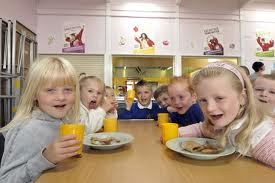
Breakfast is such a crucial meal.  I am a big supporter of the Breakfast Club program, and am delighted to here it is working well.

YEARS of public campaigns to persuade children to eat breakfast are paying off, with the number of children consuming a morning meal rising in the past decade. A national study by the University of Sydney has found primary and secondary school students are more likely to eat breakfast. Thousands of schoolchildren from years 2 to 12 were surveyed in 2000 and 2006. A follow-up study is planned for next year.

Researchers found high school students in particular were now more likely to eat breakfast.

University of Sydney nutritionist Jennifer O’Dea credited public campaigns and school ”breakfast clubs” for the improvement.

”It’s such a simple thing but it feeds the child’s brain, it improves their behaviour and reduces their risk of overweight and obesity,” she said.

The number of high school boys missing breakfast fell from 19.9 per cent to 12.1 per cent and the number of high school girls fell from 27.7 per cent to 18.7 per cent.

In primary school, the number of boys who did not eat breakfast fell from 9.4 per cent to 6 per cent, while the number of girls fell from 9.6 per cent to 6 per cent.

Dr O’Dea expects to see greater improvements when surveys are conducted again next year.

The nutritional quality of breakfast affects a child’s concentration and learning ability, Dr O’Dea found in separate research in 2008.

Congratulations to all schools that have invested their time and energy into Breakfast Club.  May it continue to assist students in desperate need of a nutritious meal.

Classroom Free Schools

June 7, 2011

Why is it that just about every idea for improving teaching and learning borders on the extreme?  The idea of removing classroom walls from the classroom, and having up to 200 students occupy the same learning space is pure madness.  The school will tell you it’s working well and that kids aren’t distracted (would they tell you it was a failed experiment, and that the students have suffered because of it?)  How can a school that can afford proper classrooms think for a second that having a’ battery chicken’ approach to education is ideal?

I must be crazy, because they swear it is working:

THE blackboard has already gone from most NSW classrooms. Now, the head of a big school system is determined that the classroom itself joins it in the scrapbook of history.  ”It’s dead,” said Greg Whitby, the executive director of 78 schools in the Catholic diocese of Parramatta, which 42,000 students attend.  He is not alone.

The Sydney diocese has embarked on the same path for primary schools. Forty of the 112 primary schools already use large-form learning areas instead of classrooms and the diocese is keen to expand their use.  

Mr Whitby hopes to close the last classroom within five years, part of a transition to ”agile learning areas”, open-plan rooms where much larger groups – sometimes even the whole school – learn under one roof.

”Everyone thinks we’ve got a barn with 200 ferals running around and teachers screaming,” Mr Whitby said. But what the Herald saw – and heard – last week at St Monica’s Primary at North Parramatta was a mega classroom in which 197 students worked in different-sized groups at a range of tasks at the same time, seemingly without disturbing each other.

In one moment kindergarten children were learning to read and follow a recipe in the kitchen; a dozen children were working on laptops; 30 were watching video trailers they had produced; others were dressing for a play and many were at round tables on a variety of tasks.

Noisy? Certainly it is noisier than a traditional classroom but the children did not appear to be distracted. Mr Whitby and the teachers say discipline has improved since the school changed shape, assisted by funds from the Building the Education Revolution scheme.

The assistant principal, Mary-Jo Mason, said there were fewer behaviour problems: ”You really don’t have children off task.”

Mr Whitby attended a very different St Monica’s in the 1950s. ”It was in the mechanistic age when it was all about control and order with the assumption that the teacher knew everything,” he said. Teachers not only controlled students, they were also kept in strict control.

”We’ve micro-managed teachers’ work for too long. As soon as you take that control off, the creativity comes and they’re really focused on how they can do the job better,” Mr Whitby said.

Teacher-student ratios are unchanged and Ms Mason said better use could be made of auxiliary staff such as librarians and learning support workers. She believed students received more individual attention.

The transition to increasingly big learning areas covers the system from kindergarten to year 12 and is well advanced, despite resistance from parents, some of whom have voted with their feet.

”Parents have got to get used to the idea, because they all had their own teacher, 30 kids and a blackboard out the front,” said one father, Jason Jones.

Peta Capello attended a parents’ forum which ventilated frustration with the new order. ”In the real world when you go to work, are you in a small, closed room with rows of desks?” she asked. ”It can get noisy and you can have an annoying person near you and you have to learn to deal with it. That’s the real world.”

Classrooms with 25 kids get noisy.  You add another 170 odd students and you’re asking for trouble.  How does this meet the needs of easily distracted, anxious and special needs students?  Is there any teacher out there that would volunteer to teach in this sort of arrangement?  I credit the diocese for trying something new, and I hope it continues to work for them, but I wonder why they needed to reach for such an extreme change.

Balance and common sense is missing from education group think.  When the novelty of this program fades and the 200 kids start acting like … kids, the schools that take this idea up will be left wondering what to do next.

My tip:  Make sure your idea is sensible, well planned, balanced and puts the interests of the students first.

Newsflash: Bullying Was Around Before Facebook

June 5, 2011

I’ve maintained frequently on this blog that cyber bullying is a major concern.  The rise of social networking sites like Facebook has meant that bullying is more rampant and invasive now than it’s ever been. But let’s not forget that cyber bullying is a manifestation of conventional bullying – and that cannot be blamed on Facebook.

That’s why I find then following article troubling:

CHILDREN as young as eight are being treated for anxiety problems triggered by social-networking sites.

Psychologists say modern technology is producing a growing number of children needing therapy to deal with distress arising from posts on Facebook and other sites.

Darryl Cross, a clinical psychologist from Crossways Consulting, said anxiety caused by technology was a growing concern.

“Modern-day technologies and social-networking sites are contributing significantly to child and adolescent anxiety,” he said.

“It is an international phenomenon.”

Although anxiety was an established disorder, more modern triggers were lead to more distressed teenagers, Dr Cross said.

“But also, it’s the ability to be in contact 24/7.”

“In previous generations, you had the telephone and if you were lucky, mum and dad let you make a call after you got home from school. But now, primary school children, not to mention adolescents, have mobiles, which means they are constantly in touch via text messages and Facebook.”

Dr Cross said children used networking sites to determine their identity and form a view of what society thought of them.

Clinical psychologist at The Children’s Psychology Clinic, Dr Elizabeth Seeley-Wait, said she was seeing kids suffering anxiety about “being out of touch or out of the loop” if they had their mobile phone taken away.

Adults are also falling victim to insecurities.

Equilibrium Psychology’s Gemma Cribb said Facebook came up in couples’ therapy. “Someone will check their partner’s Facebook and questions will come up such as ‘Where did you meet this friend?’ ” she said.

Whilst I am very weary of children having a Facebook page, especially under the age of 13, I think it’s important to note that the bullying itself is more important than the medium.  Whilst mediums change, what doesn’t seem to change are the bullies.

What is being done about it?

Sure school’s will give you their standard assortment of “P” words, like ‘policies’, ‘programs’ and ‘procedures’, to reassure you that they are taking decisive action, but these provisions are just there to avoid lawsuits.  The effect of policies and programs are minimal at best, and if there really was stringent consequences handed out, would there be such a huge problem?

Here’s some “P” words of my own – we need a more solid partnership between Principals, Parents and Practitioners.  We need schools to be as concerned about their culture and as passionate about the safety of their students as they are about their numbers, finances and academic reputation.  We need parents to be aware of how their children treat others and raise them to respect others rather than undermine, bully or belittle them.  And we need teachers to continue to fight for their students.

We have a choice, we can blame it all on the juggernaut that is Facebook, or we can fight bullying at its source whilst standing up for the rights of those who are victimised and powerless.

The Role of Teacher in Helping Students Deal With Divorce

June 5, 2011


In a previous post I observed that:

It is my opinion that while divorce is a fact of life and that in most cases there is nobody to blame, it is quite distressful for the child.  The fact that it is common and has also effected other classmates provides next to no comfort for the child.  I believe that when a child’s parents separate the teacher must refer the matter to the school councillor (if the school has one), and spend more time with child building their confidence and displaying patience when the child plays up or has difficulty completing a task.  It is not sufficient to wait until the child shows signs of anxiety or rebellion.  The time to initiate support is straight away.

Now we find just how difficult it is for kids academically:

Young children of divorce are not only more likely to suffer from anxiety, loneliness, low self-esteem and sadness, they experience long-lasting setbacks in interpersonal skills and math test scores, new research suggests.

Children do not fall behind their peers in these areas during the potentially disruptive period before their parents divorce, the study revealed. Instead, it’s after the split that kids seem to have the most trouble coping.

“Somewhat surprisingly, children of divorce do not experience detrimental setbacks in the pre-divorce period,” noted study author Hyun Sik Kim, a doctoral candidate in the department of sociology at the University of Wisconsin-Madison. “From the divorce stage onward, however, children of divorce lag behind in math test scores and interpersonal social skills.”

“Children of divorce also show enhanced risk of internalizing problem behaviors characterized by anxiety, loneliness, low self-esteem and sadness,” Kim said.

While the negative impacts do not continue to worsen several years after the divorce, “there is no sign that children of divorce catch up with their counterparts, either,” he added.

The study is published in the June issue of the American Sociological Review.

In the study, Kim discussed how the fallout from divorce might harm childhood development.

Children may be stressed by an ongoing parental blame game or child custody conflicts. This stress could be compounded by the loss of stability when a child is shuttled between separate households or has to move to another region altogether, thus losing contact with his or her original network of friends.

In fact, Kim observed a dramatic change in family locations, suggesting that children of divorce were more likely to change schools.

Parents’ divorce-related depression might also play a role, as could economic strains when family income suddenly drops, he said.

In his research, Kim analyzed data from the Early Childhood Longitudinal Study on 3,600 children who entered kindergarten in 2008.

The children were tracked through fifth grade. Over that time, Kim compared children whose parents had gotten divorced while the child was in the first, second or third grade with the children of intact marriages.

While divorce is an unfortunate fact of life for many adults and their kids, it is crucial that teachers play a supportive role, offering appropriate care and displaying patience and sensitivity at all times.  Just because it happens frequently, doesn’t make it any easier for those involved to adjust to and overcome.


Eight-Year Old’s Gift To Teacher is a Gun!

June 4, 2011

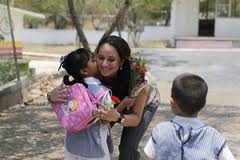
I appreciate the kindness of parents and students when they write me a short note or give me a gift at the end of the year.  It makes me feel appreciated.  However, if any parent or student is thinking about giving me a loaded gun as a gift, I would beg them to please abstain.  Such gifts I don’t need.

An elementary school teacher in Florida was shocked when she received a loaded gun as an end of the school year present, which turns out was unknowingly packed with the real gift.

A memo from the school principal at Allamanda Elementary explained that a teacher opened a gift at home she found a small handgun at the bottom of the box.

“Where’s the parents at? Where’s the parents of this child? I mean, how did he obtain this gun?” asked parent Jarrett Goddard.

School officials dispersed the news quickly.

A spokesperson for the Palm Beach County School District said in a statement that school police are investigating a report that a student at the school may have given a teacher a gift in a box that also contained a small handgun.

It also said that no one was injured and the investigation is continuing, and no further information is available at this time.

Officials said the student’s grandmother packed the present but didn’t know there was a gun inside the box.

It’s unclear how the gun got there, but it was never in the student’s hands.

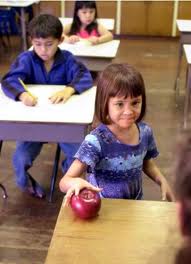
What happened to the good old apple?  It’s nutritious and you can’t shoot anything with it.

Kids Adapt to Technology While Adults Watch in Amazement

June 2, 2011

At a time when parents are often criticised for being over-protective and not exposing their kids to taking on challenges, it is amazing to see how quickly young children adapt to new technologies.  The apprehension and indecision that adults have is non-existent.   These kids often make the remarkable transition from inhibited and anxious to confident risk takers as soon as the i-Pad comes out.

Take this revealing clip as a two-and-a-half  year old is presented with an i-Pad for the very first time.  Watch how confidently she navigates the product and how quickly she learns to use its programs and features.

This shows us what kids are capable of, not only when it comes to technology, but in other spheres at all.  When engaged and stimulated, when they enjoy what they are doing, their behaviour becomes more positive and more inclined to take responsible risks.

The challenge of educators is to spend less time protecting students from making mistakes and disappointment, and more time investigating ways to educate through fun and engaging activities.  Confidence does not come about from someone protecting you or holding your hand through a challenge.

Confidence comes about when the challenge is enticing and the outcome is genuinely fulfilling.

Kindergarten Teacher Calms Students During Shootout

June 1, 2011

Experienced teachers always say, “expect the unexpected”, but who could ever expect to be teaching while there is a shootout outside the classroom.  Mexican kindergarten teacher Martha Rivera Alanis, shows us what a fabulous teacher can achieve in the worst of circumstances.  As a shootout takes place outside her window she calmly reassures her young students before engaging them in a sing-a-long.

In the video, the frightened but determined voice of a schoolteacher is heard as she attempts to maintain calm among a group of kindergartners lying on the floor before her, asking them to join her in a singalong as gunfire shatters the air outside.

The teacher refers to the children as “my love,” “precious” and “little ones” during the stirring clip filmed last week in the city of Monterrey, in northern Mexico. It’s gone viral, igniting once more a public debate over the government’s campaign against drug gangs and earning accolades for maestra Martha Rivera Alanis, reports the Associated Press.

The Nuevo Leon state government honored Rivera for “outstanding civic courage” in a ceremony today.

The 33-year-old mother of two said she was frightened, but that her “only thought was to take their minds off that noise.” The song she chose during the ordeal is a Spanish-language version of a tune popularized by the children’s TV program “Barney and Friends,” and makes reference to chocolate droplets falling from the sky.

Rivera filmed the video during a gunfight Friday in which five people were killed at a taxi stand in La Estanzuela, a district in south Monterrey. According to a local news site, Regioblogs, the teacher posted the video to her Facebook account and then was asked permission to have it reproduced on YouTube and linked to the site. So far the original clip has garnered more than 714,000 views.

“We do drills constantly, because the area where we are is a high-risk zone,” Rivera said, according to reports. The children, she added, “behaved in the way we had practiced.”

I hope to never be in the situation Martha Rivera Alanis was in, but should I ever find myself in a delicate or dangerous predicament I can now draw on the example of this fine, selfless, courageous and dedicated teacher.  What a wonderful role we can play in our students’ lives.  What a positive and calming influence we can have on them.

Thank you Martha Rivera Alanis for showing us how it’s done!