Archive for the ‘School Rules’ Category

Civil Liberty vs Saving Lives

August 9, 2012

There is a debate going around about whether or not schools have the right to drug test its students. The civil libertarians believe such a measure is an invasion of privacy, whilst school administrators believe it will send a very important anti-drug message to its students. I know which side I think better represents the needs and welfare of our children (and it isn’t the civil libertarian one).

As part of a new policy, The Southport School (TSS) will collect saliva and urine samples from students at the start of each term.

The Southport School is planning to introduce drug testing on students at the start of each term to eliminate weekend and holiday drug use.

AMA federal president Steve Hambleton says saliva tests are used by Victorian traffic police and at mine sites.

“It’s a very effective policy to actually say we are a drug-free workplace and safety goes up,” he said.

“I’m sure in schools if we can keep those risk of drugs entering the school away, certainly even on times that children are not at school it affects their behaviour, it affects their learning, it affects other children at the school, so it’s probably a role that the school’s happy to step into.”

Dr Hambleton says parents and schools need to work together to tackle student drug use.

He says the drug testing could help promote the school’s image.

The Queensland Council for Civil Liberties says it has serious concerns about the policy.

President Michael Cope says The Southport School is acting well outside its duty of care.

“Because it’s random. It’s a breach of their rights to due process,” he said.

“People shouldn’t be subject to tests like this unless there’s some suspicion they’ve done something wrong.

“It will mean a lot of innocent people will be forced to go through this examination.”

Click on the link to read Kids Don’t Need Gold Stars

Click on the link to read Only Closed-Minded Schools Block YouTube

Click on the link to read Experts Push for Kids to Start Driving at 12

Click on the link to read Kids as Young as 3 are Getting Tutors
School Adopts Chinese Students to Boost Grade Levels

August 2, 2012

If it isn’t discrimination, then it’s certainly opportunism:

The U.S. Department of Education’s Office of Civil Rights has launched an investigation into allegations that the San Mateo Union High School District is discriminating against Chinese students.

A discrimination complaint lodged against the California school system has the agency looking into claims that the district holds Chinese students to “different standards for demonstrating residency or guardianship than students of other races” and nationalities, a department spokesperson told The Wall Street Journal.

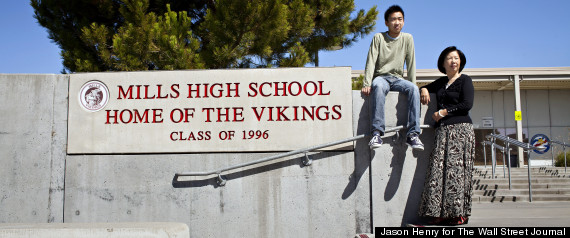
The civil rights complaint comes as at least a dozen Chinese students say they have been transferred from top-performing high schools to low-performing ones. The district says the students were transferred because they don’t reside with their parents — who, in many cases, live in China — and instead live in homes owned by relatives.

Private tutor Marian Kong filed a complaint on behalf of two students who she said fell victim to the district’s bias. Both were accepted to attend high-performing, Asian-majority Mills High School last fall, and lived with guardians whose addresses fell within zoning boundaries for the school. But just days later, they were transferred to lower-performing Capuchino High for failing to show proof of residency for Mills.

Click on the link to read Only Closed-Minded Schools Block YouTube

Click on the link to read No Place for Ambulance Chasers at our Schools

Click on the link to read Proof You Can Be Suspended for Anything

Only Closed-Minded Schools Block YouTube

July 17, 2012

I have been on the record before in stating that I believe YouTube is one of the most valuable teaching and learning tools of the modern age. I have turned to YouTube to solve many a problem; such as learning new tie knots, working out which phone represents best value for money and to assist me in developing some of the features in this blog.

YouTube is brilliant for research, following procedures, guiding students and developing problem solving skills. Yet, because some of the content is unsuitable for kids, many schools choose to block YouTube. I think this is a gross overreaction. Whilst schools have the responsibility to supervise the online activity of its students, they would be best advised to allow access to YouTube with a teacher present.

Added to the benefits I have already touched on, YouTube has become a major source of where people get their news:

A new study has found that YouTube has become a major platform for news, one where viewers are turning for eyewitness videos in times of major events and natural disasters.

The Pew Research Center’s Project for Excellence in Journalism on Monday released their examination of 15 months of the most popular news videos on the Google Inc.-owned site. It found that while viewership for TV news still easily outpaces those consuming news on YouTube, the video-sharing site is a growing digital environment where professional journalism mingles with citizen content.

“There’s a new form of video journalism on this platform,” said Amy Mitchell, deputy director of the Pew Research Center’s Project for Excellence in Journalism. “It’s a form in which the relationship between news organizations and citizens is more dynamic and more multiverse than we’ve seen in most other platforms before.”

More than a third of the most-watched videos came from citizens. Than more half came from news organizations, but footage in those videos sometimes incorporated footage shot by YouTube users.

Click here to read, ‘Schools Should Not Block YouTube’.

Soon School Teachers May also be Fired for Banning Cell Phones in the Classroom

July 10, 2012

I wonder if the firing of a yoga teacher for setting sensible standards of behaviour will soon apply to us school teachers:

For years, yoga instructor Alice Van Ness has started her classes with a simple request – that students turn their cell phones off.

She brought that policy with her to Facebook, where she began teaching a weekly class at the company’s Menlo Park campus in March. But it proved to be a hard policy to follow for at least one employee, who began tapping away on her phone in the middle of class. And after Van Ness shot her a disapproving look, the instructor found herself out of a job.

The 35-year-old San Carlos resident was fired last month after managers at the fitness contractor she worked for explained that saying “no” to Facebook employees is a no-no.

How Long Does it Take to Change a Bad Policy?

June 28, 2012

The policy of banning the application of sun block at school has been exposed as a complete and utter failure. When teachers are applying lotion on themselves and making comments about how the children are burning up, it becomes clear that this policy, as well-intentioned as it may have been, is cruel and must be repealed.

The horrific burns which hospitalised Jesse Michener’s two young girls are evidence that changes need to be made to ensure this doesn’t happen again:

Michener says school officials have promised her the sunscreen policy will be changed by fall, thanks to a change in state law that gives schools new leeway on handling over-the-counter drugs. Shannon McMinimee, a lawyer for Tacoma Public Schools, said in an e-mail that the school board was expected to review the policy but would need to seek guidance from state officials and health experts first.

But sunscreen rules are common. They typically stem from state and local policies that stop kids from bringing any drug — including non-prescription drugs — to school, says Jeff Ashley, a California dermatologist who leads an advocacy group called Sun Safety for Kids.

Sunscreens are regulated as over-the-counter drugs, so many districts treat them like aspirin, just to be safe, he says.

It time for all schools in all states to follow California’s lead. This is a bad policy. Change it now!

School Let Kids Burn

June 25, 2012


What kind of policy prevents young children from applying sun block? How on earth can schools proclaim to be looking after the welfare of their students when they would rather see them burn in the sun than let them apply lotion?

Two young girls had to go to the hospital with severe sunburns after a Washington state school forbid the sisters from applying sunscreen during an outdoor field day.

Jesse Michener said she was horrified when her two daughters, Violet, 11, and Zoe, 9, came home from school Tuesday sporting “hurts-to-look-at” burns after spending five hours outdoors with no protection, according to a post on the mom’s blog.

Michener said she didn’t rub sunscreen on her kids because it was raining when they left for school. She argued that even if she did apply the much-needed block, the school wouldn’t have let the girls reapply to maintain protection due to a “deeply flawed” school policy.

Children in all states except for California are not allowed to apply or bring the product to school, ABC News reports, partially because it is considered a medication.

Sunblock – a medication? So let me get this straight. The same school system that is going berserk when it comes to recommending children be prescribed ADHD drugs such as dexamphetamine and methylphenidate, prevent children from applying sun protection on the grounds that it’s a medication?

If I taught under such twisted logic I would risk my job over this issue. I would seek parental information regarding allergies and written permission from them to allow their children to put on sun block. No doctors certificate, no consultation with policy makers and hopefully, no sun cancers on innocent children raised under a stupid, incoherent and irrational system.

School Calls Police to Stop A-Grade Student From Studying

June 21, 2012

Since when do we call an ambitious, conscientious and hardworking student a “nuisance”?

A BRITISH high school called police to remove a star pupil who refused to stop studying and leave the library.

Jamie Gagliardi, 18, was ejected from Ifield Community College in southern England, after refusing to leave the library, the Crawley News reported.

The school accused Mr Gagliardi, who is predicted to be an A-grade student, of being “obsessed” with after-school tuition and said that it called the police because the pupil was causing a “nuisance.”

Mr Gagliardi, who was forced to call his mother to pick him up, said, “I have been punished for wanting to do well. I am a hard-working and dedicated student, and this could have such an impact on my future.”

The student went to the library despite being banned from the premises for the day as a punishment for interrupting the school principal during a meeting – to request extra revision sessions.

Marilyn Evans, the school’s director of administration, said, “He became vociferous and irritated that he couldn’t have after-school revision.”

She described Mr Gagliardi as a “top student” who should do well in his exams, but said he had been “causing a nuisance and a disturbance on the premises,” adding, “He is obsessed with doing after-school revision.”

A police spokeswoman confirmed that officers were called to the school to remove a “disruptive” pupil who was refusing to leave the premises, but said that Mr Gagliardi will not face any charges.

This case sends the wrong message for the school’s other students. Most schools would take that form of “disruptive student” over the ones they currently have.

Primary School Introduces Insane No-Touching Policy

June 15, 2012

As a teacher it distresses me greatly that schools are becoming less progressive, less inviting and less humane. Problems are dealt with in nonsensical extreme measures.  The political correct police have all but taken over and the fear of lawsuits prevails in place of a desire to accommodate the true needs of its student population.

Introducing a no-contact rule as a means to prevent schoolyard injuries isn’t just reactionary, it’s insane!

Guess what? Children hurt themselves. It’s a fact of life! To ban contact sports, hugging and high fives as a result of incidental knocks and bruises reduces the playground atmosphere to that of a doctor’s waiting room. Is that what we want for our children?

Parents claim they were not told directly of the new rule, which extended a ban on contact sports to a ban on any physical contact at all, such as playing “tiggy”, hugging or giving each other high-fives.

They claim the new rule was explained to pupils over the public address system, and students were left to tell their parents.

One parent, Tracey, said her son was winded on the playground yesterday and, when his friend tried to console him by putting his arm around his shoulder, the friend was told his actions were against the rules.

The friend then had to walk around with the teacher on playground duty for the rest of lunch as punishment, Tracey told radio 3AW.

“I’m just a bit outraged that it has come to this. There must be other ways,” Tracey said.

Another parent, John, said his children were told they could not high-five each other.

“I have a couple of children, and they have been told that if they high-five one another that’s instant detention, and if they do it three times they will be expelled,” John said.

“I mean, what are they actually trying to teach?”

One child was reportedly told that if students wanted to high-five, it would have to be an “air high-five”.

Principal Judy Beckworth said it was “not actually a policy, it’s a practice that we’ve adopted in the short-term as a no-contact games week”.

She said the new practice was introduced yesterday after students suffered a number of injuries on the playground in recent weeks, and the new no-touching rule was only due to last for one week.

However one parent, Nicole, claimed that the school was backpedalling because some parents were told by the school that the new rule would be in place for a minimum of three weeks, which would be extended if the children did not behave themselves.

What’s next? Soon schools will ban chairs because students sometimes lean back dangerously. Staples and scissors will have to go, as will monkeybars, sharp pencils, bunsen burners, glass bottles, electrical sockets, polls, doors and polished floors. Soon the only activity that students will be allowed to engage in is high fiving each other. No, wait! That’s banned too.

The Case of a Teacher Suspended for Showing Integrity

June 7, 2012

I am vehemently opposed to politically correct rules instituted in softening the reality of a non-performing child. If a child doesn’t deserve any more than an “F” grade it is ludicrous and disingenuous to give that child any higher grade. Preventing teachers from giving a mark they feel is reflective of their students’ achievement is outrageous.

Lynden Dorval is not the person you should be firing. It is the very people who concocted a stupid rule that prohibits giving students a zero grading, who should face the chop. David Staples is right to call Dorval a hero:

Lynden Dorval, 61, has been a teacher for 35 years. He’d be in in the class room again today, except he’s suspended.

Why?

Because Dorval can’t in good conscience go along with a misguided new scheme cooked up by educational theorists and school administrators.

Under this scheme, it’s no longer possible for high school teachers at Ross Sheppard and numerous other Edmonton  schools to give a student a mark of zero on a test or an assignment, even if the student refuses to hand in the assignment or write the test. Instead, students are given a mark based on the work they do complete.

This policy has been in place at Edmonton junior high schools for decades, Dorval says, but it is now making its way into local high schools.

Ross Sheppard’s principal brought it in last year. Dorval refused to go along with it then and was reprimanded. He again refused this year. He was reprimanded some more.

Finally, on May 18, after a meeting with Edmonton Public School Board superintendent Edgar Schmidt, Dorval was suspended.

In his letter to Dorval, Schmidt said it was mandatory for Dorval to follow the instructions of his principal. “You chose to disregard the requirements and thus repeatedly behaved unprofessionally and blatantly undermined the authority and responsibility of the Principal.

“You must turn in your school keys … You are not allowed entry into Ross Sheppard School or its grounds without your Principal’s permission. If you defy this directive, you will be considered a trespasser and charged …”

If Dorval doesn’t buckle under and go along with the new way of marking students who don’t do their work, he says he will lose his job.

I met with Dorval on Thursday and immediately thanked him.  It’s not often any of us see real heroes, people who put their reputations and jobs on the line to uphold a righteous principle. Dorval fits that category.  By refusing to accept lower standards in our schools, even if it cost him his job, he’s standing up for all parents and students.

I should say that Dorval is a reluctant hero. When I ask how he’s handling his suspension, his eyes fill with tears.

“It’s been pretty tough. … I didn’t expect to end my career in such a dramatic and sudden way.”

Education needs people of principle. It needs people prepared to go against the trend and fight for transparency and fairness.

Firing Dorval would be typical yet extremely damaging.

Attack of the Crazy Suspension Addicted Schools

May 9, 2012

There was a time there when suspensions actually meant something. If you were given a suspension, you knew it was for something major and you dreaded the inevitable grilling by your parents when they reluctantly turned up at your school. Whenever I was sent to the Principal’s office, I was on edge that my misdemeanor might lead to a suspension. The fact that I am still alive to write this post tells you that I never got one.

But today, for whatever reason, schools find it necessary to cheapen and make mockery of the very punishment that was a proven success over many years. Nowadays, you can get a suspension for scratching your head or making snorting sounds when you laugh.

You don’t believe me? Well then read this:

A school north-west of Melbourne has been forced to apologise to a student with a learning disability after he was suspended because his parents failed to attend a parent-teacher interview.

Brendan Mason was allowed to return to classes at Sunbury Downs College in Sunbury today, the Herald Sun reports.

Brendan’s father Andrew Mason said the meeting was one of many they had throughout the year with his teachers, integration aides and pathways teachers to discuss his progress.

Principal Brett Moore said Brendan was wrongly issued two detentions after his parents missed the meeting, and this was increased to a one-day suspension after Brendan failed to turn up to either punishment.

Mr Moore said the staff member who issued the detentions made a mistake. The staff member did not understand that Brendan’s parents were not required to go to the meeting because they had already attended a group session with his aides, Mr Moore said.

“I’ll investigate this matter … I’ll unreservedly apologise — I have to the father and I will in person.”

But Brendan’s father said his son would struggle to make up classes he had missed.

“I don’t think he can go back today — he’s not up to it, part of his problem is he gets affected by stress … he definitely can’t go back today,” he said.

In Australia, it is the politicians that are accused of being reactive and low on conviction. However, in my opinion, there is no better current day example of a ‘turncoat’ than schools. They seem to make these incredibly big mistakes. Mistakes that they would happily continue making, until someone gathers the courage to stand up for themselves and notifies the media. Then, without a moments hesitation, they do a complete 180 degree turn and blame their mistake on an errant staff member.

Schools come across as fickle, naive, incompetent and asleep at the wheel. They are quick to blame Governments, parents and students, but are almost never blameless themselves.

It’s time our schools woke up to their failing and got there acts together. Restoring confidence in our schools is pivotal to the hopes and aspirations we have for our children.