Archive for the ‘Parenting’ Category

Tip for Getting Your Kids to Open Up About Their School Day

January 8, 2015

first day

Personally, I try to make the child’s’ school experience pleasurable enough to make them anxious to share their day with their parents. But for the parents who find it hard to get anything substantive from their children in this area, here are some tips courtesy of via parenttoolkit.com:


1. Wait at least a half an hour

Kids are generally drained and strained the moment they walk in door. So wait at least 30 minutes to start talking about school. Give your child a chance to decompress and have a snack, take off the backpack, and just breathe.

2. Don’t turn questions into a third degree

What would make you want to open up and tell her all those details? The same rules apply to kids. Big kid turn offs: pushing, prodding, demanding, coaxing, lecturing and threatening.

3. Look interested

Think of how your best friend asks you about your day. Use her example. Make sure you are relaxed and appear genuinely interested when you speak to your child.

4. Ask questions that require more than yes or no

“Do you have homework?” “Did you give your speech?” are questions that make your kid only have to answer with a yes or no response. So pose questions that require your child to respond with more than just yes, no, nope, sure, nothing, fine.

5. Don’t use the same questions

A big kid turn off is hearing your same old predictable: “How was your day?” query. So be creative. Churn up those questions so your kid knows you are interested!

6. Stop and listen

The nanosecond your child utters ANYTHING related to school, stop  and give your full presence. Catch any little nugget of information and make it seem as though it’s a gold mine. Kids open up more when they think you’re interesting.

7. Stretch conversation with “invitation openers”

If and when your child shares a detail try using the “stretching method.” Don’t push or prod but instead use these type of comments: “Really?” “Uh-huh?” “I don’t believe it!” “Wow!” They’re not threatening and invite a talker to open up.

8. Repeat “talk” portions

Try repeating bits of your child’s conversation: Child: “I played on the swing.” You: “You played on the swing.” The trick is to repeat the tidbit in a matter-of-fact but interested way to get your child to open up and add more.

9. Make your house kid-friendly

Many parents swear they find out more about school from their kids’ friends than from their own child. So invite your child’s friends over. Keep the fridge stocked with food. Set up a basketball court (or whatever you need to keep those kids at your house). And then be friendly (but not intrusive) to the friend. You may find that not only do the friends open up more, but your child will tag onto the friend’s conversation.

10. Get on the school website

Find out what’s going on in your kid’s school world: read the teacher newsletters, click onto the school calendar, read the school activities schedule and menu. You can then ask specific questions about your kid’s day.


Click on the link to read Study: Smartphones are a Bigger Concern than TV

Click on the link to read What Kids Really Wanted for Christmas (Video)

Click on the link to read Young Girl Pens Angry Letter to Tooth Fairy

Click on the link to read Gift Ideas for Children that Are Not Toys

Click on the link to read When Parents Get Busted!

Study: Smartphones are a Bigger Concern than TV

January 7, 2015

smartp

Kids are spending way too much time in front of a screen. In my day the warnings about the dangers of television were very prevalent. Now the smartphone and gaming console seem to have overtaken it on the parental danger list:


Having a smartphone in a child’s bedroom translates to less sleep, more fatigue, and later bedtimes, according to a new study. Researchers at UC Berkeley found that kids who slept in the same room as a cellphone, smartphone or iPod touch — what they call “small screens” — got almost 21 minutes fewer sleep than those who didn’t. They also went to bed, on average, 37 minutes later than those without phones in their rooms. (Those who slept in the same room as a TV, meanwhile, got only 18 minutes fewer sleep; the TVs were also associated with a 31-minute delay in bedtime.)

In the study of more than 2,000 fourth and seventh graders, published Monday, 54 percent said they slept near a smartphone. “Small screens are especially concerning because they are a portal to social media, videos and other distractions, and they emit notifications that can disrupt sleep,” Dr. Jennifer Falbe, a postdoctoral research fellow at UC Berkely and the lead author of the study, tells Yahoo Parenting. “Parents should keep screen media out of bedrooms, limit screen time, and set a curfew of an hour before bedtime.” 

Falbe says her recommendations are based on the overall literature that excessive screen media can be harmful to children’s health. The American Academy of Pediatrics recommends that kids spend no more than one to two hours a day on recreational screen time, which Falbe says is a good rule of thumb. 


Click on the link to read What Kids Really Wanted for Christmas (Video)

Click on the link to read Young Girl Pens Angry Letter to Tooth Fairy

Click on the link to read Gift Ideas for Children that Are Not Toys

Click on the link to read When Parents Get Busted!
Click on the link to read The Inconvenient Truth Kids Style

What Kids Really Wanted for Christmas (Video)

December 29, 2014

https://www.youtube.com/watch?v=EQ3ePGr8Q7k#t=125


This advertisement nails what kids really want from their parents.


Click on the link to read Young Girl Pens Angry Letter to Tooth Fairy

Click on the link to read Gift Ideas for Children that Are Not Toys

Click on the link to read When Parents Get Busted!

Click on the link to read The Inconvenient Truth Kids Style

Click on the link to read The Quality Most Parents Want to Teach Their Children

Click on the link to read Are Our Expectations for Children Too High?

Young Girl Pens Angry Letter to Tooth Fairy

December 17, 2014

tooth

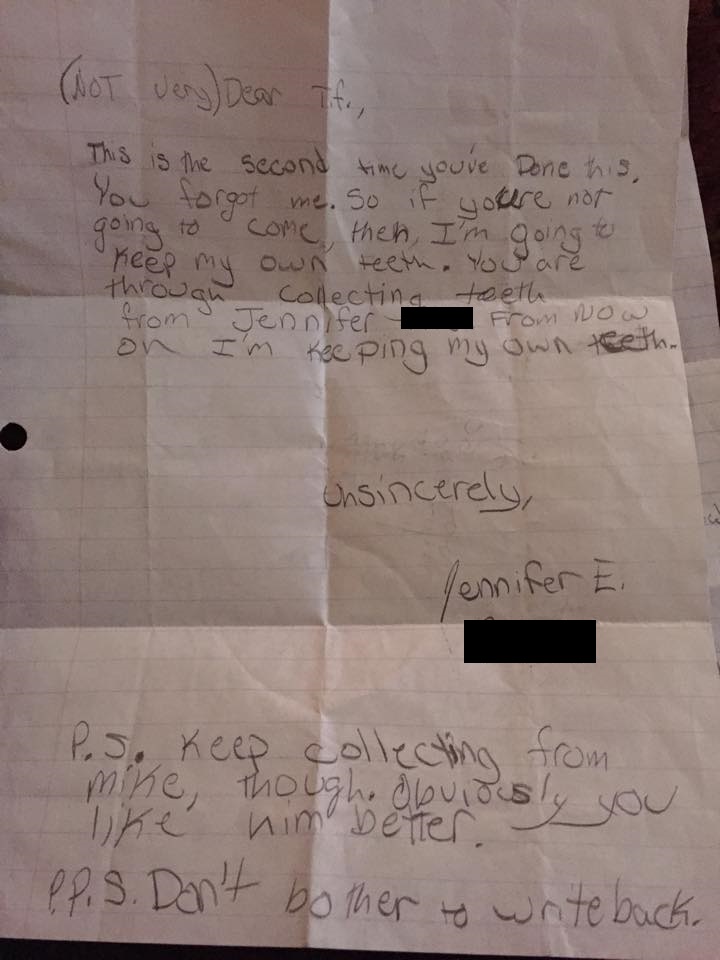
This is what happens when the tooth fairy proves unreliable and plays favorites.


Click on the link to read Gift Ideas for Children that Are Not Toys

Click on the link to read When Parents Get Busted!

Click on the link to read The Inconvenient Truth Kids Style

Click on the link to read The Quality Most Parents Want to Teach Their Children

Click on the link to read Are Our Expectations for Children Too High?

Click on the link to read 25 Ways to Approach the Dreaded ‘How was School Today?’ Question


Gift Ideas for Children that Are Not Toys

November 9, 2014

zoo

A clever and useful list of gift ideas by mother of 6 and blogger Rachel Jones:


18 Non-Toy Gifts for Children

1. Classes. Music, dance, riding, drawing — classes are a great way to encourage children in their interests and let them know that you pay attention to them and what they enjoy.

2. Memberships. Zoo, science museum, children’s museum, YMCA membership, etc. These are particularly great for family gifts! Many young families want to enjoy day outings, but affording them can be a challenge, so give them the gift of a yearly membership.

3. Subscriptions. Kids enjoy getting things in the mail. Why not encourage their reading by getting them a magazine subscription for something they are interested in!

4. Events. Movie tickets, or tickets to a play, concert or sports event are really exciting! Having an event to look forward to makes the rest of life more enjoyable.

5. Activities. Mini golf, bowling, skating rink. These are so much fun! And a big part of the fun is going together. Children love spending time with the adults in their lives; they want to see you enjoying your time as well as enjoying them.

6. Recipe and Ingredients. Kids love cooking with their parents. Baking something special or cooking dinner is an ideal time to spend together and learn life skills. Print out a recipe, purchase all the ingredients and set a date for cooking together.

7. Crafting Date. Our daughter loves making crafts. I do, too; I really do enjoy the creative aspect. But I rarely take time out to do it with her. These crafting dates mean the world to our creative little girl. Keep a basket of craft supplies and get out a book for inspiration. We like Sneaky Art: Crafty Surprises to Hide in Plain Sight, by Marthe Jocelyn.

8. Arts and Crafts supplies. If your craft box is running low, stock up a little on things you need. Add in something fun the kids haven’t used before. A gift of arts and crafts supplies often brings on the imagination, and kids can’t wait to get to work!

9. Coupons. An envelope of coupons that they can “spend” at any time: I’ll do one chore — no questions asked; movie and popcorn night, you pick the movie!; 1:1 game of cards or basketball (whatever the child’s interest is in); sit and read a book with me; stay up 1/2 hour past bedtime.

10. Restaurant Gift Card. Dinner, ice cream, coffee, cupcake — whatever suits their fancy! Give them the freedom of inviting whomever they wish: it may be mom or dad; it may be a grandparent, aunt or even teacher they would like to spend more time with.

11. Dress-Up Clothes. These do need to be limited, but two dresses and a couple play silks can get hours and hours of play!

12. Books. We get a lot of books from the library, but there are some that I just can’t find there, or it takes us longer to read through. We have read through the entire Little House series, Narnia, and are working our way through Shel Silverstein’s books. Be sure to pass the books on when you are done, so they don’t clutter up your home.

13. Clothes. When kids only have a certain amount of clothes, they often enjoy getting clothes. Make it a point to get something that fits their style. That may mean Western clothes, superhero, fancy dresses, etc.

14. Snacks. If your child is a foodie, they will love this! Some homemade granola or cookies made just for them is a special treat!

15. Outdoor Supplies. If you are an outdoorsy family, giving kids their own fishing tackle or gardening equipment can be a big deal. It’s also something that gets left on the shelf in the garage, so you always know right where to find it.

16. Telling Time. Many children these days don’t know how to read analog, or find it takes too long to think about it, so they search for a digital watch. Getting them a cool watch makes them want to be able to tell time on it. Boys, girls, and even teenagers can be excited about this.

17. Games and Puzzles. Games and puzzles are great activities for when kids have to be indoors. It’s a good practice to have individual quiet times during the day, and having a puzzle to sit and work on by themselves helps brain development and problem solving skills. Games teach a lot, too! My kids talk about how they passed geography, just because we played Risk when they were little. Monopoly and Payday have been popular and help cement math skills. Memory games are great for younger children.

18. Calendar. Many children like to know what is going on, what day it is, how many days until ____. These kids are the ones who want to know what the plan is for the day, the order in which things will happen, what time friends are expected over, etc. They struggle with spur-of-the-moment and can be frustrating if you are a spontaneous parent. But celebrate it! These children have many strengths, and make our world run more smoothly. 🙂 Embrace their inner schedule and get them their own calendar. They can write down their own classes, appointments, playdates, etc. And if they ask you, send them to their calendar so they can get used to being in control of their own schedule. You can even schedule “spontaneous days,” so they know that something different will happen that day. Trust me, it will help them enjoy the spontaneous outings!


Click on the link to read When Parents Get Busted!

Click on the link to read The Inconvenient Truth Kids Style

Click on the link to read The Quality Most Parents Want to Teach Their Children

Click on the link to read Are Our Expectations for Children Too High?

Click on the link to read 25 Ways to Approach the Dreaded ‘How was School Today?’ Question

10 Tips for an Effective Parent-Teacher Conference

October 29, 2014

timmyCourtesy of via The Huffington Post:


1. Don’t bring your child with you (unless the teacher requests it): There are times it’s helpful to have a parent/teacher/student meeting, such as when strategizing study skills, organization, or other things where direct communication will facilitate a solution. However, unless you are meeting with that purpose, it doesn’t allow for as much information to be shared between parent and teacher. The dynamic is totally different because when there’s a student in the room, the teacher tends to talk to the student. There may be things I want to say to the parent that I wouldn’t say in front of their child.

2. Ask the teacher how your child is doing socially: A big advantage of attending a school as opposed to home schooling or cyber-school is the social skills that students begin to master only by being forced to interact daily with their peers. For some children, the main stress of school has nothing to do with academics. By middle school, kids aren’t telling you much about their social lives, but their teachers may be able to give you some insight.

3. Come with an open mind: As a parent, I have to remind myself of this often, but my children’s grades and behavior are not a reflection of who I am as a person. They have free will and will make mistakes and decisions that I don’t approve of. It doesn’t make me a bad parent. As a teacher, I remember this too. My goal in working with parents is to be a problem-solver, not a judge. If you are not willing to be open-minded about your child’s challenges, you may walk away from the conference feeling defeated instead of empowered.

4. Bring specific questions or concerns: The toughest opening for a teacher is, “So how’s my kid doing in your class?” Since we only have a few minutes to talk, I’d like to know right away which areas are of concern to you.

5. Share personal information when you can: There are times parents have called to report that a grandparent or a beloved pet recently passed away, there has been a change in home environment for a child, or they are overcoming a serious illness. All of this information helps teachers because students often look or act different in the classroom without explaining what’s bothering them. It’s especially important to tell teachers if your child has been evaluated for learning disabilities or health issues. As a teacher, I have worked as a partner with parents in monitoring kids with food allergies, asthma, and changes in ADHD medication. We are the eyes and ears when you can’t be and can often provide information that will aid you and your child’s health care provider.

6. If your child’s teacher doesn’t provide some positive feedback, please ask for it: The last thing you want is to walk away from a conference feeling sad or hopeless about your child’s school experience. Even kids with the toughest behavioral or academic challenges have redeeming characteristics and good days that we as teachers can point out. If your child is unhappy in school, you may be the emotional dump at home who hears about all the things that went wrong during the day. You didn’t get to witness your children having fun with their friends at lunch or delivering a great presentation to their peers or answering a question that stumped everyone else in the class. We need to focus and build on these little victories together.

7. Tell your teacher what works well at home and what you need help with: You may feel like you’re on your own once your child gets home, but teachers often have tips that may help studying and getting organized at home go more smoothly too. If getting out the door in the morning is an issue, or getting homework done before ten p.m., please ask. Many of your children’s teachers were or are currently raising children. I feel fortunate to have that “insider’s perspective” on how best to work with my children academically and I’m more than happy to share my thoughts because happy, well-prepared students make my workdays pleasant.

8. Take notes: Especially if you are meeting with more than one teacher, you will be hit with a lot of information, too much to process all at once. Taking notes gives you an opportunity to look back on what you learned, possible areas to follow up with the teacher on later, and a chance to see patterns (maybe your child always forgets homework that’s due on Monday, or something else that you may be able to adjust).

9. Tell us what your child loves to do at home: Parents have told me about non-academic skills their children have, unusual hobbies, or passions that lie outside the classroom. When I know these things, I can work to connect them to what I teach, making school more interesting for students and helping them feel like they are essential people in the classroom.

10. Ask your child if he or she thinks there is something you should ask or address: Teachers encourage their students to be advocates for themselves, but there are times kids feel intimidated to talk to a teacher about something. A parent can be the intermediary, at least to get the conversation started.

When Parents Get Busted!

October 25, 2014

lexi

Great letter from a young girl ready for the next phase of her childhood.


Click on the link to read The Inconvenient Truth Kids Style

Click on the link to read The Quality Most Parents Want to Teach Their Children

Click on the link to read Are Our Expectations for Children Too High?

Click on the link to read 25 Ways to Approach the Dreaded ‘How was School Today?’ Question

Click on the link to read Learning to Let Go

Click on the link to read Things Teachers Wish Parents Knew Before the School Year Begins

The Inconvenient Truth Kids Style

October 14, 2014


You spend your life trying to teach your kids the importance of telling the truth and then this happens:


truth

Courtesy of Nickmom


Click on the link to read The Quality Most Parents Want to Teach Their Children

Click on the link to read Are Our Expectations for Children Too High?

Click on the link to read 25 Ways to Approach the Dreaded ‘How was School Today?’ Question

Click on the link to read Learning to Let Go

Click on the link to read Things Teachers Wish Parents Knew Before the School Year Begins

Click on the link to read The Worst Parent in the World May be an Australian

The Quality Most Parents Want to Teach Their Children

September 21, 2014

quality

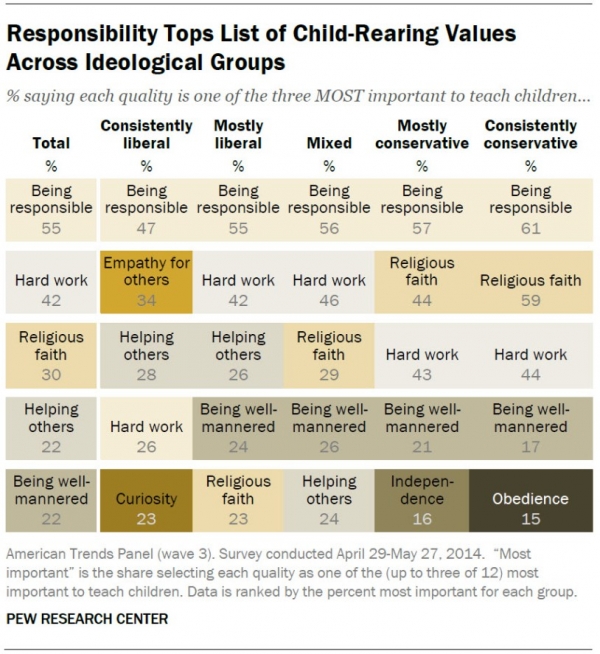
A very interesting survey asks, What is the quality most parents want to teach their children?


The Pew Research Center study on parenting attitudes sampled more than 3000 adults who were asked to evaluate which of a list of 12 values are the most important they feel children need to learn.

The adults ranked the importance of teaching children the following values from most to least popular: responsibility, hard work, helping others, good manners, independence, creativity, empathy for others, tolerance, persistence, curiosity, obedience and religious faith.

Researchers found that while “being well-mannered” was rated high on the list among all groups, it wasn’t as strong as a desired quality among the most liberal participants. Instead, liberals selected “empathy for others” and “hard work” higher on the list. Pew suggests that children are starting to be taught increasingly different values as political and cultural differences continue to evolve.

Religious faith was found to be one of the most important things parents wanted their children to develop, but it was not rated as important as the other qualities. “Obedience” ranked much higher in the list for consistently conservative parents more than any other quality, following responsibility.

Another difference in the types of qualities parents want to teach their children lies within their level of education. Less than half of college graduates chose religious faith or obedience. The study found that the college graduates selected tolerance, persistence and curiosity more than parents of a lower education. Parents with only high school education valued their children helping others more than those with some college or a college degree.

The study shows that even though political beliefs, race, religion and education vary between American parents, most parents want their children to learn similar qualities.


Click on the link to read Are Our Expectations for Children Too High?

Click on the link to read 25 Ways to Approach the Dreaded ‘How was School Today?’ Question

Click on the link to read Learning to Let Go

Click on the link to read Things Teachers Wish Parents Knew Before the School Year Begins

Click on the link to read The Worst Parent in the World May be an Australian

Click on the link to read 10-Year-Old’s Marriage Advice to His Teacher

Are Our Expectations for Children Too High?

September 16, 2014

shave


I believe very strongly in setting firm but fair expectations for my students when it comes to behaviour, respect for others and effort. But in doing so, I must be mindful not to overburden them. The last thing I want is for them to drown in unrealistic expectation.

Author and speaker put together a list of unfair expectations parents put on their kids:


1. Always be in a good mood.

Isn’t it upsetting when you come home from a long day of work and your kids are in a bad mood? You worked hard all day to put food in their bellies; the least they can do is not add to your stress. Right?

I’ve felt this way, but the thing I had to realize is that they have bad days too. It might have been that irritating kid at school or a teacher in a bad mood, it could have even been their other parent, but our children experience things throughout their day that will put them in a bad mood, just like us.

We have to cut them some slack at times; they have issues to deal with too. Do you remember how crazy being young felt at times? They’re not always going to be in a good mood, and we have to learn to accept that. Don’t misunderstand me, if your child is ALWAYS in a bad mood, that’s a different story.

2. Be perfect in school.

It’s natural to want your children to study hard and breeze through school like Doogie Howser, MD, but you have to remember that was a TV show! In real life, children learn things differently. It’s our job to guide them, not punish them because they may have a harder time learning.

We’re not perfect at work — at most jobs, it’s not expected. School is our children’s form of “work” until they go out into the world.

3. Never mess up.

It’s frustrating when our children mess up. It could be a dish dropped, door slammed or something bigger, like a car accident. Hey, WE MESS UP TOO! Why do we try to hold our kids to a standard that we can’t maintain ourselves? Mistakes happen, we ALL mess up, that’s life. Don’t hold being human against your children.

4. Be grateful for what I’ve given you.

We give our children so much, and yes, they should be grateful, but being a parent means putting your children’s needs before your own. We can’t just give them the scraps.

That goes for giving of yourself too. Just because you’re in a room with them doesn’t mean you’re spending time with them — especially if you’re glued to the TV. They shouldn’t be grateful for just your presence; they need your attention, too. Give them everything you have, not what you think you can afford to spare.

5. Ignore how we treat each other.

Our children see and pick up more than we think. When we have those “heated” discussions in what we think is private, chances are they know what’s going on.

How you treat each other will affect what kind of people they grow up to be. If you talk down to each other in front of them, if you criticize or belittle each other, you better believe they will too one day.

Our children learn how to treat others from us. Not what we tell them — how we actually treat people. Think twice before you let your emotions take over and cause you to say something that could affect your kids.

6. Don’t try to get away with anything.

I remember trying to get away with so much stuff when I was younger. My mother would yell at me when she caught me. She would tell me daily that she couldn’t wait for me to have children to see what she has to go through.

I use to think, Whatever, Mom… until I had children of my own. Turns out, mom was right. We have to remember what it was like at that age and not make every incident a nuclear explosion.

Yes, some things warrant certain punishments, but others aren’t that big of a deal in the grand scheme of things. Please don’t misinterpret what I’m saying. If it’s a minor issue, letting your kids learn a “life lesson” might be a better approach.

Our youngest son worked hard all summer to buy a laptop for himself. When we moved here to Maui, he ended up dropping it and cracking the screen. We found out a few weeks later, and we were furious.

He lied to us, he hid things from us, he broke an expensive item. We had to take a step back, cool off and remember that this affected him more than us; he bought it with his own money. We talked to him about the lying, but him breaking his own laptop was a life lesson.

7. Always forgive.

You can’t constantly treat your children poorly and expect them to always forgive. They might have a high tolerance for our issues, but there will come a limit.

There are some rough situations. Parents split up, maybe even divorce; there are money issues, stresses of everyday life, and lots of things that are out of your control. But you have to make the best out of every bad situation and not take it out on your children. In those situations, you have to do as much as you can to give them some sense of normalcy.

8. Do what I say, not what I do.

At the end of the day, our children learn more by what we do, not what we say. Actions do speak louder than words in parenting, and you have to lead by example.

When I told my children I was writing this, they informed me that I had a lot more than eight unrealistic expectations. I was irritated, but I’m sure they’re right.

We have to let our kids be kids, not perfect robots. They’re going to mess up — that’s life. Our job is to guide them and be there for them. If a situation requires discipline, then by all means do what needs to be done.

Here is what I challenge you to do: Take a step back first, and don’t let your emotions control the situation. These years are vital in molding the kind of people they will become.