Archive for the ‘Parenting’ Category

Counsellor Calls for Parents to Become More Selfish

April 2, 2012

Parents do not need to become more selfish. If anything, the opposite it true.

Parents should not be criticised for the time they invest into their children’s wellbeing. That is time well spent. Parents who devote extra time to ensuring that they are spending quality time with their kids, have an understanding of the specific personality that their child possesses and makes adjustments to their parenting to suit the child in question is bound to be rewarded.

Counsellor Jenny Brown seems to disagree:

The Growing Yourself Up author says parents need to stop obsessing about their children and start focusing on themselves – for their own and their child’s sakes.

“The key to being a grown-up parent is to take away your focus on making your child’s happiness a project, and putting the focus back on being a clear-minded, principled adult,” Brown says.

“It’s when the parent takes time to clarify their principles, think about their job description, think about what they’re in control of and what they can’t control in their child.”

The Family Systems Institute director says focusing on yourself is the best way to ensure your child grows up happy and self-reliant.

“It’s definitely not selfish. It takes a lot of thoughtful effort to be a strong, loving presence for a child,” she says.

I don’t disagree with the notion that parents also need to look after themselves. Likewise, I agree that the time spent with their kids needs to be ‘quality time’, not ‘babying’ time. Parents shouldn’t be doing their children’s homework and they should attempt to help their children grow to become independent.

I just don’t believe that selflessness is a problem affecting the broader parenting community.

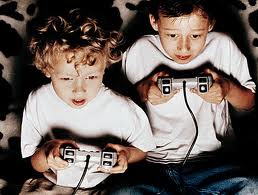
Teachers Concerned About Violent Video Games

March 28, 2012

Whenever teachers dispense parenting advice, the outcome is almost never a positive one. As much as I agree that children who are exposed to violent movies and video games are worse for it, I think it is essential that teachers spend less time judging parents and more time concentrating on the curriculum.

Still, in a perfect world, parents should reflect on some of the criticisms conveyed by teachers:

School pupils are being allowed to stay up until the early hours of the morning playing games that are inappropriate for their age, said Mary Bousted, general secretary of the Association of Teachers and Lecturers.

She said many parents were failing to adhere to age-restrictions on the most violent games, raising concerns that children are growing up desensitised to aggression and bloodshed.

It was also claimed that over-exposure to screen-based entertainment was robbing children of valuable time interacting with friends or playing outdoors – harming their education and long term development.

It follows repeated concerns from psychologists that watching violent films and playing games such as Grand Theft Auto, Mortal Kombat and Modern Warfare makes youngsters more prone to violence.

Speaking yesterday, Dr Bousted said: “I think what we are talking about, first of all, is the amount of time children spend locked in their room. The fact that children spend hours locked in their rooms playing computer games, which means they’re not interacting, they’re not playing and not taking exercise.”

Some of these games were “very violent”, she said, and risk having a major effect on “tender young minds of children and young people.”

Dr Bousted said that many teachers fear parents are ignoring age restrictions on computer games, which often ban their sale to children aged below 18.

“The watershed tends to work quite well, but with online TV and video children and young people are probably watching inappropriate content over a range of media,” she said.

It would be great to share criticisms with parents without fear of reprisal. But, in my experience, the importance of having parents on side means that these criticisms can interfere with a healthy parent/teacher partnership.

The Difficulties of Parenting a Special Needs Child

March 10, 2012


Teaching a Special Needs child can be a most difficult proposition, but parenting one is infinitely harder.

I read a brilliant piece entitled, “6 Things You Don’t Know About a Special Needs Parent.” It’s honesty provides the reader with great insight into the difficulties of raising a child that suffers from a disability. Maria Lin, the author of this wonderful article, is the parent of a 3-year-old suffering from a disorder of the 18th Chromosome. Up until now she has been tight-lipped about her experiences. I have no doubt that this article will serve to educate people like myself and will provide some comfort to other parents who are in a similar situation.

Below is her list of 6 insights:

1. I am tired. Parenting is already an exhausting endeavor. But parenting a special needs child takes things to another level of fatigue. Even if I’ve gotten a good night’s sleep, or have had some time off, there is a level of emotional and physical tiredness that is always there, that simply comes from the weight of tending to those needs. Hospital and doctors’ visits are not just a few times a year, they may be a few times a month. Therapies may be daily. Paperwork and bills stack up, spare time is spent researching new treatments, positioning him to sit a certain way, advocating for him in the medical and educational system. This is not to mention the emotional toll of raising a special needs child, since the peaks and valleys seem so much more extreme for us. I am always appreciative of any amount of grace or help from friends to make my life easier, no matter how small, from arranging plans around my schedule and location, to watching my son while I am eating.

2. I am jealous. It’s a hard one for me to come out and say, but it’s true. When I see a 1 year-old baby do what my son can’t at 4 years-old (like walk), I feel a pang of jealousy. It hurts when I see my son struggling so hard to learn to do something that comes naturally to a typical kid, like chewing or pointing. It can be hard to hear about the accomplishments of my friend’s kids. Sometimes, I just mourn inside for Jacob, “It’s not fair.” Weirdly enough, I can even feel jealous of other special needs kids who seem to have an easier time than Jacob, or who have certain disorders like Downs, or autism, which are more mainstream and understood by the public, and seem to offer more support and resources than Jacob’s rare condition. It sounds petty, and it doesn’t diminish all my joy and pride in my son’s accomplishments. But often it’s very hard for me to be around typical kids with him. Which leads me to the next point…

3. I feel alone. It’s lonely parenting a special needs child. I can feel like an outsider around moms of typical kids. While I want to be happy for them, I feel terrible hearing them brag about how their 2 year-old has 100 words, or already knows their ABCs (or hey, even poops in the potty). Good for them, but it’s so not what my world looks like (check out Shut Up About Your Perfect Kid). It’s been a sanity saver to connect with other special needs moms, with whom it’s not uncomfortable or shocking to swap stories about medications, feeding tubes, communication devices and therapies. Even within this community, though, there is such variation in how every child is affected. Only I understand Jacob’s unique makeup and challenges. With this honor of caring for him comes the solitude of the role. I often feel really lonely in raising him.

4. I wish you would stop saying, “retarded,” “short bus,” “as long as it’s healthy… “ I know people usually don’t mean to be rude by these comments, and I probably made them myself before Jacob. But now whenever I hear them, I feel a pang of hurt. Please stop saying these things. It’s disrespectful and hurtful to those who love and raise the kids you’re mocking (not to mention the kids themselves). As for the last comment, “as long as it’s healthy,” I hear a lot of pregnant women say this. Don’t get me wrong, I understand and share their wishes for healthy babies in every birth, but it’s become such a thoughtless mantra during pregnancy that it can feel like a wish against what my son is. “And what if it’s not healthy?” I want to ask. (My response: you will be OK. You and your child will still have a great, great life.)

5. I am human. I have been challenged and pushed beyond my limits in raising my son. I’ve grown tremendously as a person, and developed a soft heart and empathy for others in a way I never would have without him. But I’m just like the next mom in some ways. Sometimes I get cranky, my son irritates me, and sometimes I just want to flee to the spa or go shopping (and, um, I often do). I still have dreams and aspirations of my own. I travel, dance, am working on a novel, love good food, talk about dating. I watch Mad Men, and like a good cashmere sweater. Sometimes it’s nice to escape and talk about all these other things. And if it seems that the rest of my life is all I talk about sometimes, it’s because it can be hard to talk about my son. Which leads me to the final point…

6. I want to talk about my son/It’s hard to talk about my son. My son is the most awe-inspiring thing to happen to my life. Some days I want to shout from the top of the Empire State Building how funny and cute he is, or how he accomplished something in school (he was recently voted class president!). Sometimes, when I’m having a rough day, or have been made aware of yet another health or developmental issue, I might not say much. I don’t often share with others, even close friends and family, the depths of what I go through when it comes to Jacob. But it doesn’t mean that I don’t want to learn how to share our life with others. One thing I always appreciate is whenever people ask me a more specific question about my son, like “How did Jacob like the zoo?” or “How’s Jacob’s sign language coming along?” rather than a more generalized “How’s Jacob?” which can make me feel so overwhelmed that I usually just respond, “Good.” Starting with the small things gives me a chance to start sharing. And if I’m not sharing, don’t think that there isn’t a lot going on underneath, or that I don’t want to.
The Difficulties of Parenting a Bullied Child

March 2, 2012

It must be so difficult on parents to keep their child’s spirit up when they are getting bullied at school or online. My heart goes out to parents of bullied children. It must take quite an emotional toll.

None more so, than father of bullied teen Catherine Bernard:

A government partnership with Facebook is also on the cards to try and stamp out the scourge after schoolgirl Catherine Bernard took her own life earlier this month.

She died after returning home from her first day of year 12.

The 17-year-old Emmaus College student from Melbourne’s eastern suburbs told her dad Michael the night she died she had been bullied at school, and later on Facebook.

An emotional Mr Bernard this morning thanked Education Minister Martin Dixon for taking the issue seriously.

“He has pledged money to support the cause and if he does what he says then it can only be a good thing,” he said.

“All I wanted is to open people’s eyes and I think that is happening.

“People have to take this issue seriously.

“If we can save just one person then it means Catherine didn’t die in vain.”

Psychologist Jodie Benveniste has outlined some tips for parents who suspect their child is a bully.

SIGNS TO LOOK FOR
– Aggressive behaviour beyond the usual sibling spats at home.
– Talking aggressively or negatively about others at school.
– Coming home with money or items that don’t belong to them.
– Spending more time on the internet than usual.
– Being hyped up, aggressive or arrogant after time on the internet.

WHAT PARENTS CAN DO
– Model good behaviour. Don’t be aggressive towards your child.
– Teach them appropriate ways to interact with others from a young age.
– Teach them appropriate coping strategies to deal with life’s challenges and disappointments.
– Keep the lines of communication open with your child. Talk to them often.
– Don’t be in denial. Work with your child’s school to address the bullying.

Parents Urged to do the Job of a Teacher

March 1, 2012

It is my belief that the job of a parent is to parent and the job of the teacher is to teach. Sure it’s wonderful when parents take it upon themselves to help reinforce skills taught in class. I am always appreciative of parents that spare some time to revise concepts covered during the school day. But essentially, I am paid to ensure that the parents can spend textbook-free quality time with their children. This is in my view essential to maximising the relationship of child and parent. Children often show a reluctance to work through school material with their parents and parents often get very anxious when trying to get their children to concentrate and listen to their explanations.

It is my job to see it that parents are free to spend time with their children without having to go through the ordeal of maths and science work. That’s what they pay me for.

But unfortunately, it seems that we are not doing a good enough job. It seems as if parents have often been given little choice but to try to fill in the gaps we have left behind. You hear too many stories of parents frantically trying to complete their own childs’ homework, sometimes struggling to work out the answers themselves:

A quarter of parents in Reading admit that helping their children with homework leads to family arguments, according to a survey.

Research by tuition provider Explore Learning also showed 9.2 per cent rarely helped their children with homework with more than two thirds struggling when they did.

Maths confuses parents the most with 41.2 per cent of parents finding the subject hard to grasp compared to the 11.1 per cent of parents who find English difficult.

Nationally, nearly a third of parents admitted homework had caused friction in the family with Reading not straying far from the average when it came to struggling in maths and English.

It’s time we let parents bond with their children instead of getting them to do our dirty work. Homework, if administered at all, should be revision of concepts covered in the class. If the children are not capable of doing it independently it shouldn’t have been given to them in the first place.

Tips for Keeping Children Safe Online

February 24, 2012

Geek Squad have come up with some common sense tips for concerned parents. These tips are a good starting point for helping your children keep safe online:

Filtering Software: Install filtering software such as NetNanny or the free Windows Live Family Safety 2011. These programs can help your kids surf the Internet safely – without being exposed to any inappropriate material. You can also consider setting up free filtering at the wireless router level with OpenDNS, which will ensure that all devices that connect to your home Internet are filtered.
Maximize Current Programs: Many computers already come with online safety programs. Learn how to accurately use Parental Controls in Windows and Mac Operating Systems, and other programs that aid in monitoring and managing what children view online. Maximize the use of programs you already have installed and at your fingertips.
LOL Does Not Mean ‘Learn Online Lingo’: But you should: Among the many networking sites are Facebook and Twitter. Learn how these sites work and the coded language commonly associated with them. We can consider citing this study that says teens are increasingly using Twitter because parents have figured out Facebook, so they think they’ll have more freedom where their parents aren’t.
Gaming Parental Controls: Many games have online modes, where your kids can play against others around the globe. It’s important to know who your kids are playing with and what content they can access. Set parental controls on games to protect your kids without affecting their gaming experience.
Control Your Kids’ Online Environment: Windows Vista features parental controls that help parents monitor what kids can access on a computer – even when they’re not in the room or at home. Parents can select what games, programs and websites children can access. Time restrictions can even be set to ensure that the kids are following the rules even when mom and dad are not home. This feature is found in the Parental Controls panel and is part of the User Accounts and Family Safety Control Panel applet.

Would You Notice if Your Child Was a Bully?

February 21, 2012

Psychologist Jodie Benveniste thinks parents are so blinded by the belief that their child is perfect that they are startled when confronted with the possibility that their child has been bullying others:

Psychologist Jodie Benveniste says most parents don’t – until they get a call from their child’s school.

“That’s often the first time you hear about it because you’re not there to observe the behaviour,” she says.

Youth worker and school chaplain Nigel Lane says in his experience parents are usually in “total shock” or “total denial” when they learn their child is a bully.

The experts agree there are tell-tale signs parents can look for, including very aggressive behaviour towards siblings, talking aggressively and negatively about other children and coming home with money or items that don’t belong to them.

Lane, who has written several books and is working on another about how to recognise a bully, says most parents eventually accept there is a problem.

 “Generally I say to parents that the first thing they should do is listen. Listen to the accusation, don’t deny and ignore it,” he says.

“Then do exactly the same with your child. Sit down with your son or daughter and just listen. Ask broad questions, such as, ‘School gave me a ring today to tell me something happened at lunch time, what was it?’ rather than saying, ‘You’re a bully’, which could make them defensive.”

Lane says this “gentle” approach is more likely to bring out the truth or a version close to it.

The bullying stigma has become a massive one. It is essential that we don’t label people as bullies haphazardly. What that does is unnecessarily complicate the issue, while it also puts children who are involved in one-off incidents in the same basket as perpetual offenders.

Parents should be open to the fact that their children acts differently at school than they do at home. Schools must realise that such a disparity often comes as a result of the unnatural array of clicks and the deep social segregation that are a common fixture in many schools.

The reason why parents may be surprised to know that their child is bullying isn’t just due to their lack of objectivity, it’s also due to the ‘dog eat dog’ environment rampant in many schools. Kids are presented with an environment that is often vicious, unrelenting and difficult to navigate through.

This of course doesn’t excuse their behaviour. What it does do, is make schools equal partners with the parents in reforming bullying children.

Are American Kids Brats?

February 12, 2012

Another book that tries to paint American parents as soft and lacklustre and their kids as spoilt and bad mannered. This time the book advances the French style of parenting.

Time’s Judith Warner, in part, buys into the American parent stigma:

Amidst all the talk this past week about Pamela Druckerman’s new book, Bringing Up Bébé: One American Mother Discovers the Wisdom of French Parenting, there was one phrase that immediately lodged itself in my mind. It was in a sidebar that ran with the Wall Street Journal adaptation of her book, “Why French Parents Are Superior,” and it said this: “Children should say hello, goodbye, thank you and please. It helps them to learn that they aren’t the only ones with feelings and needs.”

That statement points directly to what I see as one of the most meaningful differences between the French and (contemporary) American style of parenting. I don’t happen to believe, as the Journal pushed Druckerman’s argument to say, that French parenting is necessarily superior, overall, to what we do in America. I don’t think French children are, overall, better or happier people — such generalizations are silly. But it is true that French kids can be a whole lot more pleasant to be around than our own. They’re more polite. They’re better socialized. They generally get with the program; they help out when called upon to do so, and they don’t demand special treatment. And that comes directly from being taught, from the earliest age, that they’re not the only ones with feelings and needs.

I say all this based on many years of extended hanging out time with French families, both before and after my own girls — who, like Druckerman’s children, were born in France — came along. In fact, that experience — and the contrast with the American way of parenting I discovered when I moved back to the States — inspired my book Perfect Madness: Motherhood in the Age of Anxiety, the main argument of which Druckerman recapitulates at the very beginning of Bringing Up Bébé. (Fuller disclosure: she interviewed me for the book as well.)

Like Druckerman, I’ve often noted wistfully how French children know how to handle themselves in restaurants. I’ve envied how French children eat what’s put in front of them, put themselves to bed when instructed to, and, generally, tend to help keep the wheels of family life moving pretty smoothly. But the difference that struck me the most deeply, when my family moved to Washington, D.C., from Paris and my older daughter began preschool, was how much more basically respectful French children were of other people. Indeed, how much emphasis French parents put on demanding they behave respectfully toward other people. And how that respect helped make life more enjoyable.

Good manners are certainly very important. Every parent worth their weight in salt attempts to teach their children the importance of graciousness and expressing thanks. But even then, there are two distinctly different types of well-mannered children. There are those who say the right things because they have been trained to do so and there are those that are well-mannered because they are genuinely appreciative and thoughtful.

The one thing I want more than good people on the surface is good people under the surface. There are too many people who will be charming and kind on the surface, yet who harbour resentment below the surface.

I’m not claiming that French people fit that category. What I will say is that books that draw such distinctions usually prove divisive, naive and filled with generalisations. American children will reach their potential when they are not characterised as spoilt brats.

The key to better American children isn’t an Asian style or French style it is a positive style. A book on the topic should include a chapter of what parents may already be doing right and then move on to some helpful hints that they may choose to consider.

But then again, who would buy a parenting book that didn’t peddle stigmas, comparisons and criticisms?

13-Year-Old Girls Given Contraceptive Implants at School Without Consent of Parents

February 8, 2012

There may exist a rule of patient-child confidentiality, but it just doesn’t seem right that such important information would be withheld from the parents. What makes it even tougher to comprehend is that this service is all done at school.

Girls as young as 13 are being given contraceptive implants at school without their parents’ knowledge.

Nurses insert devices into their arms which temporarily prevent pregnancy by releasing hormones into the blood.

Last year 1,700 girls aged 13 and 14 were fitted with implants, while 800 had injections which have the same effect.

The 2010/11 NHS figures also show that 3,200 15-year-old girls were fitted with implants, and 1,700 had injections.

But under strict ‘patient confidentiality’ rules, staff are banned from seeking the permission of parents beforehand – or even informing them afterwards.

Both forms of contraception can bring on unpleasant side-effects including weight gain, depression, acne and irregular periods.

The jabs have also been linked to bone-thinning, although experts say fractures are unlikely if they are used only for a short time.

The implants and injections are being offered to girls in nine secondary schools and three sixth form colleges in Southampton under a scheme run by NHS Solent. The sexual health clinics also offer other forms of contraception, advice and tests for infections.

I think the patient/child confidentiality should have loopholes and shouldn’t include children under the age of 16. As parents, we have the right to be informed and the right to overrule. People might say that this is a very important service against unwanted pregnancies. That may be so. But in my opinion, the best way for 13 year-olds to avoid unwanted pregnancies is to allow the parents to do their job. The best remedy against teenage pregnancy is vigilant parenting.

The Difficulties of Parenting

February 6, 2012

This afternoon I met a colleague outside her eldest child’s school. She had just picked him up from school and was struggling to get both him and his younger sibling inside the car. Her youngest child was making life very difficult for her by having a temper tantrum by the side of the road.

When she saw me, she apologised for the commotion and looked terribly embarrassed by the behaviour of her screaming 2 year-old. I tried putting her at ease, by explaining that I know what it’s like when young children are hot and tired, but it was no use. The whole ordeal clearly embarrassed my poor colleague.

This got me thinking. Society, women in particular, are so judgemental when it comes to parenting and “proper” parenting styles. They are so good at making a poor young mother feel insecure about a whole range of related issues. Any parent can tell you that tantrums are part of the job description. No matter how good or bad your parenting skills are, your kids are a good bet to have a public tantrum every once in a while.

The same goes for parents that feed their kids the odd candy bar or take them out for fast food once in a while. The needn’t feel judged, but they are.

That is why I would like to start a movement. It’s called the “Mind Your Own Business” movement.

You think I’m too lenient on my child? – Mind Your Own Business!

You object to what I put in my child’s lunchbox? – Mind Your Own Business!

You think I should work less and be home more? – Mind Your Own Business!

What’s that? My child is too young to go to child care? – Mind Your Own Business!

I shouldn’t have given up so easily on breastfeeding my baby? – Mind Your Own Business!

You think I’m an over protective parent? – Mind Your Business!

Parenting is a might hard job. Getting a healthy balance between work and home as well as not being too strict or too lenient is so difficult. People should avoid giving parenting advice unless they are specifically called on to do so. People shouldn’t go around thinking they are better parents than everyone else, because chances are they’re not.

And most of all, people should learn to mind their own bloody business!