Archive for the ‘Parenting’ Category

It’s Not Spying on Your Children, It’s Called Parenting

June 26, 2012

If children are going to great pains to hide their online activity from their parents then it stand to reason that parents are well within their rights to monitor what their children are doing. Some will argue it’s spying, I believe it’s being responsible and looking out for the child’s welfare.

We would like to thing that our children make responsible decisions and are honest about their activities – but that is often not the case:

Parents can now use an array of tools to keep up with the digital lives of their children, raising new quandaries. Is surveillance the best way to protect children? Or should parents trust them to share if they are scared or bewildered by something online?

The answers are as varied as parents themselves. Still, the anxieties of parenting in the digital age have spawned a mini-industry, as start-ups and established companies market new tools to track where children go online, who they meet there and what they do. Because children are glued to smartphones, the technology can allow parents to track their physical whereabouts and even monitor their driving speed.

If, a few years ago, the emphasis was on blocking children from going to inappropriate sites on the family computer, today’s technologies promise to embed Mom and Dad — and occasionally Grandma — inside every device that children are using, and gather intelligence on them wherever they go.

A smartphone application alerts Dad if his son is texting while driving. An online service helps parents keep tabs on every chat, post and photo that floats across their children’s Facebook pages. And another scans the Web in case a child decides to try a new social network that the grown-ups have not even heard of yet.

Click here to read about a new free parental monitoring app.

Father Considered Too Obese to Keep His Kids

June 23, 2012


A person should never lose his children because of their weight:

The problem with being a credible hulk is no matter how credible the story, he’s still a hulk.

Such is the hard truth for an obese Ottawa dad deemed too fat to keep his kids.

We’ll call him Dad because he can’t be named or identified.

Dad, 38, claims there’s no adequate oversight of Children’s Aid judgements in this province.

His two sons – age 5 and 6 – have been put up for adoption. He’s not been granted custody because – among other things – he’s 360 lbs and has been as much as 525 lbs.

It appears the judge used Dad’s obesity as a major reason as to why he can’t have custody of his kids. That’s created a lot of chatter and created a debate about whether obese people make good parents.

The judge may have some good reasons for not allowing this man to be with his children but his obesity should not be a factor.

Study Reveals Children Aren’t Selfish After All

June 21, 2012

I must say that I was pleasantly surprised by the results of a study that found that children aren’t in fact selfish:

A new study from the University of B.C. shows kids might be generous and giving because it makes them happy, contrary to the popular belief children are inherently selfish.

Adults report feeling better when spending money on other people instead of themselves and research shows the part of the brain that processes rewards is activated when donating to charity.

Three UBC researchers hypothesized very young children — under age two — experience similar emotional benefits from generosity. For adults, the happiness that results from giving could be caused by many things, like conforming with social pressure or receiving rewards.

“But looking at young kids helps us get a little closer to understanding whether this is something rooted in human nature or not,” said Lara Aknin, a PhD in social psychology. Aknin designed the study with her UBC thesis supervisor, Elizabeth Dunn, and developmental psychologist Kiley Hamlin.

This is the first study to look at the emotional benefits of giving in young children.

Aknin cited news and parenting websites that argue young kids are innately selfish and self-absorbed, and she admitted some studies have shown kids can be territorial with their possessions.

“But you also don’t have to look far to see really young kids wanting to share their soggy Cheerios,” she said. “There is this dichotomy when we look at kids, and I think most people’s assumptions are that kids are self-oriented and hoard things for themselves.”

It just goes to show how effectively adults can model good behaviour.

Click here to read my post on teaching children to be grateful.

Teaching Children How to Argue

June 19, 2012

I noticed while teaching students about persuasive writing how difficult they find it to form opinions of their own. It is almost as if children today do what they have learned to do without ever reflecting on the reasons why. This poses a significant problem when it comes to peer pressure. If you don’t have the tools to work out right from wrong, positive from negative, you can be very easily lead.

This unfortunate consequence was part of the findings of a recent study undertaken by the University of Virginia:

WHILE parents have been teaching their kids not to argue with adults for generations, new research shows it may have its benefits.

A study by the University of Virginia shows that young teenagers who are taught to argue effectively are more likely to resist peer pressure to use drugs or alcohol later in adolescence.

“It turns out that what goes on in the family is actually a training ground for teens in terms of how to negotiate with other people,” said Joseph Allen, psychology professor and lead author of the study, results of which were published in a recent edition of the journal Child Development.

Prof Allen said that parents are often “scared to death about peer pressure” but also frustrated by argumentative children.

“What we’re finding is there’s a surprising connection between the two,” he said.

Prof Allen said that teens “learn they can be taken seriously” through interactions with their parents.

“Sometimes, it can be counterintuitive to tell parents to let their teens argue with them,” said Joanna Chango, a clinical psychology graduate student who worked on the study.

In fact, learning effective argumentation skills can help teenagers learn to “assert themselves and establish a sense of autonomy”, she said.

I don’t agree with the assertion that we should encourage our children to argue with us. Instead, teachers and parents alike, should encourage students to question everything, to feel confident to form their own opinions and not to follow a crowd just for the sake of safety in numbers.
Click on the link to read my post on beating peer pressure.

Protecting Your Kids on the Internet

June 13, 2012

Seven very helpful tips on protecting your children online courtesy of expert Dr. Leigh Baker:

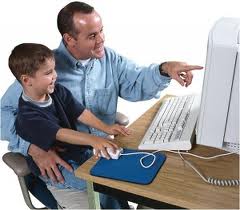
1.  Spend time with your child on the computer. Put the computer in a place that can be easily accessed by the entire family. Use the Internet with your child to play games, plan for a family vacation, or learn about new places and people. Ask your child to teach you more about the computer and to show you certain tricks he or she may have learned. Not only will you gain computer knowledge, you will also get valuable information on just how savvy your child is on the computer. Make sure to ask your child what he or she likes on the Internet and to show you favorite sites.

2.  Let your child know that you will be periodically watching and monitoring his or her online activities. (Internet security software from companies like OnlineFamily.Norton often include parental controls that can help you encourage safe surfing.)

3.  Share an online pseudonym, password, and email account with your child. In this way, you can monitor online correspondences and the Internet sites that your child has accessed.

4.  Never, under any circumstances, allow your child to have face-to-face contact with someone they met online without your permission. If you agree to the meeting, accompany your child and arrange for it to take place in public.

5.  Don’t allow your child to go into private chat rooms without your permission and supervision.

6.  Monitor your credit card bill. Many pornographic online vendors require credit cards in order to have access to their sites.

7.  Alert your Internet provider if you or your child come across sexually obscene material.

I hope this proves helpful.

Toddlers are Using Bad Language. Should we Really Care?

June 11, 2012

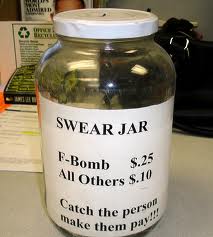
Unfortunately swearing has become part of our vernacular. Curse words are no longer seen as rude or unsociable and parents are less conscious of avoiding sprouting certain words around their children. Many will not see this as a problem. They will argue that swearing is harmless and a popular fixture of everyday conversation.

I do not find swearing offensive per se, but I am grateful that my parents brought me up to express myself in a more dignified way. It would greatly upset me if my children swore, like many children are nowadays:

CHILDREN as young as three are swearing – and it’s not just “bloody” coming out of the mouths of babes either.

“F—” and “s—” are the first naughty words that toddlers usually let fly.

They pick up swear words from the playground, at home and on TV and they do it because it gets them “maximum attention”, linguistics expert Kate Burridge says.

“In the old days they might have had their mouths washed out with soap or been sent to the bedroom with no supper,” Prof Burridge, of Monash University, said.

“But (now) they get maximum attention and learn how potent these word are.”

Parents say almost 60 per cent of children swear by three years of age and that by kindergarten more than 90 per cent of children have uttered their first rude word, an exclusive Herald Sun survey found.

Etiquette expert June Dally-Watkins said the level of swearing on TV and in public was unacceptable.

“I think it is disgusting,” she said.

“Parents should not permit it.”

Most parents agree with Ms Dally-Watkins – 70 per cent believe schools and parents should do more to crack down on swearing.

But parents (52 per cent) admit their children often hear their first curse at home.

Second was the playground (48 per cent) at school or pre-school, followed by TV (31 per cent).

Most parents (78 per cent) still actively discourage swearing.

Prof Burridge advises parents not to panic if their child swears.

She says: “It is probably best to treat these as ordinary words, because they are.

They have always been an important part of the Australian vernacular.”

Teaching Your Children to be Grateful

June 6, 2012

Below are 7 helpful tips by Dr. Caron B. Goode on helping children to become grateful for the relative luxuries they enjoy:

  • Daily Dose. Take time each day to encourage your children to express gratitude. They can do this by making an entry in a family journal or by simply talking about what they are grateful for.
  • Model Thanks. As with everything, modeling is the best way to teach your children to be grateful. Be lavish with your thanks. Thank your children for hugs. Thank the cashier for ringing up your groceries. Thank the bus driver for returning your students home safely. Letting your children see that you are grateful will encourage them to be so as well.
  • Establish Rituals. We all know the importance of family rituals. Establishing rituals that highlight being thankful is a wonderful teaching tool. Start dinner with each family member sharing what they are most grateful for. Say goodnight by sharing what you were thankful for that day. Any ritual that based on gratitude will reinforce its power.
  • Volunteer. Volunteering is a great way for your children to see gratitude in action. There are numerous chances in every community to volunteer. Homeless shelters, nursing homes, and mentoring programs are just a few. There may also be other opportunities closer to home. Perhaps an elderly relative or neighbor could use a hand. It feels good to help others. Therefore, your children not only benefit from that, but they also get to experience the warmth of appreciation. Two things for which they can be grateful.
  •  Assign Chores. Children learn by doing chores. They learn what it means to be part of a whole. They learn their contributions are important. They also learn that most things take effort. Simple household chores can help children learn to be grateful when they benefit from the efforts of others.
  • Thank You Notes. Writing thank you notes for gifts is a very literal way of teaching your children gratitude. Putting down on paper what they enjoyed about a particular gift, reminds your children why they are grateful for it.
  • Find Your Gratitude. Always be on the lookout for things to be grateful for and express your gratitude. When your children hear you say things like, “Buster is such a good dog” or “What a beautiful day”, they realize they can be grateful for even the smallest of things.

Facebook Doesn’t Seem to Care About Kids

June 5, 2012

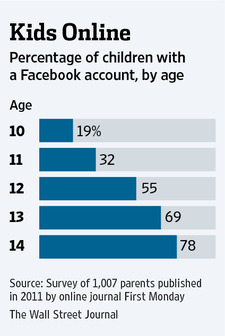
It seems as though Facebook cares more about indoctrinating more young lemmings onto their database than protecting the safety and wellbeing of our children. I have stated before my firm belief that children under 13 do not have the maturity to warrant the privilege of having a Facebook page.

You may argue that many 13 year-olds defy that rule and go and get one anyway. This is unfortunate, and something their parents ought to take an interest in, but at least in this instance there are laws that are being broken. It would be decidedly worse if the age requirement rule was abandoned altogether.

A new proposal to allow children under the age of 13 to have legal access to Facebook is the first step in a concerted effort to rescinding these important regulations:

Facebook Inc. is developing technology that would allow children younger than 13 years old to use the social-networking site under parental supervision, a step that could help the company tap a new pool of users for revenue but also inflame privacy concerns.

Mechanisms being tested include connecting children’s accounts to their parents’ and controls that would allow parents to decide whom their kids can “friend” and what applications they can use, people who have spoken with Facebook executives about the technology said. The under-13 features could enable Facebook and its partners to charge parents for games and other entertainment accessed by their children, the people said.

Facebook currently bans users under 13. But many kids lie about their ages to get accounts, putting the company in an awkward position regarding a federal law that requires sites to obtain verifiable parental consent before collecting personal data from children.

Any attempt to give younger kids access to the site would be extraordinarily sensitive, given regulators’ already heightened concerns about how Facebook protects user privacy. But Facebook, concerned that it faces reputational and regulatory risks from children already using the service despite its rules, believes it has little choice but to look into ways of establishing controls that could formalize their presence on the site, people familiar with the matter said.

Praise Your Children and then Watch them Bully

May 30, 2012

A new report dispels the long-held theory that bullies have low self-esteem. This report maintains that bullies often come as a result of being over-praised and over-complimented.

LAVISHING children with praise and constantly pumping up self-esteem is breeding a generation of bullies, groundbreaking research reveals.

Prof Helen McGrath from RMIT, a key player in Australia’s anti-bullying policies, says mums, dads and educators have spent too much time telling kids that “darling, everything you do is wonderful”.

Rather than giving children “trophies for coming seventh, eighth and ninth”, they instead need a good old-fashioned dose of reality – including in their school reports, she said.

“The silliest thing you can tell children is, ‘If you set your mind to it, you can do anything you want’,” Prof McGrath said.

Now the State Government has flagged a comprehensive discussion on teaching methods.

Education Minister Martin Dixon said last night: “What Prof McGrath’s research has shown makes good sense and is worthy of wider debate.

“While parents and teachers want to encourage their children and students to be the best they can be, it is also important that we are genuine. A measure of self-esteem is good, but a large dose of self-respect and respect for others is even better.”

Well-meaning parents and teachers had been unwittingly contributing to the problem for 30 years through the “failed self-esteem movement”, she said.

“Parents love their children and are trying really hard to keep their self-esteem high, not realising … they’ve made the mistake of assuming that means their child can never have any failures, disappointments, sadness,” she said.

“But if we’re getting kids who are increasing in their sense of narcissism, and the need to be entitled and always get positive feedback … that is a fairly dangerous way for our community to go.”

It is fascinating to read of the Government’s clumsy response to this findings. They want teachers to start being “genuine” with the2ir students. Great idea! Now why didn’t I think of that?

It is quite a simple interpretation to think that bullies are just often children with overfed egos. The mistake this report seems to make is that it assumes that children grow to believe the messages that these parents send. The assumption is that these kids grow up thinking they can achieve anything they want (whether they have natural ability or otherwise).

This is not my experience. My experience tells me that such children weigh up the compliments and positivity they get from home with some of the negative talk they get outside, and it confuses them. Children who are constantly told how beautiful they are at home, are then called “ugly” and “fat” in the schoolyard. This mixture of messages makes them feel terrible insecure. Are their parents liars? Are their school friends just being cruel, or do they have a point?

So indeed, I do believe such children have low self-esteem. The realisation that some of the messages being sent from home are not shared by the world outside doesn’t inflate their ego, but rather, confuses them and makes them less trustworthy of others.

The best depiction of a bully (or I should say, “bullies”) comes from Mike Feurstein’s classic movie “How to Unmake a Bully“. Instead of portraying the bully as a person that has no characteristics that other children can related to, Feurstein paints him as a lost child, bullied himself in the past, without a undesratnding of other options and modes for letting off steam.

The beauty about the film is that after watching it, my students gain an appreciation and a unserdtanding not only for the victim but also for the bully himself.


Pushy Parents and those Awful Standardised Tests!

May 13, 2012

So it turns out that some parents are so keen to have their children perform at the NAPLAN tests (Australia’s standardised tests) that they have started preparing them as early as kindergarten age. I couldn’t think of anything more dispiriting for a child. It’s bad enough I have to teach my Grade 3’s based on the questions they are bound to encounter during the tests, what could be worse than being subjected to it, up to 5 years in advance?

PUSHY parents are training kindergarten kids for Naplan – four years before they have to sit the controversial literacy and numeracy tests.

About a million students – in years 3, 5, 7 and 9 – will sit this year’s tests over three days next week.

But the pressure to perform is beginning years early, with some parents forcing their four-year-olds to take grade 3-level tests at home.

Dr Les Michel, from the Senior Students Resource Centre, said pre-school parents had joined the soaring demand for practice Naplan tests.

“This year we’ve even been getting kinder parents,” Dr Michel said.

“We would have had dozens, I’d say.”

Dr Michel said kindergarten parents bought the grade 3-level booklets, costing up to $24.95 each.

“They are really pushing their kids,” he said.

School Education Minister Peter Garrett said Naplan practice for pre-schoolers was “highly alarming”.

“It’s putting more pressure on kids at such a young age that they really don’t need, and it’s usurping the role that teachers in the classroom play, which is completely unnecessary,” he said.

However schools are also increasing the pressure, with “teaching for the test” now beginning as early as grade 1.

“We’re aware of it happening, even though people won’t admit it on the record, and why would they?” Parents Victoria executive officer Gail McHardy said.

“It demonstrates the desperation of some schools – their reputation hangs on it.”

Victorian Independent Education Union secretary Deb James said there was an “increased and unwelcome” focus on the tests in schools.

Australian Education Union state president Mary Bluett said: “Kids sitting down and practising tests is not the way to learn.”

Lucky for these pushy parents, I have some suggested exercises for them to set for their children.


To prepare them for the persuasive writing exam, you could set your child some of the following topics:

1. What is more fun, studying language conventions or playing outside with friends?

2. Is doing practice tests with mum and dad considered quality time?

3. Is learning for fun overrated?


To prepare them for the maths paper, I have the following suggested activities:

1. Count up the blisters that you have accrued from all the writing you’ve done and round the number to the nearest ten.

2. If Johnny went to school from 8:00 a.m until 4:00 p.m. and then spent the next 2 hours completing timed reading comprehension exams, how much time does he have to relax?

3. What percentage of pushy parents ends up rearing appreciative kids?

Good luck parents!