Archive for the ‘Nutrition’ Category

Good Heavens! It’s the Lunch Box Police!

February 17, 2012

Governments that poke their nose into people’s daily life are extremely annoying. It is a Governments job to provide people with the freedoms and resources required for living a comfortable life. The day they impose regulations that limit our basic freedoms, is the day they have gone too far.

Apparently, in some parts of the Western world, that day has well and truly arrived:

The elementary school in Raeford, North Carolina, decided the four-year-old’s lunch — which consisted of a turkey-and-cheese sandwich, banana, potato chips, and apple juice — did not meet nutritional standards established by the U.S. Department of Agriculture. Why? Because it did not contain a vegetable.

The USDA guidelines say lunches, even those brought from home, must consist of one serving each of meat, milk, and grain, and two servings of fruit or vegetables. Those guidelines — introduced last month as “historic improvements” by the federal government — spring from the Healthy, Hunger-Free Kids Act championed by First Lady Michelle Obama as part of her Let’s Move! Campaign and signed into law by President Barack Obama.
 
Dr. Janice Crouse, senior fellow for the Beverly LaHaye Institute at Concerned Women for America, sees the incident at the North Carolina school as historic in another sense. She says it is just another way government intrudes on the rights of parents.
 
“It’s another way that the government says it knows best, another way to waste taxpayer dollars, quite frankly, and to really irritate parents,” Crouse tells OneNewsNow.
 
The mother of the young girl, in an interview with Carolina Journal, says what angered her the most was the message her daughter received. “…Number one, don’t tell my die I’m not packing her lunch box properly,” she stated. “I pack her lunchbox according to what she eats.” The child, she reported, does not like vegetables; so the mom packs fruit instead.

Why do Governments resort to strict regulations and negative tactics to enforce standards which can be met without limiting freedoms and isolating people?

How to Get Kids to Eat From Their Packed Lunch

January 26, 2012

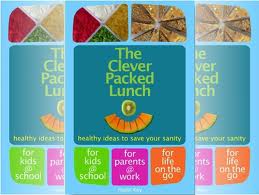
Hazel Keys, the author of The Clever Packed Lunch has come up with a system for getting kids to eat the contents of their lunchbox.

Below is a portion of an interview of Ms. Keys conducted by the Courier Mail:

Q: You’ve run a tuckshop – what’s your take on ensuring kids leave home each day with a properly packed lunchbox?

 A: It’s essential. A healthy nutritious lunch supports learning by allowing children to settle, focus and learn. Processed, refined and sugary foods have been shown to do the opposite.

Q: What motivated you to write The Clever Packed Lunch?
A: My many years of parenting and preparing school lunches resulted a system that I felt could benefit families and I wanted to share that.

Q: What are your three top tips when it comes to creating great packed school lunches?
1. Involve your kids in the preparation; listen to them and try to accommodate their preferences within the guidelines of health and balance.
2. Include plenty of fresh fruit and vegetables, preferably choosing in-season varieties.
3. Choose “whole” foods and ingredients that are as close to their natural state as possible, like seeds and whole grains.

Q: You suggest parents should try to get their children actively involved in making lunchbox choices – what are the benefits?
A: This is a great way to achieve a number of goals, so that:
• children feel empowered
• they’re far more likely to eat their lunch
• they’ll learn how to cook and feed themselves healthily in the process.

Q: Can you give us an example of a delicious and balanced lunchbox that could turn fussy eaters into fans?
A: Kids are attracted to “fast” food, there’s no doubt, and in my experience they love pizza. Pizza can definitely be healthy as long as you use quality ingredients like (some) wholemeal flour, olive oil and organic tomatoes. I serve it with salad, or the mixed potato wedges recipe from the book, which uses sweet potato, a highly nutritious food. And then there’s my healthy chocolate cake recipe!

Q: It’s Sunday night and the fridge is looking bare any lunch items that can be made up from simple pantry staples?
A: Yes! I always keep small tins of prepared salmon in the pantry, along with dried egg (not wheat) noodles, and frozen vegetables like corn and peas. The other items I always have on hand are a wide range of seeds. The noodles, once cooked, can be combined with the salmon, veggies and some sesame seeds, perhaps with a little sesame oil.

Q: Top three sandwich combos?
A: Ooh, yes! For kids I find the following are popular:
– sliced turkey breast, cranberry sauce and sliced green apple
– salmon, chopped gherkin, egg mayonnaise and cucumber
– grated cheddar, creamed corn and diced red capsicum toasted

Q: We automatically think of sandwiches when it comes to packed lunches? Can you suggest three options we could consider instead?
A: Yes, I’ve a recipe in the book I call “Sleeping Dogs”, which is a healthy version of hot dogs or sausage rolls. Home-made dips with wholegrain rice crackers or pappadams are a nutritious gluten-free choice. And my personal favourite, also from the book; the creamed corn puddings, which are rich in eggs and served with sour cream and guacamole. Yummy!

Q: How important is it to include a treat?
A: I think it’s important not to give “treat” foods too much attention, but to demonstrate flexibility by including them now and again, although not in the lunchbox unless the food has a nutritional benefit, like quality dark chocolate. That’s a real win-win treat!

Q: You suggest doubling up lunch box prep with dinner – can you give us a couple of examples to get us thinking on the right lines?
A: When making meatballs I double the quantity and shape some into patties instead. I serve them for dinner in a wholemeal or multi-grain roll with lots of salad. And when I make chicken and corn soup, I add the uncooked chicken to the stock. Chicken cooked this way is both moist and tender and adds flavour to the soup. So I often double the amount of chicken, and once cooked, remove half. Then I freeze it and use it for Asian dishes another day.

Q: What do you think are the main issues facing families in relation to providing healthy lunches for children at school, and what solutions can you offer?
A: It seems to me that families are finding themselves over-stretched, and lacking the time and money to provide really nutritious lunches. I’m convinced that this is contributing to the growing issue of child obesity. My answer is to move away from packaged and processed foods and choose fresh, simple, high quality foods instead. So much of our money goes straight into the bin wasted on fancy packaging and clever marketing, and the ingredients are often inferior. Feeding ourselves properly takes a little effort, but it’s absolutely worth it. Good food, like charity begins at home and offers an opportunity to develop in your children healthy eating habits that will last a lifetime. It’s one of the greatest gifts you can give them. And there are clever systems that can make the process fast and efficient too, such as the one outlined in my book.


The author can be contacted at hazel@lunchideasforschool.com

Does Obesity Equate to Child Abuse?

July 17, 2011

Last week Harvard obesity specialist David Ludwig advocated putting children in temporary foster care when the child is found to be obese.   The obvious conclusion being, that in his opinion, allowing your child to get to the stage of obesity equates to a form of child abuse.

I don’t agree with this statement or the measures advocated by Mr. Ludwig.  And more importantly I think the debate will distract rather than positively influence what is a very important issue.  I appreciate the words of Dr. Arthur Caplan, the director of the Center for Bioethics at the University of Pennsylvania who wrote:

“I am not letting parents off the hook,” he wrote in response to the article, “but putting the blame for childhood obesity on the home and then arguing that moving kids out of homes where obesity reigns is the answer is short-sighted and doomed to fail. We need the nation to go on a diet together and the most important places to start are the grocery store, schools and media.”

My only query on the above quote is why he omitted “home”.  Surely “home” is the most important place to start a change of habits.  Not just in what is eaten, but how food is eaten.  It is sad to hear of the demise of family dinners.  Surely the television and computers can be switched off for half-an-hour every evening.

Kids and Obesity: We Have Reached Crisis Point

July 4, 2011

The figures being released about the rate of childhood obesity is quite alarming.  To read that half a million British children have liver disease makes me worry very much about what a difficult state we are in and how far we have to go to reverse this unfortunate trend.

Doctors say obesity levels are now so high that children are commonly suffering signs of disease more commonly associated with alcohol abuse, meaning many will go on to develop cirrhosis, with some requiring liver transplants.

Government estimates say around 500,000 children below the age of 15 are suffering from “non alcoholic liver disease” which is caused by a build-up of fat within liver cells, which stops the organ functioning properly.

The condition increases the risks of heart disease, strokes and type 2 diabetes, and can lead to cirrhosis – scarring of the liver – which is often not detected until it is too late.

Britain’s most senior liver expert said the country was now facing a timebomb, with thousands of lives already at risk, and the numbers of children suffering from the disease projected to “rocket” further in line with rising obesity levels.

Prof Martin Lombard, the Department of Health’s national clinical director for liver disease warned that the disease was rarely detected until it had caused damage.

He said: “Liver disease is a silent killer, which is putting the lives of thousands of our children at risk. We do not want to see the next generation dying young from a condition that can be prevented.

“We know that with childhood obesity on the rise we can expect more children to be at risk of fatty liver disease in the near future.”

Government figures show 30 per cent of children aged between 2 and 15 are now overweight or obese – a figure which is projected to double by 2050.

Prof Lombard said he was concerned that children suffering from fatty liver disease were at particular risk if they started experimenting with alcohol in teenage years. He said even modest amounts of alcohol could worsen the condition.

There is no medical treatment for the disease, but the extent of it can be reduced by weightloss and improvements in diet.

Introducing the Candy Diet!

June 30, 2011

Feeling guilty about the amount of candy you allow your children to eat?  Not anymore.  If anything, you aren’t feeding them enough!

Or, at least that’s what the research seems to suggest ….

Indulging a sweet tooth might not be anyone’s idea of a good weight-loss strategy. But in jaw-dropping new research, scientists say they’ve found something even more likely to be associated with unwanted weight gain in children and adolescents than eating candy:

Not eating candy.

For the study, published in Food & Nutrition Research, researchers at Louisiana State University tracked the health of more than 11,000 youngsters between the ages of two and 18 from 1999 to 2004. They found that children who ate sweets were 22 percent less likely to be overweight or obese than kids who shunned sweets. Adolescents? Those who ate candy were 26 percent less likely to be overweight or obese than their non-candy-eating counterparts.

And that wasn’t the only surprising finding. Researchers also found that the blood of candy-eating kids had lower levels of C-reactive protein. That’s a marker of inflammation in the body and a risk factor for cardiovascular disease and other chronic illnesses.

Who funds this research?  Could somebody please do a study that links the watching of televised sport to greater physical health?  I could do with some scientific evidence to persuade my wife that I’m not wasting my time

Woman Re-Mortagages Her House To Feed School Kids

June 13, 2011

How about this for a story of selflessness and generosity.

A businesswoman in east London re-mortagaged her home to establish a breakfast club after learning that one-fourth of Britain’s primary pupils were too hungry to learn.

Today, Carmel McConnell’s breakfast club – Magic Breakfast – feeds 6,000 chidren every day, Daily Express reported.

At 200 of the most deprived schools, Magic Breakfast gives children a healthy start of juice, bagels and cereal or toast for just 23 pence, with many often having not eaten since the previous school lunch.

Carmel said: ‘My work was advising big business on building trusted brands. I ended up going into schools to research a book on corporate activism and found that many of the teachers were having a whip-round and bringing food into school each morning so they could give their pupils something to eat.

‘Without food, the youngsters are unable to concentrate, behave properly or to learn. I immediately bought a whole load of loaves and dropped them off at our local schools in Hackney (in east London) where the teachers had expressed a real need.

‘I then re-mortgaged the house when I realised just how widespread this problem was and how little it would take to put it right.’

Valerie Figaro, head of Randall Cremer Primary School, east London, said Magic Breakfast transformed the lives of many of her pupils.

‘When children get up they won’t have eaten for 10 to 12 hours and we are asking them to expend energy by using their brains without any fuel,’ said Figaro.

Carmel, who draws support from large corporations, hopes to advise schools on raising funds themselves for breakfast clubs.

I love stories about the unsung heroes of education.  Ms. McConnell can be contacted at carmelmcconnell@btinternet.com

Breakfast Club a Huge Hit!

June 7, 2011

Breakfast is such a crucial meal.  I am a big supporter of the Breakfast Club program, and am delighted to here it is working well.

YEARS of public campaigns to persuade children to eat breakfast are paying off, with the number of children consuming a morning meal rising in the past decade. A national study by the University of Sydney has found primary and secondary school students are more likely to eat breakfast. Thousands of schoolchildren from years 2 to 12 were surveyed in 2000 and 2006. A follow-up study is planned for next year.

Researchers found high school students in particular were now more likely to eat breakfast.

University of Sydney nutritionist Jennifer O’Dea credited public campaigns and school ”breakfast clubs” for the improvement.

”It’s such a simple thing but it feeds the child’s brain, it improves their behaviour and reduces their risk of overweight and obesity,” she said.

The number of high school boys missing breakfast fell from 19.9 per cent to 12.1 per cent and the number of high school girls fell from 27.7 per cent to 18.7 per cent.

In primary school, the number of boys who did not eat breakfast fell from 9.4 per cent to 6 per cent, while the number of girls fell from 9.6 per cent to 6 per cent.

Dr O’Dea expects to see greater improvements when surveys are conducted again next year.

The nutritional quality of breakfast affects a child’s concentration and learning ability, Dr O’Dea found in separate research in 2008.

Congratulations to all schools that have invested their time and energy into Breakfast Club.  May it continue to assist students in desperate need of a nutritious meal.

Our Kids Must Be More Active

May 4, 2011

I am not that old, yet I know that my experiences growing up in many ways are worlds apart from the current experiences of our youth.  When I was growing up we used to regularly ride our bike, play sporting games outside and sign up for after-school swimming or gymnastics classes.

I’m afraid those days are long gone:

One in six children cannot swim,  a survey has revealed.

It also found one in ten had not learnt to ride a bicycle and  almost a quarter had never run 400 metres.

The study found British children were more than twice as likely to spend their free time watching television (79 per cent) than playing sport (34 per cent).

Children were also more likely to surf the internet (56 per cent), chat on social-networking websites (45 per cent) and play video games (43 per cent) than take part in sports.

The study of 1,500 children aged six to 15 reveals a generation turning its back on sport.

‘This is another sad reflection on children today,’ said Tam Fry of the Child Growth Foundation.

A study found British children were more than twice as likely to spend their free time watching television

‘We have a generation of children being fed the wrong food, which makes them fat, and fewer and fewer get the exercise they need to burn it off. It becomes a vicious cycle.

‘We need to teach children from a young age that they have to exercise and take part in sport to stay a healthy weight.’

He added that there are often not enough places for children to play and ride their bikes because there are so many cars on the road.

The survey, which reveals a generation turning their backs on sport, was described as ‘staggering’ by the head of the British Triathlon.

Even for those who could swim and ride bikes, just a third (34 per cent) had swum the length of a pool and half (46 per cent) had ridden their bikes in the past week.

In contrast, nearly three quarters (73 per cent) had found the time to play a video game in the past week.

A further 15 per cent of the children polled said they had never played sport with their parents.

The study was commissioned as part of a series of mini-triathlon events being held this summer by Tata Steel in areas including steel regions such as Scunthorpe, Corby, Teesside, Rotherham, Swansea and Shotton in North Wales.

A third of those questioned (33 per cent) said they did not own a bike, compared with three quarters (77 per cent) who owned a games console.

Remember when the fad at school would fluctuate between down ball, 4 square, hop scotch, hula hooping and elastics?  Most girls growing up now would never have associated elastic with a game.  I find this so sad.  The future ramifications of bringing up a generation of couch potatoes is quite frightening.

Poor Children Coming to School Tired and Hungry

April 15, 2011

This is a universal problem that requires a lot more attention.  Teachers are not given enough credit for their role in supporting kids that come to school with inadequate food or no lunch at all.  It is not widely known that teachers often spend out of their own pocket to ensure that their poorer students have what to eat.  But the problem still exists, and it must be addressed.

A concerted campaign from schools by working with charity groups to ensure that meals are provided for students of poor families should ensure that heartbreaking articles like this one will be a thing of the past:

Teachers are reporting a rise in pupils entering the classroom feeling tired, hungry and dressed in worn-out clothes.

A study by the Association of Teachers and Lecturers found almost eight-in-10 staff had pupils living below the poverty line and a quarter believed numbers had increased since the start of the recession.

One teacher from Nottingham told of a sixth-former who had not eaten for three days as her “mother had no money at all until pay day”.

A teaching assistant from a West Midlands comprehensive told researchers that some pupils had “infected toes due to feet squashed into shoes way too small”, while another member from Halifax reported a boy who was ridiculed in the PE changing room because his family could not afford to buy him any underpants.

Some teachers told how pupils were consistently late for lessons as parents could not cover the bus fare to school. Other children from middle to lower income families have been forced to cut out school tips because money is so tight, it was claimed.

The disclosure follows the publication of figures showing a rise in the number of pupils eligible for free school meals as families struggle to stay above the breadline in the recession.

Almost 1.2 million five- to 16-year-olds claimed free lunches last year – a rise of more than 83,000 in just 12 months.

Mary Bousted, ATL general secretary, claimed that problems would escalate further because of Government funding cuts – putting the Coalition’s social mobility drive in jeopardy.

“It is appalling that in 2011 so many children in the UK are severely disadvantaged by their circumstances and fail to achieve their potential,” she said.

“What message does this government think it is sending young people when it is cutting funding for Sure Start centres, cutting the Education Maintenance Allowance, raising tuition fees and making it harder for local authorities to provide health and social services.

“The Government should forget empty rhetoric about social mobility and concentrate on tackling the causes of deprivation and barriers to attainment that lock so many young people into a cycle of poverty.”

It is time that we made the most crucial issues in education our first priority and main focus.  As important as debate over class size, ICT, male teacher numbers are for improved educational outcomes, such discussion often takes over.  We need to get back to basics.  The basic requirement for a school is to look after the welfare of its students.  That makes health and bullying among the most important priorities in my book.Here’s an opportunity for schools and charity groups to work together to tackle a problem that shouldn’t even exist in the forst place.

Banning Home-Made Lunches is a Dreadful Policy

April 15, 2011

Of all the things to ban at school, who was responsible for this terrible idea? How can you ban children from bringing a home-made lunch to school? How can you force parents into spending money for their child’s lunch when they could provide their own for less cost?  This is another case of we don’t trust parents and their children, so we’ll intervene.  Whilst this philosophy is often generated from good intentions, it seldom leads to good results.

The days of brown bagging it are over for students in a Chicago school. In an effort to encourage healthy eating, their principal banned lunches brought from home.

Elsa Carmona, principal of Little Village Academy on Chicago’s West Side, forbade students from bringing food from home (except those students with a medical excuse) after she noticed kids eating “flaming hot” chips and drinking soda at lunchtime. “It’s milk versus Coke,” she said.

While the goal of healthy eating is a positive one, parents are understandably upset about the Carmona dictating what their kids can and cannot eat for lunch. Not to mention the fact that some parents may be able to send their kids to lunch with a meal that costs less (and one that could be even healthier) than the school’s offerings.

The kids are upset, too. When the Tribune reporter visited the school, one seventh grader led students in a chant of “We should bring our own lunch! We should bring our own lunch!” Students say the school’s food tastes bad. Bad-tasting food, parents say, often means that kids throw away the school lunch and go hungry.

It’s also worth noting, as reported by the Tribune, that the school district receives money from the federal government for each free or reduced-price lunch it serves, meaning that in banning homemade lunches could potentially put more money in the pockets of both the district and the school district’s food provider.

But Carmona maintains her school’s policy is simply about helping students make healthy choices. “Nutrition-wise,” she told the Tribune, “it’s better for the children to eat at the school. It’s about nutrition and the excellent quality food that they are able to serve (in the lunchroom).”

Is anyone surprised that this scheme looks very much like a money-making venture disguised as a realistic attempt in tackling childhood obesity?  What happens to a child who is caught bringing in a lunch from home that is more healthy and nutritious than what the school offers?  Does that child get punished?  What happens if the students hate the menu?  Why should they be forced to eat what they don’t like?

I am all for reducing the amount of junk that students have in their lunch boxes. But at the end of the day, I urge school’s to stop mirroring prisons.  Yes discipline is important, as is routine.  And yes, at times intervention is required.  But why do those involved in forming school policy show a lack of regard for making their students’ time at school a happy, comfortable or at the very least bearable experience?

How about forcing those involved in making stupid rules like this one to eat from the school cafeteria?  How about making them lead my example and banning them from eating a home-made lunch?

And you wonder why there is such a lack of respect from students nowadays?