You would have thought we were stuck in the 1960’s. Honestly, to offer make-up classes to young girls is such an outdated idea.
A school has triggered outrage for giving make-up lessons to girls as young as 14.
The classes at Mount St Mary’s Catholic High School in Leeds even teach the youngsters how to get ready for a night out, the Mirror reports.
Teachers claim they help pupils learn how to make a good first impression and can boost their self-confidence.
However, family campaign groups and parents yesterday criticised the school.
The Family Education Trust told the paper: ‘At a time when there is growing public concern about the sexualisation of children and young people, it is irresponsible for schools to provide make-up lessons.
‘Parents don’t send their daughters to school to learn how to put on make-up but to receive a decent education.
‘The fact that some of the pupils asked for these lessons is no defence.
Indeed, it is not for students to dictate what is taught in class. My issue here is it sends the wrong message. True confidence doesn’t come from the ability to apply make-up, it comes from achievement. Far more worthier programs can be undertaken by the school than this one.
Whilst I don’t feel it’s necessary to condemn the school for this error in judgement, I think it’s time they concentrated on making these girls feel good about themselves within their charter of educational outcomes.
I once taught a child that refused to talk. He was already in fourth grade by the time I had him and some of his previous teachers had told me that they hardly recall a time when they heard the sound of his voice. No matter what I tried, nothing was working. By the end of Term 1 I was beginning to doubt I could do anything for him.
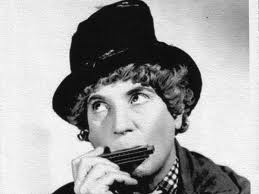
Then it hit me. It was a long shot, but I couldn’t think of anything else so it was worth a try. The boy reminded me of Harpo from the Marx Brothers. Not only didn’t he talk, but he had the same facial features and a similar haircut. I decided to show the class my favourite Marx Brothers movie, Duck Soup, and dedicate the screening to this student that refused to talk. I mentioned how Harpo Marx is cool and so is this student who happens to share a resemblance.
I figured that instead of trying to get him to talk and making his silence a negative, I would celebrate it and cannonise it. The class loved the Marx Brothers and particularly enjoyed Harpo Marx. In fact, no one loved it more than this particular child, who would mimic Harpo, get his parents to order the Marx Brother’s DVD’s and yes, the positive attention from peers in particular made him start to talk!
I recently stumbled on a valuable website that deals with helping parents and educators deal with shy children. The website is called shakeyourshyness.com and it features some useful tips. By following the link provided, the tips below are explained in more detail.
Normalize shyness and depict it in a positive light.
Make regular contact.
Give shy children a job to do.
Comment on their successes and post their work.
Help Children Learn To Initiate Contact With Others.
Educate Parents.
Reward Small Improvements
Keep an eye out for teasing
It turns out that he was just waiting for somebody to at least attempt to understand him. He didn’t want people to try to change him, he wanted people to appreciate him for who he was.
Later that year, this very child performed in the school concert. Thank you Harpo!
I have noticed that kids these days take things for granted on a far greater scale than when I was a child. It is much harder to please children and equally as hard to get a voluntary “Thank You.”
I imagine that Christmas is when this trend comes to the fore. As children are expecting gifts, there is a visible feeling of entitlement. The occasion mandates a good gift so what is there to be thankful for? If the gift isn’t up to their expectation, they feel that a public show of disappointment is appropriate because the gift bearer should had a better sense of occasion and made a better purchase.
What many young children may not be aware of is the stress involved with buying presents. Parents and family members go to great trouble and expense to buy quality gifts. All the child has to do is rip open the gift wrapping.
I don’t know about you, but I’m still recovering from a fun-filled holiday. I have thoroughly enjoyed the look on my kid’s faces when they saw their presents Christmas morning, all the food, and most importantly, the quality family time.
But now that the presents are finished—and we’re putting our house back together—it’s important to me that my kids appreciate all the kindness and generosity that has been shown to them.
When I was growing up, my mother had a rule about presents: you couldn’t use the gift until you had properly said thank you. Many times, this meant a phone call to say thank you for the present. But as I got older, my mom instilled in me the importance of a thank you note.
I have been trying to instill that same gratitude for gifts in my children. We usually make a phone call or draw a picture, but now my 5-year-old is learning how to properly write a thank you note. In fact, I know the significance is getting through, because after receipt of one gift, my son whispered to me that he needed to write a thank you note because that was exactly what he had been hoping for—my heart melted.
This week, I’m determined to have my boys write notes to their grandparents, family and even Santa, to thank them for the wonderful gifts they received. We’re even going to include some drawings to sweeten the package.
Babies and young toddlers: Take a piece of construction paper and using finger paints, dip your child’s hand in the paint. Then make hand prints on the paper. Then you can write a thank you for the gift on the side. Trust me when I tell you that grandparents love this!
Older toddlers: Have them color a picture, and then take a marker and then write in the thank you.
Preschoolers: Take a piece of handwriting paper, have them draw a picture on the top half and then on the bottom half, pre-write the letter for your child using dotted-line letters that your child can trace and then sign their name.
Elementary school: Give your child a head start by making them a template to follow. Sometimes the hardest part of a thank you note is knowing what to write. Elementary school kids can write the letters, but will feel less intimidated if you help them with the basic framework.
Middle/high school: Give your child a deadline. Tell them they have to have the notes completed by a certain date.
Believe it or not, your child will actually appreciate the present more because he or she took the time to do this. I know I always appreciate when people take the time to say thank you to me as well.
As a child who started slow and only came into my own after school, I have always been determined to help slow starting students find their feet as quickly as possible. It is my belief that the classroom teachers can turn the fortunes of a slow starting student around.
Three-quarters of children in England who make a slow start in the “Three Rs” at primary school fail to catch up by the time they leave, data shows.
And more than a third (39%) of pupils who make a bright start are no longer reaching advanced levels when they leave.
The government’s school league tables data also shows 9% of primary schools do not meet its floor standards.
Overall 74% of pupils met the required levels in English and maths.
Some of those kids that are allowed to fall through the cracks are victims of poor teaching. Often the slow start comes about because the learning style of the student differs to the way the information is conveyed by the teacher.
I think it’s a major cop-out to let the slow starters continue on their merry way without giving them the intervention they so desperately need.
I am horrified at some of the language that kids use nowadays. Hearing expletives obviously used by their parents at home, kids as young as 6 come to school sprouting four letter curse words as casually as if they were discussing the weather.
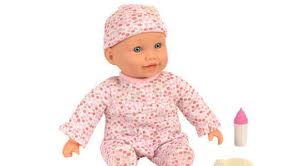
PARENTS listening closely to the babbling sounds of a baby doll were shocked when the toy appeared to say “you crazy b***h.”
The You and Me Interactive Triplets sold at Toys R Us stores in America and online via Amazon are supposed to say mamma and dadda and babble like a real baby.
“Oh, absolutely. She’s calling them a crazy b***h,” Kathy Wetter told Local 6 news in Florida.
Listen to what the baby has to say in the video above. What do you think it says? Tell us below.
Dozens of videos of the doll have been uploaded onto YouTube and angry parents have flooded Toys R Us with complaints.
Fisher-Price insisted that the doll was not pushing pro-Islamic messages. The sound some parents were hearing was caused by an accidental distortion of the doll’s soundtrack.
Toys R Us said it has no plans to take the swearing doll off its shelves, but it would allow offended customers to return the toy with a receipt.
Call me old-fashioned but young children swearing is not a good look. Just listening to some of the words this doll uses from the YouTube clip attached above, I am appalled that this was allowed to get on shelves without so much as a warning to parents. To manufacture a doll that is programmed to say nasty, misogynistic expressions is quite irresponsible.
Whilst it may not come as a surprise to learn that British society casts negative views about the way children behave, the level of disrespect and animosity doesn’t bode well for the future. To liken children as ‘feral animals’ may well be an accurate description for many, but I can’t help thinking whether such criticisms results in a stronger us vs them mentality.
Almost half of Britons think children are violent and starting to behave like animals, a Barnardo’s survey suggests.
The children’s charity says the research suggests society holds a negative view towards children despite the majority being well behaved.
Of the more than 2,000 people questioned by ICM Research, 44% said young people were becoming feral.
Barnado’s chief executive Anne Marie Carrie said it was “depressing” so many were ready to give up on children.
The survey revealed that:
49% agreed children are beginning to behave like animals
Almost 47% thought youngsters were angry, violent and abusive
One in four said those who behaved badly were beyond help by the age of 10
Whilst 36% thought children who get into trouble need help, 38% disagreed
Writing off our young is not a good move. We just can’t stand by and blindly judge. We must do what we can to ensure that the next generation of adults feel empowered to make a positive contribution to society.
However uneasy people are feeling about the state of children in today’s world, it is up to us to straighten things out. As it is, I am unhappy by the way my generation virtually ignores the contributions and sacrifices made by our elders. I hate to think how badly the younger generations will treat us.
Children born at the start of the academic year achieve better exam results, on average, than children born at the end of the academic year.
This matters because educational attainment has long-term consequences for a range of adult outcomes. But it is not only educational attainment that has long-lasting effects: other skills and behaviours affect adult outcomes too, and can also matter for children’s current wellbeing.
In line with previous research, our report shows that there are large and significant differences between August- and September-born children in terms of their cognitive skills, whether measured using national achievement tests or alternative indicators such as the British Ability Scales; these gaps are particularly pronounced when using teacher reports of children’s performance.
Those born in August are also significantly more likely to take vocational qualifications after leaving compulsory schooling and slightly less likely to attend a Russell Group university.
I was one of the youngest in my class and really struggled to keep in touch with my classmates. I was slow to mature, and in hindsight I probably should have stayed down a year to maximise my academic potential.
Having said that, I believe that parents can get fixated with their children being among the youngest and can use it as an excuse. This then filters down to the child who rationalises their performance by making the same excuse.
Critics of the way our generation of parents rear children tell us that we spoil kids senseless. They say that we go out of our way to protect our children from failure. They admonish us for not allowing children to deal with disappointment, a crucial life skill in the real world.
But as much as I agree with these critics, I can’t help but sympathise for children that are not ready for the battering that can come about from being singled out amongst their peers.
When I was studying to become a teacher, my Art lecturer made us do a sketch of a fellow classmate, who was made to pose leaning against a ladder. I can’t draw for my life. Even my stick figures look shabby! At the end of the activity, the students wandered from drawing to drawing, inspecting the works of art that our creative class had accomplished. Then there was mine. An absolutely horrendous, ghastly mess, that looked nothing like the poor subject. I wanted to crawl into the art supplies cupboard and remain there for at least thirty years!
When we were expecting our first child, we attended parenting classes. On one of our weekly lessons, the instructor got all the fathers up in front of the class to do a demonstration of how cloth nappies/diapers are applied to a newborn. We were each given a cloth nappy and a doll and were given quick instructions before being put to work. I have never been great with verbal instructions. I am a visual person, relying on generous amounts of time and clear descriptive pictures before I can follow even the simplest of instructions. Needless to say, my nappy ended up looking more like a paper airplane.
And I’m an adult with relatively good self-esteem. Imagine how kids feel?
Imagine how uncoordinated and unfit children feel during physical education classes. Imagine how traumatic it is for a child who finds maths difficult to demonstrate an answer on the board in front of the class.
I totally agree that these are problems children should be able to deal with, as they are problems that exist in the real world.
I’m just not sure I’m emotionally ready to teach it to them.
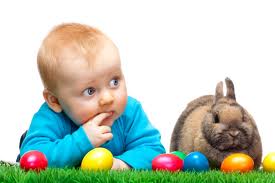
I read a brilliant article in The National about the lies we tell our children and when is the right time to confess that the Easter Bunny they are so fond of isn’t real.
Below is just an excerpt of the article. I strongly encourage you to read the entire piece by following this link.
The world is a confusing place for small children, particularly as they only learn to distinguish between reality and fantasy between the ages of three and five. Jacqueline Woolley, a psychology professor at the University of Texas in the US, found that by the age of four, children learn to use the context in which new information is presented to distinguish between fact and fiction. So, before long, your little one will be figuring out that the tooth fairy isn’t who you said she is. Which begs the question: at what age should we tell our children that their beloved magical characters aren’t real? Or, should we even claim that they’re real in the first place?
Last Christmas I witnessed the most heated debate I’d ever come across on Facebook. It didn’t involve politics, religion or money. No; it was Santa Claus who caused the divide. One friend posed the question: “Should I tell Sophie Father Christmas is real?” What followed was a polarised debate between those who wanted their children to enjoy a magical gift-giving time and those who believed that perpetuating the story of Santa was being dishonest with their offspring. “I was devastated when I found out it was my mum, not Santa, who hung the stocking on the end of my bed,” admitted one father. Whereas others regretted never having the chance to believe in Santa because older siblings had spoilt it for them.
“I make a point of always being honest with my daughter and now she has turned six I’m feeling increasingly uncomfortable with perpetuating the lie of Santa Claus,” admitted Rosie Cuffley, a mother of two.
According to Carmen Benton, a parenting educator and educational consultant at LifeWorks, Dubai, Rosie shouldn’t worry. “Sharing the world of fantasy characters with our children is not a lie, but rather a playful way of storytelling and connecting as a family to fun events. Think about the joy and excitement that thoughts of characters such as Santa Claus can induce. You have the power to create a magical world of dreams, wishes and storytelling for your kids and I believe these are part of being a playful parent.”
It’s a different scenario when children ask directly whether Santa Claus, for example, is real. Most psychologists agree that children need to know they can trust their parents to tell them the truth, even about magical characters. “The majority of children will let go of a fantasy after the age of eight, and most would be happy for the years of the imaginary world they had been able to enjoy,” says Benton.
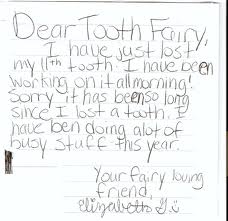
I feel terrible that my daughter still believes in the Tooth Fairy. I don’t like perpetuating a lie (especially one I know will be uncovered sometime soon). I have a feeling, irrational or otherwise, that when she does find out, her first thought will be, “What else is he lying to me about?”
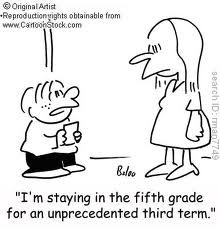
OECD figures released this year found about 8 per cent of Australian students were repeating grades at school, often with the intention of helping them catch up and get better educational outcomes.
But a University of Sydney study of more than 3,000 students in eight different New South Wales schools has found repeating a child could have the opposite effect.
Professor Andrew Martin says the research found the students who repeated did not only suffer academically, but they also struggled in other ways.
“We found that students who repeated a grade tended to be less likely to do their homework, they had more days absent from school, they tended to be a bit lower on the academic engagement and motivation scale, they were lower in academic confidence and they were lower in their general self-esteem,” he told ABC News Online.
“In many cases, it seems what educators and parents were hoping for does not quite happen.
“It seems that simply pressing the pause button does not get at the issues that might have led to the decision to repeat a child.”
WhilstI respect the findings of this study, the trend of promoting students for no other reason than to protect their self-esteem is quite challenging for teachers. It means that the child is often far behind, is often missing basic skills and therefore cannot understand advanced concepts and sometimes disrupts the other students. It means that there will be students that can’t read or write properly entering into high school.
How is that beneficial to the child? How does being set vastly different work to ones classmates make that child feel any less of a failure?
Teachers will generally do anything they can to accelerate the divide between struggling students and the rest of the class. The last thing they would ever want is for any of their students to suffer emotionally.
At the same time, the current closed mindedness of education experts when it comes to repeating year levels is a concern. Surely, at some point, the child has a better chance repeating a year than they do being promoted on the back of under developed skills?
I am in no way an advocate for making children repeat year levels. But I am also mindful that gaps can grow, and the result of a skills divide in the classroom can have a lasting effect on both class and struggling student.
I suppose it just goes to show the importance of good teaching in the early years, alertness in spotting any learning problems or difficulties and a well run and resourced Special Education/Remedial Education department.






 Topical Teaching