Archive for the ‘Child Development’ Category

Pushy Parents and those Awful Standardised Tests!

May 13, 2012

So it turns out that some parents are so keen to have their children perform at the NAPLAN tests (Australia’s standardised tests) that they have started preparing them as early as kindergarten age. I couldn’t think of anything more dispiriting for a child. It’s bad enough I have to teach my Grade 3’s based on the questions they are bound to encounter during the tests, what could be worse than being subjected to it, up to 5 years in advance?

PUSHY parents are training kindergarten kids for Naplan – four years before they have to sit the controversial literacy and numeracy tests.

About a million students – in years 3, 5, 7 and 9 – will sit this year’s tests over three days next week.

But the pressure to perform is beginning years early, with some parents forcing their four-year-olds to take grade 3-level tests at home.

Dr Les Michel, from the Senior Students Resource Centre, said pre-school parents had joined the soaring demand for practice Naplan tests.

“This year we’ve even been getting kinder parents,” Dr Michel said.

“We would have had dozens, I’d say.”

Dr Michel said kindergarten parents bought the grade 3-level booklets, costing up to $24.95 each.

“They are really pushing their kids,” he said.

School Education Minister Peter Garrett said Naplan practice for pre-schoolers was “highly alarming”.

“It’s putting more pressure on kids at such a young age that they really don’t need, and it’s usurping the role that teachers in the classroom play, which is completely unnecessary,” he said.

However schools are also increasing the pressure, with “teaching for the test” now beginning as early as grade 1.

“We’re aware of it happening, even though people won’t admit it on the record, and why would they?” Parents Victoria executive officer Gail McHardy said.

“It demonstrates the desperation of some schools – their reputation hangs on it.”

Victorian Independent Education Union secretary Deb James said there was an “increased and unwelcome” focus on the tests in schools.

Australian Education Union state president Mary Bluett said: “Kids sitting down and practising tests is not the way to learn.”

Lucky for these pushy parents, I have some suggested exercises for them to set for their children.


To prepare them for the persuasive writing exam, you could set your child some of the following topics:

1. What is more fun, studying language conventions or playing outside with friends?

2. Is doing practice tests with mum and dad considered quality time?

3. Is learning for fun overrated?


To prepare them for the maths paper, I have the following suggested activities:

1. Count up the blisters that you have accrued from all the writing you’ve done and round the number to the nearest ten.

2. If Johnny went to school from 8:00 a.m until 4:00 p.m. and then spent the next 2 hours completing timed reading comprehension exams, how much time does he have to relax?

3. What percentage of pushy parents ends up rearing appreciative kids?

Good luck parents!

What Happened to Honesty and Integrity?

April 11, 2012

My generation is going to point to today’s youth at some point (if they haven’t already) and blame them for having less respect and being more selfish than they were when they were young.

That may be so, but who do you think is really to blame?

Last week, as I went to pick up my daughter from school a driver smashed into my parked car.

Did he (could have been a “she”, but I’ll stick with “he” for convenience sake) stop and wait for me to return?

Nope.

Did he leave a note with his insurance details and a contact number?

Nope.

That’s right, he just drove away like some kind of gutless chicken. He probably thought that my insurance would cover the damage and there would be no loss to me.

In reality, even though I have full cover, my insurance company will only pay for the damage over $1000 (I would have to pay for the first $1000). My car is probably not worth that much more than $1000 and I can’t afford to buy another at this stage, so it looks like I’m going to have to walk to work!

This story is not a new one. One of my friends experienced a similar thing on the very same day!

We can blame today’s children for plenty if we want to. But on further reflection, one has to ask – How are they supposed to end up if we can’t get our own act together and become more responsible rolemodels.

Can You Affect the Emotional Intelligence of Your Baby?

March 30, 2012

As a father of a newborn baby I was wondering what, if any, impact I could have on his emotional intelligence. I came across a piece by psychologist Angharad Candlin, that raises some of my questions and seeks to answer them.

Can you influence your child’s emotional intelligence from birth? Does your style of parenting influence the way your child responds to stressful situations? Are you potentially pre-disposing your toddler to tantrums? Are there behaviours as a parent you can adopt to help your child develop without worrying behaviours. Without meaning to set you up for further parenting guilt baby and family psychologist Angharad Candlin talks about emotionally connecting with your baby and toddler and gives us some easy hints to make those important early connections.

As a parent I am always trying to research the best way of raising my child. It’s simple, there are behaviours I want to encourage and quite a few I want to avoid, mainly tantrums. It’s easy to imagine if you were a terrible and reckless psychopath it would be easy enough to damage a child very badly but what about the vast majority of parents who want the very best for their child? How much can we as parents can do to influence our baby’s personality and approach to stressful issues and if it is possible to influence such behaviours why aren’t we running classes for all parents!

This podcast is not designed to point out where you might be going wrong but rather to show just how a few simple tweaks might make your parenting journey a little easier. Angharad Candlin is a child psychologist with twenty years experience working with children, young people and families. Angharad offers parents insight into ‘Emotion Coaching’, which is one way that parents can connect with what is really happening in their child’s life.

Angharad says when toddlers experience emotion; they often have “big” behaviour, which can be read as ‘misbehaviour’ rather than as an emotional response. If parents pick this up early, and give toddlers a reliable language and feedback about their emotional world, then they can choose a response that connects with their child.

Angharad is an Honorary Associate with Macquarie University’s Psychology Department.

The podcast is available by following this link.

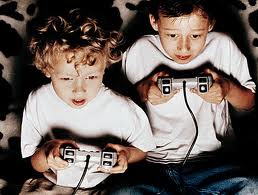
Teachers Concerned About Violent Video Games

March 28, 2012

Whenever teachers dispense parenting advice, the outcome is almost never a positive one. As much as I agree that children who are exposed to violent movies and video games are worse for it, I think it is essential that teachers spend less time judging parents and more time concentrating on the curriculum.

Still, in a perfect world, parents should reflect on some of the criticisms conveyed by teachers:

School pupils are being allowed to stay up until the early hours of the morning playing games that are inappropriate for their age, said Mary Bousted, general secretary of the Association of Teachers and Lecturers.

She said many parents were failing to adhere to age-restrictions on the most violent games, raising concerns that children are growing up desensitised to aggression and bloodshed.

It was also claimed that over-exposure to screen-based entertainment was robbing children of valuable time interacting with friends or playing outdoors – harming their education and long term development.

It follows repeated concerns from psychologists that watching violent films and playing games such as Grand Theft Auto, Mortal Kombat and Modern Warfare makes youngsters more prone to violence.

Speaking yesterday, Dr Bousted said: “I think what we are talking about, first of all, is the amount of time children spend locked in their room. The fact that children spend hours locked in their rooms playing computer games, which means they’re not interacting, they’re not playing and not taking exercise.”

Some of these games were “very violent”, she said, and risk having a major effect on “tender young minds of children and young people.”

Dr Bousted said that many teachers fear parents are ignoring age restrictions on computer games, which often ban their sale to children aged below 18.

“The watershed tends to work quite well, but with online TV and video children and young people are probably watching inappropriate content over a range of media,” she said.

It would be great to share criticisms with parents without fear of reprisal. But, in my experience, the importance of having parents on side means that these criticisms can interfere with a healthy parent/teacher partnership.

Absent-Minded Kids Are Smarter: Study

March 18, 2012

For an absent-minded teacher like myself, this is very encouraging news. To think that we could be smarter, regardless of whether we know what day it is or recall what our passwords are, is surprising to say the least:

Is your child absent-minded? You should feel happy, for a new study says that it may well be a sign that the kid is intelligent. Researchers have found that children who have wandering minds actually have sharper brains — in fact, those who are constantly distracted are able to hold far more information than their diligent peers.

The study has shown that those who appear to be constantly distracted have more “working memory”, giving them the ability to do two things at the same time, the Daily Mail reported.

Those who appear to be constantly distracted have more “working memory”.

Participants in the study had to either press a button in response to the appearance of a certain letter on a screen, or tap in time with their breath. The researchers checked periodically to ask if their minds were wandering.

At the end, they measured the participants’ working memory capacity, giving them a score for their ability to remember a series of letters interspersed with easy maths questions.

Daniel Levinson of University of Wisconsin-Madison, who led the study, said those with higher working memory capacity reported “more mind wandering during these simple tasks” even though their performance was not compromised.

The results are the first to show the association with mind wandering and intelligence. It is thought the extra mental workspace is used, for instance, when adding up two spoken numbers without being able to write them down. Its capacity has been associated with general measures of intelligence, such as reading comprehension and IQ score.

I could sit here and show-off about these findings but I’m too busy trying to find my darn car keys …. again!

Kids Stop Taking Risks When Constantly Tested

March 15, 2012

One of the key skills a primary teacher tries to institute in their class is the freedom of answering a problem without any trepidation. I tell my students that a wrong answer is not a negative. It is rather an opportunity to learn something new, and there is nothing more satisfying than being able to do something that one previously had trouble with.

Such a reasoning can only be effectively conveyed within a certain learning environment. A calm, friendly, supportive environment inspires children to try their best regardless of whether they are certain they have the correct answer. An intimidating and judgemental environment causes students to feel reluctant to take risks.

Standarised testing is an environment changer, and a study confirms that such ordeals make children less likely to develop the skill of risk taking:

Kids perform better in school if they know failure, and trying again, is part of the learning process, according to a new study published by the American Psychological Association.

“Experiencing difficulty when we work on a demanding problem may raise the possibility that we are not that smart after all,” said Jean-Claude Croizet, co-author of the study. “Difficulty makes us nervous because it is often associated with lower ability.”

One experiment included 111 French schoolchildren ages 11 and 12. They were given a difficult anagram problem that was too difficult for any of them to solve. Afterwards, researchers told half the kids that failure is common and to be expected when learning. The other group were simply asked how they tried to solve the problem by the researchers. The group that received the pep talk scored better on further tests than the group of kids who did not receive the talk.

“Fear of failing can hijack the working memory resources, a core component of intellectual ability,” the researchers said. “Fear of failing not only hampers performance, it can also lead students to avoid difficulty and therefore the opportunities to develop new skills. Because difficulty is inherent to most academic tasks, our goal was to create a safer performance environment where experiencing difficulty would not be associated with lower ability.”

While the researchers noted the students’ improvement on tests was likely temporary, working memory may get a boost from a simple dose of self-confidence. The researchers said teachers and parents should provide positive reinforcement and point out kids’ progress rather than test scores.

“The cognitive gains obtained in our research may offer promising prospects for application in education because working memory capacity underlies a wide range of complex activities like learning, problem solving and language comprehension,” Autin said.

Kids Need Meaningful Relationships More than Mobile Phones

March 12, 2012

No matter how advanced technology becomes, nothing will stop us from needing human contact and real interaction. You might be able to stockpile Facebook friends, but nothing can replace the loyalty and support offered by a real friend.

Sometimes I feel that we have allowed ourselves to live in glass cubicles, shielded from real people, real conversations and real experiences. The same technology which was devised to bring us closer together has been misused and ultimately, has kept people out.

Teachers have been instructed to keep emotional distance from their students, the local small business operator who cared about his/her community as much as their bank balance, has been replaced by people not interested in the place where they work or the people who frequent their establishment. People are much less likely to say things like, “I just met someone on the train. We got talking and she told me all about her interesting life.” The only talking on trains is via mobile phone.

Is this really a natural way to live? Is this how we want our children to grow up? Are we really surprised to read that children don’t play with other children like they used to?

A new study that found almost 50 per cent of kids don’t play every day has prompted an expert’s warning about a generation of depressed and anxious youngsters.

The study, hailed as the first of its kind in Australia, carried out a total of 1397 interviews, including 344 with children aged between eight to 12.

About 40 per cent of them said they don’t have anyone to play with while 55 per cent say they’d like to spend more time playing with their parents.

Forty-five per cent said they were not playing every day.

The MILO State of Play study, which also interviewed 733 parents and 330 grandparents, found that more than 94 per cent of them believed play was essential for child development.

But it is still rapidly falling off the list of priorities, said child psychologist Paula Barrett.

“The longer we de-prioritise it, the more likely we are to have unhappy and inactive Australian kids which are more likely to be anxious and depressed, resulting in a raft of social problems in adulthood,” she said.

Dr Barrett said unstructured, active play was essential to help children learn important life skills, develop imagination and creativity.

“This finding highlights a concerning yet common misperception that many parents share – they dont think that kids need to play regularly after the age of eight,” she said.

Many will criticise me for drawing a parallel with the state of society and the development of new technologies. Of course technology isn’t solely to blame for a lack of real and personal interactions. But let’s face it, they have made the issue more serious. Just look at the advertisement above. Do we really want life’s pleasures to be about how nifty our touch screens can become?

In 2005 a landmark movie was released entitled, Crash. It depicted New York as a place where people are too insecure and selfish to interact with others. The only way a person can have any dialogue with a stranger is if they, quite literally, crash into each other.

Our children need real friends, not Facebook friends, they need play dates not peer-to-peer gaming sessions and they need the adults in their lives (including teachers) to scrap any notions of emotional distance and become engaged.

Let’s tear down the barriers and bypass the touch screens and actually … talk with each another!

Introducing Late Night Childcare

March 11, 2012

I feel great sympathy for parents working two jobs and unsociable hours in order to feed and clothe their children. I would not want the opinion below to be taken as a criticism of working parents. I believe that parents who work hard to give their children what they need are inspiring.

But as much as I sympathise with late working parents, the idea of late night childcare doesn’t respond to me. I can’t see such a concept working in favour of child or parent.

Happy Faces, in the Brentwood area of Northeast Washington, might be playground zero in a snapshot of a still-languishing economy and the changing realities of the American workplace. Two years ago, five children needed “day care” past 6 p.m. on weekdays. Now there are often 25. Last week, an anxious parent called about needing regular care for a child until 2 a.m.

At 4 p.m. one recent day, staffers escorted little feet to a dining area for dinner, while men in steel-toe boots clomped out of the strip-mall storefront carrying their kids, who had arrived before sunrise. The place sounds like an amusement park and smells like applesauce.

“Leaving your kids here is one of the hardest parts of being a single parent,” said Teresa Williams, 37. She cobbles together hotel clerk shifts and takes classes at Strayer University to provide for Jaylen, her 4-year-old son.

“But nowadays, you have to take the work when you can get it; you have to go to school,” Williams said. “This was the only place I could find that would take my son.”

Happy families give me a great sense of satisfaction. I like to observe happy families interact. My worry is that whilst childcare is necessary, it shouldn’t become a childs’ home. I am concerned that the birth of the 24 hour childcare service will coincide with the death of quality family time.

Are Children Getting Enough Sleep?

February 14, 2012

Kids seem to be looking and feeling mored tired than ever before.

A recent study indicates otherwise:

It is a common complaint of our modern age that kids and teens don’t get enough sleep.

Video games, TV, social media, and other trappings of our increasingly tech-centric lives are often blamed, but a new study shows that long before Facebook or PlayStation 3, kids were sleeping less than experts said they should.

When researchers in Australia reviewed sleep recommendations and actual sleep times among children over the past century, they found that kids consistently slept about 37 minutes less than recommended at the time.

Each time, new technological marvels — be it the light bulb in the early 1900s, TV in the 1950s, or computer gaming systems and social networking today — were blamed for declining sleep times.

“The message that children don’t get enough sleep has been the same for over 100 years,” says researcher Tim S. Olds, PhD, of the University of South Australia.

I wonder if children today experience a different form of tiredness. A tiredness as a result of late nights, a lack of physical exercise, a carb dominated diet and excess weight. Perhaps the tiredness is the same as always, but the presentation of the tiredness is more extreme.

How to Get Kids to Eat From Their Packed Lunch

January 26, 2012

Hazel Keys, the author of The Clever Packed Lunch has come up with a system for getting kids to eat the contents of their lunchbox.

Below is a portion of an interview of Ms. Keys conducted by the Courier Mail:

Q: You’ve run a tuckshop – what’s your take on ensuring kids leave home each day with a properly packed lunchbox?

 A: It’s essential. A healthy nutritious lunch supports learning by allowing children to settle, focus and learn. Processed, refined and sugary foods have been shown to do the opposite.

Q: What motivated you to write The Clever Packed Lunch?
A: My many years of parenting and preparing school lunches resulted a system that I felt could benefit families and I wanted to share that.

Q: What are your three top tips when it comes to creating great packed school lunches?
1. Involve your kids in the preparation; listen to them and try to accommodate their preferences within the guidelines of health and balance.
2. Include plenty of fresh fruit and vegetables, preferably choosing in-season varieties.
3. Choose “whole” foods and ingredients that are as close to their natural state as possible, like seeds and whole grains.

Q: You suggest parents should try to get their children actively involved in making lunchbox choices – what are the benefits?
A: This is a great way to achieve a number of goals, so that:
• children feel empowered
• they’re far more likely to eat their lunch
• they’ll learn how to cook and feed themselves healthily in the process.

Q: Can you give us an example of a delicious and balanced lunchbox that could turn fussy eaters into fans?
A: Kids are attracted to “fast” food, there’s no doubt, and in my experience they love pizza. Pizza can definitely be healthy as long as you use quality ingredients like (some) wholemeal flour, olive oil and organic tomatoes. I serve it with salad, or the mixed potato wedges recipe from the book, which uses sweet potato, a highly nutritious food. And then there’s my healthy chocolate cake recipe!

Q: It’s Sunday night and the fridge is looking bare any lunch items that can be made up from simple pantry staples?
A: Yes! I always keep small tins of prepared salmon in the pantry, along with dried egg (not wheat) noodles, and frozen vegetables like corn and peas. The other items I always have on hand are a wide range of seeds. The noodles, once cooked, can be combined with the salmon, veggies and some sesame seeds, perhaps with a little sesame oil.

Q: Top three sandwich combos?
A: Ooh, yes! For kids I find the following are popular:
– sliced turkey breast, cranberry sauce and sliced green apple
– salmon, chopped gherkin, egg mayonnaise and cucumber
– grated cheddar, creamed corn and diced red capsicum toasted

Q: We automatically think of sandwiches when it comes to packed lunches? Can you suggest three options we could consider instead?
A: Yes, I’ve a recipe in the book I call “Sleeping Dogs”, which is a healthy version of hot dogs or sausage rolls. Home-made dips with wholegrain rice crackers or pappadams are a nutritious gluten-free choice. And my personal favourite, also from the book; the creamed corn puddings, which are rich in eggs and served with sour cream and guacamole. Yummy!

Q: How important is it to include a treat?
A: I think it’s important not to give “treat” foods too much attention, but to demonstrate flexibility by including them now and again, although not in the lunchbox unless the food has a nutritional benefit, like quality dark chocolate. That’s a real win-win treat!

Q: You suggest doubling up lunch box prep with dinner – can you give us a couple of examples to get us thinking on the right lines?
A: When making meatballs I double the quantity and shape some into patties instead. I serve them for dinner in a wholemeal or multi-grain roll with lots of salad. And when I make chicken and corn soup, I add the uncooked chicken to the stock. Chicken cooked this way is both moist and tender and adds flavour to the soup. So I often double the amount of chicken, and once cooked, remove half. Then I freeze it and use it for Asian dishes another day.

Q: What do you think are the main issues facing families in relation to providing healthy lunches for children at school, and what solutions can you offer?
A: It seems to me that families are finding themselves over-stretched, and lacking the time and money to provide really nutritious lunches. I’m convinced that this is contributing to the growing issue of child obesity. My answer is to move away from packaged and processed foods and choose fresh, simple, high quality foods instead. So much of our money goes straight into the bin wasted on fancy packaging and clever marketing, and the ingredients are often inferior. Feeding ourselves properly takes a little effort, but it’s absolutely worth it. Good food, like charity begins at home and offers an opportunity to develop in your children healthy eating habits that will last a lifetime. It’s one of the greatest gifts you can give them. And there are clever systems that can make the process fast and efficient too, such as the one outlined in my book.


The author can be contacted at hazel@lunchideasforschool.com