Growing numbers of children are failing to develop properly at a young age because of the toxic pressures of modern life, it was claimed.
The powerful lobby of childcare experts said that many “commercially vulnerable” under-16s were spending too much time sat unsupervised in front of televisions, games consoles and the internet in their bedroom instead of playing outdoors.
Children are also among the most tested in the Western world after being pushed into formal schooling at an increasingly young age and more likely to be exposed to junk food and poor diets than elsewhere, they said.
The comments were made as a new group – the Save Childhood Movement – was launched today in bid to highlight the multiple threats facing young people.
I found the court ruling in this case quite extreme. I can’t work out why this mother wasn’t granted granted supervised contact with her children on the condition that she undergo ongoing therapy for her mental illness:
TO the outside world she was a loving mum who had a very sickly young son.
But after 115 New South Wales hospital visits in three years, she has been banned from contacting her nine-year-old child – and his three siblings – before they turn 18 amid grave fears that her behaviour could lead to one of them being harmed or even killed.
The “extreme” order was made after the Children’s Court heard the woman showed signs of Munchausen syndrome by proxy – a form of child abuse where parents repeatedly invent illnesses for their children because they crave attention and sympathy. She denies the claim.
The mother has also been diagnosed with narcissistic personality disorder.
In the first case of its kind in the state, the court heard that while obsessing on her eldest child she neglected the others – aged three, six and seven – describing them as “side salad”.
Child experts referred to them as “forgotten children”.
When a court bans a parents of all contact with their children they need a very good reason.I am not convinced the reasoning here warrants the severity of the ban.
Do you believe this mother was harshly dealt with?
With an explosion of ADHD medications prescribed I imagine that medication sharing and misuse will become an everyday reality:
A US suburban “supermum” has revealed how she became addicted to her son’s ADHD medication to help her do housework.
The woman is one of the growing number of mothers turning to prescription drugs to help them deal with their daily parenting responsibilities, the US ABC Network reports.
Betsy Degree, from suburban Minneapolis, said she started taking prescription medicine to deal up with the demands of being a mother-of-four.
“I grew up in a house where my mom was very neat,” she said.
“Everything was really clean, beautiful dinners every night and that didn’t come naturally for me.”
A few years ago after stealing one of her son’s Adderall pills she found she was able to be the mother she wanted to be.
“I was able to get all the stuff done around the house,” Ms Degree said.
“I was able to cook the dinner and have everything perfect.”
Many will argue that upkeep isn’t a sufficient reason for taking ADHD medication. I would argue that if maintaining concentration is a good enough reason to prescribe drugs to children why wouldn’t it be a good enough for adults who need help in getting stuff done around the house? Why is one problem so much more urgent than the other?
Another thing that interests me is this quote by addiction treatment facility Hazelden chief medical officer Dr Marvin Seppala:
Dr Marvin Seppala told ABC News the rising incidence of addiction was a “significant problem”.
Research thus far suggests that individuals with ADHD do not become addicted to their stimulant medications when taken in the form and dosage prescribed by their doctors.
I am deeply concerned that this is an addictive drug with or without prescription, whether it be taken by child or adult, homemaker or student, ‘supermum’ or naughty child.
If children are going to great pains to hide their online activity from their parents then it stand to reason that parents are well within their rights to monitor what their children are doing. Some will argue it’s spying, I believe it’s being responsible and looking out for the child’s welfare.
We would like to thing that our children make responsible decisions and are honest about their activities – but that is often not the case:
Parents can now use an array of tools to keep up with the digital lives of their children, raising new quandaries. Is surveillance the best way to protect children? Or should parents trust them to share if they are scared or bewildered by something online?
The answers are as varied as parents themselves. Still, the anxieties of parenting in the digital age have spawned a mini-industry, as start-ups and established companies market new tools to track where children go online, who they meet there and what they do. Because children are glued to smartphones, the technology can allow parents to track their physical whereabouts and even monitor their driving speed.
If, a few years ago, the emphasis was on blocking children from going to inappropriate sites on the family computer, today’s technologies promise to embed Mom and Dad — and occasionally Grandma — inside every device that children are using, and gather intelligence on them wherever they go.
A smartphone application alerts Dad if his son is texting while driving. An online service helps parents keep tabs on every chat, post and photo that floats across their children’s Facebook pages. And another scans the Web in case a child decides to try a new social network that the grown-ups have not even heard of yet.
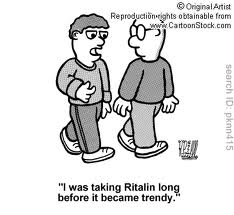
I am sickened by the forces that are trying to get impressionable parents to see ADHD drugs as if they were multivitamins. There are many factors that result in a loss of concentration in the classroom. They include diet, sleep deprivation and uninspiring, non engaging teaching styles.
Kids with attention deficit hyperactivity disorder, or ADHD, struggle in school. Their wandering concentration makes it tough to follow directions, absorb lessons, and finish homework. Now, new research may offer a partial solution.
The large new study funded by the government of Iceland suggests that stimulant medications like Ritalin may help to prevent some of those academic declines.
The study, published in the journal Pediatrics, found that the earlier kids get started on drug treatment, the less their academic performance was likely to suffer between fourth and seventh grades, especially in math. And girls saw a bigger benefit than boys did from early drug treatment.
Why is a lack of concentration viewed with such negativity?
What kind of policy prevents young children from applying sun block? How on earth can schools proclaim to be looking after the welfare of their students when they would rather see them burn in the sun than let them apply lotion?
Two young girls had to go to the hospital with severe sunburns after a Washington state school forbid the sisters from applying sunscreen during an outdoor field day.
Jesse Michener said she was horrified when her two daughters, Violet, 11, and Zoe, 9, came home from school Tuesday sporting “hurts-to-look-at” burns after spending five hours outdoors with no protection, according to a post on the mom’s blog.
Michener said she didn’t rub sunscreen on her kids because it was raining when they left for school. She argued that even if she did apply the much-needed block, the school wouldn’t have let the girls reapply to maintain protection due to a “deeply flawed” school policy.
Children in all states except for California are not allowed to apply or bring the product to school, ABC News reports, partially because it is considered a medication.
Sunblock – a medication? So let me get this straight. The same school system that is going berserk when it comes to recommending children be prescribed ADHD drugs such as dexamphetamine and methylphenidate, prevent children from applying sun protection on the grounds that it’s a medication?
If I taught under such twisted logic I would risk my job over this issue. I would seek parental information regarding allergies and written permission from them to allow their children to put on sun block. No doctors certificate, no consultation with policy makers and hopefully, no sun cancers on innocent children raised under a stupid, incoherent and irrational system.
I hope we don’t get child psychologists and new age self-help authors spring to the defense of these kids. When a group of school kids turns the 9/11 memorial into their own personal dumping ground, it is not a case of ‘kids being kids’. These kids knew what they were doing, realised how insensitive it was and yet, decided to do it anyway.
But like the bullying of a bus monitor (as I have covered in a number of posts), this isn’t about kids on a bus or kids at the 9/11 memorial site, this is about kids in general.
There is a lack of self-respect and respect for others in this generation of kids that is quite frightening. The kamikaze approach that is apparent in both recent stories is a problem that is faced in households and classrooms all over the world.
In this case, the target for their angst is going to make a lot of people extremely upset:
A group of Brooklyn students on a school trip to the National September 11 Memorial & Museum were booted from the hallowed site after they callously hurled trash into its fountains.
The vile vandals from Junior High School 292 in East New York treated the solemn memorial — its reflecting pools honoring the nearly 3,000 people killed in the terror attacks — like a garbage dump.
“They kicked us out because of littering in the water. Kids were throwing baseballs in the pond thing,” said eighth-grader Anthony Price, 14, of East New York, who insisted he wasn’t one of the troublemakers.
In addition to the baseballs, witnesses reported seeing empty plastic soda bottles and other refuse in the water on Thursday.
“They were making jokes and throwing stuff in the fountain. It didn’t seem like a big deal,” added another student on the trip who refused to give his name.
Department of Education officials have launched an investigation into the students’ shenanigans.
Tourists visiting the site Saturday said they were disgusted by the students’ filthy acts.
“That is an absolute disgrace,” said Sharon Hooks, 55, a school teacher from Hartford, Conn. “I don’t care if these children were too young to remember the events of that day. They need to be taught to be respectful.”
I can’t believe the rhetoric I have read about the money Karen Klein is earning from donations. So what? Generous people were so outraged by what they witnessed on that clip that they donated money. Get over it!
This story was never really about a bus monitor anyway. The. Klein case merely exemplified some very big bullying related issues – namely, the lack of respect many children have for adults, the lack of empathy for a person who is clearly being hurt, the influence of a group in regards to peer pressure and the passive behaviour from bystanders.
An elderly bus monitor who was taunted, picked on and threatened by a quartet of ruthless seventh-graders is likely going to retire on the $586,000 she has so far received in donations from concerned strangers who were outraged after viewing a video that captured her torment.
‘She is definitely surprised and overwhelmed and certainly thankful for everyone’s support, and it is nice knowing she is not alone,’ Karen Huff Klein’s daughter, Amanda Romig, told RadarOnline.com on Friday.
‘We never thought it was going to be that much, she didn’t think that much – then wow!’ Romig added, saying that her 68-year-old mother is not likely to return to work.
Click here on my post which discussed the need to punish the middle school children involved.
I hope the generous people who helped secure this donation together with the many other people who were shocked and angered by the clip, now focus their energies on ensuring that their children never treat people like those middle school children treated Ms. Klein.
The problem with being a credible hulk is no matter how credible the story, he’s still a hulk.
Such is the hard truth for an obese Ottawa dad deemed too fat to keep his kids.
We’ll call him Dad because he can’t be named or identified.
Dad, 38, claims there’s no adequate oversight of Children’s Aid judgements in this province.
His two sons – age 5 and 6 – have been put up for adoption. He’s not been granted custody because – among other things – he’s 360 lbs and has been as much as 525 lbs.
It appears the judge used Dad’s obesity as a major reason as to why he can’t have custody of his kids. That’s created a lot of chatter and created a debate about whether obese people make good parents.
The judge may have some good reasons for not allowing this man to be with his children but his obesity should not be a factor.
Excuses, excuses, excuses. Young bullies may be acting out due to their own “need for a sense of significance and belonging“, but they have to accept responsibility for their actions. The children who bullied their school bus monitor acted completely inappropriately and deserve far more than “positive discipline”:
The New York middle school students caught on video taunting and mocking a 68-year-old school bus monitor don’t deserve to be punished, says parenting expert Jane Nelson.
Everyone else in America might be calling for harsh, swift justice to be meted out by both the Greece Central School District and the parents of the kids involved. But not Nelson.
Co-author of two dozen parenting books including the “Positive Discipline” series, Nelson says the traditional means of punishment — yelling, shaming, hitting, grounding, etc. — are counterproductive.
“I think to go after these kids in a punitive way, it just doesn’t help,” she said. Nelson knows that the vast majority of parents will scoff both at that notion — and at her belief that the young bullies are merely acting out due to their own “need for a sense of significance and belonging.”









 Topical Teaching
