Posts Tagged ‘Memory’

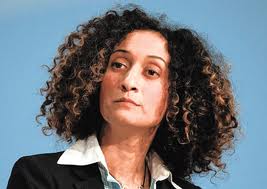
Birbalsingh: Children Think Winston Chruchill is a TV Dog

October 7, 2011

Whilst I don’t agree with everything Katherine Birbalsingh preaches, I think it would be irresponsible not to listen and absorb her frustrations with what is a failing Education system.

She is right that you cannot have students busy doing activities all day without giving them some background knowledge.  But I think she is wrong to dismiss the issues raised from the traditional style of teaching which she espouses.  The “Boredom Factor” is a huge stumbling block when teaching kids.  One may have gotten away with endless rote learning and long mat sessions in my day, but the kids wont let you get away with it today.

Below are some of the views she raised in a recent speech:

In a major speech on Wednesday evening, she told of children who failed to understand that Paris was the capital of France and other pupils who believe Winston Churchill is “that dog off the insurance advert”.

“Teaching historical facts or lists of vocab which rely on memory skills is considered old-fashioned,” she said.

“Instead, we think it better to inspire children to be creative through group discussion and project work. But background knowledge is absolutely essential to enable children to absorb new ideas.”

“Teachers are not meant to stand in front of the class, but instead move amongst children who are all busy doing something. The idea here is that ‘doing’ is more interesting than ‘listening’.

“That might very well be true. But the problem comes when we think that ‘doing’ needs to happen most of the time.

“This means that the teacher, traditionally a source of knowledge, almost becomes redundant as a fountain of knowledge and instead, becomes something of a referee.”

“Ordinary people don’t realise just how little some of our kids know. What we also forget is that the very thing that got us to where we are now, was the kind of education that we had – our teachers teaching us knowledge, so that we know the difference between Paris and France, even if it sometimes meant being bored in lessons and learning the discipline to struggle through.

“How many people in business clinch a deal because they know the soft skills of being polite, or know how to sit through a boring lecture, and concentrate enough to still pick up what is necessary to impress the client?

“Soft skills cannot be taught in a vacuum, independent of content or knowledge.”

I don’t take in much at all from a boring lecture.  Why is it always a choice between two extreme philosophies (this time, the progressive and the traditional)?  Why can’t a teacher borrow from both approaches and teach in a way that suits the needs and learning styles of their class?  Why take on a boring style of teaching which may command basic concentration when you can take on a more engaging style and shoot much higher?

The problem with our system is more complicated than the shortcomings of a progressive style.  In part, the problem is a result of rigid and extreme philosophies, instead of a more flexible approach that can be tinkered with to suit the makeup of the teacher’s class.

That’s right – not all students are the same!  Therefore a teacher cannot afford to be a one-trick pony.  They have to adopt a style that can be tinkered with and amended all the time.
When Do Kids Begin Forming Memories?

May 13, 2011

I stumbled across a fascinating article about when children begin forming memories:

New research challenges the notion that very young children do not form memories, finding that they do but that the memories often fade over time.

Most adults remember little before their third or fourth birthdays, and the thinking has been that prior to this age children do not have the cognitive or language skills to process and store events as memories.

But psychology professor Carole Peterson, PhD, and colleagues from Canada’s Memorial University of Newfoundland confirmed in earlier research that this is not the case and that even very young children can recall past events.

Now they report that young children’s earliest memories tend to change over time, being replaced with “newer” earliest memories until around age 10. As this happens, memories occurring in the preschool years tend to be lost.

“As young children get older their first memories tend to get later and later, but around age 10 their memories crystallize,” Peterson tells WebMD.

Checking Children’s Memories

In an effort to better understand how children form memories, the researchers asked 140 kids between the ages of 4 and 13 to describe their earliest memories and then asked them to do the same thing two years later.

On both occasions, the children were also asked to estimate their age at the time of each memory, and parents were questioned to confirm that the events happened.

The researchers found that children between the ages of 4 and 7 during the first interview showed very little overlap between the memories they recalled as “first memories” during the first question session and those they remembered two years later.

“Even when we repeated what they had told us two years before, many of the younger children would tell us that it didn’t happen to them,” Peterson says.

Conversely, a third of the children who were age 10 to 13 during the first interview described the same earliest memory during the second interview. More than half of the memories they recalled were the same at both interviews.

The researchers are now studying why children remember certain events and not others.

Peterson says traumatic or highly stressful events made up only a small percentage of the earliest memories reported by children in the study.

Cultural Differences Influence Early Memory

Earlier research suggests that culture plays a big part in early memory.

When Peterson and colleagues compared early memories in groups of Canadian and Chinese children, they found that the Chinese children’s earliest memories tended to be a year or more later than the earliest memories of Canadian children.

Emory University child memory researcher Robyn Fivush, PhD, found the same thing in a study comparing Chinese and American children.

Fivush tells WebMD that Western children tend to have stronger early memories because their dialog with parents and other adults tends to be more autobiographical.

The first lasting memory I have is from when I was 4 years-old, which seems to be consistent with these findings. When was your first lasting memory?

Click on the link to read Experts Push for Kids to Start Driving at 12

Click on the link to read Study Reveals Children Aren’t Selfish After All

Click on the link to read Catering for Four-Year Old Transgendered Children

Click on the link to read What Happened to Honesty and Integrity?

Click on the link to read Kids Need Meaningful Relationships More than Mobile Phones