Posts Tagged ‘Etiquette’

Toddlers are Using Bad Language. Should we Really Care?

June 11, 2012

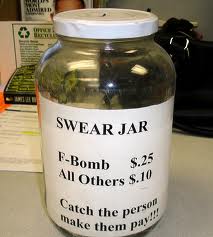
Unfortunately swearing has become part of our vernacular. Curse words are no longer seen as rude or unsociable and parents are less conscious of avoiding sprouting certain words around their children. Many will not see this as a problem. They will argue that swearing is harmless and a popular fixture of everyday conversation.

I do not find swearing offensive per se, but I am grateful that my parents brought me up to express myself in a more dignified way. It would greatly upset me if my children swore, like many children are nowadays:

CHILDREN as young as three are swearing – and it’s not just “bloody” coming out of the mouths of babes either.

“F—” and “s—” are the first naughty words that toddlers usually let fly.

They pick up swear words from the playground, at home and on TV and they do it because it gets them “maximum attention”, linguistics expert Kate Burridge says.

“In the old days they might have had their mouths washed out with soap or been sent to the bedroom with no supper,” Prof Burridge, of Monash University, said.

“But (now) they get maximum attention and learn how potent these word are.”

Parents say almost 60 per cent of children swear by three years of age and that by kindergarten more than 90 per cent of children have uttered their first rude word, an exclusive Herald Sun survey found.

Etiquette expert June Dally-Watkins said the level of swearing on TV and in public was unacceptable.

“I think it is disgusting,” she said.

“Parents should not permit it.”

Most parents agree with Ms Dally-Watkins – 70 per cent believe schools and parents should do more to crack down on swearing.

But parents (52 per cent) admit their children often hear their first curse at home.

Second was the playground (48 per cent) at school or pre-school, followed by TV (31 per cent).

Most parents (78 per cent) still actively discourage swearing.

Prof Burridge advises parents not to panic if their child swears.

She says: “It is probably best to treat these as ordinary words, because they are.

They have always been an important part of the Australian vernacular.”
Are American Kids Brats?

February 12, 2012

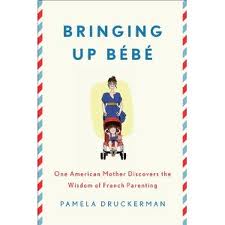
Another book that tries to paint American parents as soft and lacklustre and their kids as spoilt and bad mannered. This time the book advances the French style of parenting.

Time’s Judith Warner, in part, buys into the American parent stigma:

Amidst all the talk this past week about Pamela Druckerman’s new book, Bringing Up Bébé: One American Mother Discovers the Wisdom of French Parenting, there was one phrase that immediately lodged itself in my mind. It was in a sidebar that ran with the Wall Street Journal adaptation of her book, “Why French Parents Are Superior,” and it said this: “Children should say hello, goodbye, thank you and please. It helps them to learn that they aren’t the only ones with feelings and needs.”

That statement points directly to what I see as one of the most meaningful differences between the French and (contemporary) American style of parenting. I don’t happen to believe, as the Journal pushed Druckerman’s argument to say, that French parenting is necessarily superior, overall, to what we do in America. I don’t think French children are, overall, better or happier people — such generalizations are silly. But it is true that French kids can be a whole lot more pleasant to be around than our own. They’re more polite. They’re better socialized. They generally get with the program; they help out when called upon to do so, and they don’t demand special treatment. And that comes directly from being taught, from the earliest age, that they’re not the only ones with feelings and needs.

I say all this based on many years of extended hanging out time with French families, both before and after my own girls — who, like Druckerman’s children, were born in France — came along. In fact, that experience — and the contrast with the American way of parenting I discovered when I moved back to the States — inspired my book Perfect Madness: Motherhood in the Age of Anxiety, the main argument of which Druckerman recapitulates at the very beginning of Bringing Up Bébé. (Fuller disclosure: she interviewed me for the book as well.)

Like Druckerman, I’ve often noted wistfully how French children know how to handle themselves in restaurants. I’ve envied how French children eat what’s put in front of them, put themselves to bed when instructed to, and, generally, tend to help keep the wheels of family life moving pretty smoothly. But the difference that struck me the most deeply, when my family moved to Washington, D.C., from Paris and my older daughter began preschool, was how much more basically respectful French children were of other people. Indeed, how much emphasis French parents put on demanding they behave respectfully toward other people. And how that respect helped make life more enjoyable.

Good manners are certainly very important. Every parent worth their weight in salt attempts to teach their children the importance of graciousness and expressing thanks. But even then, there are two distinctly different types of well-mannered children. There are those who say the right things because they have been trained to do so and there are those that are well-mannered because they are genuinely appreciative and thoughtful.

The one thing I want more than good people on the surface is good people under the surface. There are too many people who will be charming and kind on the surface, yet who harbour resentment below the surface.

I’m not claiming that French people fit that category. What I will say is that books that draw such distinctions usually prove divisive, naive and filled with generalisations. American children will reach their potential when they are not characterised as spoilt brats.

The key to better American children isn’t an Asian style or French style it is a positive style. A book on the topic should include a chapter of what parents may already be doing right and then move on to some helpful hints that they may choose to consider.

But then again, who would buy a parenting book that didn’t peddle stigmas, comparisons and criticisms?