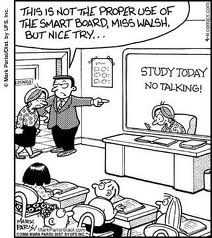
The problem with the wonderfully diverse technologies available to teachers is that it can sometimes breed lazy teaching. A SmartBoard doesn’t make a teacher. The challenge for teachers is not to rely on the technologies at hand, but to simply use them in conjunction with a well-developed lesson.
When reports show that computers don’t make a difference to learning, I wonder if they are really saying that teachers haven’t learned to capitalise from them yet:
Kids love using computers and gadgets in the classroom but the technology has not made them better learners, suggests a new report.
The non-profit Media Awareness Network interviewed a small sample of plugged-in elementary and high school teachers from across Canada and found there’s work to be done to better incorporate technology into schools.
The report suggests many students aren’t really as good at using the Internet as it may seem. While it’s assumed today’s kids are quick to learn how to use computers, the authors found many students are great at social media or finding something to watch on YouTube but their digital skills end there.
Teachers reported that some of their kids had a hard time effectively using search engines like Google and weren’t able to consistently sort out valuable sources from the clutter on the web.
“Digital literacy is not about technical proficiency but about developing the critical thinking skills that are central to lifelong learning and citizenship,” the report states.
The finding wasn’t particularly surprising, said Matthew Johnson, director of education for the Media Awareness Network.
“It’s something we’ve seen before but this really underlined it. I always like to draw a distinction between literacy and fluency,” he explained.
“When we watch a young person sit down on the computer and open a dozen different screens and do a dozen different things at once, we’re really seeing (digital) fluency — the same fluency that lets a 10-year-old talk a mile a minute. But it doesn’t necessarily show genuine literacy, it doesn’t show they understand what they’re doing, it doesn’t even show necessarily that they’re skilled at what they’re doing.”


 Topical Teaching